

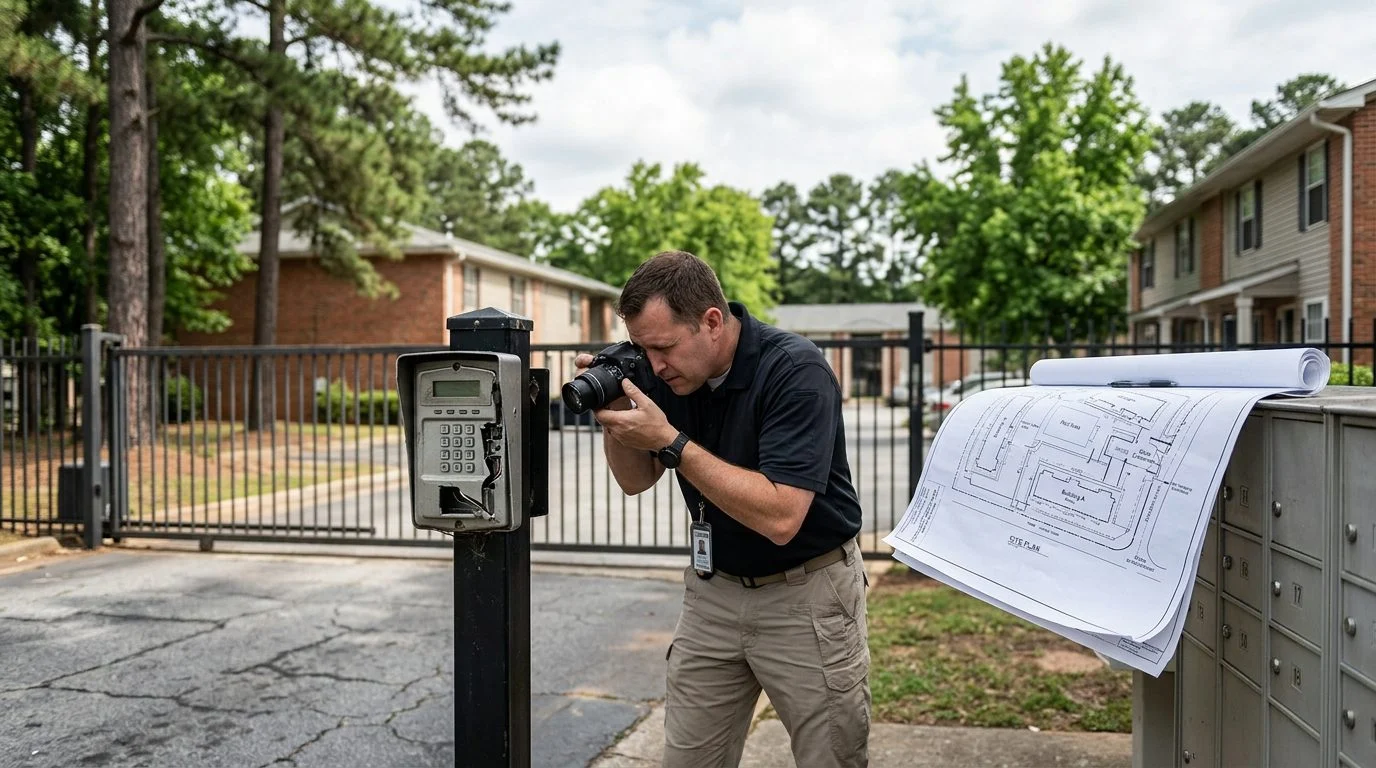
Parking lot injuries in Georgia
Hurt in a Georgia parking lot? Know what you have to prove
Property owners and the businesses that run a lot can owe visitors a safe place to park, walk and shop. Here is how those claims are built.
T. Madden & Associates, P.C.
1999
Practicing law since
5
Georgia offices
24/7
Call us any time
By Terance Madden · Published November 23, 2026
A trip to the store should not end in a hospital bed. Yet a pothole, a pile of broken glass, or a dark corner can turn a parking lot into a crash scene in seconds. When someone is hurt, a spouse, mom or adult daughter often ends up managing the recovery.
In a Georgia premises injury claim, the central question is what the evidence shows about how the injury happened.
Under Georgia premises liability law, what must be proven to hold a parking lot owner responsible for a crash caused by a hazard like a pothole, debris, or poor lighting?
Premises liability is a property owner’s legal responsibility for injuries caused by unsafe conditions on its land. Georgia’s starting point is O.C.G.A. § 51-3-1. An owner who invites people onto its land must use ordinary care in keeping the premises and approaches safe.
Ordinary care means the care a prudent person would use in the same situation (O.C.G.A. § 51-1-2). A shopper or customer is an invitee, meaning someone on the lot for the owner’s business. That status sets the duty the owner owes, which is ordinary care in keeping the premises safe, measured by the care ordinarily prudent persons would exercise in similar circumstances.
- Duty: The owner controls the lot, and you were there as an invitee.
- Failure: The owner did not repair, clean, light, mark or warn in time.
- Causation and damages: The hazard caused the crash, and you have real harm, such as medical bills, lost wages and pain.
A pothole at the edge of a grocery lot can jolt a car into a pole. A burned-out light can hide a parking curb at night.
The owner is not always the only party. Under O.C.G.A. § 51-2-5, an employer can be liable for a contractor’s negligence in six situations, including when the employer retains the right to direct or control the time and manner of executing the work, or interferes and assumes control so that an injury results that is traceable to that interference.
If a pothole, loose debris, or a dark lot left you or someone you love hurt, we can talk through what happened, with no pressure to decide anything. Talk it through with our team — the first consultation is free, confidential, and carries no obligation.
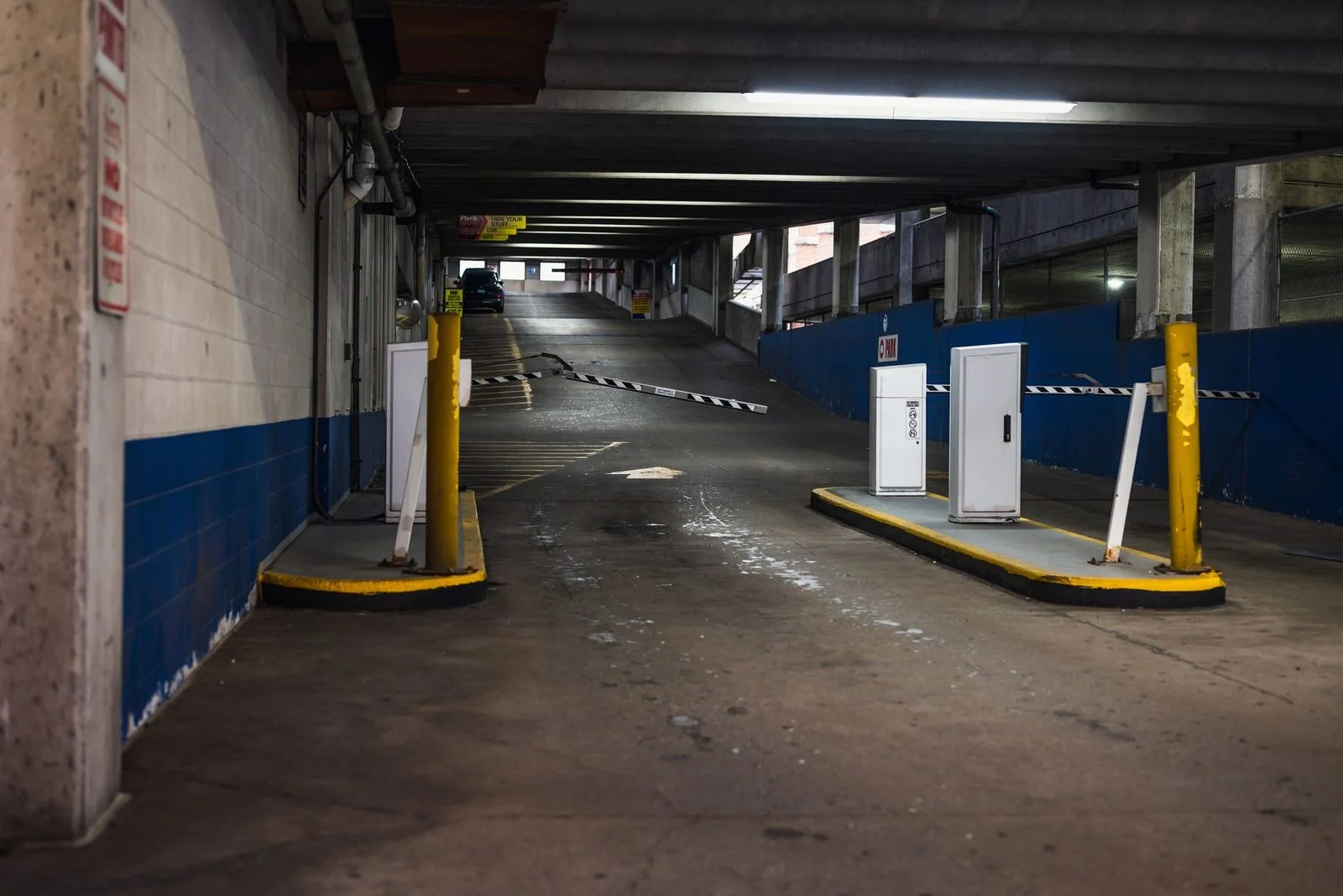
What evidence shows the parking lot owner knew or should have known about the hazard?
Knowledge is usually proven with records, photos and footage, not memory. Start preserving evidence the same week.
Useful proof includes photos and video taken before any repair, maintenance and repair records, inspection schedules, vendor contracts, prior complaints, incident reports, and footage from the owner’s cameras.
Lot cameras often record over old footage. A single repair can erase a pothole. Early preservation matters.
Lighting cases turn on different records: light levels at the time of the crash, the age of the fixtures, outage reports, and whether the lot met the owner’s own lighting standards.
Terance Madden trained as an electrical engineer before law school. He starts a lighting or hazard case by asking what the physical evidence shows and how the crash happened. Then he works to identify and preserve the records that answer those questions.
How can Georgia’s fault rules affect a recovery in a parking lot crash?
Georgia reduces your recovery by your share of fault, and bars it entirely at 50 percent or more (O.C.G.A. § 51-12-33; Quynn v. Hulsey (2020)).
Comparative fault (shared fault) means a judge or jury assigns a percentage to each person involved. The statute also bars recovery when you are 50 percent or more responsible. The Supreme Court of Georgia quoted that bar in Quynn v. Hulsey, 310 Ga. 473 (2020).
Owners often argue you were distracted, wore the wrong shoes, drove too fast, or that the hazard was obvious. The question is whether the owner’s failure contributed to the harm, and the trier of fact then assesses the percentage of fault of all persons or entities who contributed to the injury or damages; the judge reduces the plaintiff’s damages by the plaintiff’s percentage of fault, and the plaintiff cannot recover any damages if the plaintiff is 50 percent or more responsible (O.C.G.A. § 51-12-33). Whether that holds depends on the facts.
Why does the insurance on a parking lot claim matter, and how do insurers often respond?
Big Insurance is not on your side, and its first offer is rarely what a claim is worth.
Expect these tactics. A low first offer comes fast. A recorded statement is requested early, before the injuries are clear. Treatment gets called unnecessary. Delays stretch on. The “the hazard was obvious” argument often shows up.
The response is to pursue every coverage layer. That can include the owner’s liability policy, a management company’s policy, a contractor’s policy, and any umbrella or excess coverage. A claim should count lifetime damages where the injury lasts, and it should be prepared as if it will go to trial. Georgia separates general damages, which the law presumes flow from a wrongful act, from special damages, which must be proved (O.C.G.A. § 51-12-2).
What should a family do next if a parking lot hazard caused a crash?
Start a dated folder now, get medical care promptly, and wait before giving any recorded statement.
If you are managing this for someone you love, you are the one keeping track of everything. Keep medical records, bills, appointment notes, photos, witness names, and every letter from an insurer in one place, in date order.
Follow the treatment plan. Write down what happened while memory is fresh. Hold off on a recorded statement to any insurer until the facts and injuries are clear.
Georgia generally gives two years to file a personal injury lawsuit (O.C.G.A. § 9-3-33). Gathering facts takes time, so don’t let the clock run without a plan. For related claims, see our page on e-bike and bicycle crash claims in Georgia.
If a pothole, loose debris, or a dark lot hurt you or someone you love, call T. Madden & Associates, P.C. for a free, confidential consultation. The first consultation is free, confidential, and has no obligation to continue.
Frequently Asked Questions
Who is responsible when someone is hurt in a parking lot in Georgia?
The owner of the property can be responsible under premises liability, the legal rule that property owners must keep their premises reasonably safe for the people who visit them. In some cases, a business that controls or manages the lot may also share responsibility.
What must a parking lot owner do to keep visitors safe?
Under Georgia law (O.C.G.A. § 51-3-1), an owner must use ordinary care to keep the lot safe for customers and other invited visitors.
How long do I have to file a claim after a parking lot injury in Georgia?
In most Georgia personal injury cases, the deadline is two years from the date of injury (O.C.G.A. § 9-3-33). Other rules can apply depending on the facts, so the safest step is to act quickly.
Can I still recover compensation if I was partly at fault?
Georgia uses modified comparative negligence, so you may recover damages only if your share of fault is less than 50%, and any award is reduced by your percentage of fault. If you were hurt in a parking lot because of someone else’s negligence, call T. Madden & Associates, P.C. for a free consultation. The first consultation is free, confidential, and comes with no obligation to continue.