

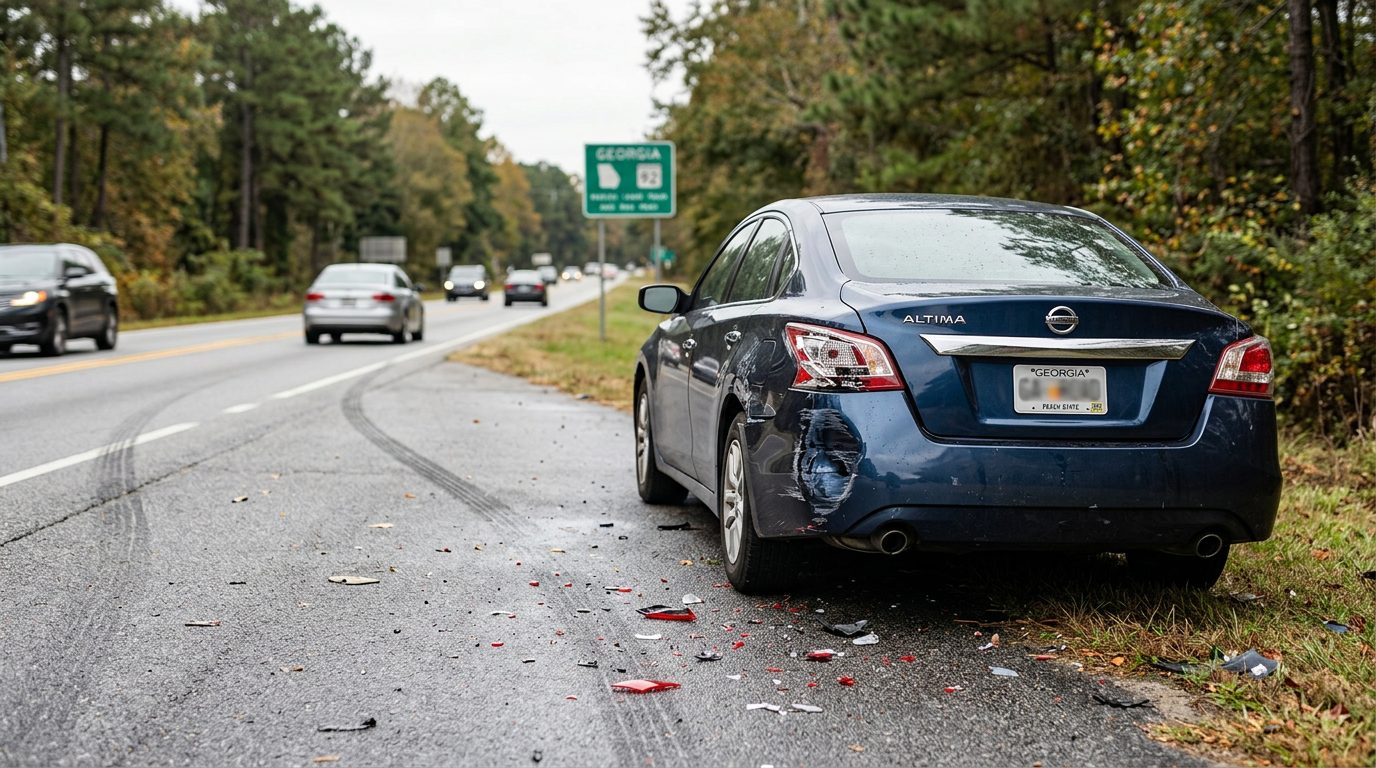
Hit and Run | Georgia
Hit by a driver who fled? You have options, and the firm can explain them.
Ask about your own insurance, your medical bills and the steps that protect a claim. A conversation costs nothing and is confidential.
Why people reach out to T. Madden & Associates, P.C.
1999
In practice since
5
Offices across Georgia
24/7
Phone line available
By Terance Madden · Published November 7, 2026
How much can you get from a hit and run lawsuit? There’s no single figure. The amount depends on your losses, how fault is divided, and what insurance applies. Georgia law lets an injured person seek money for medical bills, lost income, property damage and pain and suffering.
If a driver hit you or someone you love and drove away, you may be handling pain, appointments, insurance calls and missed work all at once. This guide explains what drives the value of a claim, one piece at a time.
What a hit and run lawsuit can recover in Georgia
A hit-and-run lawsuit seeks compensation for losses caused by a driver who struck you and left. Those losses fall into two groups: economic damages and non-economic damages.
A hit-and-run happens when a driver strikes a person or vehicle and leaves the scene. The at-fault driver is unknown or hard to find. O.C.G.A. § 51-12-2 says general damages are presumed to flow from a wrongful act. They can be recovered without proof of any amount. Special damages must be proved.
Your recovery tracks your injuries, the proof you gather, and the insurance available. The sections below cover each one.
If a driver left you or someone you love hurt and you're still sorting out your options, our team is glad to talk it through with you. Talk it through with our team — the first consultation is free, confidential, and carries no obligation.

Why there is no single average hit and run payout
No single average payout fits a hit-and-run case, because published averages mix very different claims. One average can blend a minor sprain with a permanent injury. So it rarely describes one person’s claim.
A hit-and-run adds another layer. When the driver is unknown, the money may have to come from your own insurance. Proving the crash also becomes a bigger part of the work.
Fault matters too. Under O.C.G.A. § 51-12-33, the trier of fact (the person or group deciding the case) sets the injured person’s percentage of fault. The judge then reduces the award in proportion. If the injured person is 50 percent or more responsible, no damages can be recovered.
Focus on what moves value up or down. Those factors include how serious the injury is, how long treatment lasts, how well the crash is documented, and the insurance limits involved.
Economic damages: medical bills, lost wages and property loss
Economic damages are the money losses you can count. They include medical bills, lost pay and property repairs. Keep every bill, pay record and receipt.
Medical costs can include emergency care, imaging, surgery, physical therapy, medications and follow-up visits. Bills still coming in count too. Georgia limits these costs to the reasonable value of medically necessary care. O.C.G.A. § 51-12-1.1 says the evidence includes both amounts charged and, if you have health insurance, the amounts actually needed to satisfy those charges. That holds even if the insurance was never used.
Some providers treat patients under a letter of protection, a promise to be paid from any settlement.
Future medical and healthcare expenses can count as evidence, and either side may challenge their reasonableness. Georgia lets the trier of fact reduce future economic losses to present value, using a 5 percent discount rate or another rate it finds appropriate. O.C.G.A. § 51-12-13 sets that rule. Necessary expenses from an injury also count in the estimate. O.C.G.A. § 51-12-7 covers that point.
Property losses include repairs or replacement for a car, motorcycle or e-bike. They also include protective gear and ride-related costs, such as rentals or rides you needed while hurt.
Non-economic damages: pain, suffering and daily life
Non-economic damages cover the human side of an injury. That includes pain, emotional distress and lost enjoyment of life. These losses have no receipt, so proof comes from records and testimony.
Georgia sets no formula for every case. Where the entire injury is to a person’s peace, happiness or feelings, O.C.G.A. § 51-12-6 says no measure can be prescribed except the enlightened consciences of impartial jurors.
In practice, these losses track how serious the injury is. They also track how long it lasts, what treatment it required and how it changed your routine. Scarring is part of that picture too.
Documentation helps. Keep medical records of each visit. A simple daily journal of pain and activities also helps. Statements from people who saw the change in your life add support. Long gaps between medical visits are easy for an insurer to question.
When your own insurance is the source of recovery
Your own uninsured motorist (UM) coverage can pay when the at-fault driver is uninsured. O.C.G.A. § 33-7-11 says the policy must pay the insured’s damages for bodily injury from the owner or operator of an uninsured motor vehicle, within the limits the statute sets out. O.C.G.A. § 33-7-11 reads: “(a)(1) No automobile liability policy or motor vehicle liability policy shall be issued or delivered in this state to the owner of such vehicle or shall be issued or delivered by any insurer licensed in this state upon any motor vehicle then principally garaged or principally used in this state unless it contains an endorsement or provisions undertaking to pay the insured damages for bodily injury, loss of consortium or death of an insured, or for injury to or destruction of property of an insured under the named insured’s policy sustained from the owner or operator of an uninsured motor vehicle, within limits exclusive of interests and costs which at the option of the insured shall be.”
Whether a particular hit-and-run fits that rule depends on the facts of the crash and the policy.
Some auto policies also include medical payments (MedPay) coverage, which can help with medical bills. Your own policy will show whether it’s included. Household policies, such as homeowners or renters coverage, may matter for an e-bike rider too.
How a $25,000 settlement is divided
A $25,000 settlement does not pay out in full, because fees, case expenses and other claims come out first. Each deduction matters when you read the final number.
The deductions usually run in this order. First comes the attorney’s fee under the signed agreement. Then come case expenses. After that come medical liens, provider claims and any other reimbursement claims. What’s left is your net amount.
We handle personal injury cases on a no-fee-unless-we-win basis, but you may still be responsible for court costs and case expenses. Review the agreement closely before you sign.
A $25,000 policy limit is the most that policy pays. It caps the insurer’s payment. It does not measure what your injury is worth.
For illustration only, assume a $25,000 settlement, $3,000 in case expenses and a $6,000 provider claim. Subtract the fee under your agreement, then those two amounts. The rest is your net. These figures are hypothetical and are not a prediction of any result.
Not sure what your next step is?
Talk it through with our team — the first consultation is free, confidential, and carries no obligation.
How long a hit and run settlement takes
A hit-and-run settlement can take longer than a standard crash claim. The main reason is that the at-fault driver may be unknown. Timing depends on several steps, not one date.
Key factors include how serious the injury is and whether treatment has finished. Timing also depends on how quickly records arrive and whether the at-fault driver or insurer is identified. Uninsured motorist claims add investigation and proof steps, which can stretch the timeline.
Some claims settle before any lawsuit is filed. If the insurer does not offer fair value, a lawsuit may follow. Each path has its own timing. Gathering records early helps avoid delays from missing paperwork.

Deadlines and the next step for your situation
Georgia’s general deadline for a personal injury action is two years after the right of action accrues. O.C.G.A. § 9-3-33 sets that two-year rule, with exceptions. The same statute gives loss of consortium claims four years.
If you’re the injured rider, you may still be in pain while sorting this out. If you’re a relative, you may be the one making calls and tracking bills. Both roles carry real weight. For e-bike riders, see our e-bike accident lawyer page and the Georgia e-bike laws guide as next reading.
Frequently asked questions
How much can you get from a hit and run lawsuit in Georgia?
No single amount applies to every case. Value depends on your losses, how fault is divided and the insurance that applies.
How long do I have to sue after a hit and run in Georgia?
Georgia’s general rule gives two years after the right of action accrues for personal injury. Loss of consortium claims have four years.
Can I recover pain and suffering after a hit and run?
Pain and suffering is a non-economic damage. Georgia sets no formula for it, so records and a daily journal help show its impact.
If a driver left you or someone you love hurt, the options can feel confusing at first. Our free first consultation is confidential and carries no obligation to continue. You can call us at any hour.