

E-Bike Accidents | Clayton County
Getting a Police Report After an E-Bike Crash in Clayton County
Practical steps for requesting a crash report and keeping the rest of your records organized. T. Madden & Associates, P.C. has practiced personal injury law in Georgia since 1999.
About T. Madden & Associates, P.C.
1999
Year the firm began practicing law
24/7
Phone line available any time
Free
First consultation, confidential and with no obligation
By Terance Madden · Published November 5, 2026
How to Get Police Report for an E-Bike Crash in Clayton County
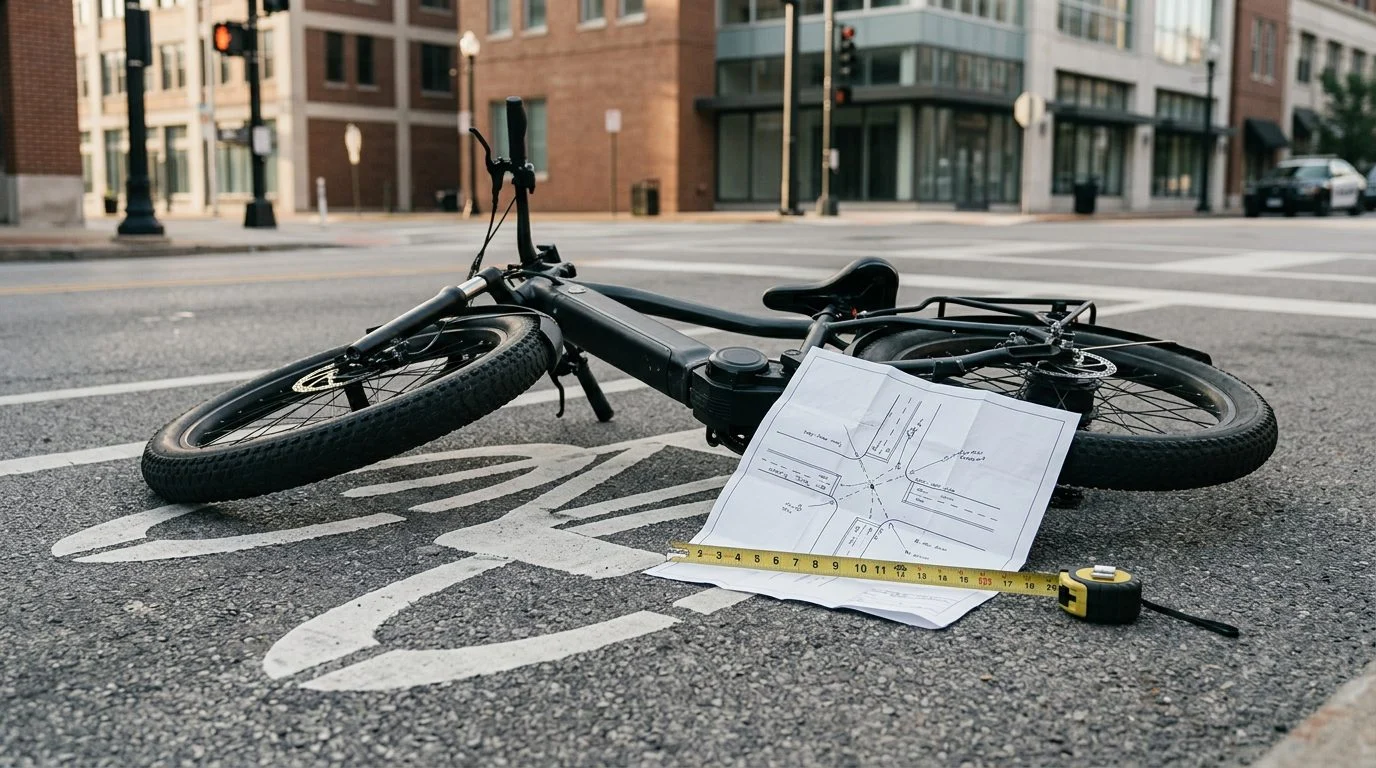
If you were hurt in an e-bike crash in Clayton County, the police report is a key record of what happened. To get it, first find the agency that responded, then ask its records unit for a copy. This guide walks through how to get police report e-bike crash Clayton County records, step by step, including what to do if no officer came to the scene. Keep in mind that the report is one piece of evidence. It does not decide fault on its own.
If a crash left you hurt and the police report is hard to get, we're glad to talk through your options with you, free and with no obligation. Talk it through with our team — the first consultation is free, confidential, and carries no obligation.
Start With Safety and Medical Care After an E-Bike Crash
Safety and medical care come first, before any paperwork. Move out of traffic if you can. Call 911 if anyone is hurt or the crash blocks the road.
- Get medical attention even if your injuries seem minor. Some symptoms start hours or days later.
- Write down how you feel. Keep every medical record, bill, and appointment note from the first visit on.
- Photograph the bike and the scene before anyone moves or repairs the bike.
- Keep a simple daily log of pain, missed work, and tasks you can no longer do.
Prompt reporting and steady medical records help in two ways. They show when the crash happened and what harm followed. They also tie the police report to your injuries in a clear way. Notes made close to the event are easier to check later than memories pieced together months afterward. Be careful about detailed posts on social media, since insurers may read them.
Find Out Which Agency Responded to Your Crash
The agency whose officer responded holds the report, so start by identifying that agency. Depending on where the crash happened, it could be the Clayton County Sheriff’s Office, a city police department such as Jonesboro Police, or the Georgia State Patrol.
- Check any card, citation, or paperwork the officer gave you. Note the agency name, the officer’s name or badge number, and any incident or report number.
- If you don’t know the agency, ask the people who helped at the scene. You can also check where the crash happened against city limits. A crash inside a city is usually handled by that city’s police department.
Write these details down and photograph the paperwork. Records staff will ask for them when you request the report.
Steps to Request Your E-Bike Crash Report in Clayton County
To get the report, contact the responding agency’s records unit and ask how to request a crash report. Follow these steps in order.
- Gather the date, time, exact location or nearest intersection, names of everyone involved, and any report number.
- Ask the records unit whether a request is made online, by mail, or in person.
- Say you were a party to the crash, or that you act for an injured party. Give the details so staff can find the file.
- Ask about copy fees and accepted payment methods before you send the request.
- Ask when the report will be ready and how you will receive it.
- Review the report when you get it. Check names, vehicle details, direction of travel, the location, the officer’s narrative, and any citations. Raise errors with the agency.
Other agencies publish their own steps. The Cobb County accident reports page describes when reports become available, who may obtain them, identification requirements, and fees for people not involved in the crash. The GDOT crash reporting page covers the procedure for obtaining police crash reports. Clayton County’s process may differ, so the records unit’s answer controls.
What to Do If Police Did Not Come to the Scene
If no officer came, first confirm whether a report exists. Then build your own record of the crash.
- Call the agency’s non-emergency line or dispatch. Ask whether a crash report was created for your incident, and ask for the answer in writing if you can.
- Write down the date, time, location, and how the crash happened while your memory is fresh.
- Photograph the scene, the bike, the other vehicle, visible damage, road conditions, and any injuries. Keep the original files with their dates.
- Collect names and phone numbers of witnesses, and note what they said at the scene.
- Keep receipts for bike repair or replacement, medical bills, lost work time, and other out-of-pocket costs.
Georgia law lets an injured person recover for breach of a legal duty that causes damage, where the law requires a person to perform an act for the benefit of another or to refrain from doing an act which may injure another. Under O.C.G.A. § 51-1-6, when the law requires a person to perform an act for the benefit of another or to refrain from doing an act which may injure another, the injured party may recover for breach of that legal duty if he suffers damage thereby. Your records help show that link.
How the Police Report Fits With Your Injury Claim
A police report is one piece of evidence. It does not, by itself, decide who was at fault. The report records the officer’s observations, statements, and any citations. Photos, witness accounts, medical records, and physical evidence add to it.
Georgia divides fault by percentage. Under O.C.G.A. § 51-12-33, the judge reduces damages in proportion to the injured person’s share of fault. The same section bars recovery if the plaintiff is 50 percent or more responsible for the injury. The trier of fact (the jury, or the judge in a trial without a jury) must also consider the fault of all persons or entities who contributed to the injury, whether or not they were or could have been named in the suit, but a nonparty’s fault is considered only if the plaintiff settled with that nonparty or a defending party gave notice at least 120 days before trial that the nonparty was wholly or partially at fault.
Damages also come in two types. Under O.C.G.A. § 51-12-2, special damages actually flow from the wrong and must be proved. Under O.C.G.A. § 51-12-7, necessary expenses from an injury are a legitimate item in the damage estimate.
Timing matters too. Georgia law generally requires a personal injury lawsuit to be filed within two years, under O.C.G.A. § 9-3-33. Tell your own insurer about the crash and keep notes of every call. Before you give a recorded statement or accept an offer from another insurer, make sure you understand your injuries.
Not sure what your next step is?
Talk it through with our team — the first consultation is free, confidential, and carries no obligation.
Common Questions About Police Reports After E-Bike Accidents
Can you file a report after an e-bike accident?
Whether a report exists depends on whether the crash was reported to law enforcement at the time. Ask the responding agency how it handles reports made later.
Who is at fault if you hit a cyclist?
Fault turns on the facts, such as traffic signals, right-of-way, speed, and visibility. Georgia divides fault by percentage, so a court can split it among the people involved.
What if there is no police report?
Document the scene, collect witness names, and keep medical and repair records. Those records support your account even without an officer’s report.
Talk With T. Madden & Associates About Your Clayton County E-Bike Crash
T. Madden & Associates, P.C. offers a free, confidential first consultation with no obligation to continue. If you are dealing with an injury, a report you cannot get, and a choice about the claim, you do not have to sort it out alone.
The firm handles e-bike injury claims on a no-fee-unless-we-win basis, but the client may still be responsible for court costs and case expenses. Calls are answered 24/7.
Terance Madden is the responsible lawyer for this page. The firm has practiced since 1999 and has offices in Jonesboro (Clayton County), Atlanta, Decatur, Macon and Augusta. Related reading includes the firm’s e-bike accident lawyer page and its Clayton County page.
To start a free case evaluation, visit the firm’s contact page.
Steps to Request a Crash Report
Identify the responding agency
Note which law enforcement agency responded to the crash. The agency that took the report is the place to start your request.
Gather what you already have
Collect the date, time, location, and any incident or citation numbers, along with the names of drivers or witnesses you know.
Submit a records request
Ask the agency how it handles copies of crash reports, including any form, fee, or identification it requires. Keep a record of your request.
Ask for help with the process
If the report is hard to obtain or contains errors, contact T. Madden & Associates, P.C. for a free consultation about next steps.
How We Can Help
Organizing crash evidence
We help you sort police reports, photos, medical records, and other documents related to your e-bike accident in one place.
Communicating with insurers
We can handle conversations with insurance companies so you can focus on your recovery.
Fees explained up front
We do not charge a fee unless there is a recovery. You may still be responsible for court costs and case expenses, and we will explain these before you decide.
Available when you need us
Call our office at any hour to talk about your e-bike crash and the steps ahead.
Important: Do Not Wait to Gather Information
Witness names, photos, and medical records can be difficult to recover as time passes. Write down what you remember about the crash as soon as you can, while the details are still clear.