

Motorcycle Crashes | Georgia
Hit by a Car Turning Left? Find Out Who Pays
Left-turn crashes raise hard questions about fault, insurance and your medical bills. Our team at T. Madden & Associates, P.C. helps riders sort them out.
Why riders call T. Madden & Associates, P.C.
1999
Practicing law since
24/7
Call us any time
Free
Confidential first consultation
By Terance Madden · Published November 9, 2026
A car turned left in front of your motorcycle in Georgia, and now you’re hurt. The bills are stacking up, and the insurance letters are coming in.
In left-turn crashes, who had to yield is often a central question. Who pays next depends on which insurance policies apply.
The short answer: the driver who turned left usually owes the duty to yield
Left-turn crashes often turn on the details of how each driver moved, so the specific facts of your crash matter.
Here’s how it usually plays out. The driver sees a motorcycle, guesses it is still far off, and turns. The rider has no room to avoid it.
Liability is the legal term for responsibility for harm caused by a careless act. When a turning driver fails to yield, that driver may carry liability for the rider’s injuries.
The key question is simple. Did the driver look, judge the gap and wait? If not, the crash was a choice, not bad luck.
Expect the other side to argue the rider was partly at fault too. Georgia’s shared-fault rule, explained below, decides how that argument plays out.
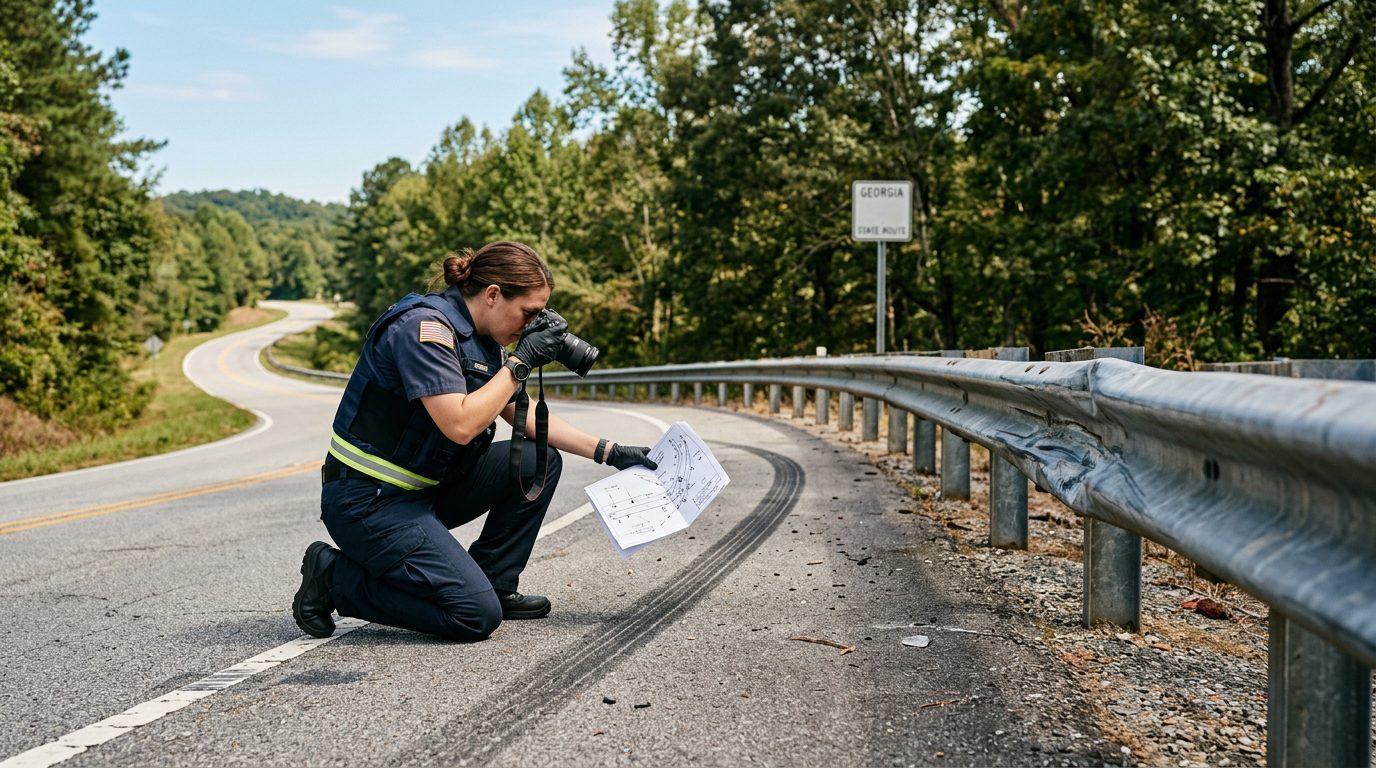
Witnesses, photos and damage to both vehicles can show where the turning car was and what it did. Gather them early, while they are still fresh.
Hurt after a car turned left into your path? The firm offers a free first consultation to talk through who may be responsible for your injuries. Talk it through with our team — the first consultation is free, confidential, and carries no obligation.
Why a left turn into a motorcycle happens
The turning driver waits at an intersection or driveway, looks for a gap in traffic, and pulls out. That is the common pattern.
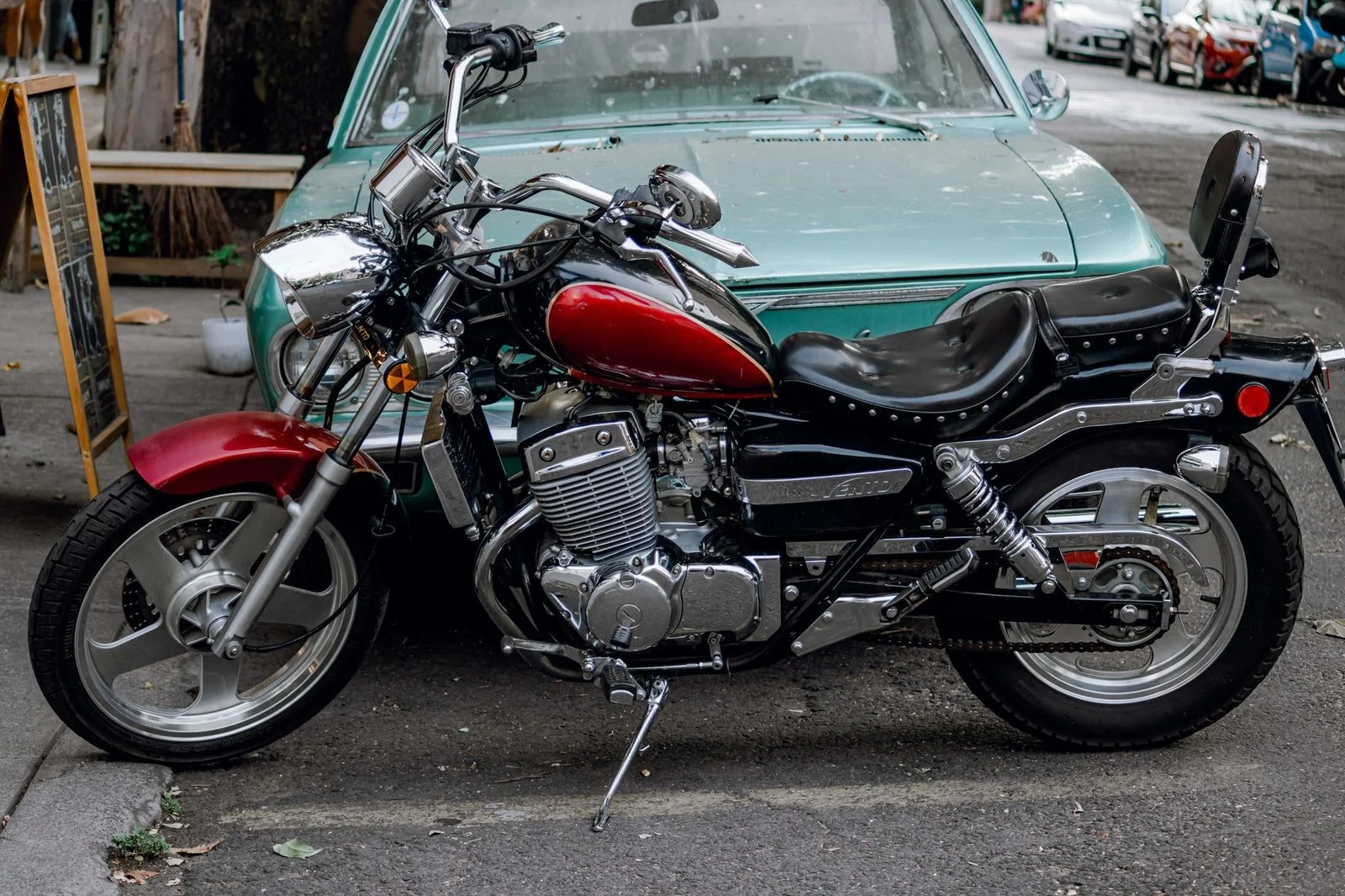
Motorcycles are narrow. They can slip between cars, sit in a blind spot, and look farther away than they are. A driver scanning for car-sized vehicles can miss one entirely.
Speed makes it worse. A rider moving at the normal flow of traffic covers a lot of ground while a driver is pulling out. Misjudging that gap is a failure to look, not bad luck.
Turns into driveways and parking lots are another trap. The driver’s attention is on the next car, not the rider coming up behind it.
The Insurance Institute for Highway Safety tracks motorcycle crash deaths by state and year, so the risk is documented. IIHS motorcycle fatality data shows the scale of it.
The question is what the turning driver should have seen and done.
Who pays first: the at-fault driver’s liability insurance
The at-fault driver’s liability insurance is usually the first place a claim for your injuries goes. Liability coverage pays for injuries the policyholder caused.
Policy limits are the most the insurer will pay under that policy. Ask for the limits early, and get the answer in writing.
Here’s the catch. Many policies carry limits too low for a serious motorcycle injury. Surgery, rehab, time off work and a long recovery can add up fast.
Don’t assume the at-fault driver’s policy will cover everything. Document the full value of the claim first, including medical bills, future care and lost income.
If the limits fall short, other coverage can come into play. The next two sections cover those layers.
When the at-fault driver has little or no coverage: UM and UIM
If the at-fault driver has no insurance, or not enough, your own policy may pay. Two coverages do this work.
Uninsured motorist (UM) coverage pays you when the other driver has no insurance. Underinsured motorist (UIM) coverage pays when the other driver’s limits are too low to cover your losses.
O.C.G.A. § 33-7-11 sets that rule. The insured chooses the limits within the statute’s terms.
If you’re the spouse, mother or adult daughter handling the paperwork, start with your own declarations page. That is the summary page listing your coverages and limits. Look for UM and UIM there and note the amounts.
Many people don’t know what they bought until they need it. Reading that page now saves stress later.
Other parties who may share the bill: owners, employers, and vehicle parts
Other parties can share the bill when they were at fault too. Check every one.
If the driver was working, the employer may answer for that driver’s careless act. O.C.G.A. § 51-2-2 makes a person liable for torts committed by a servant within the scope of the business.
Georgia’s Supreme Court has also said an employer that admits it answers for its driver can still face claims for its own negligent hiring, training and supervision. Quynn v. Hulsey addresses that point.
Vehicle parts and service matter too. Each may carry its own insurance, which can mean another source of payment.
Terance Madden leads T. Madden & Associates, P.C., a Georgia personal injury law firm in practice since 1999. His engineering training helps him read vehicle and crash evidence.
Injury patterns can tell a story too. A systematic review of motorcycle injuries explains how injury distribution can help reconstruct crash events.
How Big Insurance handles a left-turn claim, and how the firm responds
Big Insurance is not on your side. Its first offer is rarely what your claim is worth.
Expect familiar tactics. An early request for a recorded statement, a taped account the adjuster can use later. A low first offer. A “low impact” argument that says the crash couldn’t have hurt you much. Delays. Disputes over whether your treatment was needed.
Georgia also uses comparative fault, which means each person’s share of blame. Under O.C.G.A. § 51-12-33, a judge reduces your award by your share of fault. If you are 50 percent or more at fault, you recover nothing.
Hypothetical example, not a real case: a $100,000 award with 20 percent fault on the rider would drop to $80,000.
The firm pursues every coverage layer. That includes the at-fault driver’s liability policy, your UM and UIM, any umbrella or excess policy, and corporate coverage when a business is involved.
Not sure what your next step is?
Talk it through with our team — the first consultation is free, confidential, and carries no obligation.
Who pays the bills while the claim is pending
Medical bills and lost pay usually come first, and both belong in the claim. Keep them organized from day one.
Georgia law limits medical expense damages to the reasonable value of medically necessary care, as the jury decides. See O.C.G.A. § 51-12-1.1.
Necessary expenses from an injury are a legitimate part of the damages estimate. See O.C.G.A. § 51-12-7.
Lost wages and time off work deserve their own close look once you know who pays.
If you’re the one tracking these bills for a family member, you’re carrying the paperwork and the phone calls. Keep every bill, pay stub and letter in one folder. Missing records make every number harder to prove.
The firm handles injury cases on a no-fee-unless-we-win basis. Clients may still be responsible for court costs and case expenses.
If a car turned left in front of you, reach out to talk through your case
If a car turned left into your path, you’re hurt, and insurance calls are coming in, you don’t have to sort out who pays by yourself.
Talk to the firm about the crash, your injuries and the policies you have. The firm offers a free, confidential first consultation with no obligation to continue. Contact the firm to set one up.
The firm, led by attorney Terance Madden, has practiced since 1999. It has offices in Jonesboro, Atlanta, Decatur, Macon and Augusta.
Frequently Asked Questions
Who pays when a car turns left in front of a motorcycle in Georgia?
If that coverage is not enough, your own uninsured or underinsured motorist coverage may apply, depending on your policy.
Can I still recover compensation if I was partly at fault for the crash?
Georgia follows modified comparative negligence under O.C.G.A. § 51-12-33. You can recover only if you are less than 50 percent at fault, and any award is reduced by your share of the fault.
How long do I have to file a claim after a motorcycle crash in Georgia?
Most personal injury claims in Georgia must be filed within two years under O.C.G.A. § 9-3-33. If you were hurt in a crash caused by someone else, call T. Madden & Associates, P.C. for a free first consultation, which is confidential and carries no obligation to continue.