

Georgia Truck Accident Lawyer
Hurt in a Truck Crash? Your Claim May Reach the Trucking Company
T. Madden & Associates, P.C. has represented injured Georgians since 1999, from Jonesboro and Atlanta to Decatur, Macon and Augusta. Your first consultation is free, confidential and comes with no obligation to continue. No fees unless there is a recovery, though you may still be responsible for court costs and case expenses.
Why Georgians Call Us
1999
Serving injured Georgians since
5
Georgia offices: Jonesboro, Atlanta, Decatur, Macon, Augusta
24/7
Call us anytime
By Terance Madden · Published October 26, 2026
Can You Sue a Trucking Company in Georgia When Its Driver Causes a Crash?
Yes, in many Georgia truck crashes you can name the trucking company along with the driver. Whether the company can be held responsible depends on who employed the driver, who owned the truck, and how the truck was being used.
Being hit by a commercial truck is frightening. The crash may leave you with medical bills, lost pay, and pain that lingers. If a loved one died, the questions can feel even heavier. You may be asking whether the company, and not only the driver, has to answer for what happened.
Two questions sit at the center. The first is whether the driver was careless. The second is whether the company is responsible for the driver’s conduct, or for its own choices. A single claim can address both.
This page walks through the main routes. We cover employer liability, direct claims against the company, useful records, punitive damages, insurance, and Georgia deadlines. For a broader view of these cases, read our truck accident claims overview.
A crash with a commercial truck can leave you with questions you never expected, including whether the trucking company belongs in your claim. Our team is glad to talk through the facts of your crash with you. Talk it through with our team — the first consultation is free, confidential, and carries no obligation.

Why a Trucking Company Can Be Held Responsible for Its Driver
A Georgia employer can be liable for harm its worker causes while doing the employer’s work. Georgia’s joinder provision, subsection (c) of § 40-1-112, sets out when a motor carrier’s insurance carrier may be named in the same lawsuit as the carrier: when one or more related motor carriers are insolvent or bankrupt, or when personal service cannot, after reasonable diligence, be made on the driver or motor carrier. That joinder rule does not by itself establish when an employer is liable for its driver.
Scope of work is the key fact. A driver hauling a company load, following dispatch, or driving a route the company assigned usually fits inside the company’s business. A driver who took the truck for a personal errand may not. The facts decide this, so trip records and dispatch messages matter.
Employment status also matters. Company drivers are usually the carrier’s employees. Owner-operators and independent contractors may be treated differently. Courts look at the contract and at how much control the company held over the work, not only at the label on the paperwork.
Leased equipment can add more names. One company may own the truck, another may lease it, and a third may operate it under its legal authority. Each may have had a role in who controlled the truck and the trip. The facts of your crash will decide which of these parties belong in the claim.
Direct Negligence Claims Against the Trucking Company
A claim can also target the company’s own conduct, apart from anything the driver did. These claims look at decisions the company made before and during the trip. The questions often fall into a few groups.
- Hiring: Did the company check the driver’s license, background, and driving record before putting him behind the wheel? Federal rules require a motor carrier to request the driver’s motor vehicle record for the prior three years within 30 days of the date the driver’s employment begins, as described in 49 C.F.R. § 391.23.
- Training and supervision: Did the company teach safety rules and check that the driver followed them?
- Retention: Did the company keep a driver it knew, or should have known, was unsafe?
- Maintenance: Was the truck kept in safe working order?
- Dispatch pressure: Did schedules push the driver to drive too long or too fast?
Each theory depends on the facts. A company can have a clean hiring file and still face hard questions about how it ran its schedule. Keep notes on what you learn about the driver’s history and the company’s rules. Those notes can help you and your lawyer ask the right questions early.
Evidence That Can Support a Claim Against the Trucking Company
The records a trucking company keeps often matter most. Early action matters, because some records and footage can be lost over time.
- Hours-of-service logs: Most carriers must use an electronic logging device to record duty status. 49 C.F.R. § 395.8 sets that requirement, with listed exceptions. These logs show driving time and rest breaks, which can matter if the driver was tired.
- Driver qualification file: Look for the driver’s motor vehicle record, notes on prior employers contacted, and safety history.
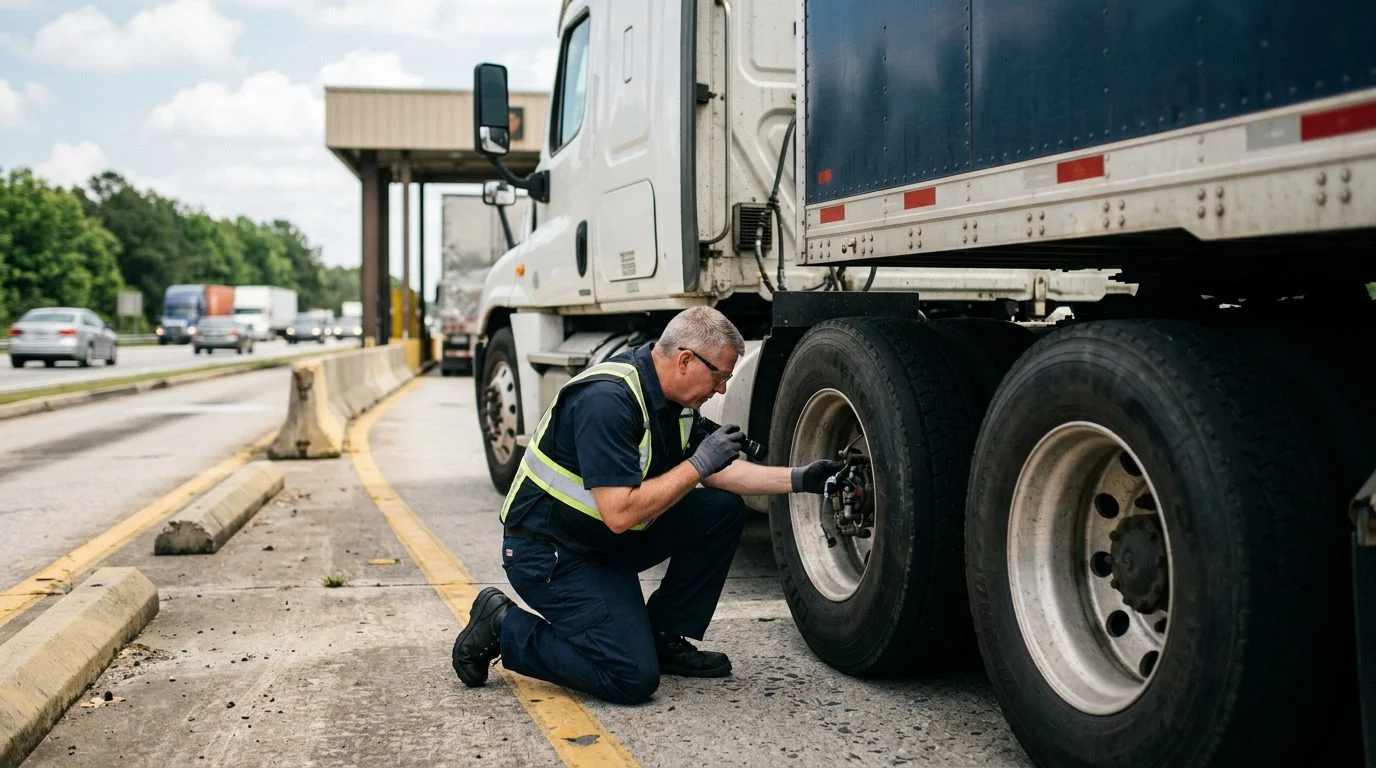
- Maintenance and inspection records: Brakes, tires, and lights are common issues after a serious crash.
- Scene and crash proof: Dash camera video, onboard data, the police report, witness names, and photos taken soon after the crash can all matter.
No single record decides a case. Together, they can show what the company knew, what it checked, and what happened on the road.
Punitive Damages in Georgia Trucking Cases
Georgia allows punitive damages in some tort cases when the evidence meets a high standard. Under O.C.G.A. § 51-12-5.1, the plaintiff must prove by clear and convincing evidence willful misconduct, malice, fraud, wantonness, oppression, or “that entire want of care which would raise the presumption of conscious indifference to consequences.”
Punitive damages are not meant to repay your losses. The statute says they are awarded “not as compensation to a plaintiff but solely to punish, penalize, or deter a defendant.” Medical bills and lost wages are handled as separate categories of damages.
The statute also sets a limit. In most tort actions, punitive damages are capped at $250,000, but there is no cap when the claim arises from product liability. In product liability tort cases, the statute provides that there shall be no limitation regarding the amount which may be awarded as punitive damages, and outside those cases the statute’s listed exceptions remove the cap, such as when the defendant acted or failed to act with specific intent to cause harm, or while impaired by alcohol or by drugs other than lawfully prescribed drugs administered in accordance with prescription, to the degree that his or her judgment is substantially impaired. Uncapped punitive damages under subsection (f) can be imposed only on an active tort-feasor, not on a party that did not itself act in that way. Punitive damages must also be specifically requested in the complaint, the document that starts the lawsuit.
Who May Be Named and How Insurance Affects a Recovery
Several parties can be named in a truck crash claim, depending on the facts. These often include the driver, the motor carrier, and the truck’s owner or lessor. Insurance usually shapes how any recovery is paid.
Georgia limits when a carrier and its insurer can be sued together. Under O.C.G.A. § 40-1-112, joining the insurer with the motor carrier in the same action is allowed only in limited cases. Those include when one or more related carriers are insolvent or bankrupt, or when personal service cannot, after reasonable diligence, be made on the driver or the carrier. The same section says a missed filing does not reduce a person’s right to pursue an action directly against the carrier’s insurer.
Fault is shared among the parties. Georgia does not make every defendant pay the whole award. Under O.C.G.A. § 51-12-33, damages are split by each person’s percentage of fault. Each liable person pays only its own share, and those shares are not joint.
Policy limits matter in settlement talks. They do not change the facts of the crash, though. The severity of the injury and the strength of the evidence still drive how a claim is valued.
Not sure what your next step is?
Talk it through with our team — the first consultation is free, confidential, and carries no obligation.
Deadlines and Damages Under Georgia Law
For most injury claims in Georgia, the general deadline is two years. O.C.G.A. § 9-3-33 says, except as otherwise provided in this article, actions for injuries to the person must be brought within two years after the right of action accrues. Loss of consortium claims have four years under the same statute.
Shorter notice rules apply when a government vehicle is involved. Claims against counties must be presented within 12 months after they accrue or become payable under O.C.G.A. § 36-11-1, and minors or others under disabilities have 12 months after the disability is removed.
Your own share of fault also matters. Georgia reduces damages in proportion to the injured person’s fault. Under O.C.G.A. § 51-12-33, a plaintiff who is 50 percent or more responsible for the injury receives no damages.
Typical damages include medical expenses, lost wages, and pain and suffering. When a death results from a crime or from criminal or other negligence, the personal representative may recover funeral, medical, and other necessary expenses under O.C.G.A. § 51-4-5. Value depends on injury severity, treatment history, wage loss, liability evidence, and available coverage.
Frequently Asked Questions About Suing a Trucking Company
Can you sue a company if its driver hits you?
Often yes, when the driver was doing the company’s work at the time. Scope of work and employment status decide whether the company can be named.
Can I sue for emotional distress in Georgia?
Emotional harm can be part of an injury claim along with physical injuries.
What affects the value of a commercial vehicle claim?
Injury severity, treatment, lost income, evidence of fault, and insurance coverage all play a part. No single factor decides the outcome.
Fees, Costs, and Your Free First Consultation
T. Madden & Associates, P.C. handles these cases on a no-fee-unless-we-win basis. The client may still be responsible for court costs and case expenses. The first consultation is free, confidential, and carries no obligation to continue.
Talk With Terance Madden About Your Crash
If a truck crash has left you or someone you love with hard questions, you don’t have to sort them out alone. Paperwork, medical visits, and missed work can pile up fast after a collision with a commercial truck.
T. Madden & Associates, P.C. is led by attorney Terance Madden. The firm has practiced since 1999 and has offices in Jonesboro, Atlanta, Decatur, Macon, and Augusta, Georgia. If you want to know whether the trucking company belongs in your claim, reach out through our contact page and tell us what happened.
Responsible attorney: Terance Madden, T. Madden & Associates, P.C. Offices in Jonesboro, Atlanta, Decatur, Macon, and Augusta, Georgia. Contact: tmaddenlaw.com/contact.
How We Approach a Truck Accident Claim
Reviewing the Paperwork
Trucking companies keep driver logs, maintenance records, driver qualification files and cargo documents. We look at what was kept and what should have been kept.
Examining Who Was Responsible
Whether a trucking company can be named in a claim depends on the facts, including who employed the driver and what the driver was doing at the time of the crash. We examine those facts closely.
Dealing With the Insurers
Trucking companies and their insurers protect their own interests. Our lawyers handle those communications so you can focus on your recovery.
Acting Early
Electronic logs, dashcam footage and vehicle data can be overwritten or lost. Contacting us early helps preserve evidence while it is still available.
Be Careful Before Speaking With the Trucking Company's Insurer
Insurance adjusters for trucking companies are focused on limiting what their company pays. Before you give a recorded statement or sign any release, talk with a lawyer about your situation.
Steps to Take After a Georgia Truck Crash
Get Medical Care
Your health comes first. Get evaluated promptly, even if your injuries seem minor, and follow your providers' instructions.
Report the Crash
Make sure the crash is reported to the police, and write down the truck's company name, the driver's details and the vehicle's number.
Preserve the Evidence
Photos, witness names, medical records and any communications with the company all matter. Keep them in one place.
Call Our Team
Our team at T. Madden & Associates, P.C. offers a free, confidential consultation with no obligation to continue.