

Truck Accidents · Clayton County
Your Child Was Hurt in a Truck Crash. Here Is What to Do First.
A calm, practical guide for parents in Clayton County. T. Madden & Associates, P.C. has represented Georgia families since 1999, and our team is ready to talk with you about your options.
About T. Madden & Associates, P.C.
1999
Year the firm began practicing law
5
Georgia offices: Jonesboro, Atlanta, Decatur, Macon and Augusta
Free
Confidential first consultation, with no obligation to continue
By Terance Madden · Published November 3, 2026
Your first job is to get your adult child medical care and protect the facts of the crash. Your child makes the final decisions about any injury claim, and you can help them carry the load. This guide covers those first steps in plain language, with links to the Georgia and federal rules that shape what comes next.
Your Adult Child Holds the Claim, and You Can Still Help
Who may bring an injury claim can depend on the facts of each case. Your child makes the final calls about the case. That can feel backwards when you’re the one driving to the hospital and keeping lists. Your role still matters.
Most parents help in practical ways. You can drive to appointments and keep a written log of symptoms, medicines, missed work, and bills. You can gather the paperwork your child brings home. You can speak with doctors or insurers when your child agrees to it.
Two documents often come up early. A HIPAA release lets medical providers share records with a person your child names. A durable power of attorney names someone to act for a person who cannot act for themselves. Your child may need to sign one or both to get records or talk with an insurer, so ask early. Your child should understand what any document allows before signing it.
If your child's recovery has your family asking hard questions, our team at T. Madden & Associates, P.C. can talk them through with you. Talk it through with our team — the first consultation is free, confidential, and carries no obligation.

The First Hours: Medical Care, the Scene, and Calling 911
Medical evaluation comes first, even when your child says they feel fine. Large-truck impacts can cause injuries that aren’t obvious at the scene. Some symptoms show up hours or days later.
Calling 911 brings police and emergency help to the scene. The officer’s crash report becomes a key record later. Ask the officer for the report number before anyone leaves.
If your child can talk, or another family member is there, write down the truck company’s name. Note the DOT number or unit number if you can see it, the driver’s name, and any witness contact details. Take photos of the truck, the road, and your child’s damaged vehicle or gear. Keep the clothing and helmet your child wore. Notes made the same day are easier to trust than memories pieced together weeks later.
Evidence a Trucking Company Can Move Quickly to Control
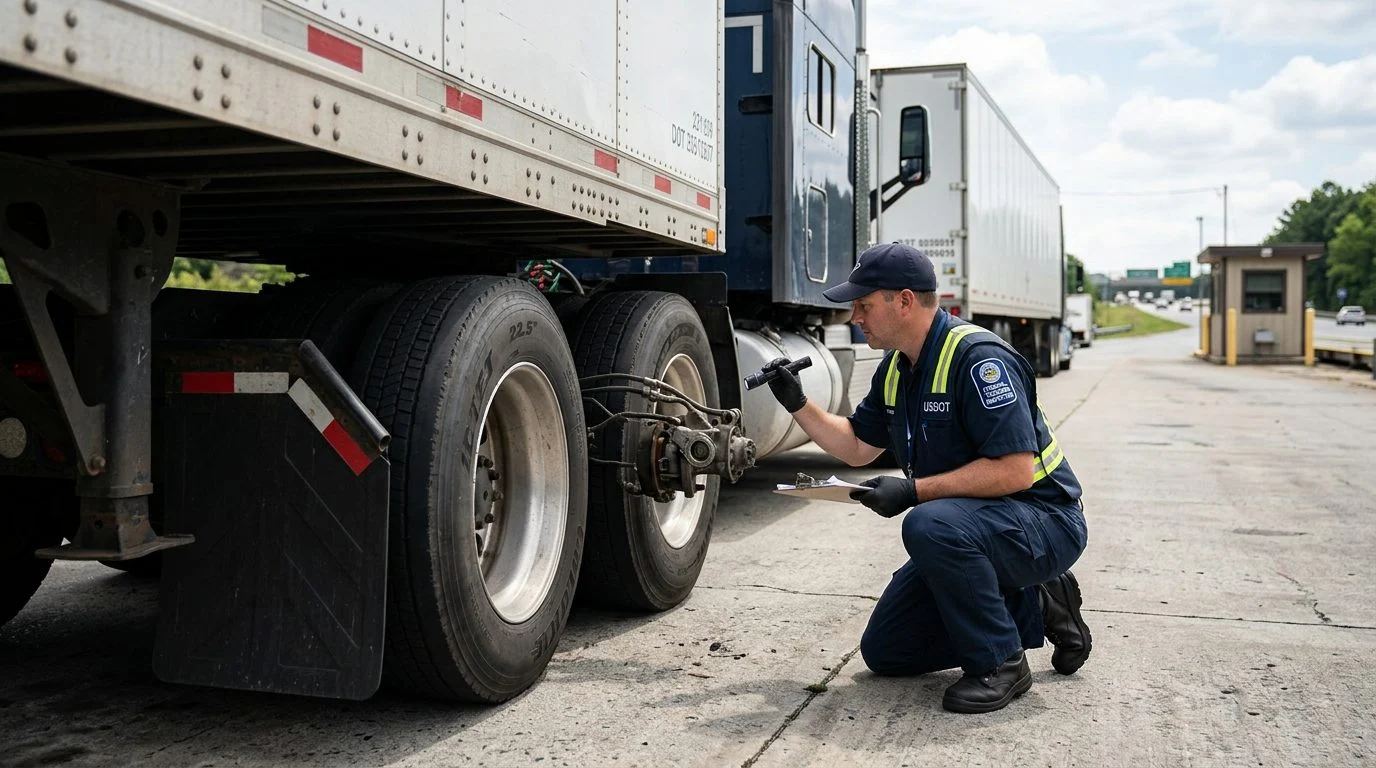
Early action matters because trucking records can change or be discarded. The trucking company keeps its logs, dispatch messages, and maintenance records, not your family. Federal rules require drivers to record their duty status and bar any false report about it, under 49 C.F.R. § 395.8.
Federal rules also set minimum periods for keeping company records. After those periods, records may be destroyed at the discretion of each company’s management, under 49 C.F.R. § 379.3, but this does not excuse compliance with the lawful requirements of any other governmental body prescribing longer retention periods. Rules also bar a motor carrier from altering or erasing original hours-of-service information, under 49 C.F.R. § 395.30. The FMCSA hours-of-service rules explain how driving and on-duty limits work.
In some truck crashes, federal rules also require alcohol and drug testing of surviving drivers within set time limits, under 49 C.F.R. § 382.303.
For your child’s own items, keep photos, damaged gear, phone records, and written notes. Don’t delete social media posts about the crash, and avoid posting new comments about it.
When the Trucking Company’s Insurer Calls
An adjuster for the trucking company’s insurer works for that insurer, not for your child. The adjuster may call soon after the crash. The call may include a request for a recorded statement or a quick settlement offer.
Your child can ask for time to understand their injuries before agreeing to a recorded statement or signing anything. A statement given in pain or while on medication can lock in details that look different later.
A parent should not answer questions for the child without the child’s agreement. Write down the caller’s name, company, and phone number. Then tell your child about the call, so they can decide how to respond.
For more on insurer contact questions, read whether the other driver’s insurance will contact you.
Georgia Deadlines: Why Timing Matters
Georgia generally requires an injury lawsuit to be brought within two years after the right of action accrues. That rule comes from O.C.G.A. § 9-3-33.
The statute has exceptions, so the exact deadline depends on the facts. Parents shouldn’t assume there is extra time: most injury actions must be brought within two years after the right of action accrues, but actions for injuries to the person involving loss of consortium must be brought within four years after the right of action accrues. A child in the hospital may not have the energy to track dates.
Trucking cases can take longer to prepare than car cases. Investigators may need to identify the company, its insurer, and any other party. Gathering records also takes time.
Write the crash date on a calendar and keep it with the other papers. For more on deadlines in trucking cases, read the trucking company statute of limitations guide.
What Insurance Coverage May Mean If the Child Was Not at Fault
Georgia reduces an injured person’s damages by their share of fault. A person found 50 percent or more responsible recovers no damages (O.C.G.A. § 51-12-33; Quynn v. Hulsey (2020)).
Under O.C.G.A. § 51-12-33, the judge reduces damages in proportion to the injured person’s percentage of fault. A family’s view of who was at fault may differ from that record.
Medical bills can be paid through several sources. The family’s own health or auto policy may apply while a claim is pending, and coverage depends on the policies involved.
If the truck driver cannot be identified, Georgia’s uninsured motorist rules under O.C.G.A. § 33-7-11 add physical-contact or eyewitness requirements.
Read more about insurance when the injured person is not at fault.
Not sure what your next step is?
Talk it through with our team — the first consultation is free, confidential, and carries no obligation.
Where a Clayton County Truck Crash Case Could Be Filed
The court for a case turns on the facts of the crash and the parties involved. No single answer fits every family. Georgia has state courts and superior courts.
Which one may hear a case turns on details such as where the crash happened, who the defendants are, and the type and amount of the claim. A crash in Clayton County does not by itself decide the court. Writing down the crash location, the truck company’s name, and the date gives everyone a clear starting point.
The Georgia Department of Public Safety states that Georgia applies minimum motor-carrier safety requirements and adopts applicable federal regulations. The FMCSA large truck crash facts are national figures, not Georgia crash data.
The timing of a filing can also affect how quickly a case moves. That is one reason to understand the options early.
Talk With Our Team About Your Child’s Situation
You can talk with our team about your child’s situation before deciding anything. Many parents in this spot are juggling a hospital stay, a recovering child, unanswered questions, and a trucking company already involved. Taking one step at a time is a reasonable place to start.
Who makes the decisions about my child’s claim?
Your adult child makes the final decisions about their own injury claim. You can help with records, rides, and paperwork with their agreement.
How long do you have to sue after a crash in Georgia?
Under O.C.G.A. § 9-3-33, injury lawsuits generally must be brought within two years after the right of action accrues.
Should I talk to the trucking company’s adjuster for my child?
Don’t answer for your child without their agreement. Let your child decide whether to give a recorded statement.
If your child’s situation raises questions you can’t answer alone, reach out to T. Madden & Associates, P.C., led by Terance Madden, which has practiced in Georgia since 1999 and has an office in Jonesboro. Start through the firm’s contact page, or call at any hour. The first consultation is free, confidential, and comes with no obligation to continue. The firm works on a no-fee-unless-we-win basis, but you may still be responsible for court costs and case expenses.
Terance Madden is the responsible lawyer for this page. Contact T. Madden & Associates, P.C. through the contact page. This page is general information, not legal advice.
Five Steps for Parents to Take Early On
1. Make sure your child gets medical care
Injuries from large truck crashes are not always obvious at first. Follow the medical advice you receive and keep every appointment, test and prescription record.
2. Write down what you remember
Record the date, time, location, weather and what your child told you about the crash while the details are fresh. Notes made soon after an event are often the most useful.
3. Gather and keep the paperwork
Collect the police or crash report number, photos, bills, pay stubs if work was missed, and any letters from insurance companies. Keep everything in one folder.
4. Talk with a lawyer before speaking to insurers
Insurance representatives may ask for recorded statements. Our team can explain the process and help you decide how to respond, with your child's agreement.
A Key Reminder
Do not sign any settlement papers or release forms from an insurance company until you have talked with a lawyer about what they cover. Once a release is signed, it can be difficult to reopen the matter.
How Our Team Can Help Your Family
Plain-language answers
We explain the process in clear terms, so you know what to expect at each stage.
Work with your family
We keep you informed and involve you as they choose.
Help organizing records
We can help gather medical bills, crash reports and other paperwork so nothing important is missed.
Reach us when you need us
Call us at any hour to start a free case evaluation and talk through your child's situation.