

Truck Accident Lawyer | Georgia
Are Truck Drivers Independent Contractors? What Georgia Crash Victims Should Know
Trucking companies often label drivers as independent contractors. That label can become a central question after a crash. T. Madden & Associates, P.C. has represented injured Georgians since 1999.
T. Madden & Associates, P.C.
1999
Serving injured Georgians since
5
Georgia offices
Free
First consultation, no obligation
24/7
Phone line available
By Terance Madden · Published October 25, 2026
Some truckers are independent contractors, and some are employees. Are truckers independent contractors? The answer depends on how the work is actually done, not only on what the paperwork calls it.
Are truckers independent contractors? The label alone does not decide it
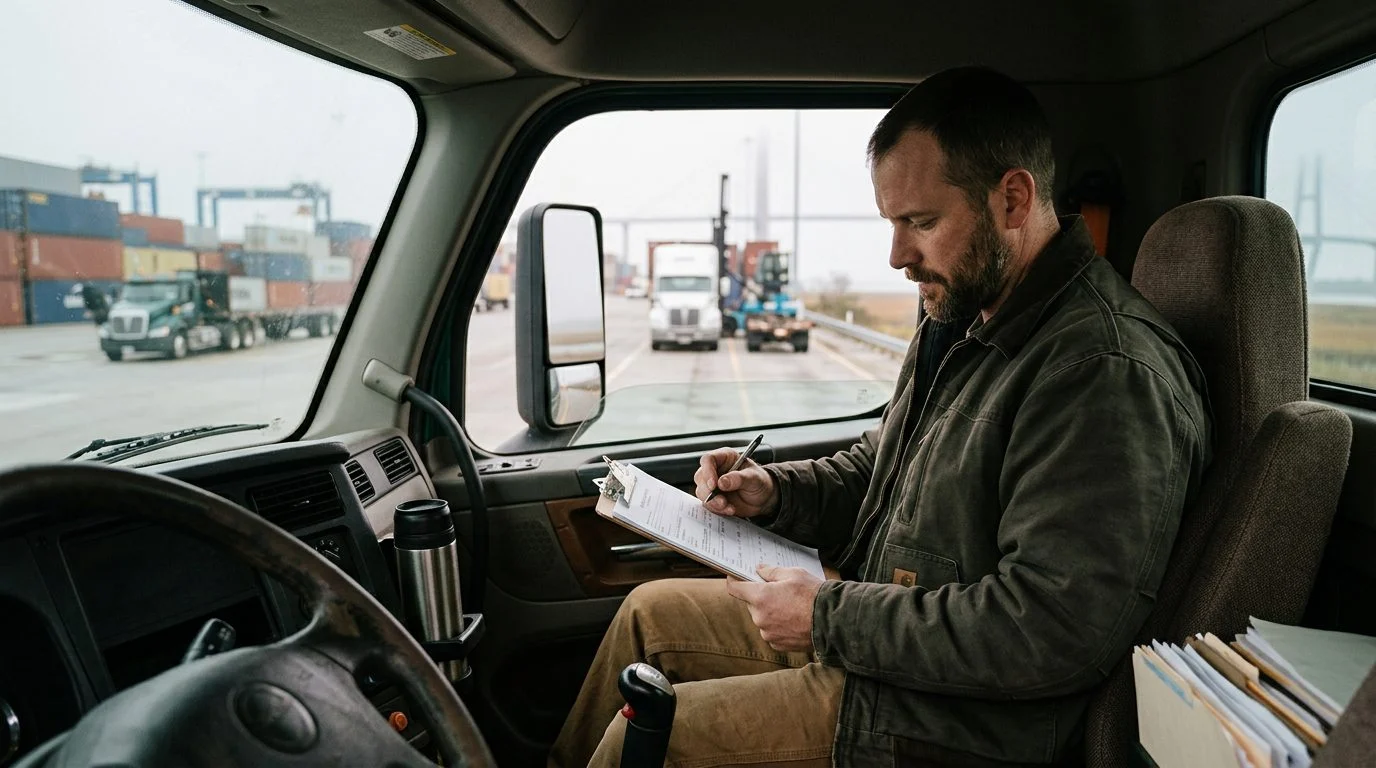
Some truck drivers work as independent contractors, often as owner-operators who run their own trucks. Others are employees of a motor carrier. A contract that calls a driver a “contractor” is one piece of evidence. It is not the final answer. Courts look at how the work is really done, day to day, and who directs it. Many drivers assume the contract settles the question. Often it does not.
If a truck crash or an unclear work arrangement has you asking who is responsible, our team can talk it through in a free, confidential first consultation. Talk it through with our team — the first consultation is free, confidential, and carries no obligation.
How Georgia courts look at the right to control the work
The main question is who controls the work. Georgia law ties responsibility to that control. Under O.C.G.A. § 51-2-4, an employer generally is not responsible for torts committed by an employee who runs an independent business and is not subject to the employer’s immediate direction and control. That phrase matters. The statute asks about the right to control, not only the control that was actually used. Control can show up in dispatch and routing, delivery deadlines, load assignments, required procedures, and discipline or firing. No single detail usually decides the case. The full picture does.
Factors that point toward employee status versus independent contractor status
Several details tend to show who is really in charge. Ask these questions about the arrangement:
- Equipment: Who owns or leases the tractor, the trailer, and the fuel card? Who pays for repairs, maintenance, and insurance?
- Pay: How is the amount paid for the equipment and driver’s services set? The lease must clearly state it, and it may be expressed as a percentage of gross revenue, a flat rate per mile, a variable rate, or any other method of compensation mutually agreed upon by the parties to the lease. Can the driver earn more by managing costs or taking extra loads?
- Freedom: Can the driver hire helpers, haul for other carriers, or set his or her own hours and routes?
- Core work: Is hauling freight the company’s main business? That tends to point toward employment.
- Ongoing ties: Is the arrangement long-term and exclusive? How do both sides describe it in daily practice?
Each detail is a clue. Together they show whether the driver runs a real business or works inside someone else’s operation. Look at what happens in practice, not only at the paper. A contract can say one thing while the daily routine says another.
Owner-operators and the federal leasing rules
Under 49 CFR 376.11, there must be a written lease granting the use of the equipment and meeting the requirements contained in 49 CFR 376.12. Those terms are important for the trip and the money. They do not settle employee status. Section 376.12 says the provisions required by paragraph (c)(1) are not meant to affect whether the driver is an independent contractor or an employee. Under 49 U.S.C. § 14102, the Secretary may require a motor carrier that uses motor vehicles it does not own to make the arrangement in writing, signed by the parties, specifying its duration and the compensation to be paid. That federal statute lets the government require a carrier using leased vehicles to control and be responsible for operating them safely, as if it owned them.
Do truckers own their own trucks?
Some do, and many do not. Some independent truckers own their own tractors and haul under contract. Many drivers operate trucks leased from a carrier or a leasing company. Company drivers usually drive equipment the company supplies. Ownership is only one factor. Owning a truck does not automatically make a driver a contractor. Driving a company truck does not automatically make a driver an employee. A driver who owns a truck may still take direction from a carrier at every step. A driver who leases a truck may have little say over the work. Ask who controls the trip. Who sets the load, the route, the schedule, and the rules for the day? Those answers carry more weight than the title on the truck or the name on the lease.
Why the classification matters after a truck crash
Classification can change who may be held responsible after a crash. Under O.C.G.A. § 51-2-2, every person is liable for torts committed by his servant when the servant acts by his command or within the scope of his business. If a driver works under a company’s direction, that rule may reach the company. If the driver is a true independent contractor, the contractor rules in § 51-2-4 and § 51-2-5 come into play instead. Fault also gets divided. Under O.C.G.A. § 51-12-33, damages are reduced by the injured person’s share of fault. Each liable person’s share is apportioned to that person and is not joint liability. A plaintiff who is 50 percent or more responsible shall not be entitled to receive any damages. That is why every party that controlled the trip matters. How any particular crash turns out depends on its facts.
Not sure what your next step is?
Talk it through with our team — the first consultation is free, confidential, and carries no obligation.
What documents and facts help clarify the relationship
Good records often show who controlled the trip. Useful items include the driver’s contract or lease, bills of lading, dispatch messages, pay statements, equipment lease papers, insurance certificates, and the carrier’s USDOT number information. Federal rules require a carrier to keep trip records for leased equipment. Those records include the owner’s name and address, the point of origin, the departure date and time, and the final destination (49 CFR 376.11). Driving and rest records matter too. The federal hours-of-service rules cover driving limits and required rest breaks for commercial drivers. Preserve what you have early. Keep the crash report, photos, and any messages or receipts.
Are truckers independent contractors? Quick answers
Can a trucking company be responsible for a contractor driver?
Sometimes. Georgia law looks at who controlled the work, so the facts decide it.
Does owning a truck make a driver a contractor?
Not by itself. Ownership is one factor among several.
Who must make sure a driver follows driver rules?
Federal law lets the Secretary of Transportation require a motor carrier to control and be responsible for leased vehicles (49 U.S.C. § 14102).

Talk through your situation with T. Madden & Associates, P.C.
You may be reading this after a truck crash hurt you or someone you care about. You may also be unsure about a work arrangement you did not choose. Questions about who is responsible can feel urgent, and you do not have to sort them out alone. If that describes your situation, reach out through our contact page for a free, confidential first consultation with no obligation to continue. T. Madden & Associates, P.C. works on a no-fee-unless-we-win basis, but the client may still be responsible for court costs and case expenses. Terance Madden is the responsible lawyer for this page. The firm has practiced since 1999 and has offices in Jonesboro (Clayton County), Atlanta, Decatur, Macon, and Augusta.
Why Injured Georgians Contact Our Firm
Free, confidential consultation
Your first consultation is free, confidential, and comes with no obligation to continue.
No fees unless there is a recovery
Our fee comes only from a recovery. Clients may still be responsible for court costs and case expenses.
Lawyers and staff who take your call
Terance Madden and Shenia Madden, with our support staff, work with clients from our Jonesboro, Atlanta, Decatur, Macon and Augusta offices.
Call anytime
Reach us 24/7 to talk about a truck crash and what to do next.
Don't Assume the Label Settles the Question
Contracts, leasing papers, and company policies may call a driver an independent contractor, while daily dispatching, scheduling, and control of the work may tell a different story. Keep every document you receive after a crash, and have a lawyer review the facts.
Steps to Take After a Truck Crash
Get medical care
See a doctor even if your injuries seem minor. Your health comes first, and medical records matter to your case.
Document the scene
Take photos, note the truck's company name and number, and collect names and contact details of witnesses.
Save every paper
Keep bills, pay stubs, insurance letters, and anything the trucking company or driver gives you.
Speak with a lawyer
Our firm offers a free, confidential consultation to review the facts of your crash and explain your options.