

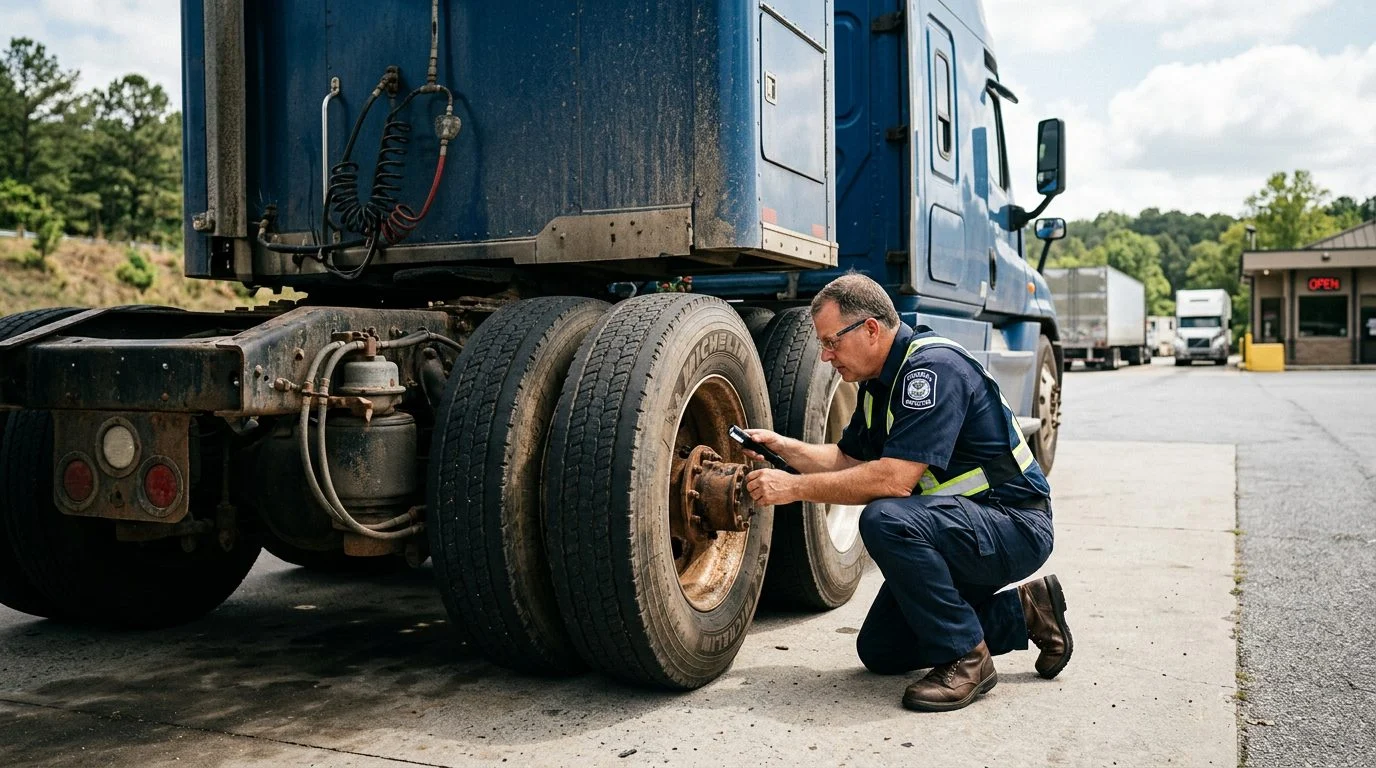
Truck Accidents | Georgia
Cargo Shipper Liability in a Georgia Truck Crash
When a shipper's loading or packaging choices contribute to a truck crash, the injured person may have questions about who else is involved. T. Madden & Associates, P.C. has practiced in Georgia since 1999 and can review your situation in a free, confidential consultation.
Why people contact our office
1999
Practicing in Georgia since
5
Offices across Georgia
24/7
Phone availability
By Terance Madden · Published October 20, 2026
The claim usually turns on whether that company’s own carelessness helped cause the crash. This guide answers a common question about cargo shipper liability truck crash Georgia cases: who can be named, and what decides it?
Can a Cargo Shipper or Loader Be Sued?
A shipper or loader can be named in a lawsuit when its own negligence contributed to the crash. If a company packed, loaded, or described a load carelessly, and that carelessness helped cause injury, it may face a claim. Whether a specific company can be sued depends on the facts of the crash and the contracts involved.
Being named in a lawsuit is not the same as being found responsible. Under Georgia’s fault rules, the trier of fact (the person or group deciding the facts) sets each party’s percentage of fault.
Most truck crashes involve more than one party. The driver, the motor carrier, and others may share responsibility, so the question is rarely about one company alone. For the wider picture, read our Georgia truck accident guide.
If a loaded truck shifted or spilled and someone you love was hurt, you don't have to sort out who is responsible alone. Our team can talk it through with you. Talk it through with our team — the first consultation is free, confidential, and carries no obligation.

Who Counts as the Shipper or Loader?
The shipper is the business that offers freight for transport. The loader is the party that puts the cargo on the trailer or arranges for it to be put there.
These roles can belong to one company or to several. A manufacturer may ship goods that a warehouse loads. A freight forwarder may arrange the trip. A third-party loading crew may handle the physical work for someone else.
Two starting points help sort out the roles. The first is the contract, including any shipping terms. The second is the bill of lading, the paper that describes the freight. Who controlled the loading also matters. A company that chose how a pallet was stacked or strapped may have more to answer for than one that handed over a sealed box. Keep records of every company that touched the load, because each one may matter.
How Does Improper Loading Cause Truck Crashes?
Improper loading causes crashes when cargo moves, falls, or throws the truck off balance. Common problems include uneven weight, cargo that is not blocked, braced, or strapped, overloaded axles, and loads that shift or fall onto the road.
Federal rules set the standard. Each commercial motor vehicle carrying cargo on public roads must be loaded and equipped, and its cargo secured, to keep the cargo from leaking, spilling, blowing, or falling. See 49 C.F.R. § 393.100. Cargo must be firmly immobilized or secured by structures, tiedowns, or similar devices. See 49 C.F.R. § 393.106.
A shift can change how a truck handles. A driver may lose control. A load may strike another vehicle. Cargo may fall onto a car, a motorcycle, or a pedestrian. These crashes can happen fast, and the cargo may be cleared from the road before anyone takes photos. The rules give investigators a clear standard to measure a load against.
Which Claims and Parties May Be Involved?
An injured person may also have claims against the truck driver, the motor carrier, the vehicle owner, and others. It depends on who did what.
Cargo shipper liability truck crash Georgia cases can involve several defendants. Georgia’s apportionment rule matters here. Under O.C.G.A. § 51-12-33, each liable person owes its own share of the damages, not a joint share.
Fault can also reduce recovery. Under comparative fault (shared fault), damages drop in proportion to the injured person’s share of fault (O.C.G.A. § 51-12-33; Quynn v. Hulsey, 310 Ga. 473 (2020)). If that share is 50 percent or more, Georgia law bars recovery (O.C.G.A. § 51-12-33; Quynn v. Hulsey, 310 Ga. 473 (2020)).
What Evidence Shows Who Loaded the Cargo?
Shipping papers and loading records can show who handled the freight. Bills of lading and load tickets are a good place to start. Electronic logging device data can show when and where the truck was moving.
An electronic logging device records items such as the date, time, location, engine hours, and vehicle miles. When a truck is moving and no duty change has been recorded for an hour, the device makes an intermediate entry. See 49 C.F.R. § 395.26.
Federal rules also require drivers to check their loads. A driver must inspect the cargo and its securing devices within the first 50 miles of a trip. Except for the driver of a sealed commercial motor vehicle who has been ordered not to open it to inspect its cargo, or the driver of a commercial motor vehicle that has been loaded in a manner that makes inspection of its cargo impracticable, drivers of trucks and truck tractors must check again after a change in duty status, after 3 hours of driving, or after 150 miles, whichever comes first. See 49 C.F.R. § 392.9.
Photos and video of the trailer, the scene, and the cargo can matter, especially after the load has been moved or cleared. Witness names, the driver’s account, and crash reports can also show what happened at the loading dock and on the road. The companies involved hold many of these records, so asking for them early helps.
How Long Do You Have to File in Georgia?
Georgia generally gives two years to sue for injuries to a person. Under O.C.G.A. § 9-3-33, these actions must be brought within two years after the right of action accrues. The same statute sets a different period for some other claims. For example, loss of consortium claims have four years.
Looking into who loaded the cargo can take time. Waiting can cost the time needed to identify and sue every responsible party.
Wrongful death claims have their own rules. Under O.C.G.A. § 51-4-5, when no one else is entitled to bring the action, a personal representative may bring it for the benefit of the next of kin.
Not sure what your next step is?
Talk it through with our team — the first consultation is free, confidential, and carries no obligation.
Talk With T. Madden & Associates About Your Situation
T. Madden & Associates, P.C. represents people hurt in truck crashes in Georgia. The firm is led by attorney Terance Madden, who has been in practice since 1999. The firm has offices in Jonesboro, Atlanta, Decatur, Macon, and Augusta.
The first consultation is free, confidential, and comes with no obligation to continue. Related reading is available in our what can you sue a trucking company for guide.
Common Questions
Can a cargo shipper be sued after a Georgia truck crash?
Sometimes. Cargo shipper liability truck crash Georgia claims can arise when the company’s negligence helped cause the crash.
How long do you have to sue in Georgia?
Georgia generally allows two years for injury claims. The rule comes from O.C.G.A. § 9-3-33, which gives two years for injuries to the person, but one year for injuries to reputation and four years for loss of consortium claims.
Does shared fault reduce recovery in Georgia?
Yes. Damages are reduced by your share of fault, and recovery is barred if you are 50 percent or more responsible (O.C.G.A. § 51-12-33; Quynn v. Hulsey, 310 Ga. 473 (2020)).
If a loaded truck shifted or spilled and you’re now sorting out who is responsible, you don’t have to work through it alone. Our team can talk with you about your options. To start, use our free case evaluation.
Disclaimer: This page is general information, not legal advice. Terance Madden is the responsible attorney for T. Madden & Associates, P.C. Contact the firm through its contact page.
How our office approaches a cargo-related truck case
Review the crash record
Our team looks at crash reports, bills of lading, and other paperwork that can show how the load was secured and what was shipped.
Identify everyone involved
Trucking crashes often involve a driver, a carrier, and other companies. We work to understand each party's role so no relevant source is overlooked.
Protect your rights
Insurers may contact you early. We can handle communication with them while you focus on recovering from your injuries.
Keep you informed
We explain each step in plain language so you know what to expect, from investigation through any settlement talks or court filing.
Act early
Evidence from a crash scene, such as a damaged load, loading records, and driver logs, can change or disappear over time. Time limits can also apply to injury claims in Georgia. Speaking with a lawyer early helps preserve options.
Common questions about shipper claims
Can a shipper be part of a truck case?
A shipper's actions, such as improper loading or inaccurate cargo information, may be examined when a crash is investigated. Each case depends on its own facts.
What does the consultation cost?
Your first consultation is free, confidential, and comes with no obligation to continue. Our practice works on a no-fee-unless-there-is-a-recovery basis, but clients may still be responsible for court costs and case expenses.
Who handles the case?
Terance Madden leads the practice, and our staff supports every client throughout the process.
What if I am not sure I have a case?
Many people are unsure at first. Reaching out lets our office review the facts and explain what options may be available.