

Truck Crash Cases | Jonesboro, GA
Hurt in a Truck Crash? Start With a Free Case Evaluation
T. Madden & Associates, P.C. has represented injured Georgians since 1999. Tell us what happened and we will review your truck crash case with you, at no cost and with no obligation to continue.
Serving Injured Georgians
1999
Year the firm began practice
5
Georgia offices, including Jonesboro
24/7
Phone line available for urgent calls
By Terance Madden · Published November 5, 2026
For people in Jonesboro GA hurt in a truck crash, a free truck crash case evaluation is a confidential first review. It looks at the crash, the injuries, and your options. It carries no obligation to continue.
You may be reading this for yourself. You may also be reading it for a family member who is still recovering from a collision with a semi-truck or tractor-trailer. This page explains what the review covers, which truck records matter, and what happens after you call.
What a Free Truck Crash Case Evaluation Is and Who It Is For
A free truck crash case evaluation is a first review of your claim, offered at no charge. It serves people hurt in a crash with a semi-truck, tractor-trailer, or other commercial truck.
It also serves families when a truck crash causes a death. When no family member is entitled to bring the wrongful death claim, Georgia law lets the administrator or executor of the estate bring it for the benefit of the next of kin (O.C.G.A. § 51-4-5).
Truck cases often involve more than one party, so the review starts wide. The review looks at facts and documents. It does not predict how a case will end.
If a semi-truck crash has left you or a family member hurt, you don't have to sort out the records and insurer calls alone, and our team can talk through your options. Talk it through with our team — the first consultation is free, confidential, and carries no obligation.

What the Evaluation Covers
The evaluation covers who may be responsible, how the crash happened, which insurance may apply, and what the injuries have cost you.
- Responsible parties. The driver, the trucking company, a cargo loader, or a maintenance contractor may share blame.
- Fault rules. Georgia uses modified comparative fault. A judge reduces damages by your percentage of fault. You recover nothing at 50 percent or more (O.C.G.A. § 51-12-33).
- Shared fault. Each liable person owes its own share. Those shares are not joint amounts under the same law.
- Insurance. Trucking companies often carry commercial policies. Federal rules set a $750,000 minimum for certain for-hire interstate carriers hauling nonhazardous property (49 CFR 387.9).
- Medical bills. When the plaintiff has health insurance, Georgia law looks at both the amounts charged and the amounts actually necessary to satisfy them under the insurance contract, whether or not the insurance has been or will be used to pay (O.C.G.A. § 51-12-1.1).
- Deadlines. Georgia generally gives two years to file a personal injury suit, with exceptions (O.C.G.A. § 9-3-33).
Truck-Specific Evidence We Review
The review focuses on records a truck crash creates. Many of these records can disappear if no one asks for them early.
- Crash report. Request it from the investigating agency. It records what the officer saw and learned. It is one piece of evidence.
- Electronic logging device (ELD) data. An ELD records driving hours. FMCSA says carriers must keep electronic duty-status records for six months (FMCSA ELD guidance). A carrier may not alter or erase the original hours-of-service information (49 CFR 395.30).
- Drug and alcohol testing. After certain truck crashes, the employer must test surviving drivers. Drug and alcohol testing. After certain truck crashes, the employer must test surviving drivers. These include crashes involving a death (for surviving drivers who were performing safety-sensitive functions), or crashes with an injury needing immediate treatment away from the scene or a tow-away where the driver receives a citation within 8 hours for a moving traffic violation arising from the accident for alcohol testing, or within thirty-two hours of the occurrence for drug testing (49 CFR 382.303).
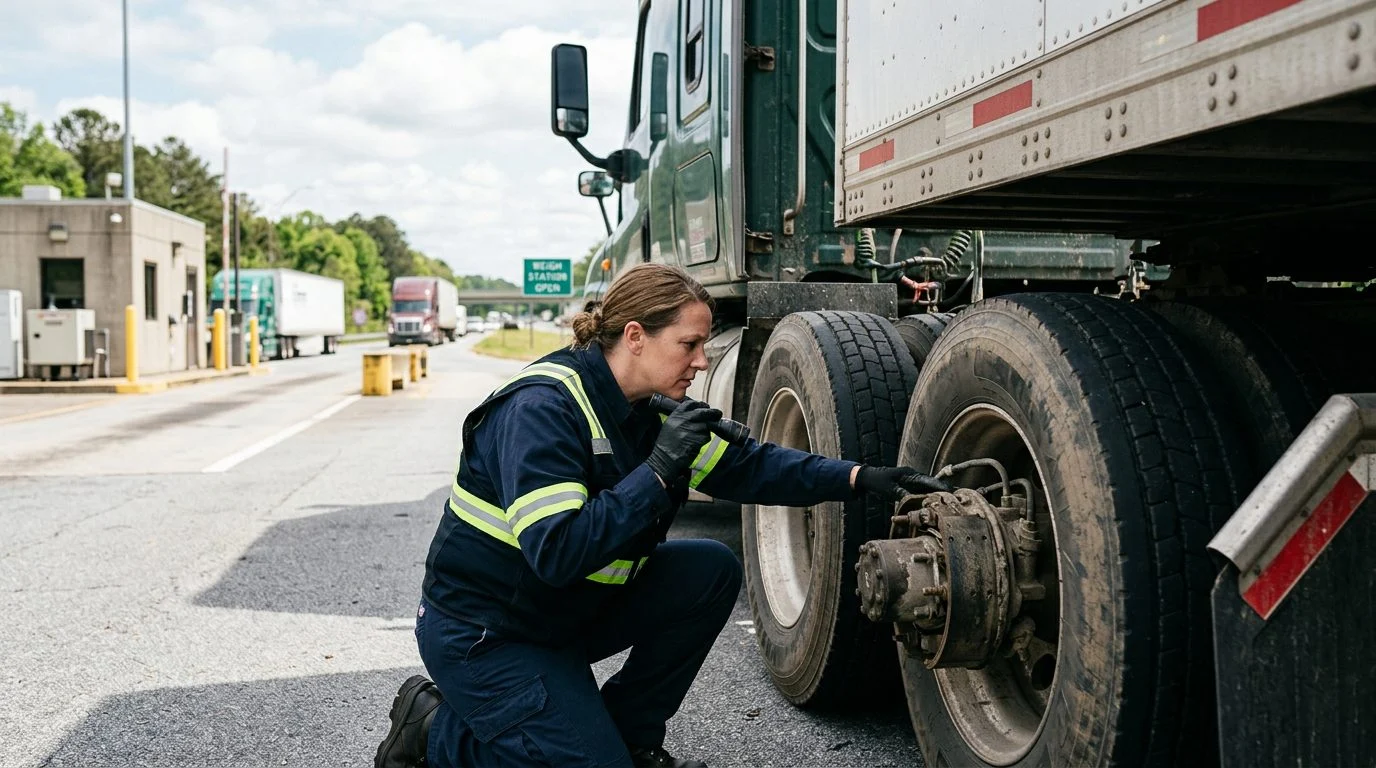
- Maintenance records. Carriers must inspect, repair, and maintain their trucks. They must keep those records for 1 year, and for 6 months after the vehicle leaves their control (49 CFR 396.3).
- Scene evidence. Photos, dashcam video, and witness names matter most early.
How the Process Works, Step by Step
You make contact, share the basic facts, and review documents together. You decide what comes next, and there is no obligation at any step.
- Contact. Call the office, which is answered 24/7, or use the online form. Share the crash date, location, and injuries.
- Confidential intake. Talk through the crash and any calls you’ve had with insurers.
- Document review. Go over the crash report, medical records, photos, and insurer letters you have.
- Plain-language explanation. Discuss possible responsible parties, insurance questions, and likely next steps.
- Your decision. Choose whether to continue. You can decide either way.
How long a claim takes depends on the facts. Injuries, records, and insurer responses all play a part.
What to Gather Before Your Evaluation
Gather the crash report number, photos, contact details, insurance information, and medical records. Bring what you have. Missing items can be requested later.
- Names and phone numbers of the driver, passengers, and witnesses.
- Truck details, including the company name and DOT number if shown. Interstate carriers must register with FMCSA and obtain a USDOT number (FMCSA USDOT rules).
- Medical records and bills, including the emergency visit, follow-up care, and out-of-pocket costs.
- Pay stubs or an employer letter if lost wages are involved.
- Insurer letters or recorded statements, with notes on what was said.
- A daily journal of symptoms and activities you can’t do.
Avoid posting about the crash on social media. Early requests protect electronic truck data, because a motor carrier must not alter or erase the original hours-of-service information (49 C.F.R. § 395.30(f)).
What the Evaluation Costs: Free Consultation and Fee Terms
The first consultation is free, confidential, and carries no obligation to continue. That is the first step in any free truck crash case evaluation.
The firm works on a no-fee-unless-we-win basis, but you may still be responsible for court costs and case expenses.
Settlement amounts are never promised. They turn on documented damages and fault, and no one can predict a result in advance.
Not sure what your next step is?
Talk it through with our team — the first consultation is free, confidential, and carries no obligation.
Why Work With Terance Madden & Associates, P.C. in Jonesboro
Terance Madden leads T. Madden & Associates, P.C., a Georgia personal injury practice in place since 1999. Terance Madden is the responsible lawyer named on this page.
- Offices in Jonesboro (Clayton County), Atlanta, Decatur, Macon, and Augusta.
- Support staff help with scheduling and paperwork. Our team speaks for the practice when you call.
- Practice areas include car, truck, motorcycle, and e-bike accidents, slip and falls, medical malpractice, nursing home abuse, negligent security, wrongful death, and catastrophic injury.

Frequently Asked Questions About Truck Crash Evaluations
Do I need a police report for a free evaluation?
A report helps, but you can start without one. The firm can discuss how to request the crash report from the investigating agency.
Is the first call confidential?
Yes. The free first consultation is confidential and carries no obligation to continue.
How long do I have to file?
Georgia generally allows two years to file a personal injury suit, with exceptions (O.C.G.A. § 9-3-33).
Can I still recover if I was partly at fault?
Georgia reduces damages by your share of fault. You recover nothing if you are 50 percent or more responsible (O.C.G.A. § 51-12-33).
Can I call after hours?
Yes. The phone line is answered 24/7.
If a semi-truck crash has left you or a family member hurt, you don’t have to sort out the records and insurer calls alone. Our team can talk through your options. Start a free case evaluation.
Why Start With a Free Evaluation
Confidential first consultation
Your free first consultation is confidential and carries no obligation to continue. You can share the facts of your crash openly.
No fees unless there is a recovery
The firm's fee is contingent, so there are no fees unless there is a recovery. You may still be responsible for court costs and case expenses, and we will explain those before you decide.
Reach us around the clock
Call us any time, day or night, to start your free case evaluation. Our team is ready to listen after a crash, when questions are urgent.
Local Georgia representation
Our Jonesboro office serves Clayton County, and T. Madden & Associates, P.C. also has offices in Atlanta, Decatur, Macon and Augusta.
Keep Your Records Safe
Photos of the scene and vehicles, medical records, bills, and any letters from insurance companies are valuable. Keep them in one place and bring them to your free evaluation.
What to Bring to Your Free Evaluation
Crash details
Date, time, and location of the collision, plus the names of the truck company and driver if you know them.
Police or crash report
If you have one, bring it. If not, we can discuss how to request the report from the investigating agency.
Photos and witnesses
Pictures of the scene, your vehicle, your injuries, and contact information for anyone who saw the crash.
Medical and insurance papers
Treatment records, bills, and any letters or forms from insurers, so we can review where your claim stands.