

Truck Accident Lawyer | Georgia
Trucking Company Insurance Minimums in Georgia: What Injured Drivers Should Know
Insurance limits decide how much coverage is available after a serious truck crash. Here is how minimum requirements work and why they matter after an injury.
T. Madden & Associates, P.C.
1999
Representing injured people since
5
Georgia offices
Free
First consultation, confidential
By Terance Madden · Published October 28, 2026
Most for-hire trucks that run between states must carry at least $750,000 in public liability insurance. That is the short answer to the question “how much insurance does a trucking company have to carry Georgia” drivers and crash victims ask. Some cargo and passenger vehicles face higher federal minimums.
If you were hurt in a truck crash, these numbers shape the insurance you’re dealing with. They set a floor. They do not tell you what your claim is worth.
The Short Answer: How Much Insurance a Semi Truck Must Carry
For most for-hire freight trucks, the federal minimum is $750,000. The rule covers for-hire vehicles rated at 10,001 pounds or more that haul non-hazardous property in interstate or foreign commerce. The federal Schedule of Limits sets that figure.
The cargo can raise the number. Oil and certain hazardous materials carry a $1,000,000 minimum for for-hire and private trucks rated 10,001 pounds or more in interstate or foreign commerce (any quantity) or intrastate commerce (bulk only). Some bulk hazardous loads carry $5,000,000. The cargo decides the tier, not the size of the truck alone.
Federal rules say a motor carrier may not operate a truck until the required coverage is in effect. They set the floor for coverage. They do not set the value of an injury claim.
If a truck crash has left you or someone you love facing insurance letters and bills, you don't have to sort it out alone; talk with our team about how the coverage may apply. Talk it through with our team — the first consultation is free, confidential, and carries no obligation.
Federal Rules and Georgia Requirements Work Together
Federal rules set minimum insurance amounts for interstate carriers. Georgia adds its own rules for trucks that operate and register within the state. A carrier may face both sets of rules, so compare them before you rely on one number.
Georgia’s rule for for-hire intrastate carriers appears in O.C.G.A. § 40-2-140. It says no for-hire intrastate carrier gets a registration unless a certificate of insurance is filed. That certificate must come from an insurance company licensed to do business in Georgia, unless the commissioner permits self-insurance in lieu of a policy of indemnity insurance because the carrier’s financial ability warrants it.
Private carriers follow a different federal path. Under 49 U.S.C. § 31139, the Secretary may require a private carrier’s filed amount to be at least the greater of the federal minimum or the amount state law requires where it operates. When in doubt, use the higher of the applicable amounts as your benchmark.
Minimum Limits by Cargo and Vehicle Type
Check the cargo first, then the vehicle.
- Non-hazardous freight for hire: $750,000 under the federal schedule.
- Oil and listed hazardous materials: $1,000,000 for oil listed in 49 CFR 172.101, and for hazardous waste or materials defined in 49 CFR 171.8 and listed in 49 CFR 172.101 but not covered by the higher tiers, for for-hire and private carriers in interstate or foreign commerce in any quantity, or in intrastate commerce in bulk only, with a gross vehicle weight rating of 10,001 or more pounds.
- Certain bulk hazardous substances and explosives: $5,000,000 under the federal schedule, for listed bulk hazardous substances and bulk Division 1.1, 1.2, or 1.3 materials, on for-hire and private vehicles with a gross vehicle weight rating of 10,001 or more pounds.
Passenger carriers have their own table. For interstate passenger carriers, 49 CFR § 387.33T sets $5,000,000 for a vehicle seating 16 or more, including the driver. It sets $1,500,000 for a vehicle seating 15 or fewer.
To find the right tier, look at two facts. The first is what the truck hauls. The second is how many seats the vehicle has. Cargo papers, such as the bill of lading, show the freight.
Commercial Policies Are Not the Same as Personal Auto Policies
A commercial truck policy is written for business driving. A personal auto policy is written for private driving. The two are not interchangeable when a truck is hauling freight for hire.
Federal truck minimums come from separate rules, so a personal policy is not the reference point. A commercial policy covers the carrier’s liability from its hauling operations. Cargo and physical damage coverage protect the freight and the truck itself. Those coverages do not pay injured people. Injury claims turn on the liability limits.
That guide also describes optional collision and comprehensive coverage, which can protect a vehicle.
What Policy Limits Can Mean After a Serious Injury
A policy limit caps what that policy pays. A serious injury or wrongful death claim can exceed the required minimum. How much is available depends on the facts of each case, and coverage is confirmed through the claim process.
Georgia treats damages as compensation for injury. Under O.C.G.A. § 51-12-4, such compensation is generally the measure of damages where an injury is capable of being estimated in money; if an injury is small or the mitigating circumstances are strong, nominal damages only are given.
Fault matters too. Under O.C.G.A. § 51-12-33, a judge reduces damages in proportion to the injured person’s share of fault. A person who is 50 percent or more responsible gets no damages. Each liable person pays its own apportioned share, not a joint amount.
Georgia also limits when an insurer can be named in the same lawsuit. Under O.C.G.A. § 40-1-112, the insurer may be joined only in limited cases. Those cases include a carrier that is insolvent or bankrupt, or where the driver or carrier cannot be served after reasonable diligence.
Records That Help Show Which Insurance Applies
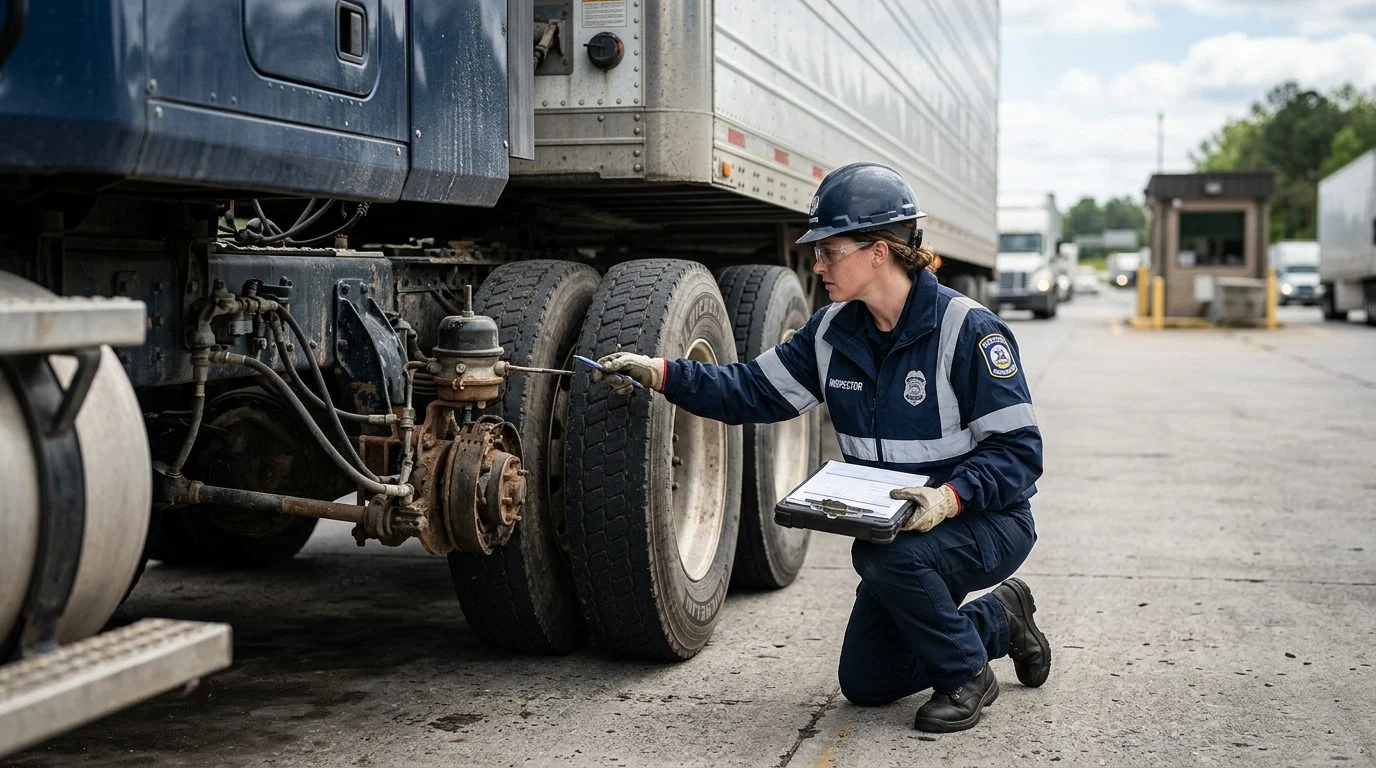
The truck’s USDOT and MC numbers, plus the crash paperwork, show who the carrier is. Those details help identify what coverage may apply. The USDOT and MC numbers are often painted on the cab or the door.
Useful records include the police crash report, photos from the scene, the driver’s name, the company name, bills of lading, and driver logs. Federal rules require post-accident drug and alcohol testing for commercial truck drivers only after certain qualifying crashes. Proof of financial responsibility is also public information. Under 49 CFR § 387.7, a member of the public can ask to review it.
Time matters. Georgia generally gives two years to sue for injuries to a person, and four years for actions involving loss of consortium, under O.C.G.A. § 9-3-33. Gathering records early keeps that deadline from catching you off guard.
Not sure what your next step is?
Talk it through with our team — the first consultation is free, confidential, and carries no obligation.

Talk With Terance Madden About Your Truck Crash in Georgia
If you’re reading this after a truck crash, you may be doing it for a family member. Insurance letters and medical bills can arrive while you’re still recovering from a crash you did not choose. You can talk through the coverage questions before you decide anything.
Common Questions About Trucking Insurance in Georgia
How much insurance must a semi truck carry in Georgia?
For most interstate for-hire freight, federal rules set $750,000. Georgia registration rules also apply to some trucks.
How long do I have to file a lawsuit?
Georgia generally allows two years for actions for injuries to the person under O.C.G.A. § 9-3-33, with one year for injuries to reputation and four years for loss-of-consortium claims. Talk with us early so the deadline is not a surprise.
Our team at T. Madden & Associates, P.C. can review how a carrier’s coverage may apply to your crash. Your first consultation is free, confidential, and comes with no obligation to continue. Reach out at https://www.tmaddenlaw.com/contact/ or call us anytime, day or night. We have offices in Jonesboro, Atlanta, Decatur, Macon, and Augusta.
This page gives general information, not legal advice. Responsible lawyer: Terance Madden, T. Madden & Associates, P.C., https://www.tmaddenlaw.com/contact/.
Why Insurance Limits Matter After a Truck Crash
Coverage sets the ceiling
A carrier's policy limit can determine how much insurance money is available to pay injured people, so it shapes every serious truck claim.
Minimums are only a baseline
Required minimums do not describe the full coverage a company actually carries, and they may fall short of the losses from a catastrophic crash.
Multiple policies can apply
Trucking claims can involve primary liability coverage, excess or umbrella policies, and other insurance. Reviewing each source matters.
Our team reviews the details
The lawyers and staff at T. Madden & Associates, P.C. look closely at the carrier, the trucking operation and the available coverage in each case.
Important: Do Not Assume the Minimum Is Enough
Insurance minimums are a legal floor, not a measure of what an injury is worth. Serious injuries, long-term care and lost income can exceed the available coverage, so details matter early.
Key Questions About Trucking Insurance
Federal rules for interstate carriers
Carriers hauling freight across state lines may be subject to federal financial responsibility rules that set minimum liability levels.
Georgia registration requirements
Georgia registration rules can also apply to certain commercial trucks, which is one reason the carrier's paperwork should be reviewed.
Policy limits and other coverage
The insurance that applies to a crash depends on the policies in force at the time, including any excess coverage the company carries.
Talking with a lawyer early
Early review of insurance information, crash reports and carrier records can help you understand your options from the start.