

Georgia Truck Accident Evidence: How to Get It Fast
By Terance Madden · Published October 30, 2026
Asking how do I get truck crash evidence in Georgia usually comes down to speed. The most useful proof after a truck wreck sits with the trucking company, and some of it can be changed, overwritten, or discarded on a set schedule. This guide covers which records matter, how long federal rules require them to be kept, how to request the crash report, and what to do in the first days. T. Madden & Associates, P.C. is a Georgia personal injury firm in practice since 1999, led by attorney Terance Madden, with offices in Jonesboro, Atlanta, Decatur, Macon and Augusta. For the broader picture, read our Georgia truck accident lawyer guide.
Why Truck Crash Evidence Disappears Faster Than Car Crash Evidence
Truck crash evidence disappears faster because the trucking company, not the injured person, controls most of it. Trucks are often repaired and returned to service quickly, which can change or remove physical damage. Roads are often reopened soon after a crash, so the scene can look different within a day.
Skid marks, debris, and roadway conditions can also change within hours or days. Witnesses move, and their memories fade over time.
A car crash usually involves two drivers and their insurers. A truck crash can involve the driver, the carrier, the truck’s owner, a maintenance contractor, a loader, or a broker. Each one may hold separate files.
That means the company’s routine practices matter as much as the scene itself. The clock starts working the day of the wreck. Treat the first week as the time to ask for records, not the time to wait for them to arrive.

The Truck Records That Usually Matter Most
The records that usually matter most are the truck’s electronic data, the driver’s logs, and the company’s maintenance and driver files. The truck’s electronic control module (ECM) can hold data on speed, braking, and other events before a crash.
Truck event data recorders can capture vehicle, driver-input, and crash-signature information around a highway crash, according to NHTSA event data recorder research.
Driver logs show driving time, rest breaks, and duty status. Dispatch messages and GPS or fleet tracking data show where the truck was and what the company asked the driver to do.
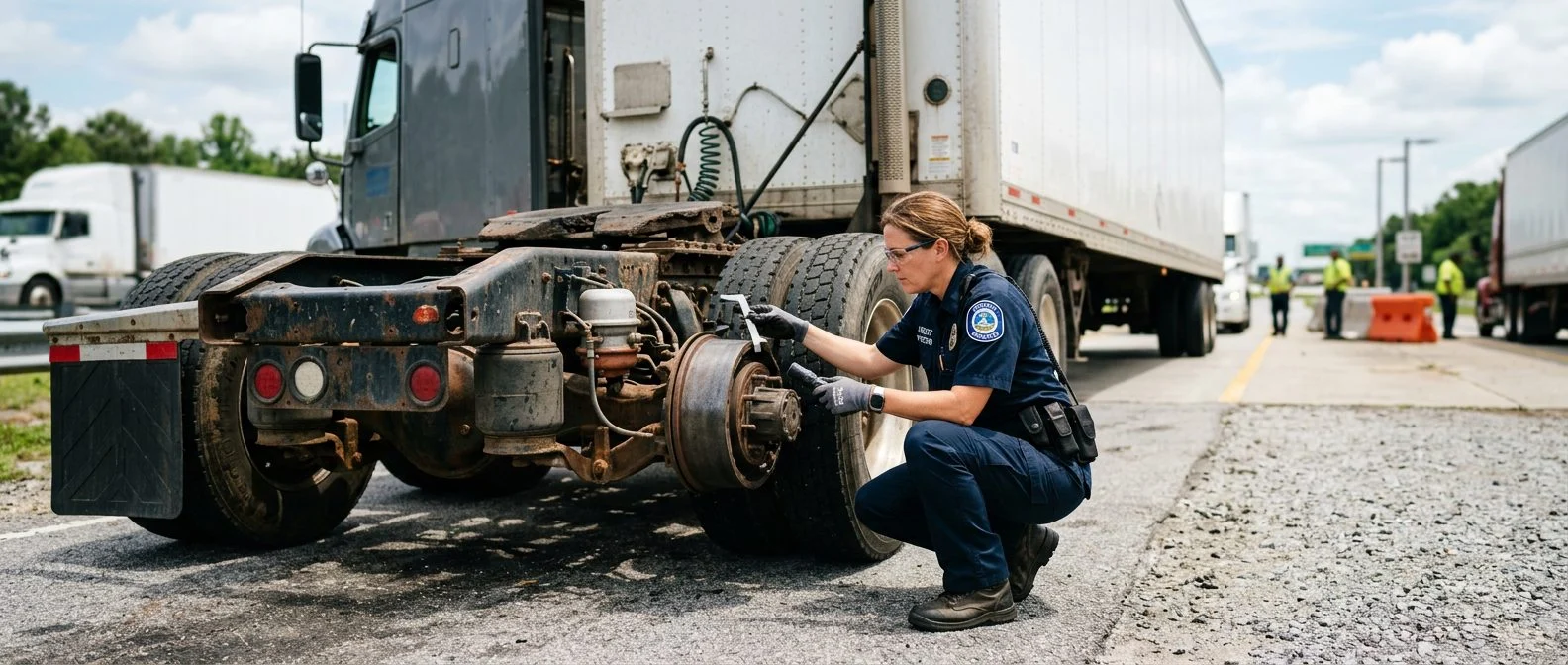
Maintenance and inspection records show the condition of brakes, tires, and lights. Driver qualification files, drug and alcohol testing records, and training records show how the company screened and supervised the driver. Bills of lading and load-securement papers matter when cargo may have played a part.
How Long Each Type of Evidence Is Typically Kept
Some federal rules set minimum keep times. Others depend on company practice, so you should not assume a record will still exist.
Under 49 C.F.R. § 395.8, a motor carrier must keep driver records of duty status and supporting documents for not less than 6 months from the date of receipt.
Under 49 C.F.R. § 396.3, maintenance records must be kept for 1 year where the vehicle is housed or maintained, and for 6 months after the vehicle leaves the carrier’s control.
Companies subject to 49 C.F.R. § 379.3 must retain records for the minimum retention periods provided in appendix A to that part. After the required retention periods, the records may be destroyed at the discretion of each company’s management. The part shall not be construed as excusing compliance with the lawful requirements of any other governmental body prescribing longer retention periods for any category of records. Video can be recorded over unless someone asks for it to be kept.
Georgia’s deadline runs on its own track. Under O.C.G.A. § 9-3-33, most actions for injuries to the person must be brought within two years after the right of action accrues.
How to Obtain the Georgia Crash Report
You get a Georgia crash report by asking the law enforcement agency that responded to the wreck. That may be the Georgia State Patrol, a city police department, or a county sheriff’s office.
Requests usually go through that agency’s records process, and some agencies require a written open records request. Ask for the report by its case or report number and give the date and location of the crash.
A typical report lists the vehicles, drivers, insurance details, witnesses, and the officer’s observations. Reports can be revised or supplemented, so ask for an updated copy once the investigation closes.
Treat the report as one piece of evidence, not the final word on fault. The National Transportation Safety Board is similar here. According to the NTSB truck crash report summary, its investigations determine probable causes and issue safety recommendations, but they do not determine fault or liability.
Preservation Letters and Georgia’s Duty to Preserve Evidence
Asking how do I get truck crash evidence in Georgia often leads to one early step: a written preservation demand. This is a letter that asks the trucking company and its insurer to keep specific evidence.
Send it as early as you can. Under 49 C.F.R. § 379.3, the required periods are minimums, and after they end, the records may be destroyed at the discretion of each company’s management. The part does not excuse compliance with the lawful requirements of any other governmental body that prescribes longer retention periods for a category of records.
Name the truck by its unit number, VIN, USDOT number, and license plate. List each record you want kept, including ECM data, logs, dispatch messages, maintenance files, the driver qualification file, and video.
Ask that the truck and its electronic modules not be repaired, sold, or scrapped until the data is downloaded under agreed or court-approved steps.
Evidence can disappear over time, which is one reason to contact a lawyer early. Lawyers call this spoliation, meaning the loss or destruction of evidence. Records may be preserved by any technology that accurately reflects all of the information in the record and remains accessible in a form that can be accurately reproduced later, as 49 C.F.R. § 379.7 explains.
Steps You Can Take in the First Days After the Wreck
Start with the facts that are easiest to lose. Photograph the scene, the vehicle damage, skid marks, debris, and road conditions as soon as it is safe to do so.
Write down the company’s name, the USDOT number on the cab door, the trailer number, and the driver’s name and license details. Note the truck’s color and any visible markings.
Ask where the truck is being towed and stored. Write down the storage facility’s name and address. Our related page on who pays for towing after a truck wreck covers the cost side.
Collect witness names and phone numbers while memories are fresh. Note what each person saw.
Keep medical records, bills, and any letters or calls from insurers. Before you give a recorded statement, ask what it will be used for. You can take time to think before you answer.
Common Questions
How do I get truck crash evidence in Georgia?
Start with a written preservation demand and a request for the crash report. Ask early, because some records have short minimum keep times.
How long must a trucking company keep driver logs?
Federal rules require at least 6 months from the date of receipt, under 49 C.F.R. § 395.8.
Does the crash report decide who is at fault?
No. It is one piece of evidence, and fault depends on all the facts.
Why Fault and Insurance Depend on the Evidence
Fault in Georgia is shared by percentage, so early evidence shapes the result. Under O.C.G.A. § 51-12-33, the judge reduces damages in proportion to the plaintiff’s percentage of fault.
Under the same section, a plaintiff who is 50 percent or more responsible recovers no damages (O.C.G.A. § 51-12-33; Quynn v. Hulsey (2020)). Damages are also apportioned among the liable persons by each person’s share of fault, and that is not joint liability.
Several parties can share responsibility in a truck crash. Under O.C.G.A. § 51-2-5, an employer can be liable for a contractor’s negligence in listed circumstances, such as when it keeps the right to direct the work.
Insurance questions for semi-trucks are covered on our related page on how much insurance a semi-truck must carry in Georgia.

If You Are Dealing With a Georgia Truck Wreck Now
If you are dealing with a truck wreck now, you may be recovering from injuries or helping a family member through it. You did not choose this, and the records may be changing while you read.
T. Madden & Associates, P.C. is led by attorney Terance Madden. The firm has been in practice since 1999 and has offices in Jonesboro, Atlanta, Decatur, Macon, and Augusta.
The firm offers a free first consultation that is confidential and carries no obligation to continue. The firm handles personal injury cases on a no-fee-unless-we-win basis, but you may still be responsible for court costs and case expenses.
If you want to talk about your own truck crash, request a free case evaluation with our team.