

Georgia Injury Claims | Clayton County, Atlanta, Decatur, Macon & Augusta
Thinking About Reporting Your Accident to Insurance? Start With a Clear Answer
T. Madden & Associates, P.C. has helped Georgia families with injury claims since 1999. Learn why prompt, careful reporting matters and when to talk with a lawyer first.
Serving Georgia Since 1999
1999
In practice since
5
Offices across Georgia
24/7
Call us anytime
By Terance Madden · Published November 3, 2026
The Short Answer: Usually Yes, and Sooner Is Better
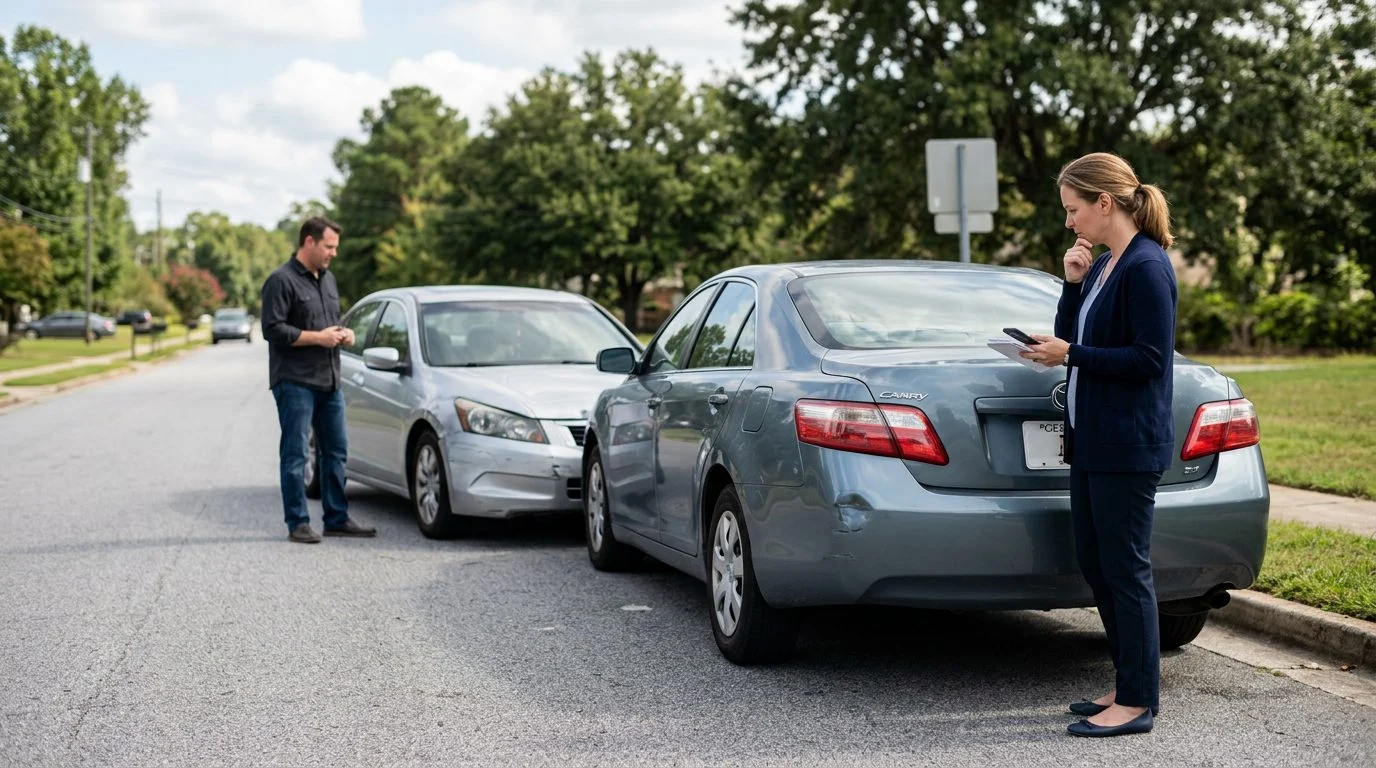
Is it worth reporting an accident to insurance? In most cases, yes. Reporting to your own insurer is usually worth doing, and it’s best done promptly, even when the damage looks minor.
A small crash can still cause problems later. Pain may show up a day or two after the wreck. The other driver may later say you caused it. A repair bill may grow once a shop takes the car apart. A prompt report gives you a dated starting point for all of it.
If you’re reading this after a crash, you may still feel shaken. The choice may feel rushed. You don’t have to settle every question today. This page covers the insurance question. Our truck accident lawyer page covers the rules that apply when a commercial truck is involved.
If a crash has you juggling an insurance call, medical visits and hard choices, you don't have to sort it out alone. We're glad to talk it through with you. Talk it through with our team — the first consultation is free, confidential, and carries no obligation.

Do You Have to Report an Accident in Georgia?
The Georgia Department of Transportation also publishes the Georgia Uniform Motor Vehicle Accident Report, which documents the state’s crash reporting process.
Talking with a lawyer can help you understand which steps apply to your situation. A police report does not notify your insurer. Notice to your insurer comes through your own policy. Many people assume one covers the other, but they don’t.
Work and rideshare driving can add another layer. Under O.C.G.A. § 33-1-24, a personal auto policy may exclude coverage while a driver is logged on to a transportation network company’s digital network or providing its services. If you were driving for an app, tell your insurer promptly and ask which coverage applies.
Why Prompt Notice Matters for Your Own Coverage
Late notice can give your insurer a reason to question or delay your claim. Your policy wording controls how notice works, so read the notice terms in your own policy.
A prompt report also creates a record. It shows the date, the place, the people involved and your first description of what hurt. That record matters if symptoms grow or the story changes later.
Timing of medical care matters too. A long gap between the crash and the first doctor visit can invite questions from the insurer or the other side. Get checked out, and tell the provider exactly how the crash happened.
Insurance notice is not the same as a lawsuit deadline. Under O.C.G.A. § 9-3-33, actions for injuries to the person generally must be brought within two years after the right of action accrues. That statute begins with “except as otherwise provided,” so other rules can change the period. A late insurance report is a separate issue from that court deadline.
Reporting to Your Insurer Versus the Other Driver’s Insurer
Your insurer handles notice under your own policy. Your policy may also include medical payments coverage and uninsured or underinsured motorist coverage. O.C.G.A. § 33-7-11 reads: “(a)(1) No automobile liability policy or motor vehicle liability policy shall be issued or delivered in this state to the owner of such vehicle or shall be issued or delivered by any insurer licensed in this state upon any motor vehicle then principally garaged or principally used in this state unless it contains an endorsement or provisions undertaking to pay the insured damages for bodily injury, loss of consortium or death of an insured, or for injury to or destruction of property of an insured under the named insured’s policy sustained from the owner or operator of an uninsured motor vehicle, within limits exclusive of interests and costs which at the option of the insured shall be.”
The other driver’s insurer is a different company. Its adjuster works for that company. An adjuster may call you quickly and ask for a recorded statement. Take a moment before you agree to one or accept an early offer. Injuries may not be fully known yet.
Fault matters in these talks. Under O.C.G.A. § 51-12-33, damages are reduced in proportion to the injured person’s percentage of fault. A plaintiff who is 50 percent or more responsible for the injury or damages recovers nothing.
To keep your account factual, write down the date, the location, the weather and the road conditions. Take photos of the vehicles and the scene. Record the names and phone numbers of any witnesses.
What Happens If You Report an Accident but Do Not File a Claim?
Reporting a crash is not the same as asking for payment. You can report an incident and not request money right away. Ask your insurer how it records a report and how it records a claim.
A report can protect your record even when no payment is requested at the time. It puts the crash on file while the details are still fresh.
Some symptoms appear days or weeks after a crash. A dated report helps show the link between the wreck and later complaints. Without it, the timeline may be harder to explain.
Revisit the decision if things change. Revisit it if your injuries grow, if the other driver disputes fault, or if a truck or uninsured driver is involved. Each change can affect what you need to report and when.
When a Truck Crash or an Uninsured Driver Changes the Picture
Truck crashes often involve more parties and more paperwork. Federal rules set minimum financial responsibility levels for motor carriers. For example, for-hire carriers hauling nonhazardous property in interstate commerce at 10,001 pounds or more must meet a $750,000 public liability minimum, under 49 C.F.R. § 387.9.
Testing can also apply. The test should happen as soon as practicable. Under 49 C.F.R. § 382.303, if an alcohol test isn’t administered within two hours following the accident, the employer records the reasons; for a controlled substances test, the period is 32 hours following the accident. The rule also does not require delaying necessary medical attention.
If the at-fault driver has no insurance, your own uninsured motorist coverage may become central to your claim. Check that coverage early. Ask about it when you report the crash.
Not sure what your next step is?
Talk it through with our team — the first consultation is free, confidential, and carries no obligation.
Steps to Take Besides Reporting After an Accident
Get medical evaluation promptly and follow the care plan. Treatment records become part of any later claim.
Photograph the scene, the vehicles, visible injuries and road conditions while they are still there. Keep a simple written log of symptoms, missed work and expenses.
Georgia limits medical expense damages to the reasonable value of medically necessary care. Under O.C.G.A. § 51-12-1.1, either side may present evidence challenging the reasonableness of medical expenses. Keep every bill and explanation of benefits.
Preserve clothing, phone records and any damaged property. Don’t throw away parts or gear until you’ve talked with someone about them.

Talk With T. Madden & Associates About Your Accident
A crash can bring an insurance call, a medical visit and a hard decision all in the same week. You don’t need to make every choice today. Take the steps that feel safe, and keep your records.
If you’d like to talk through your situation, start with a free first consultation. It is confidential and comes with no obligation to continue. You can request a free case evaluation or call the firm, which is available 24/7.
Is it worth reporting an accident to insurance?
In most cases, yes. A prompt report creates a dated record, even when the damage looks small.
Should I call my insurance company right after a crash?
Calling promptly is usually the better choice, because late notice can raise questions. Your policy wording controls the details.
How long do I have to sue for a Georgia car crash injury?
Georgia generally gives two years to bring an action for injuries to the person (O.C.G.A. § 9-3-33; Kenneth B. Cameron v. Jmp Pizza, Inc (2026)). Other rules can change that period.
Can I report an accident without filing a claim?
Yes. You can report a crash without asking for payment right away. Ask your insurer how it records a report and how it records a claim.
This page is general information, not legal advice. Terance Madden is the responsible lawyer for this page. T. Madden & Associates, P.C. has practiced since 1999 and has offices in Jonesboro (Clayton County), Atlanta, Decatur, Macon and Augusta. Contact the firm through the contact page.
Why Early, Careful Reporting Matters
Creates a dated record
A prompt report puts the accident on the record, even when the damage looks minor at the scene.
Timing can affect the claim
Late notice can raise questions later, so it helps to address reporting early rather than waiting.
Protects your position
Careful, accurate communication keeps your account consistent from the first call onward.
Talk it through first
Our team can explain what to say, what to hold back, and how your policy language may apply to your situation.
Before You Give a Recorded Statement
Insurance adjusters may ask for a recorded statement or a signed form soon after a crash. Speak with a lawyer before you agree to either, especially if you are still being treated for injuries.
Common Questions After an Accident
Is a minor crash worth reporting?
Yes. Injuries can appear hours or days later, and a prompt report helps document the event either way.
What if the other driver asks me not to call?
Reporting protects you. Let us review the situation before you decide how to proceed.
Can I report without a lawyer?
You can, but many people prefer to get guidance first so their words and records are handled carefully.
What should I gather?
Photos, the police report number, witness details, medical records and any bills all help tell the full story.
Unsure what to do after a crash?
Talk with T. Madden & Associates, P.C. today. Your first consultation is free, confidential and comes with no obligation.