

Truck Accident Lawyer | Georgia
Hurt by a Careless Driver Who Works for a Trucking Company? Talk to Us.
T. Madden & Associates, P.C. has represented Georgia families since 1999. Learn how a claim against a trucking company can work, from Jonesboro, Atlanta, Decatur, Macon or Augusta. Your first consultation is free, confidential and comes with no obligation.
Why Georgia Clients Call Our Firm
1999
Serving Georgia clients since
5
Offices: Jonesboro, Atlanta, Decatur, Macon, Augusta
24/7
Call line for urgent questions
Free
Confidential first consultation
By Terance Madden · Published November 3, 2026
Can I sue a trucking company for hiring a bad driver in Georgia? In many cases, yes. That claim is separate from the claim against the driver. If you’re asking this for an injured family member, you’re not alone in it. This page explains how these claims work, what records matter, and the deadlines that apply. T. Madden & Associates, P.C. has practiced in Georgia since 1999.
Yes, a Trucking Company Can Be Sued in Georgia for Its Own Negligence
A trucking company can be a defendant for its own failures, apart from how the driver handled the truck. The claim looks at the company’s choices. Who did it put behind the wheel? What did it do about problems it knew about?
Georgia makes a person liable for torts committed by a servant “in the prosecution and within the scope of his business,” under O.C.G.A. § 51-2-2. That covers the driver’s conduct.
This claim is not limited to the moment of the crash. It can look at years of hiring, monitoring, and record-keeping. It may matter to:
- Injured drivers and passengers
- Pedestrians and other motorists hurt in the crash
- Families of people killed in a crash with a commercial truck
Each case turns on who made the decisions and what they knew.
If a driver's past problems may have played a part in your crash, you don't have to sort out the company's role alone. Call us at any hour for a free, confidential first consultation. Talk it through with our team — the first consultation is free, confidential, and carries no obligation.

What a Georgia Negligent Hiring, Retention, or Supervision Claim Has to Show
A pattern of speeding violations followed by a speed-related crash has a clear link.
Proof usually comes from paper. The company’s records of what it knew, and what it did about it, matter as much as the crash.
Records That Show What the Company Knew, and When the Truck Was Unsafe
Company records can show what a carrier knew and when it knew it. Federal rules require motor carriers to keep several of these records.
- See 49 C.F.R. § 391.51.
- Prior employer checks: a written record of each previous employer contacted. Failures to get safety history must be documented. See 49 C.F.R. § 391.23.
- Duty status and logs: drivers must record duty status, and carriers must use electronic logging devices. See 49 C.F.R. § 395.8. Under federal driver qualification rules, a motor carrier must investigate each driver it employs, other than a person who has been a regularly employed driver of the motor carrier for a continuous period which began before January 1, 1971, safety performance history with Department of Transportation regulated employers during the preceding three years.
- Drug and alcohol records: these must be kept in a secure location. See 49 C.F.R. § 382.401.
- Training, supervision, and discipline notes: or the lack of them.
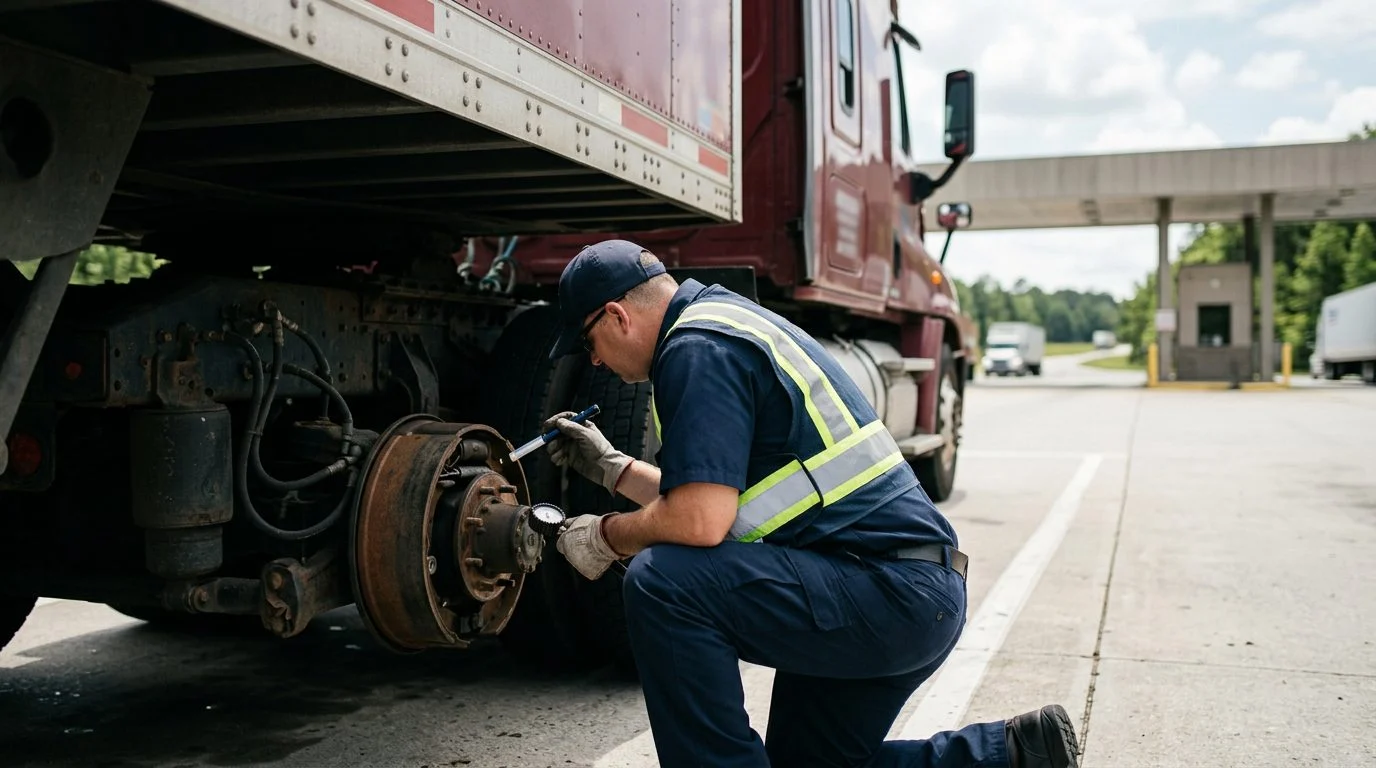
When the truck itself was unsafe, maintenance records matter. Carriers must inspect, repair, and maintain their vehicles, and keep parts like brakes, steering, and tires in safe condition. See 49 C.F.R. § 396.3. Ask whether a known defect was fixed before the trip.
Who Can Be Held Responsible in a Georgia Truck Crash
Several parties can share responsibility. It depends on who controlled the driver, the truck, and the trip. Possible parties include the driver, the motor carrier, the truck owner, a leasing company, and sometimes a broker or maintenance provider.
Georgia splits fault by percentage. Under O.C.G.A. § 51-12-33, each liable person pays only its own share, and the damages are not joint liability. If the injured person is 50 percent or more responsible, that person recovers no damages.
Punitive damages are a separate question. Under O.C.G.A. § 51-12-5.1, they require clear and convincing proof of willful misconduct, malice, fraud, wantonness, oppression, or that entire want of care which would raise the presumption of conscious indifference to consequences. They punish and deter. They do not compensate the injured person. Whether they apply depends on the facts.
Time Limits and Early Steps That Protect a Georgia Claim
Georgia generally gives two years to sue for injuries to the person (O.C.G.A. § 9-3-33; Kenneth B. Cameron v. Jmp Pizza, Inc (2026)). Some claims have other periods, and exceptions exist.
Under O.C.G.A. § 9-3-33, these actions must be brought within two years after the right of action accrues. Loss of consortium claims have four years under the same statute.
Waiting can cost evidence. Carrier records are kept for set periods, and some can be removed after those periods end. Early steps help:
- Keep the crash report, photos, and the names of the driver and company.
- Get medical care and keep every record.
- Track lost wages and out-of-pocket costs.
- Talk with a lawyer before a recorded statement or early settlement offer. The insurance adjuster works for the insurer, not for you.
What to Expect: Process, Timeline, and How the Fee Works
A case usually starts with a free first consultation. Then come records requests, an evaluation, and a claim or lawsuit.
- Free first consultation. The firm reviews the crash, your injuries, and any known driver or company history. The first consultation is free, confidential, and has no obligation to continue.
- Investigation. The firm requests records from the carrier and may send a preservation demand where records could be lost.
- Liability review. The facts are reviewed against the driver, the company, and any other party.
- Demand or suit. A demand goes to the insurer. If needed, a lawsuit is filed.
Timelines vary widely. They depend on injuries, how fast records arrive, and whether the case resolves before trial.
The firm handles these cases on a no fee unless we win basis. The client may still be responsible for court costs and case expenses.
Not sure what your next step is?
Talk it through with our team — the first consultation is free, confidential, and carries no obligation.
Why T. Madden & Associates, P.C. for a Negligent Hiring Claim
T. Madden & Associates, P.C. is a Georgia personal injury firm that has practiced since 1999. Its work includes car, truck, motorcycle, and e-bike crashes, slip and falls, medical malpractice, nursing home abuse, negligent security, and wrongful death.
- Terance Madden is the responsible lawyer for this page.
- The firm’s lawyers include Terance Madden and Shenia Madden, supported by assistants and office staff.
- Our team reviews the crash facts with you in plain language.
- Offices are in Jonesboro (Clayton County), Atlanta, Decatur, Macon, and Augusta. The phone line is available 24/7.
Disclaimer: This page is general information, not legal advice. Responsible lawyer: Terance Madden, T. Madden & Associates, P.C. Contact: https://www.tmaddenlaw.com/contact/

Common Questions About Suing a Trucking Company in Georgia
Most of these questions come down to whether the company’s own decisions played a part in the crash.
Can I sue the company if the driver was its employee?
In many cases, yes. The company’s own hiring, retention, or supervision choices can support a separate claim.
Is truck driving considered a dangerous job?
Commercial trucks are much larger and heavier than passenger cars. Federal rules set detailed duties for drivers and carriers.
What should I avoid telling the insurance company?
Avoid recorded statements and settlement commitments until the facts and your options are reviewed.
How long do I have to sue after a truck crash in Georgia?
Georgia generally gives two years for injuries to the person, with exceptions. The deadline is covered in the time limits section above.
How much do accident lawyers charge in Georgia?
Fees are explained in the “What to Expect” section above.
If you’re trying to make sense of a crash that may involve a driver’s past problems, you don’t have to do it alone. A free, confidential first consultation can review the facts with you, with no obligation to continue. Start a free case evaluation.
What We Look at in a Truck Crash Case
The Crash Report and Records
We review police reports, photos, and the details of how the collision happened.
Who Was Involved
We examine the driver, the trucking company, and any other parties whose actions may have contributed to the crash.
Hiring and Supervision Practices
We look at how the company hired, trained, and monitored the driver, because those choices can matter to a claim.
Your Injuries and Losses
We help you document medical care, lost income, and the everyday impact of your injuries.
Protect Your Claim Early
Ask the trucking company or its insurer for a copy of your crash report and any driver records you can get, and save photos, witness names, and medical paperwork. Do not give a recorded statement or sign a settlement release before speaking with a lawyer.
How Our Process Works
1. Tell Us What Happened
Call or submit our online form. We listen to your account and answer your questions in a free, confidential consultation.
2. We Investigate
Our team gathers records, reviews the crash, and identifies the parties who may be responsible.
3. You Decide the Next Step
We explain your options in plain language. There is no obligation to continue after the consultation.
4. Fees Only If There Is a Recovery
Our fees are contingent: no fees unless there is a recovery. You may still be responsible for court costs and case expenses, and we will explain those before you decide.