

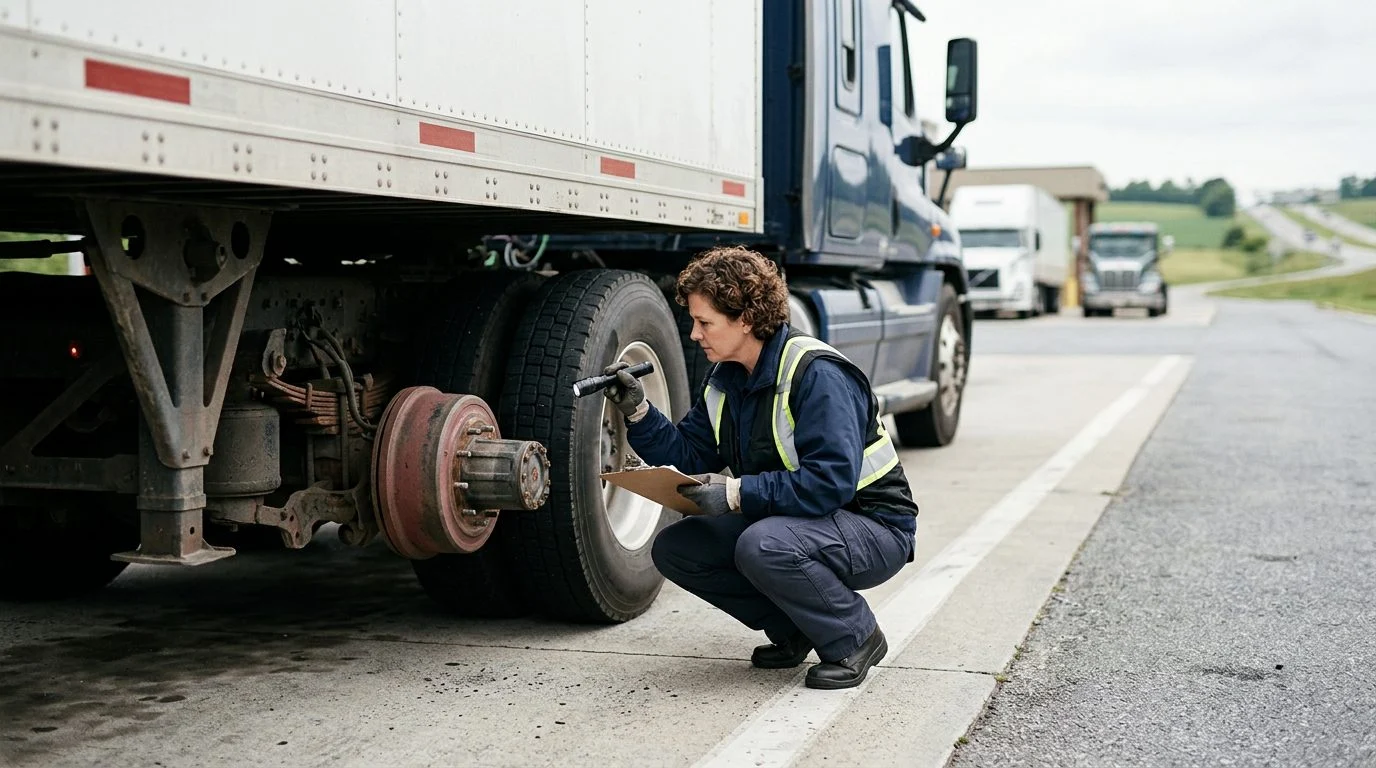
Police Report After Truck Crash Clayton County, GA
By Terance Madden · Published October 20, 2026
Short Answer: Why a Police Report Matters After a Truck Crash
Yes, you should try to get a police report after a truck crash. It is the official written record of what responders saw and documented at the scene, and it is one of the first records to request.
Truck crashes often involve serious injuries and more than one party. Trucks are heavy, damage can be severe, and a crash may involve a driver, a trucking company and other drivers. A neutral written record puts the basic facts in one place from the start.
The report is one piece of the file, not the whole file. Photos, witness names, medical records and insurance information fill in the rest. This guide covers the common questions in the order most people need them. It is written for someone who may be juggling a hospital visit, a damaged vehicle and a stack of phone calls.

What to Do Right After a Crash: Calling the Police
Call police to the scene right away after a truck crash. Waiting makes the record harder to build. Details fade, and evidence can move or disappear.
A truck driver and trucking company may have their own records duties. Those records can add to the file. Later sections explain what they are and why timing matters.
What a Truck Crash Report Usually Contains
A crash report usually lists the date, time and location of the crash. It also lists the drivers, passengers, vehicles, insurance details and witnesses when they are available.
The report also includes the officer’s narrative, a collision diagram and any citations issued at the scene. Each part helps show how the crash happened.
Truck crashes add details that matter. The report can record the size of the vehicles, where the trailer came to rest, and road and weather conditions as the officer saw them. These facts can shape how the crash is understood later.
Check the report for accuracy as soon as you get it. If something is wrong or missing, write it down while the details are fresh. Keep those notes with the report.
Police Reports After a Georgia Crash
Start with that process. The Georgia DOT crash reporting page explains the state’s crash data and report-request steps.
Then ask the responding agency how it handles copy requests. Each agency sets its own steps, so confirm them before you go in or call.
Rules and procedures can change over time. Ask the agency that holds the file for its current steps. Save the confirmation or the name of the person you spoke with.
How to Get a Clayton County Police Report After a Truck Crash
Request the report from the agency that responded to the scene. That may be the Clayton County Police Department. If Georgia State Patrol troopers responded, ask the State Patrol instead.
Gather these details first. Write down the date and time of the crash, the road or intersection, and the drivers’ names. Add the report number if you have it.
Then contact the responding agency and ask how to request a copy. Ask about any fee and how long the process usually takes. Plan ahead, because processing time can vary.
Keep a few details for later. Save the report number, the responding officer’s name and badge number, and a copy of any citation. These details make the next request easier and help match the report to the crash.
Frequently asked questions
What should you do right after an accident?
Calling the police from the scene is a practical first step. Waiting makes the record harder to build.
How do I get a police report after truck crash Clayton County?
Ask the agency that responded to the scene, such as the Clayton County Police Department or Georgia State Patrol. Have the date, location, drivers’ names and any report number ready.
What if the police did not come to my truck accident?
Document the scene yourself with photos, witness names, insurance details and a written account. Save medical records and bills as they arrive.
What to Do If No Officer Came or the Report Is Incomplete
Start by documenting the crash yourself. If no officer came, you can still gather facts from the scene and in the days after.
Gather these records now. Take photos of both vehicles, the road and any visible injuries. Write down witness names and phone numbers. Note the other driver’s insurance and company information. If you can see the truck’s company name and DOT number, record them too.
Write a detailed account of what happened while your memory is fresh. Save medical records and bills as they come in.
If the report has errors or leaves out key facts, ask the agency in writing to correct it. Keep copies of everything you send and receive.
Why Truck Crash Cases Can Involve More Records Than the Police Report
Truck crashes often involve records that a police report does not contain. Motor carriers must keep certain driver records for set periods, and those periods can be short.
Records of duty status and supporting documents must be kept for at least six months from the date of receipt, under 49 C.F.R. § 395.8.
Post-accident testing has its own timing. When a commercial motor vehicle operating on a public road in commerce is involved in a crash, 49 C.F.R. § 382.303 requires the employer to test each surviving driver who was performing safety-sensitive functions for alcohol and controlled substances if the crash involved a loss of human life. Under 49 C.F.R. § 382.303, after an occurrence involving a commercial motor vehicle operating on a public road, the employer must test each surviving driver as soon as practicable for alcohol if the driver was performing safety-sensitive functions and the accident involved the loss of human life, or if the driver receives a citation within 8 hours of the occurrence for a moving traffic violation arising from the accident and the accident involved bodily injury requiring immediate medical treatment away from the scene or a motor vehicle with disabling damage requiring tow-away. The controlled substances test applies under the same conditions, with the citation required within thirty-two hours of the occurrence. These include crashes with bodily injury that needs immediate medical treatment away from the scene, or with a tow-away. Alcohol testing should happen as soon as practicable. If it is not done within two hours, the employer must keep a record of why.
Georgia law can also reach the employer. Under O.C.G.A. § 51-2-2, every person is liable for torts committed by his or her servant at that person’s command, or in the prosecution and within the scope of that person’s business, whether the torts are committed by negligence or voluntarily. Whether a driver was working at the time depends on the facts.
Fault also matters. Under O.C.G.A. § 51-12-33, damages are reduced by the injured person’s percentage of fault. A person 50 percent or more responsible recovers nothing.
The Federal Motor Carrier Safety Administration maintains a page of large truck and bus crash facts. Those figures are national, not Georgia-specific.
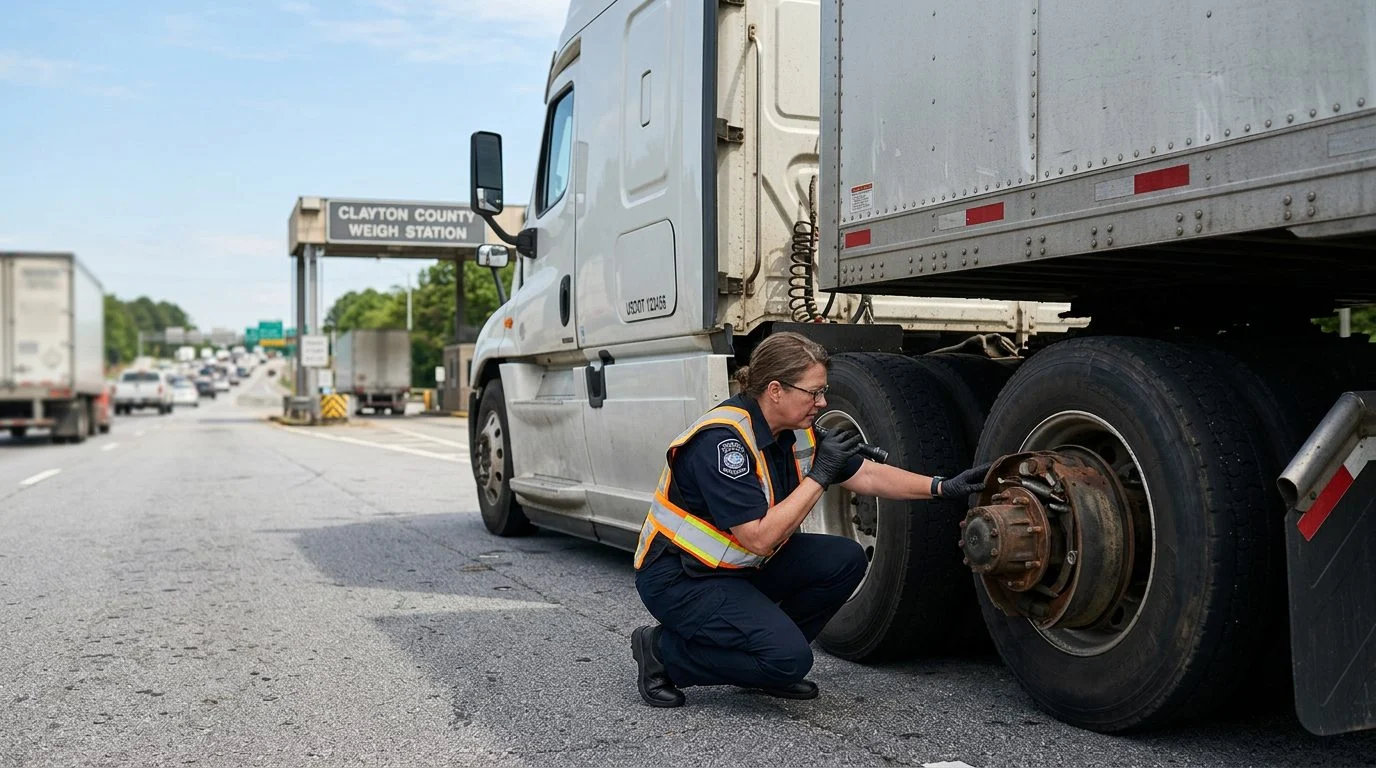
Talk With T. Madden & Associates About Your Clayton County Truck Crash
If you’re trying to make sense of a truck crash while a loved one recovers, or you’re still waiting on a report, you don’t have to sort it out alone. Talking through the paperwork and the next steps can help you decide what to do.
T. Madden & Associates, P.C. has been in practice since 1999. The firm represents people hurt in car and truck wrecks, along with motorcycle, e-bike, slip and fall, nursing home, medical malpractice, negligent security and wrongful death matters. It has offices in Jonesboro in Clayton County, Atlanta, Decatur, Macon and Augusta.
If you are working through a truck crash in Clayton County, contact the firm for a free, confidential first consultation. There is no obligation to continue. Start on the firm’s contact page.
Disclaimer: This page is general information, not legal advice. T. Madden & Associates, P.C. is responsible for this content. The responsible lawyer is Terance Madden. Contact the firm through the contact page.