

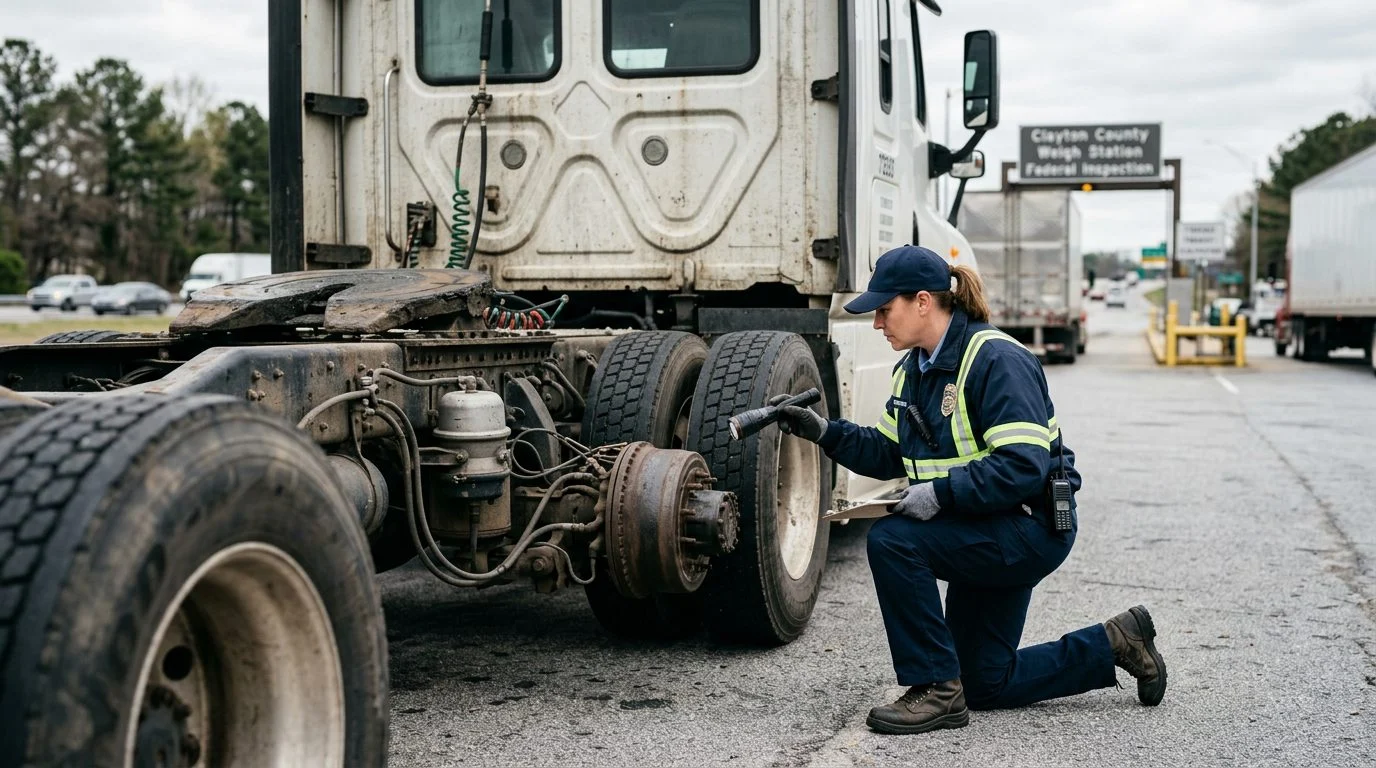
Rear-End Truck Accidents | Clayton County, GA
Hurt in a Rear-End Truck Crash in Clayton County? Talk to Our Team Today
T. Madden & Associates, P.C. has been in practice since 1999 and has an office in Jonesboro. Your first consultation is free, confidential, and comes with no obligation to continue.
The Firm at a Glance
1999
In practice since
5
Offices across Georgia
24/7
Phone availability
By Terance Madden · Published November 2, 2026
A rear-end truck accident claim seeks money for injuries after a large truck hits a vehicle from behind, or a vehicle is struck from behind by a truck. Georgia’s general filing deadline for many injury lawsuits is two years, except as otherwise provided by statute (O.C.G.A. § 9-3-33; Kenneth B. Cameron v. Jmp Pizza, Inc (2026)). This page explains who may be responsible, what a claim can cover, and how our team handles these cases for people in Clayton County.
What a Rear-End Truck Accident Claim Is and Who It Is For
A rear-end truck accident is a crash where a commercial truck strikes the back of a car, SUV, motorcycle, e-bike or pedestrian, or is itself struck from behind. Commercial trucks include tractor-trailers, dump trucks and box trucks.
Trucks weigh far more than passenger vehicles and need much more distance to stop. These crashes can cause serious, long-lasting injuries because the force of the impact falls on the people in the smaller vehicle.
This claim is for drivers, passengers, motorcyclists, e-bike riders and pedestrians hurt in these crashes in Clayton County, Jonesboro and nearby areas. Our team handles car accident, truck accident and catastrophic injury matters, and this claim fits within them.
If a commercial truck hit you from behind in Clayton County, you don't have to deal with the insurance calls alone, so contact our team to start your free case evaluation. Talk it through with our team — the first consultation is free, confidential, and carries no obligation.

Who May Be Responsible After a Rear-End Truck Crash
Several parties can be responsible, and the truck driver is only one of them.
- The driver. The key questions are whether the driver kept a safe distance, watched traffic, and braked in time.
- The trucking company. When a driver was working for the company, the company may share responsibility.
- Other parties. A cargo loader, a maintenance contractor, or a vehicle owner who is not the driver may also contribute, based on what happened.
Coverage limits matter. Federal rules set a minimum public liability amount of $750,000 for certain for-hire interstate trucks carrying nonhazardous property. That is a minimum, so the actual policy limit in a given crash can differ.
Your own policy may then apply.
What a Rear-End Truck Accident Claim Can Cover
A claim can seek compensation for medical bills, lost income, property damage and pain and suffering.
- Medical care: emergency treatment, hospital stays, surgery, therapy, medication and future care.
- Lost income: missed work and lost ability to earn in the future.
- Pain and suffering: the effect of injuries on daily life and family life.
Truck crashes leave a data trail. Federal rules say carriers must not alter or erase original hours-of-service data, under federal ELD record rules. Motor carriers need to keep inspection reports for three months from the date the written report was prepared, under federal inspection report rules, so early requests matter.
How Our Team Handles a Rear-End Truck Accident Case, Step by Step
The process starts with a free consultation and moves through evidence, medical records, a settlement demand and, if needed, a lawsuit.
- First contact. You get a free, confidential consultation with no obligation to continue. We review the crash, your injuries and any insurance calls. You can also start a free case evaluation online.
- Preservation. We send letters asking the trucking company and insurer to keep logs, inspection reports, dash camera video and maintenance records.
- Investigation. We gather the crash report, photos, witness information, wage records and vehicle records.
- Medical picture. We help build the treatment record. Recovery takes time, so the claim often waits until the medical picture is clearer.
- Claim and negotiation. We present documented damages to the insurer and review every offer with you before you decide.
- Lawsuit if needed. If a fair resolution is not reached, we file suit in the proper court and keep you informed.
The firm handles personal injury cases on a no-fee-unless-we-win basis, but the client may still be responsible for court costs and case expenses. Our team explains these costs before you agree to any representation.
The pace of each step varies with the injuries, the evidence and how the other side responds.
Georgia Deadlines and Fault Rules That Shape Your Claim
Georgia generally allows two years from the injury to file a personal injury lawsuit, and a person who is 50 percent or more at fault recovers nothing.
Under O.C.G.A. § 9-3-33, actions for injuries to the person must be brought within two years after the right of action accrues. Loss of consortium claims have four years under the same section.
Under O.C.G.A. § 51-12-33, damages are reduced in proportion to the injured person’s fault. Under O.C.G.A. § 51-12-33, the judge reduces the damages awarded to the plaintiff in proportion to the plaintiff’s percentage of fault, and a plaintiff who is 50 percent or more responsible for the injury or damages claimed is not entitled to receive any damages. A person 50 percent or more responsible cannot receive damages.
Each liable party pays its own share of fault, not a joint amount. Fault of nonparties can also be considered in the apportionment if the plaintiff settled with the nonparty or a defending party gives notice not later than 120 days prior to the date of trial that the nonparty was wholly or partially at fault.
Evidence such as logs and video can disappear, and insurers may ask for recorded statements early. Speak with our team before you give any recorded statement.
These are general Georgia rules. How they apply to your crash depends on the facts.
Why Injured Clayton County Residents Work With T. Madden & Associates, P.C.
T. Madden & Associates, P.C. has practiced personal injury law since 1999, with offices in Jonesboro (Clayton County), Atlanta, Decatur, Macon and Augusta.
- Lawyers and staff. Our lawyers include Terance Madden and Shenia Madden, supported by assistants and office staff.
- Local office. The Jonesboro office serves clients in Clayton County.
- Calls at any hour. Our phone line is available 24/7 to start a case review.
- Practice areas. Car, truck, motorcycle, e-bike, slip and fall, medical malpractice, nursing home abuse, wrongful death, catastrophic injury and negligent security matters.
Terance Madden is the responsible lawyer for this page.
Not sure what your next step is?
Talk it through with our team — the first consultation is free, confidential, and carries no obligation.
Frequently Asked Questions About Rear-End Truck Accident Claims
Most rear-end truck questions come down to Georgia’s two-year deadline, the fault rule and insurance limits.
How long do I have to file?
Generally two years from the injury date, under O.C.G.A. § 9-3-33.
Can I pursue the trucking company, or only the driver?
What if the company says I was at fault?
Georgia reduces damages by your share of fault, and you cannot recover at 50 percent or more, under O.C.G.A. § 51-12-33.
What if the truck driver has no insurance?
Your own uninsured motorist coverage may apply, under O.C.G.A. § 33-7-11.
Is the first consultation free?
Yes, the first consultation is free, confidential and without obligation to continue.
Start Your Free Case Evaluation After a Rear-End Truck Crash
If a commercial truck hit you from behind in Clayton County, the next step is a conversation about your crash. Share the facts, your injuries and any calls from the truck company’s insurer, and our team will review them with you at no cost.
Disclaimer: This page is general information about Georgia law. It is not legal advice and not a promise of any result. Responsible lawyer: Terance Madden, T. Madden & Associates, P.C. Contact the firm through our contact page.
Why Injured Drivers Call T. Madden & Associates
Free First Consultation
Your first consultation is confidential and comes with no obligation to continue.
Lawyers Who Take the Time to Listen
Terance Madden and Shenia Madden review what happened, answer your questions, and explain the options in plain language.
No Fees Unless There Is a Recovery
You pay no attorney fee unless there is a recovery. You may still be responsible for court costs and case expenses, and we will explain these before you decide.
Call Any Time
Reach our team 24/7 to talk about your rear-end truck crash and your next steps.
Important: Be Careful Before You Speak With the Trucking Company
Trucking companies and their insurers often contact injured people quickly. Talk with our team before giving a recorded statement, accepting an offer, or signing any release.
After a Rear-End Truck Crash: Steps That Can Help
Get Medical Attention
Get evaluated even if your injuries seem minor. Some injuries, including neck and back injuries, may not show symptoms until hours or days later.
Document the Scene
Photos of both vehicles, the damage, the road, and any visible injuries can be helpful. Keep copies of medical bills and records.
Limit Statements
Be careful with recorded statements to the trucking company or its insurance adjuster, and avoid guessing about how the crash happened.
Contact Our Team
Call T. Madden & Associates, P.C. for a free, confidential first consultation with no obligation to continue.