

Georgia Injury Guide | Jonesboro, Atlanta, Decatur, Macon and Augusta
Asked for a Recorded Statement? Talk to a Lawyer First
An insurance adjuster may ask you to go on the record soon after a crash. T. Madden & Associates, P.C. has represented people hurt in Georgia since 1999. Your first consultation is free, confidential and comes with no obligation.
About T. Madden & Associates, P.C.
1999
Year the firm began practice
5
Georgia offices
Free
First consultation, confidential
By Terance Madden · Published October 30, 2026
Should I Give a Recorded Statement to the Insurance Adjuster?
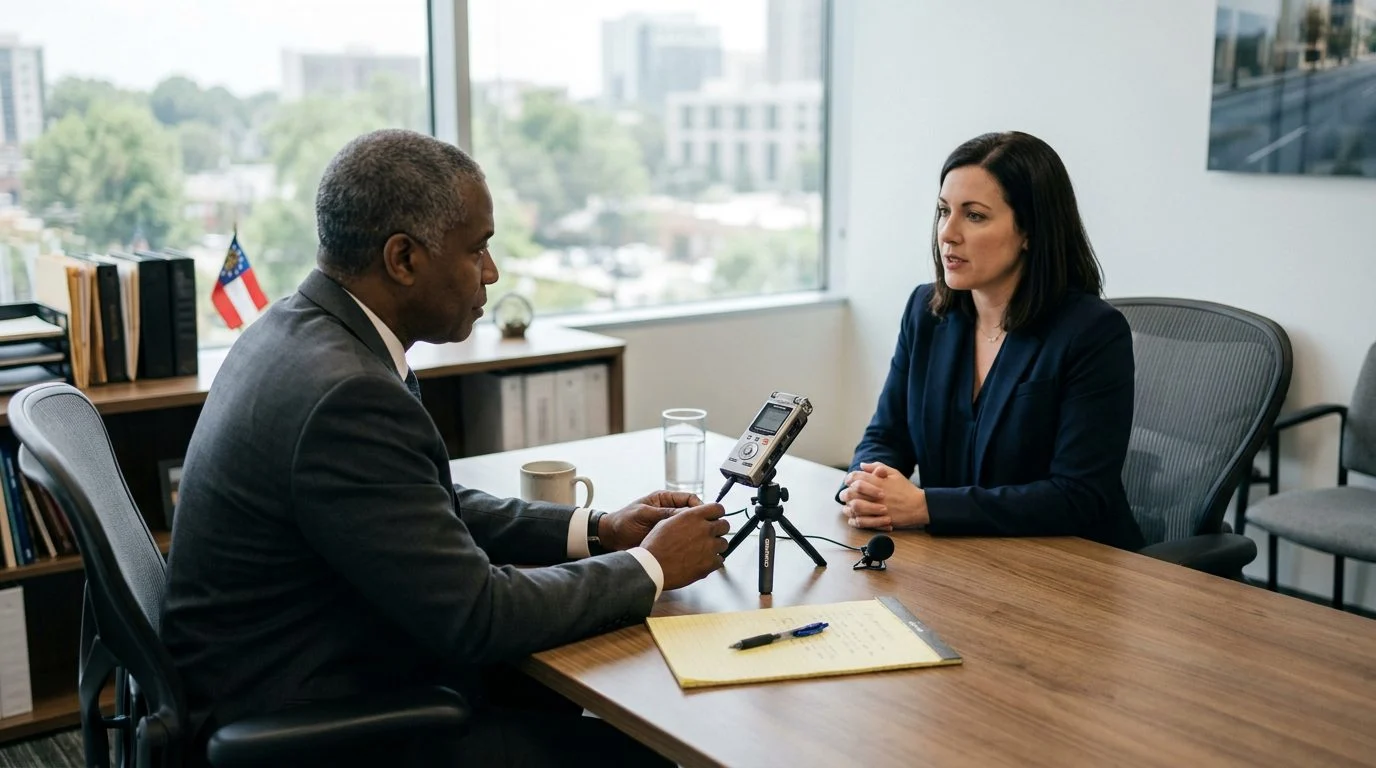
Should I give a recorded statement to the insurance adjuster? Usually, the answer depends on which insurance company is asking. A recorded statement is an interview an adjuster records, often by phone, about how a crash happened and how you were hurt. This Georgia guide explains the difference and what to do before you answer.
If an adjuster is calling while you recover and you're unsure what to say, you don't have to face it alone. Our team can talk through your options in a free, confidential first consultation. Talk it through with our team — the first consultation is free, confidential, and carries no obligation.

Short answer: whose adjuster is calling makes the difference
The first question is which insurer is asking, and that often decides how careful you should be.
A recorded statement can come from the other driver’s insurer, a trucking company’s insurer, or your own insurer. Each one has a different role. The other side’s insurer works to resolve its own policyholder’s liability. Your insurer works under the terms of your policy.
Many people feel pressure to call back quickly. That pressure is normal, but a short pause to think is usually a good idea. Georgia’s insurance regulator advises claimants not to rush to accept an offer, and says they may negotiate with the insurer for a fair settlement (Georgia insurance regulator’s claim tips). That advice applies before any recording starts.
Two kinds of claims: your own insurer versus the other side’s
A first-party claim goes to your own insurer. A third-party claim goes to the insurer of the person who caused the crash.
First-party claims use your own policy. Examples include medical payments coverage or collision coverage, if you carry them. Third-party claims are made against the at-fault driver or company.
The other side’s insurer has no contract with you. Its adjuster works for its own insured, so the questions serve that company’s interests. Keep that in mind when a friendly voice asks for a few details.
Your own policy may include a cooperation clause. That clause can ask you to help your insurer investigate the claim. Read your policy’s wording before you decide how to answer your own insurer.
Georgia’s insurance regulator also describes uninsured motorist coverage. It says this coverage may protect the insured and passengers when an uninsured driver causes the accident (Georgia insurance regulator’s auto insurance guide). If you’re unsure which coverage applies, ask about it early.
Are statements to insurance adjusters required?
If an insurance adjuster asks you for a recorded statement, you can contact T. Madden & Associates, P.C. to talk through your options before you respond.
Many people assume an adjuster can require a statement on the spot. You can pause the call. You can ask for the request in writing, or ask for the questions by email or letter.
Keep requests separate. A request for a recorded statement is different from a request for medical records, a medical authorization, or a signed form. Each one deserves its own review. Read any form carefully before you sign it.
Timing matters too. A written request shows exactly what is being asked. It also gives you time to gather crash details and your medical notes. Ask in writing when the insurer needs a response.
What a recorded statement is and what an adjuster report looks like
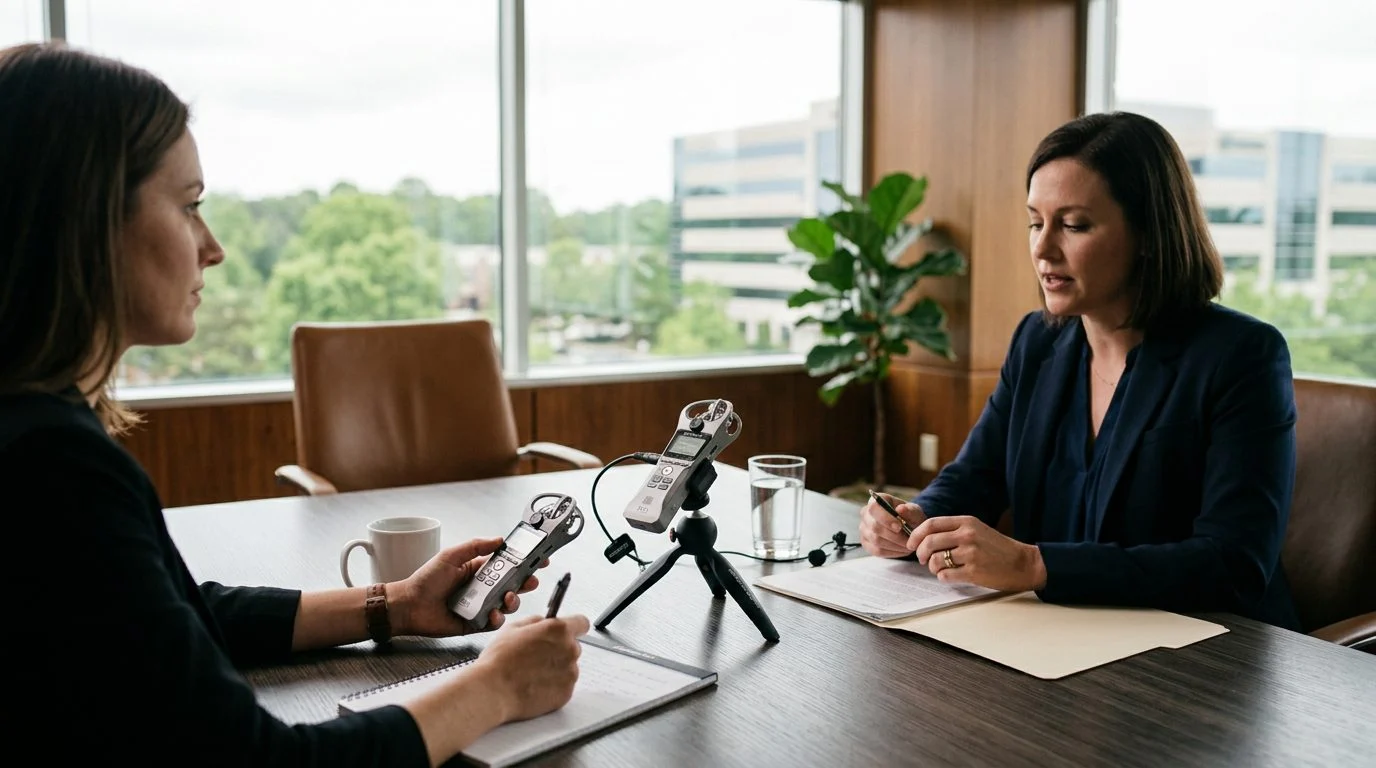
A recorded statement is an interview the adjuster captures on the record, usually with a set of standard questions.
The adjuster asks about the crash, where you were going, your injuries, and what you did afterward. The recording goes into the claim file. Later, the adjuster writes claim notes. Those notes often summarize your words in shorter phrases.
That summary is what matters later. A casual remark can read as a firm admission once it’s trimmed into a note. Ask whether a copy of the recording or a transcript is available.
If the other driver fled the scene, the claim may involve your own uninsured motorist coverage, if you carry it. Write down what you know about the vehicle, the location, and any witnesses. Those details help whoever reviews the claim.
Why truck crashes make a recorded statement more consequential
A recorded answer after a truck crash can reach more than one company, because more parties are usually involved.
A truck crash can involve the driver, the trucking company, its insurer, and sometimes other businesses tied to the load or the vehicle. Federal rules set record duties for these companies. A motor carrier must make accident records available to authorized investigators, and must keep an accident register for 3 years after each accident (49 C.F.R. § 390.15).
A motor carrier must retain records of duty status and supporting documents required under this part for each of its drivers for a period of not less than 6 months from the date of receipt (49 C.F.R. § 395.8). After certain crashes, the employer must test the surviving driver for alcohol and controlled substances as soon as practicable (49 C.F.R. § 382.303). Those timelines and records can be compared with what you say.
Trucking companies and their insurers may move quickly to gather information. Ask for the official crash report and read it before you give any statement.
Not sure what your next step is?
Talk it through with our team — the first consultation is free, confidential, and carries no obligation.
Words that matter: what people often say that gets used later
Short, accurate answers about what you know are safer than guesses.
Common problem answers include guessing at speed or distance, saying “I’m fine” about injuries, and describing the crash before you know the full extent of your injuries. A casual apology can also be framed as an admission. Small wording choices can shape how fault is described.
Fault matters under Georgia law. The judge reduces damages in proportion to the plaintiff’s percentage of fault (O.C.G.A. § 51-12-33). A plaintiff who is 50 percent or more responsible recovers no damages under the same statute. Georgia also bars recovery when a plaintiff could have avoided the harm with ordinary care (O.C.G.A. § 51-11-7).
Answer only what is asked. Ask for a question to be repeated. Say “I don’t know” when you don’t know. Don’t speculate.
Help yourself before you pick up the phone
Before any call, write down the facts you know and get a medical evaluation.
Keep a written record of the crash date, the location, the other vehicle’s details, witness contact information, and symptoms as they develop. Notes made close to the crash are easier to check later than memories pieced together weeks afterward.
Medical care matters too. Get evaluated and follow through with treatment your doctor recommends. Medical records are often reviewed in an injury claim. Georgia limits medical expense damages to the reasonable value of medically necessary care (O.C.G.A. § 51-12-1.1).
Write down the adjuster’s name, the company, the claim number, and the exact questions asked. Ask for any request in writing before you agree to anything.
Next step: talk with T. Madden & Associates before you give a statement
If an adjuster is waiting for a call back, contact T. Madden & Associates, P.C. before you respond.
Pain, paperwork, and worried family members can pile up fast after a crash. T. Madden & Associates, P.C. is a Georgia personal injury firm led by attorney Terance Madden. The firm has practiced since 1999, with offices in Jonesboro (Clayton County), Atlanta, Decatur, Macon and Augusta.
The firm handles car, truck, motorcycle and e-bike crashes, along with other injury matters. Our lawyers include Terance Madden and Shenia Madden. The firm’s free first consultation is confidential, with no obligation to continue. The firm works on a no-fee-unless-we-win basis, but the client may still be responsible for court costs and case expenses.
Do I have to give a recorded statement to the other driver’s insurer?
You can ask for time or a written request before you answer.
What should I avoid saying?
Avoid guesses about speed, distance, or the full extent of your injuries.
What does an adjuster report look like?
It often includes the adjuster’s notes summarizing what you said.
If an adjuster is calling while you recover, you don’t have to face it alone. Contact our team at the firm’s contact page to talk through your options in a free, confidential first consultation.
Disclaimer: This page is general information, not legal advice. Responsible lawyer: Terance Madden, T. Madden & Associates, P.C. Contact: https://www.tmaddenlaw.com/contact/.
Why Talk to a Lawyer Before You Speak to an Adjuster
Protect your words
Statements given early can be used later. A lawyer can help you decide what to say and what to hold back.
Understand the process
Our attorneys can explain what the insurer is asking for and why, in plain language.
Keep the other side at a distance
Our team can handle communications with the insurance company so you can focus on recovering.
Reach us any time
Call us 24/7 to talk about your situation before you respond to an adjuster.
Pause Before You Give a Recorded Statement
Adjusters often ask for a recorded statement quickly. Before you agree, call a lawyer. Do not guess about speed, distance or the full extent of your injuries.
Tips for Any Call From an Insurance Company
Ask for the request in writing
A written request lets you review exactly what is being asked before you respond.
Ask for time
You can say you need time to gather your thoughts or speak with a lawyer first.
Stick to facts you know
Describe what you saw and felt. Avoid estimates you are not sure of.
Keep records
Write down the adjuster's name, the date and the time of each call, and keep any letters you receive.