

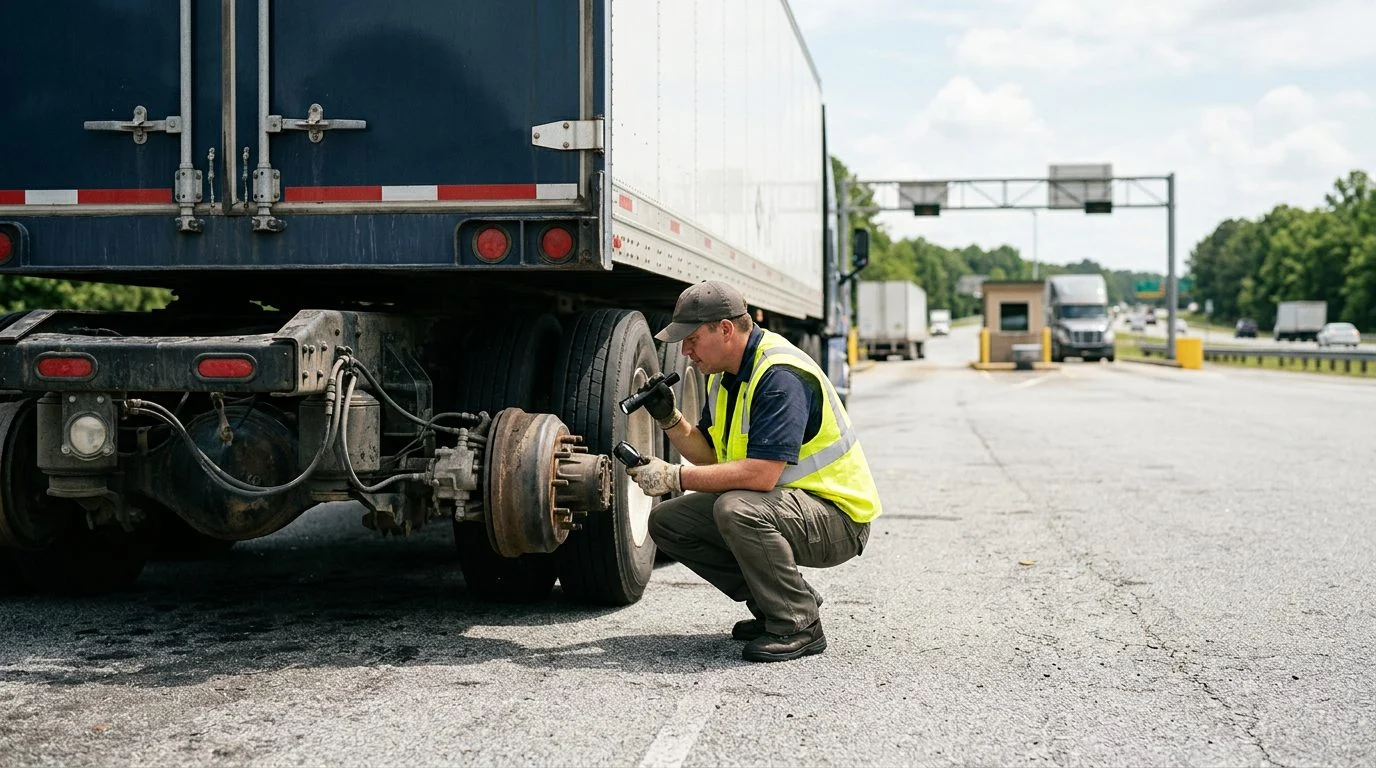
Truck Accidents | Georgia
Trucking Company Insurance Policy Limits in Georgia: What Injured Families Should Know
T. Madden & Associates, P.C. has helped people hurt in Georgia truck wrecks since 1999. Learn how a trucking company's policy limits can shape a claim, then talk with our team.
The firm at a glance
1999
Practicing law since
5
Georgia offices: Jonesboro, Atlanta, Decatur, Macon and Augusta
24/7
Phone line available any time
$0
Free first consultation, with no obligation to continue
By Terance Madden · Published October 27, 2026
A trucking company’s insurance policy limit is the most its liability policy will pay for covered injuries and damages from one crash. In Georgia, trucking company insurance policy limits depend on the type of carrier, the cargo, and the route. This guide explains those numbers in plain terms, what they can pay for, and how fault can change what is reachable.
What a trucking insurance policy limit is
A policy limit is the ceiling on what an insurer pays under that policy. Liability coverage pays injured people who are owed money because of the truck owner’s or driver’s legal responsibility for the crash.
Some policies show three separate numbers:
- Bodily injury per person: the most paid for one injured person.
- Bodily injury per accident: the most paid for all injured people from one crash.
- Property damage: the most paid for damage to vehicles and other property.
A limit is not the value of a claim. It only caps what that policy pays. This guide is for injured people, families after a fatal crash, and anyone trying to understand the insurance behind a truck.
If a truck crash left you hurt or took a family member, you may have a claim, and our team can talk through your policy questions with you. Talk it through with our team — the first consultation is free, confidential, and carries no obligation.

How insurance limits apply to trucks
Federal rules can require more for many trucks. Under 49 CFR 387.9, the minimum for for-hire interstate carriage of nonhazardous property in a vehicle rated 10,001 pounds or more is $750,000. Certain oil and hazardous materials carry higher minimums, up to $5,000,000 for some bulk hazardous substances.
Under 49 CFR 387.7, a motor carrier may not operate a motor vehicle until it has the required minimum insurance in effect. Under 49 C.F.R. § 387.7, proof of the required financial responsibility shall be maintained at the motor carrier’s principal place of business.
The right figure depends on the carrier’s operations, cargo, and routes.
What liability coverage can pay for in a truck crash
Liability coverage can pay for the damages a responsible party owes. Georgia law describes damages as compensation for injury. Under O.C.G.A. § 51-12-4, generally such compensation is the measure of damages where an injury is of a character capable of being estimated in money. If an injury is small or the mitigating circumstances are strong, only nominal damages are given.
In a truck crash, claims often include:
- Medical care: emergency treatment, surgery, rehabilitation, and future care.
- Lost income: missed work and reduced ability to earn.
- Other losses: pain, suffering, and effects on daily life.
- Property damage: vehicles and personal belongings.
Under O.C.G.A. § 51-12-4, damages are given as compensation for injury, and generally such compensation is the measure of damages where the injury is capable of being estimated in money. Under O.C.G.A. § 51-4-5, when there is no person entitled to bring an action for the wrongful death of a decedent under Code Section 51-4-2 or 51-4-4, the administrator or executor of the decedent may bring an action for the benefit of the next of kin, and the amount of the recovery shall be the full value of the life of the decedent; when death of a human being results from a crime or from criminal or other negligence, the personal representative of the deceased person shall be entitled to recover for the funeral, medical, and other necessary expenses resulting from the injury and death of the deceased person.
Remember that the limit caps the policy. A claim can be worth more than the coverage available.
Where extra coverage can come from
Extra coverage can come from umbrella or excess policies. These sit above the primary auto liability limit and pay after that limit is used up. Not every carrier has them.
More than one party may be insured. The motor carrier, the driver, and the vehicle owner or lessor can each carry coverage.
Separate trucks, terminals, or operations may have separate policies. Whether defense costs reduce the available limit depends on the policy wording, so the actual policy language matters.
If the at-fault driver has no insurance, whether your own uninsured or underinsured motorist coverage applies depends on the terms of your policy.
How fault and comparative negligence change what is reachable
Georgia reduces damages by the injured person’s share of fault. Under O.C.G.A. § 51-12-33, the judge reduces the award in proportion to the plaintiff’s percentage of fault. A plaintiff who is 50 percent or more responsible for the injury or damages may not receive any damages.
Fault can also be split among several people. Under the same statute, each liable person pays only its own share. The damages are not joint liability among them. Under O.C.G.A. § 51-12-33(d)(1), a nonparty’s fault is considered if the plaintiff settled with that nonparty or if a defendant gives notice, no later than 120 days before trial, that the nonparty was wholly or partially at fault.
That argument can shift how much of the loss a given policy must cover, so it deserves a close look early.
How a truck claim moves when policy limits are in question
A claim usually starts with medical care and evidence. Then it moves to the insurer and, if needed, a lawsuit.
- Get medical care. Follow the treatment plan and keep every record.
- Preserve evidence. Logs, dash-camera footage, maintenance records, and photos can matter.
- Notify the right parties and track every insurer contact.
- Make a demand. An early offer can come before the full extent of injuries is known.
- Request policy information. Proof of required coverage is public information that must be produced for review upon reasonable request by a member of the public under 49 CFR 387.7.
- File suit if needed. Under O.C.G.A. § 9-3-33, actions for injuries to the person generally must be brought within two years after the right of action accrues, except for actions involving loss of consortium, which must be brought within four years after the right of action accrues.
Fatigue and overloading evidence can also matter when limits are a concern. Our team reviews these facts with the medical and liability details of each case.
Not sure what your next step is?
Talk it through with our team — the first consultation is free, confidential, and carries no obligation.
Why T. Madden & Associates, P.C. handles these claims
T. Madden & Associates, P.C. is a Georgia personal injury firm in practice since 1999. Terance Madden leads the firm. It has offices in Jonesboro, Atlanta, Decatur, Macon, and Augusta.
The firm represents people hurt in car and truck wrecks, motorcycle and e-bike crashes, slip and falls, medical malpractice, nursing home abuse, negligent security, and wrongful death.
The firm works on a no-fee-unless-we-win basis, but you may still be responsible for court costs and case expenses.
Reach the firm at one of its offices in Jonesboro, Atlanta, Decatur, Macon or Augusta, or through its contact page.
Common questions about truck insurance limits in Georgia
Can a truck claim be worth more than the policy limit?
Yes. The policy limit caps what that policy pays, so a claim’s value can exceed it.
Does the trucking company’s insurance pay if its driver is at fault?
Liability coverage generally responds to the insured’s legal liability for the crash, subject to policy terms.
How long do I have to file?
Georgia’s general limit for injury claims is two years under O.C.G.A. § 9-3-33.
If a loaded truck left you hurt or a family member died, you don’t have to sort out the policy alone. Reach out to T. Madden & Associates, P.C. through its contact page to talk through your situation and start a free case evaluation.
How our firm approaches truck crash claims
Reviewing the coverage
We look at the trucking company's policy information and the limits that may apply to a crash, so you understand what is on the table.
Identifying every party
Trucking crashes often involve a carrier, a driver, a vehicle owner and others. We work to identify each party that may carry insurance.
Clear, plain-language updates
Our team explains each stage of the claim in terms you can follow, including how policy limits may affect your options.
Fees only if there is a recovery
We handle truck accident claims on a no-fee-unless-there-is-a-recovery basis. You may still be responsible for court costs and case expenses, which we explain before you decide.
Important: a policy limit is not the value of your claim
A policy limit is the most a particular insurance policy will pay. Your claim's value may be higher or lower than that number. Do not assume the limit defines what your case is worth. Speak with our team before accepting any settlement offer.
Coverage terms worth understanding
Liability coverage
Liability coverage is the insurance meant to pay for injuries and damage a company's legal responsibility causes. Its terms are set by the specific policy.
Per-incident limits
Many policies state a maximum amount for a single crash. Multiple injured people may share that amount, so it is worth reviewing early.
Excess and umbrella policies
Some carriers hold additional layers of coverage above their primary policy. Whether they apply depends on the policy language and the facts of the crash.
Multiple insurers
A single crash can involve more than one policy. Reviewing each one helps show the full set of coverage that may be available.