

Truck Accident Lawyer | Georgia
Injured in a Georgia Truck Accident? Understand Your Options in State or Federal Court
T. Madden & Associates, P.C. has represented people hurt in Georgia since 1999. Terance Madden and our team review your truck accident case and explain how it may proceed.
Serving Georgia Since 1999
1999
Year the firm began practicing law
5
Georgia offices: Jonesboro, Atlanta, Decatur, Macon and Augusta
24/7
Phone line available around the clock
By Terance Madden · Published October 20, 2026
Short Answer: Yes, but Only When Federal Court Has Power Over the Case
Yes, a truck accident lawsuit can sometimes be heard in federal court in Georgia. Federal courts have limited power, so a case must meet specific tests before a federal court can hear it. Most Georgia truck crash claims are state-law negligence claims, and many are filed in Georgia state court.
If you’re reading this, you may be dealing with injuries, medical bills, time off work, or the death of someone you love. The court question is one part of a bigger decision. Understanding how it works early can help you think clearly about your next steps.
If you're weighing whether a truck crash claim belongs in federal or state court, our team is glad to talk it through with you. Talk it through with our team — the first consultation is free, confidential, and carries no obligation.
What Makes a Federal Court Case Possible?
A federal court can hear a truck crash claim only when federal law gives it the power to do so. Those tests turn on the facts, especially who the parties are and where they live. A trucking company may be based outside Georgia. The driver may live in another state. Those details can change which courts are available.
Many people assume that any crash on a Georgia road sends the case to federal court. That is not how it works. The location of the crash alone does not decide the court. The people and companies involved matter just as much. Corporations and individual drivers are treated differently, so the review can get detailed. That is why a short look at everyone involved is useful early.
How Much Money Is at Stake in the Claim?
Federal court tests also look at the size of the claim. The amount a claim is worth can matter to whether a federal court has power to hear it. A claim that looks large on paper still needs a close look against those tests.
Claims usually include several kinds of losses. These can include medical bills, lost wages, and pain and suffering. Keep bills, pay stubs, and written notes about missed work. These records show what the claim includes, whichever court hears it.
A common mistake is waiting to gather these records until the case is already in court. By then, some items may be harder to find. Collecting them early also makes the full picture clearer for everyone involved.
How a Truck Accident Case Gets to Federal Court
A case can start in federal court, or it can be moved there after it is filed in state court. The person bringing the claim usually chooses where to file first, within the rules that apply. Changing courts later is not automatic.
A defendant may ask to move a case from state court to federal court. This step is called removal, which means moving a case to a different court. Timing matters for both sides.
One mistake is waiting too long to ask the question. Ask early, while the facts and records are still fresh. Whether a case starts in state or federal court, track each step on a calendar with the deadline in view.
What Changes in Federal Court and What Stays the Same
The steps and timing can feel different from a state case. The core filing deadline is the rule to plan around, whichever court you choose.
Georgia’s two-year deadline under O.C.G.A. § 9-3-33 applies to actions for injuries to the person. Loss of consortium claims tied to those injuries have four years under the same statute. Plan around the two-year deadline, which runs from the date the right of action accrues under O.C.G.A. § 9-3-33.
Under O.C.G.A. § 51-12-33, a plaintiff’s damages are reduced by the plaintiff’s share of fault. A plaintiff who is 50 percent or more responsible recovers nothing (O.C.G.A. § 51-12-33; Quynn v. Hulsey, 310 Ga. 473 (2020)). The rule is explained in Quynn v. Hulsey (Georgia Supreme Court, 2020).
Crash Evidence and Trucking Company Records in a Federal Case
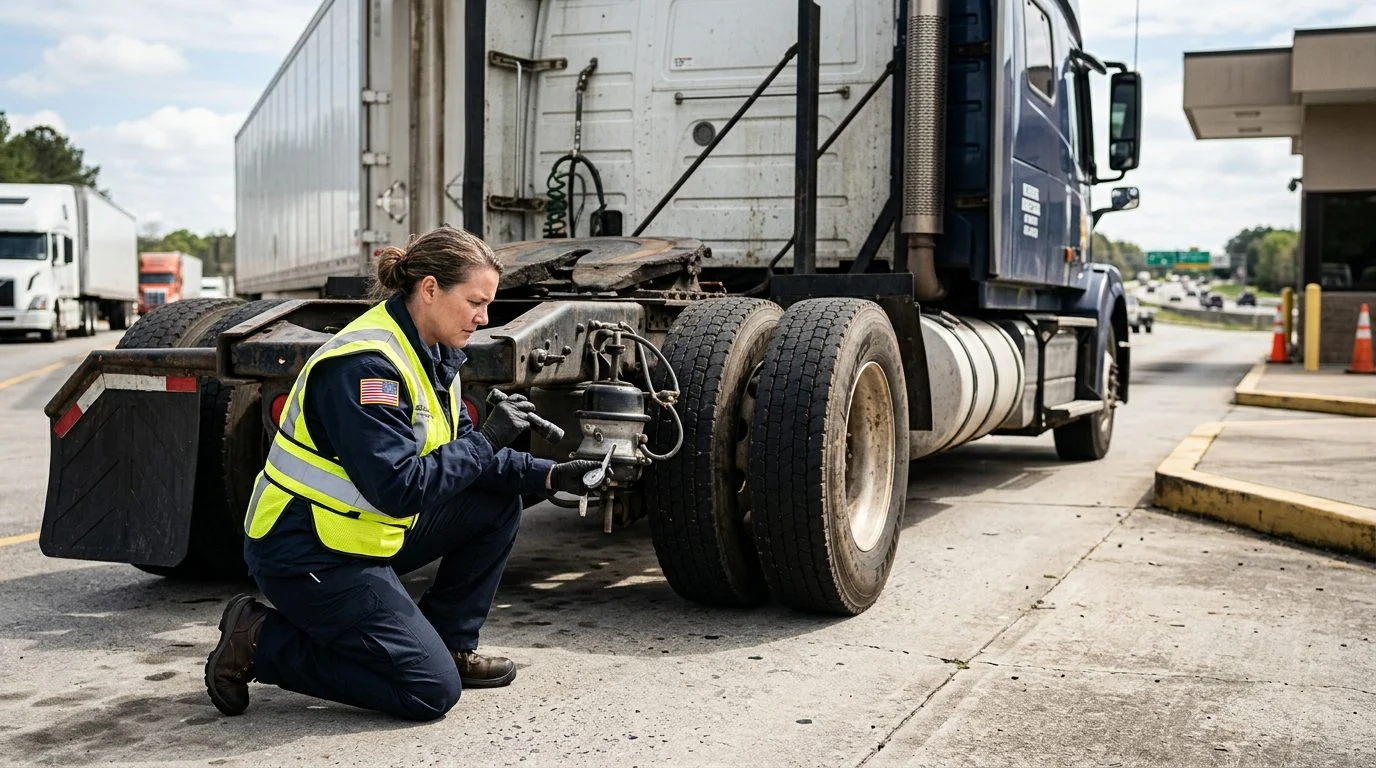
Trucking company records often matter in state and federal court alike. Ask about them early, because companies do not keep every record forever. Under a federal records retention rule, companies keep records for minimum periods. Under 49 C.F.R. § 379.3, after the required retention periods, the records may be destroyed at the discretion of each company’s management, and the provisions of this part shall not be construed as excusing compliance with the lawful requirements of any other governmental body prescribing longer retention periods for any category of records.
Other records have set rules too. Under 49 C.F.R. § 379.3, companies subject to the part must retain records for the minimum retention periods provided in appendix A to that part; the accident register rule is separate. Under 49 C.F.R. § 395.8, motor carriers must require each driver to record the driver’s duty status for each 24-hour period, except a private motor carrier of passengers (nonbusiness). The driver signs to certify those entries. These logs can show how long a driver was working before a crash.
Post-crash testing is another area to know.
Ask for anything tied to the crash, such as photos, vehicle data, and citations. Asking early helps while memories and records are still fresh.
Not sure what your next step is?
Talk it through with our team — the first consultation is free, confidential, and carries no obligation.

Talk With Terance Madden About Your Truck Crash and the Right Court
Deciding between federal and state court is one piece of a hard time. You do not have to sort it out alone. T. Madden & Associates, P.C. offers a free, confidential first consultation with no obligation to continue.
The firm is a Georgia personal injury law firm led by attorney Terance Madden, in practice since 1999. Its offices are in Jonesboro (Clayton County), Atlanta, Decatur, Macon, and Augusta. Our team can talk through the facts of your crash, the deadlines, and the records that matter.
Frequently Asked Questions
Can a truck accident lawsuit be filed in federal court in Georgia?
Sometimes.
Does filing in federal court change the two-year deadline?
Plan around the two-year deadline under Georgia law, whichever court hears the case.
How long do I have to file a Georgia injury claim?
Georgia generally gives two years for actions for injuries to the person under O.C.G.A. § 9-3-33.
A plaintiff who is 50 percent or more at fault recovers nothing (O.C.G.A. § 51-12-33; Quynn v. Hulsey, 310 Ga. 473 (2020)).
If you’re weighing whether a truck crash claim belongs in federal or state court, our team is glad to talk it through with you. To start, request a free case evaluation.
This page is general information, not legal advice. Reading it does not create an attorney-client relationship. Responsible attorney: Terance Madden, T. Madden & Associates, P.C., with offices in Jonesboro, Atlanta, Decatur, Macon, and Augusta. Contact details are at the link above.
How We Approach Your Truck Accident Case
Careful Case Review
We look at the crash report, the trucking company's records and the other evidence that bears on how the collision happened.
Courts Chosen With Care
Whether a truck accident claim is filed in state or federal court is a question we discuss with you based on the facts of your case.
Fees Only If There Is a Recovery
Our fees are contingent. You owe no attorney fee unless there is a recovery, though you may still be responsible for court costs and case expenses.
Support Throughout
Our team keeps you informed and helps with the many details that come up after a serious truck crash.
Important: Act Promptly
Trucking companies often begin protecting their interests quickly after a crash. Time limits for filing an injury claim apply, and waiting can make your case harder to prove. Contact us as soon as you can.
What to Bring to Your Free Consultation
Crash Details
Write down the date, time, location and what you remember about the collision.
Medical Records
Gather bills, discharge papers and notes from every provider who has treated your injuries.
Photos and Witnesses
Share any pictures of the scene, your vehicle or the truck, and names of anyone who saw what happened.
Insurance Information
Bring any letters or paperwork from insurance companies, including claim numbers.
Talk With Terance Madden About Your Truck Accident
Related practice areas
- What Is a Truck’s Black Box or Crash Data Recorder, and Can It Be Used in a Georgia Claim?
- Time Limited Demand Truck Accident Georgia: What to Know
- What Not to Say to an Injury Lawyer or Adjuster