

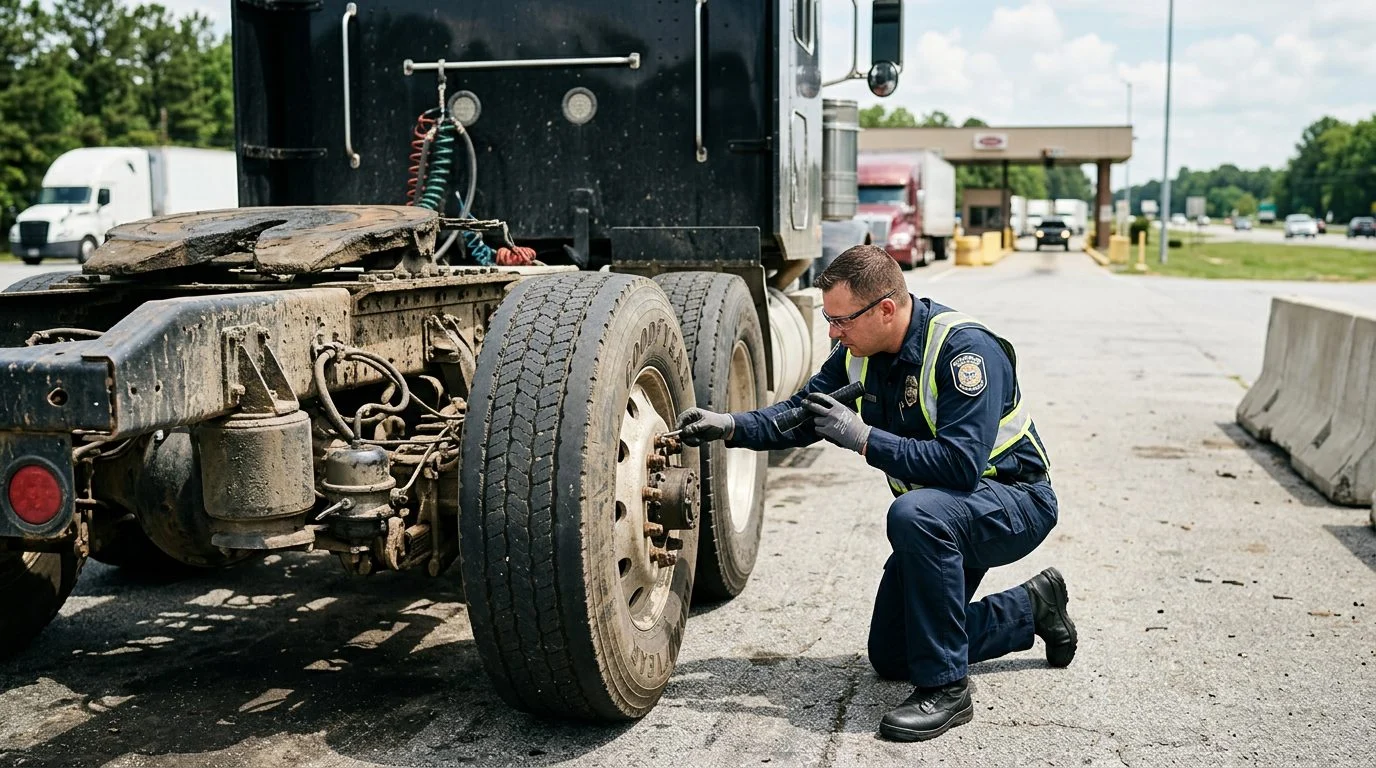
Truck Black Box Crash Data Georgia: A Plain Guide
By Terance Madden · Published October 19, 2026
A truck’s black box is a computer that can store crash-related data, and that data can show what the truck was doing before a wreck. In a Georgia injury claim, it is one piece of evidence. It works best alongside other trucking records, and it can be lost if no one asks for it in time.
This page explains what the black box is, what it usually records, and which other truck records often matter. It also covers how Georgia’s fault rules and filing deadline affect timing. Terance Madden has been in practice since 1999, and T. Madden & Associates, P.C. represents people hurt in truck and car wrecks in Georgia.
What a Truck’s Black Box Is and Where It Sits in the Cab
A truck’s black box is usually its engine control module (ECM), a computer that monitors how the engine and vehicle run. Many heavy trucks also act as event data recorders (EDRs). According to NHTSA research on event data recorders, truck EDRs may record technical vehicle, occupant, driver-input, crash-signature, restraint, and post-crash information around a highway crash.
The device is built into the engine and electronics. It is not a separate box sitting in plain view. Drivers rarely see it, and most people don’t know it exists. Someone has to know it is there before it can be read.
Different makes and model years store different data. Two trucks in the same wreck can produce different records. That is why the exact make, model, and year matter early. The device can also be damaged in the crash itself, so its condition and location need to be checked.

What the Data Typically Records Before and During a Crash
The recorder usually keeps a short window of data around a triggering event, such as a hard stop or airbag deployment. Think of it as a short clip, not a full trip diary. It shows the moments near impact.
What a recorder logs depends on the system. Commonly, the data includes vehicle speed, brake use, throttle position, and engine speed. Some systems also note whether cruise control or the clutch was in use. Which items exist in a specific truck must be confirmed from that truck’s system.
Because the window is short, prompt collection matters. If the data is never read, or normal use overwrites it, the moment of the crash may not survive. Speed and brake information from that moment is often the most valuable part.
Other Truck Records That Often Sit Alongside the Black Box
Other records often matter as much as the black box. The black box covers the crash moment. The paper and electronic records cover the hours and days around it.
Electronic logging devices (ELDs) are one example. Under federal ELD rules, an ELD automatically records date, time, truck location, engine hours, vehicle miles, and driver, vehicle, and carrier identification. These records help show driver hours of service.
Maintenance records are another. Under federal maintenance rules, a carrier must keep inspection, repair, and maintenance records for each vehicle it controls. Those records must be kept for one year, and for six months after the truck leaves the carrier’s control.
Driver files also matter. Testing records follow their own schedule. Under federal testing record rules, driver alcohol test results indicating an alcohol concentration of 0.02 or greater must be maintained for a minimum of five years, while negative and canceled controlled substances test results, and alcohol test results with a concentration of less than 0.02, must be maintained for a minimum of one year.
Companion evidence can help too. Dash-camera footage, GPS data, dispatch messages, and cargo records can all add detail. What exists varies by carrier and by equipment.
Can Black Box Data Be Used in a Georgia Injury Claim?
Yes, crash data from a truck can be used as evidence in a Georgia injury claim. The court decides what evidence it will accept, though. The data must be pulled correctly, tied to the right truck, and stored in a way that can be checked later.
Good handling matters. Someone should record who downloaded the data, when, and with what tools. That record is often called a chain of custody. If it is missing, the other side can challenge whether the data reflects the crash.
Vehicle data can matter in other cases too. Car, motorcycle, and wrongful death claims may also turn on vehicle records. Each claim has its own facts, so the records that matter will change from case to case.
How Speed and Braking Data Can Support a Claim
Speed and braking data can show how fast the truck was moving and whether the driver braked before impact. Those numbers can be compared with the posted limit, road conditions, and marks left at the scene. Together, they help build a timeline.
Timing is often the hardest thing to recall. A witness may say the truck “was coming fast,” but cannot estimate seconds. A recorder can show speed over the short window it saved. That gives the timeline a measured starting point.
Brake and throttle data can also show when the driver reacted. A delay between a hazard and a brake signal can matter to the sequence. The data shows what the truck did, not why it did it. Explaining why takes other evidence.
Reconstructing the Crash With Recorded Data
Accident reconstruction combines recorder data with photographs, vehicle damage, roadway measurements, and the police report. Qualified reconstruction professionals do this work. They analyze the data and explain how it fits the physical evidence.
The goal is a clear sequence of events. Reconstruction shows what happened first, what happened next, and where each vehicle was. That sequence can be shared with an insurance adjuster, the other side, or a court.
Reconstruction does not end with the data download. Damage patterns and road marks can confirm or challenge what the box shows. When they agree, the story is easier to follow. When they don’t, the team needs to find out why.
Why Crash Data Can Disappear and Why Timing Matters
Crash data can be lost, and the trucking company usually controls the records. Under federal record retention rules, companies subject to this part must keep records for the minimum retention periods provided in appendix A. After those periods, records may be destroyed at the company’s discretion, but this does not excuse compliance with the lawful requirements of any other governmental body prescribing longer retention periods.
Records can also be kept in digital form. Under federal preservation rules, records may be preserved by any technology that accurately reflects the information and stays readable later. Trucks are often repaired and returned to service quickly after a wreck, so the damage and any stored data can change.
A written request asking the company and its insurer to keep crash records puts them on notice. Our team can help identify what to ask them to keep.
Deadlines matter too. O.C.G.A. § 9-3-33 says actions for injuries to the person must be brought within two years after the right of action accrues. That statute begins with “except as otherwise provided,” so other rules can apply to some claims. Early action helps gather records while they still exist.
How Georgia Fault Rules Interact With Crash Data
Georgia reduces an injured person’s damages by their share of fault. It bars recovery if that share reaches 50 percent. Under O.C.G.A. § 51-12-33, the judge reduces damages in proportion to the plaintiff’s percentage of fault. Under subsection (g), a plaintiff who is 50 percent or more responsible recovers no damages.
The same statute apportions the award among liable persons by percentage of fault. Under subsection (b), each person’s share is their own liability, not joint liability. Under subsection (c), the fault of all persons who contributed to the injury is considered, even nonparties.
Crash data cuts both ways. A recorder might show the truck was speeding. It might also show the other driver pulled out late. Each side reads the same records to support its own view. The full record matters, not only the parts that help one side.
How fault is divided depends on the facts of each crash.
Common Proof Gaps That Weaken Black Box Cases
Black box evidence is weaker when no one can show how it was pulled, stored, or read. A recorder that was never downloaded cannot help. A missing chain of custody invites challenge.
Recorder data also has limits. It does not show driver fatigue, distraction, or what a driver could see. Those points need other proof. Under federal rules on impaired drivers, no driver may operate a commercial vehicle while alertness is so impaired, or so likely to become impaired, by fatigue, illness, or any other cause, that it is unsafe, except in a case of grave emergency where the hazard to occupants of the commercial motor vehicle or other users of the highway would be increased by compliance with this section, in which case the driver may continue to operate the commercial motor vehicle to the nearest place at which that hazard is removed. Hours-of-service records can help test that question.
Records can also be altered. Under federal hours-of-service recording rules, no driver or carrier may make a false report about duty status. They also may not tamper with an ELD so it fails to record data accurately.
Missing ELD, maintenance, or camera records leave gaps in the timeline. The other side may use those gaps to argue its version. Requesting records early helps reduce the number of gaps.
Talk With T. Madden & Associates About Your Truck Crash
If you’re researching a truck crash that hurt you or someone you love, you may be dealing with injuries, missed work, and questions about the other driver’s company all at once. Our team knows that is a lot to carry.
Common Questions
Is a truck’s black box the same as an ELD?
No. The black box records crash-related vehicle data, while an ELD records driving time and duty status.
Can a trucking company keep its records forever?
Federal rules set minimum retention periods. After those periods, companies may destroy records at their discretion, but this does not excuse compliance with the lawful requirements of any other governmental body prescribing longer retention periods for any category of records.
Does black box data prove who was at fault?
Not by itself. It works best alongside photos, other records, and witness accounts.
How long do I have to file an injury claim in Georgia?
Georgia generally allows two years for injury claims under O.C.G.A. § 9-3-33, though other rules can apply.
Terance Madden is the responsible lawyer for T. Madden & Associates, P.C. The firm has offices in Jonesboro (Clayton County), Atlanta, Decatur, Macon, and Augusta. The first consultation is free, confidential, and carries no obligation to continue. If you want to talk through your truck crash, including the truck, the crash date, and which records may still be preserved, reach out through our free case evaluation page.