

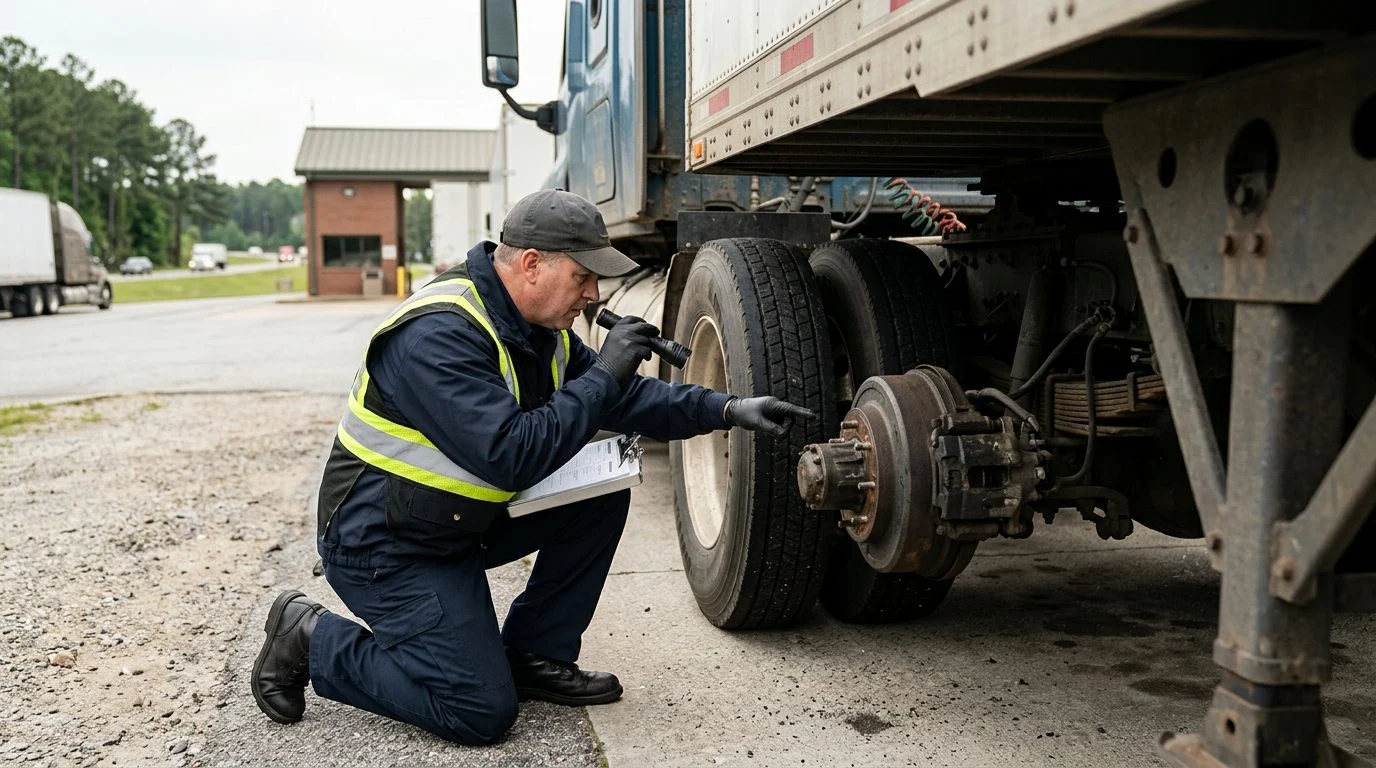
Truck Accident Lawyer · Georgia
Hurt in a work zone crash with a truck? Get a clear picture of your options.
Narrow lanes, shifting traffic and heavy equipment leave little room for error. Our team reviews who was involved and what caused the crash.
T. Madden & Associates, P.C.
1999
Year the firm began practice
5
Offices across Georgia
By Terance Madden · Published November 17, 2026
A truck crash in a work zone in Georgia can have more than one responsible party. The truck driver, the trucking company, a road contractor, and a government road agency may each share fault. Georgia’s fault rules decide how much of your recovery is reduced. This page explains each party, the deadlines that matter most, and the evidence that often shows who caused the crash.
Why a Work Zone Truck Crash Can Involve More Than One Responsible Party
Several parties can be responsible because a work zone creates many chances for things to go wrong at once. Lanes narrow, cones and barriers shift traffic, and drivers must slow down or merge quickly. A heavy truck needs more room to stop and turn, so small mistakes can have large results. If you were hurt, or you are caring for someone who was, this is probably a situation you did not expect.
Four groups usually come up: the truck driver, the trucking company, road contractors and subcontractors, and government road agencies. Each group may have its own insurer. That is why one crash can lead to several claims rather than one. The rest of this page takes each group in turn.
If a crash in a lane closure or construction zone left you hurt, more than one party may share responsibility, and our team is glad to talk it through with you. Talk it through with our team — the first consultation is free, confidential, and carries no obligation.
How Georgia Divides Fault in a Truck Accident
Georgia reduces your recovery by your own share of fault. It bars recovery entirely at 50 percent or more (O.C.G.A. § 51-12-33; Quynn v. Hulsey (2020)). Under O.C.G.A. § 51-12-33, the judge reduces your damages in proportion to your fault. If you are 50 percent or more responsible, you do not receive any damages.
The same statute says each liable person pays only its own share. Those shares are not joint liability, and they are not subject to contribution. The jury must also weigh the fault of everyone who contributed to the injury, even someone who was never sued.
Imagine a jury finds you 20 percent at fault. Your award drops by 20 percent. Each other party then answers only for its own assigned share. How fault is split among drivers, companies, and contractors can change the final result. Each case turns on its own facts.
The Truck Driver’s Duty on a Work Zone Roadway
Federal rules say that when rain, fog, dust, smoke, or similar conditions reduce visibility or traction, the driver must use extreme caution and reduce speed. See 49 C.F.R. § 392.14.
Work zone crashes often involve drivers who speed through reduced-speed areas, follow too closely, miss merging or stopped traffic, or change lanes near barriers. Distraction is another common cause.
Hours-of-service rules also matter. See 49 C.F.R. § 395.3. See 49 C.F.R. § 395.3. A tired driver can make the same mistakes as a distracted one.
A driver’s own conduct can be the starting point for a claim. That remains true even when a contractor or agency also played a role. Read more about when a driver says it was your fault.
When the Trucking Company Can Be Held Responsible
A trucking company can be held responsible for a driver’s negligence on the job. Under O.C.G.A. § 51-2-2, every person is liable for torts committed by a servant in the prosecution and within the scope of his business. This is the rule behind respondeat superior, where the employer answers for an employee’s work-related negligence.
The company may also face claims of its own. In Quynn v. Hulsey, the Georgia Supreme Court held that an employer that admits respondeat superior can still be sued for its own negligent hiring, retention, supervision, training, or entrustment. These claims focus on what the company knew or should have known about a driver.
Federal rules require a motor carrier to keep a driver qualification file while the driver is employed and for three years afterward. See 49 C.F.R. § 391.51. Those files can show what the company checked. The company’s own insurance may be a separate source of payment from the driver’s.
Road Contractors, Subcontractors, and Traffic Control Companies
A road contractor can share responsibility when its lane closures, signs, barriers, or traffic controls fail. Under O.C.G.A. § 51-2-5, an employer can be liable for a contractor’s negligence in listed situations. Those include a violated statutory duty, work that is dangerous in its nature, and an employer that keeps control over how the work is done.
Possible failures include missing or misplaced signs, poorly marked lane shifts, inadequate barriers, unsafe drums or cones, weak lighting, and pavement drop-offs. General contractors and subcontractors may both be involved. Responsibility often turns on who set up and maintained the work zone at the time of the crash.
Traffic control plans show what should have been in place. Columbia County’s work zone traffic control procedures explain which entities provide public protection and prepare temporary traffic control plans for county-maintained roads. A contractor’s insurer may be separate from the trucking company’s insurer.
Government Road Agencies and Special Notice Rules
Claims against a city can require written notice within six months of the event upon which the claim is predicated. For a city, the claim must be presented in writing to the governing authority within six months of the event. See O.C.G.A. § 36-33-5. The notice must state the time, place, and extent of the injury, and the negligence that caused it. It must also include the specific amount of money damages sought. The governing authority must act within 30 days of presentation.
For the state, written notice is due within 12 months of when the loss was discovered or should have been discovered. See O.C.G.A. § 50-21-26.
Don’t wait to learn who owns the road. Note the road name, any agency signs, and the contractor’s name. These details help identify which entity and which notice rule apply.
Not sure what your next step is?
Talk it through with our team — the first consultation is free, confidential, and carries no obligation.
Evidence That Helps Show Who Caused a Work Zone Crash
The strongest evidence shows where the lanes, signs, barriers, and the truck were at the moment of the crash. Start with the police crash report, photos and video of the scene, witness names, and damage to each vehicle. Photos taken soon after the crash can show signs, lane shifts, and barrier placement before the setup changes.
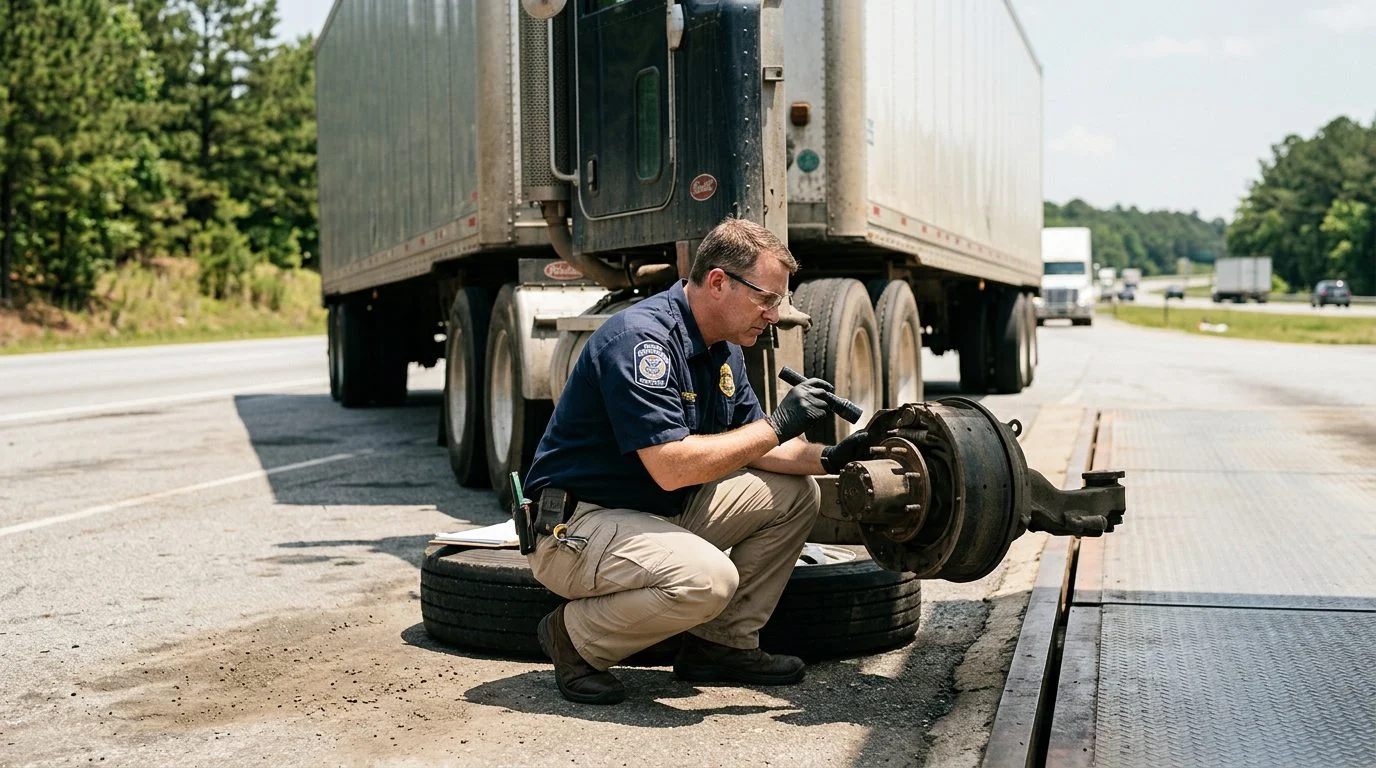
Trucking records can show how the driver operated. These include electronic logging device data, dispatch messages, driver qualification files, and records of duty status. Federal rules require a motor carrier subject to these hours-of-service rules, other than a private motor carrier of passengers (nonbusiness), to have each driver it uses record their duty status for each 24-hour period (49 C.F.R. § 395.8). Ask for these records early.
Keep medical records, receipts, and a written account of what you remember while it is fresh. Avoid posting details about the crash online. Public posts about the crash can be read by the other side.
Time Limits, Insurance Limits, and What Recovery Can Involve
Georgia generally allows two years from the date the right of action accrues for injury claims (O.C.G.A. § 9-3-33; Kenneth B. Cameron v. Jmp Pizza, Inc (2026)). See O.C.G.A. § 9-3-33. The statute has exceptions, and claims against government entities can have shorter notice periods, as explained above.
Insurance limits set how much coverage is available. You can learn about Georgia minimum liability insurance limits and what coverage numbers like 100/300/100 mean in this guide. Lane-change and blind-spot crashes involving trucks in Clayton County raise similar fault questions, covered in this Clayton County guide.
T. Madden & Associates, P.C. is a Georgia personal injury firm in practice since 1999. It has offices in Jonesboro, Atlanta, Decatur, Macon, and Augusta. Terance Madden is the responsible lawyer for this page. The firm’s lawyers include Terance Madden and Shenia Madden.
Talk Through Your Work Zone Crash With Our Team
Working out which driver, company, contractor, or agency to involve is hard while you’re still recovering. Questions often come up early, and you don’t have to answer them alone.
Can a trucking company be liable if its driver caused the crash?
Georgia law can hold a company responsible for a driver’s negligent acts done within the scope of the driver’s work. The company may also face its own claims, such as negligent hiring.
Do I lose everything if I was partly at fault?
Not unless your share is 50 percent or more (O.C.G.A. § 51-12-33; Quynn v. Hulsey (2020)). Below that line, your damages are reduced by your percentage of fault.
How long do I have to file?
If a crash in a lane closure or construction zone left you hurt, share the date, the location, and any paperwork you have through our contact page. You’ll get a free, confidential first consultation with no obligation to continue. The firm works on a no-fee-unless-we-win basis, but you may still be responsible for court costs and case expenses. Our offices are in Jonesboro, Atlanta, Decatur, Macon, and Augusta, and our phone line is available 24/7.