

Truck Accident Lawyers · Georgia
More Than One Party May Be Involved in a Truck Crash
T. Madden & Associates, P.C. has represented people hurt in Georgia since 1999. Learn which drivers and companies may be named after a truck wreck, then talk with our team about your situation.
About T. Madden & Associates, P.C.
1999
In practice since
5
Offices: Jonesboro, Atlanta, Decatur, Macon and Augusta
By Terance Madden · Published November 5, 2026
Short answer: In a Georgia truck crash, the truck driver and the trucking company that employed or dispatched the driver can both be named. Other businesses whose conduct contributed to the wreck can also be named. Who can be sued after a truck crash in Georgia turns on what caused the crash.
This page walks through each group in plain language. It also explains the fault rules and deadlines that shape these claims. For a broader view, read our truck accident claims guide. T. Madden & Associates, P.C. has practiced personal injury law since 1999.
Who Can Be Named in a Georgia Truck Crash Lawsuit?
Georgia law looks at everyone who contributed to the harm, not only the person behind the wheel. In an action for injury, the trier of fact must consider the fault of all persons or entities who contributed to the injury, “regardless of whether the person or entity was, or could have been, named as a party to the suit” (O.C.G.A. § 51-12-33).
That is why the defendant list can grow beyond the driver. Other businesses can be part of the chain of events that led to a crash. Examples include a company that loaded cargo badly, a repair shop that worked on brakes, or a parts maker whose product failed. A city responsible for a roadway may also be involved in some crashes. Each possibility has its own rules, covered below.
Your starting point is the crash itself. Ask what went wrong and who had a role in it. The right defendants follow from that answer.
If you're sorting out who may be responsible after a truck crash that hurt you or someone you love, you don't have to do it alone. Talk with Terance Madden in a free, confidential first consultation. Talk it through with our team — the first consultation is free, confidential, and carries no obligation.
The Truck Driver
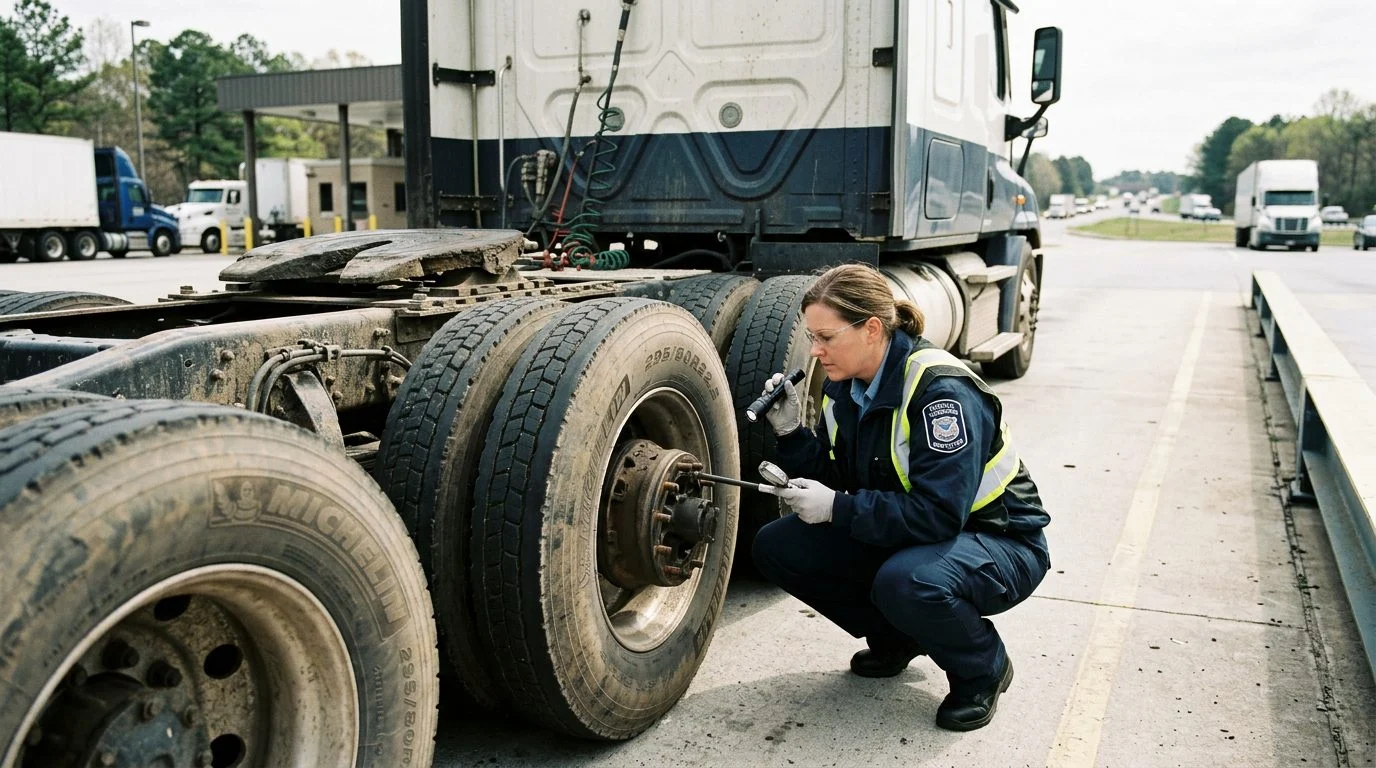
The truck driver can be named for his or her own driving. A driver who speeds, follows too closely, looks away from the road, or drives while fatigued may be found at fault.
Federal rules also set steps after certain crashes. As soon as practicable following an occurrence involving a commercial motor vehicle operating on a public road in commerce, each employer must test for alcohol each of its surviving drivers who was performing safety-sensitive functions with respect to the vehicle if the accident involved the loss of human life, or who receives a citation within 8 hours of the occurrence under State or local law for a moving traffic violation arising from the accident, if the accident involved bodily injury to a person who immediately receives medical treatment away from the scene, or one or more motor vehicles incurring disabling damage that requires the vehicle to be transported away from the scene by a tow truck or other motor vehicle (49 C.F.R. § 382.303). If an alcohol test is not given within two hours, the employer must keep a record of why. The employer must stop trying to give an alcohol test after eight hours, and stop trying to give a drug test after 32 hours (49 C.F.R. § 382.303).
The same rule says nothing in it requires delaying necessary medical care for injured people. Medical care comes first. Testing results can matter to fault, and our post-crash drug test guide covers that topic in more detail.
The Trucking Company and Vicarious Liability
A trucking company is often named alongside its driver when the driver was working for that company. The company may be the employer, the motor carrier, or the business that dispatched the load. Federal rules place duties on the carrier, not only the driver. Under federal rules, where a duty is prescribed for a driver or a prohibition is imposed on the driver in these parts, “it shall be the duty of the motor carrier to require observance” of that duty or prohibition (49 C.F.R. § 390.11).
Carriers that operate across state lines must register with the federal agency and obtain a USDOT number (FMCSA). Georgia also ties registration for for-hire intrastate carriers to proof of insurance (O.C.G.A. § 40-2-140). O.C.G.A. § 40-2-140 provides that no for-hire intrastate motor carrier shall be issued a registration unless there is filed with the commissioner a certificate of insurance for such applicant or holder, on forms prescribed by the commissioner, evidencing a policy of indemnity insurance by an insurance company licensed to do business in this state.
Who the driver worked for matters. Leased drivers, owner-operators, and drivers hauling for a broker can raise different questions. Those facts are often the first thing to pin down.
Negligent Hiring, Training, Supervision, and Entrustment Claims
A claim can allege the company was careless when it hired, trained, supervised, or kept a driver. It can also allege the company let an unfit driver use a truck. These claims look at what the company did, or failed to do, before the crash.
Federal rules require every motor carrier to keep a driver qualification file for each driver it employs. That file must be kept for as long as the driver works for the carrier, and for three years after (49 C.F.R. § 391.51). Carriers running commercial vehicles must install and require drivers to use electronic logging devices to record duty status, unless a motor carrier may require a driver to record the driver’s duty status manually in accordance with this section, rather than require the use of an ELD, if the driver is operating a commercial motor vehicle under the conditions listed in 49 C.F.R. § 395.8.
These records can show driving hours, training, and driving history. Duty-status records need only be kept for six months, so early requests matter (FMCSA). Acting early helps keep these records from being lost.
Other Parties: Cargo, Maintenance, Brokers, Manufacturers, and Government Entities
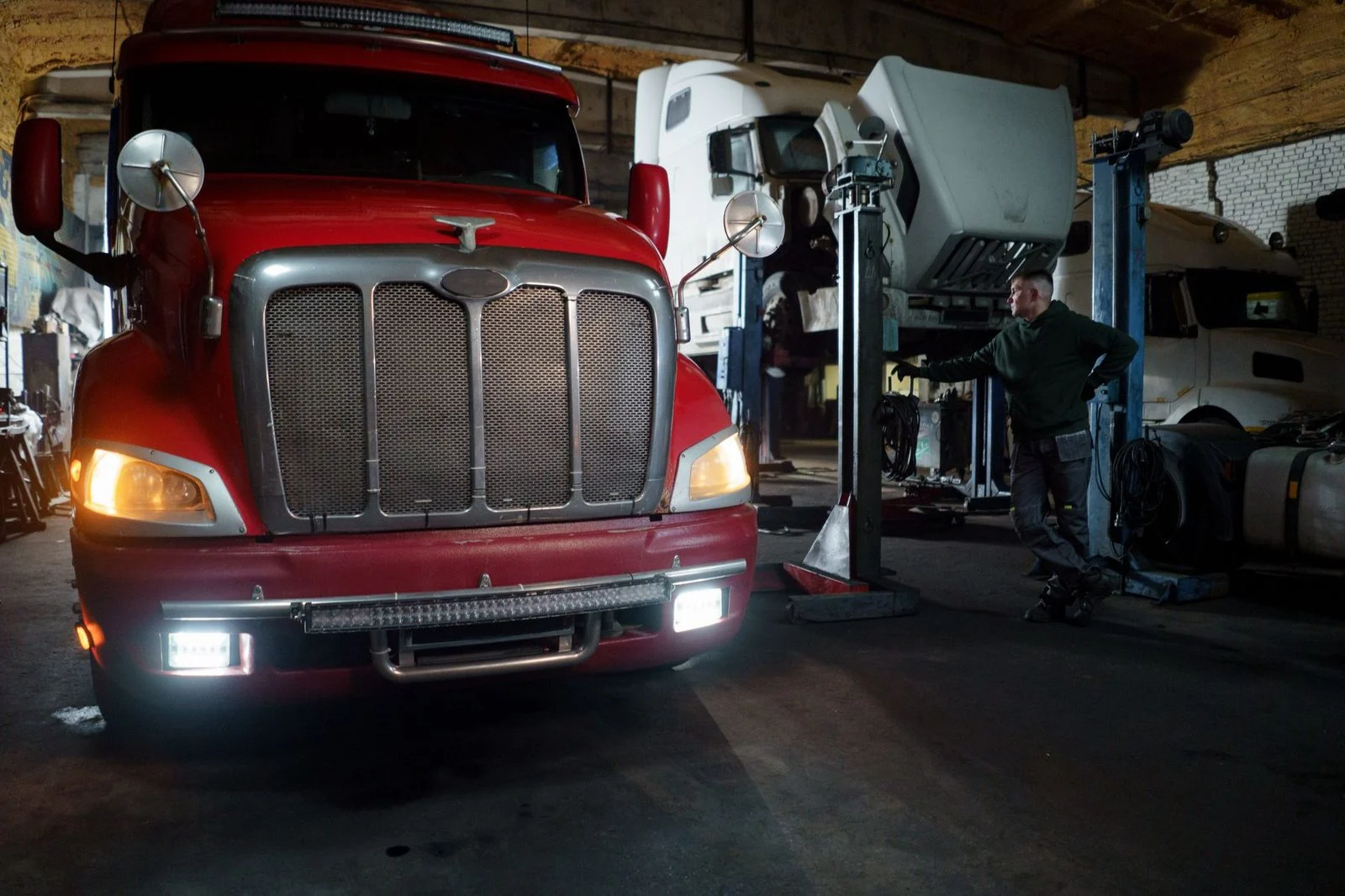
Other businesses can be named when their own conduct helped cause the crash. Cargo loaders or shippers may have loaded or secured freight improperly. Maintenance shops may have done poor work on brakes or tires. Freight brokers and parts makers can also be part of the chain of fault.
Government bodies follow a stricter notice rule. Under O.C.G.A. § 36-33-5, a claim against a city must be presented in writing to the city’s governing authority within six months of the event. The claim must state the time, place, and extent of the injury, as nearly as practicable, including the specific amount of monetary damages being sought, and the negligence that caused it. Courts cannot hear the suit until that claim has first been presented. O.C.G.A. § 36-33-5 reads: “(c) Upon the presentation of such claim, the governing authority shall consider and act upon the claim within 30 days from the presentation; and the action of the governing authority, unless it results in the settlement thereof, shall in no sense be a bar to an action therefor in the courts.”
The claim must also state a specific dollar amount of damages sought. The governing authority must act within 30 days of presentation. O.C.G.A. § 36-33-5 reads: “(c) Upon the presentation of such claim, the governing authority shall consider and act upon the claim within 30 days from the presentation; and the action of the governing authority, unless it results in the settlement thereof, shall in no sense be a bar to an action therefor in the courts.”
Can You Sue Your Employer in Georgia?
The answer turns on how the job connects to the crash, so the employer question needs its own review. If you were working when you were hurt, your work relationship can change which claims apply. Work-related injuries can follow different rules than crashes with a stranger’s truck.
A common mistake is assuming the employer is the only party to consider. A worker hurt by another company’s truck may need to look at that other driver and carrier. A worker’s own employer may be a separate question entirely. Raising both questions early lets the facts sort out the path.
Not sure what your next step is?
Talk it through with our team — the first consultation is free, confidential, and carries no obligation.
Georgia’s Fault Rules and How Multiple Defendants Are Weighed
Georgia reduces an award by the injured person’s share of fault. A person who is 50 percent or more responsible may recover nothing (O.C.G.A. § 51-12-33; Quynn v. Hulsey (2020)). The judge “shall reduce the amount of damages otherwise awarded to the plaintiff in proportion to his or her percentage of fault” (O.C.G.A. § 51-12-33). Under the same statute, the plaintiff “shall not be entitled to receive any damages” at 50 percent or more.
When more than one defendant is at fault, the jury apportions damages by each person’s share. Each defendant answers for its own apportioned share. Those shares are not joint, and they are not subject to any right of contribution (same statute).
A defendant can also point to a nonparty. Pointing to a nonparty requires either that the plaintiff entered into a settlement agreement with the nonparty, or that a defending party gives notice “not later than 120 days prior to the date of trial” by filing a pleading in the action designating the nonparty, with the nonparty’s name and last known address (or best available identification) and a brief statement of the basis for believing the nonparty at fault (same statute).
Punitive damages are a separate question. Georgia allows punitive damages only in tort actions where clear and convincing evidence shows willful misconduct, malice, fraud, wantonness, oppression, or that entire want of care which would raise the presumption of conscious indifference to consequences (O.C.G.A. § 51-12-5.1 (Clark v. Leigh (and Vice Versa) (2026))). Punitive damages punish and deter. They are not paid as compensation. Our punitive damages guide explains this in more detail.

Filing Deadlines, Insurer Contact, and Next Steps
Georgia generally gives two years to file a personal injury claim (O.C.G.A. § 9-3-33; Kenneth B. Cameron v. Jmp Pizza, Inc (2026)). Under O.C.G.A. § 9-3-33, actions for injuries to the person must be brought within two years after the right of action accrues, except for actions for injuries to the person involving loss of consortium, which shall be brought within four years after the right of action accrues.
If someone died, the rules differ. Under O.C.G.A. § 51-4-2, a surviving spouse may recover for the homicide of a spouse, or a child or children if there is no surviving spouse. The spouse receives no less than one-third of any recovery.
Under O.C.G.A. § 40-1-112, the insurer may be joined only when a related motor carrier is insolvent or bankrupt, or when personal service cannot be made after reasonable diligence against the driver of the vehicle of the motor carrier giving rise to the cause of action or against the motor carrier. Our guide to early insurer settlement offers covers that next step.
T. Madden & Associates, P.C. offers a free first consultation, which is confidential and carries no obligation to continue. The firm works on a no-fee-unless-we-win basis, but you may still be responsible for court costs and case expenses.
Frequently asked questions
Who can be sued after a truck crash in Georgia?
The truck driver and the trucking company that employed or dispatched the driver can both be named. Other businesses whose conduct contributed can also be named.
How long do I have to file a claim?
Georgia generally allows two years after the right of action accrues for injury claims. Shorter notice rules apply to claims against a city.
Can I sue a city over a road-related truck crash?
A written claim must first be presented to the city’s governing authority within six months of the event.
Is a direct suit against a trucking company’s insurer allowed?
Under Georgia’s motor carrier joinder rule, the insurer may be joined only in narrow circumstances.
Terance Madden is the responsible lawyer for T. Madden & Associates, P.C. If you’re sorting out who may be responsible after a truck crash that hurt you or someone you love, you don’t have to do it alone. You can start a free case evaluation with the firm.
Disclaimer: This page is general information, not legal advice. Terance Madden is the responsible lawyer for T. Madden & Associates, P.C., with offices in Jonesboro, Atlanta, Decatur, Macon and Augusta. Contact: tmaddenlaw.com/contact.
Who may be named after a Georgia truck crash
The truck driver
The driver may be named for their own conduct behind the wheel, such as speeding, distracted driving or fatigue.
The trucking company
The company that employed or dispatched the driver may be named as well, depending on the facts of the crash.
Companies that loaded, maintained or repaired the truck
Cargo loaders, maintenance contractors and repair shops may be named if their work contributed to the crash.
Other businesses whose conduct contributed
Other companies whose actions played a part in the collision may also be named. Our team reviews each crash on its own facts.
Protect your evidence early
Photos, the crash report number, witness names and medical records can all matter later. Be cautious about giving recorded statements to anyone other than your own lawyer before you have spoken with one.
How our team can help
Call 24/7
Reach out any time to talk about your truck crash with our team.
Free first consultation
Your first consultation is free, confidential and without obligation to continue.
No fees unless there is a recovery
Clients may still be responsible for court costs and case expenses.
Offices across Georgia
Serving clients from our offices in Jonesboro, Atlanta, Decatur, Macon and Augusta.