

Car Accident Lawyer | Georgia
Police Respond to Hit-and-Run Crashes. Here's What Happens Next.
T. Madden & Associates, P.C. has helped people hurt in Georgia crashes since 1999. Talk with our team about your hit-and-run case from our Jonesboro, Atlanta, Decatur, Macon or Augusta office.
Serving Georgia Since 1999
1999
Year the firm began practice
5
Offices across Georgia
By Terance Madden · Published October 30, 2026
Yes. In Georgia, police respond to hit-and-run crashes, write them up, and can open an investigation. How far that investigation goes depends on the leads officers can find. This guide explains what officers do at the scene, what happens if they find the driver, and what you can do now to help. If you were hurt, or someone you care about was, the first days after the crash matter. The steps below take only minutes, and they can help a case later.
What police do at the scene of a hit and run
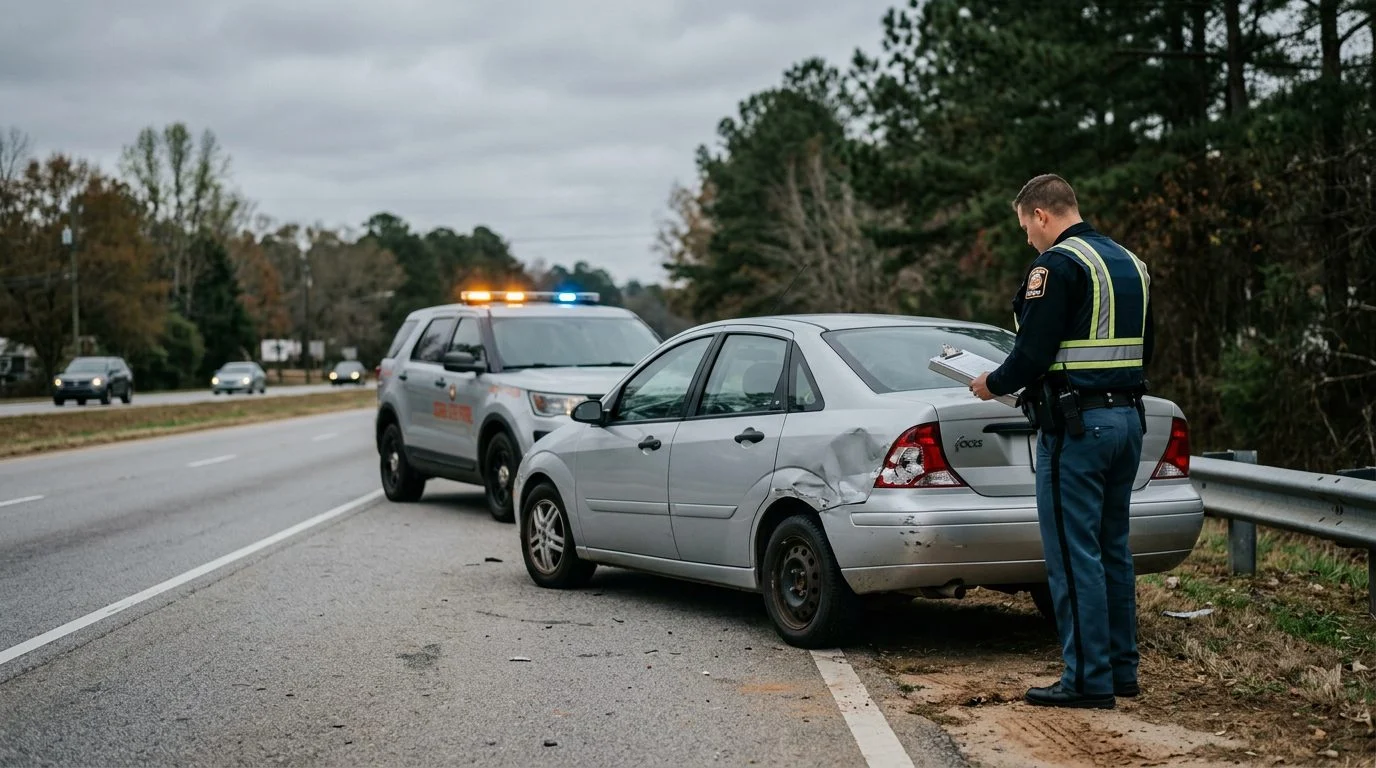
An officer’s first job is to check for injuries and get medical help to anyone who needs it. After that, the officer documents what is there. That usually includes the vehicles and where they stopped, debris on the road, skid marks, and any witnesses who stayed behind.
Before you leave the scene, ask the officer for a report number. Your report number is how you track the file, request a copy, and give it to your insurance company. Write it down with the date, the time, and the officer’s name and badge number.
Tell the officer everything you remember, even small details. A partial plate, a color, a sound, or the direction the other car was headed can give investigators a place to start. Report what you saw, not what you guess. A clear, honest account helps the file more than a long one full of assumptions.
If the other driver left and no officer reached you, a report can still be made. Keep every note you make. Those notes are your own record of what happened.
If a driver left you or someone you love hurt, you don't have to sort out the police, insurance and deadlines alone. Our team is here to talk through your options. Talk it through with our team — the first consultation is free, confidential, and carries no obligation.
Will police investigate a hit and run in Georgia?
Yes, police can investigate. A crash investigation looks at what happened on the road and what the evidence shows about it.
A driver who drives away has skipped those duties. That is why police treat these crashes as a case to work, not a minor fender-bender.
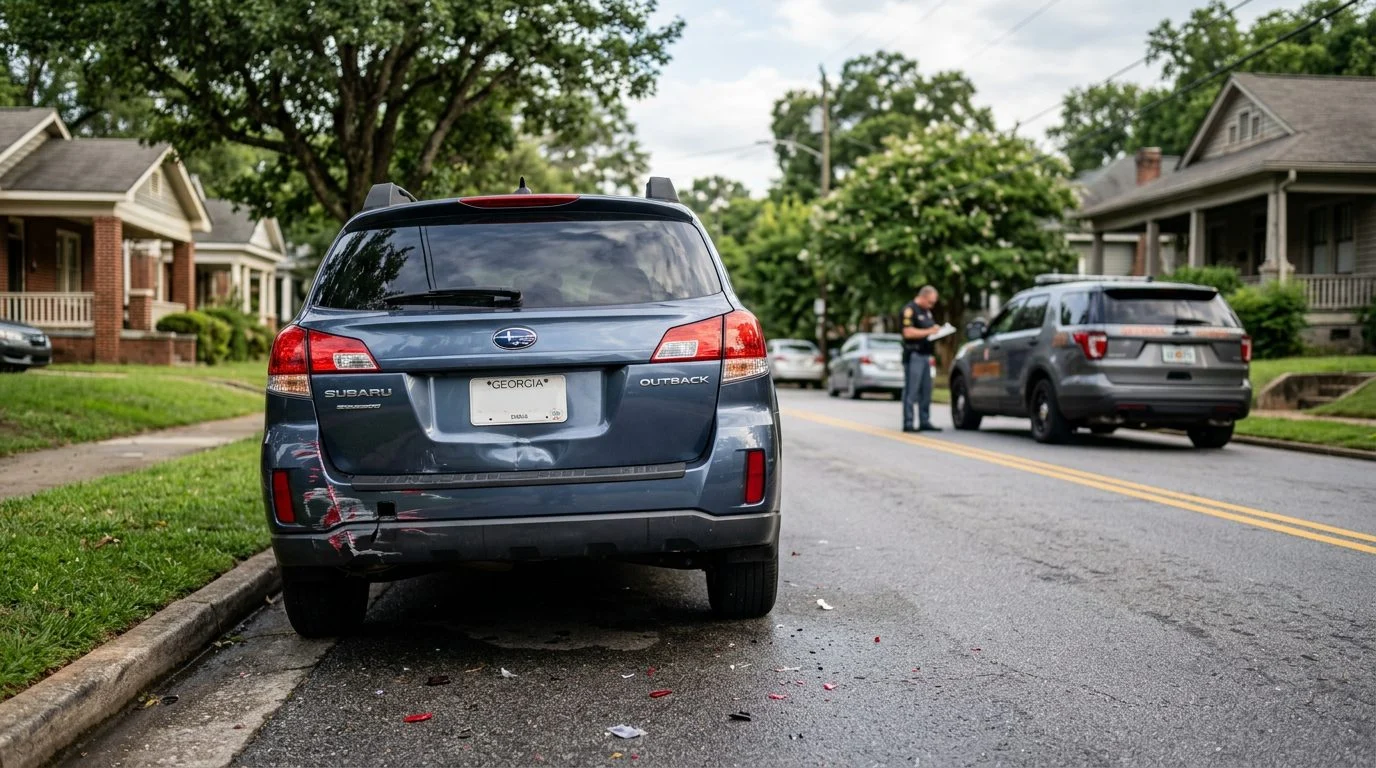
How far the investigation goes depends on the leads. Useful leads include vehicle debris, pieces of a broken light or bumper, partial plate numbers, surveillance video, and witness descriptions. With strong leads, investigators have a path to follow. With few leads, the case can stall.
That is why your own records matter. Keep photos, medical notes, witness names, and a log of your calls. If the investigation slows down, your records still show what happened.
How long does a hit-and-run investigation take?
There is no fixed timeline for a hit-and-run investigation. Some cases move quickly once a lead appears. Others stay open for a long time, especially when the crash left little physical evidence. A quiet week does not mean the case is closed.
Ask the agency for the case or report number and the name of the assigned officer. Keep a written log of every follow-up call. Record the date, the time, the person you spoke with, and what they told you. That log helps if you need to call again or give information to an insurer.
Once a report is filed, you can ask for a copy. Read the process on that page before you file a request.
What happens if police identify the driver?
If police identify the driver, the case moves toward charges, and a judge may become involved.
Keep the criminal case separate from your injury claim. A criminal charge does not pay your medical bills or repair your car. Your civil claim has to stand on its own proof.
Don’t assume the criminal case sets your deadline. Georgia’s general personal injury deadline is two years, under O.C.G.A. § 9-3-33 as quoted in a Georgia Court of Appeals opinion. A criminal prosecution can pause the time limit for a tort claim brought by the victim of the crime, under O.C.G.A. § 9-3-99. That pause cannot run longer than six years, except as the statute otherwise provides.
Do police get involved in parking lot and private property crashes?
Police may take a report for a parking lot crash, but the response can differ from a crash on a public road. The agency decides how it responds, based on what happened and what is on scene. Give the agency the facts as you know them, and keep any report number you receive.
Property owners, store managers, and security staff may have camera footage or an incident report. Ask them to save the video right away. Many camera systems record over older footage on a set schedule, so the sooner you ask, the better. Write down the name of the person you spoke with and the time you made the request.
Take photos of the spot where the crash happened before vehicles move, if you can do so safely. Parking lot lines, signs, and the position of the cars can matter later. Keep these photos with your other records.
What to do right after a hit and run to help the investigation
Clear, quick notes are among the most useful things you can give investigators. Start with safety. Call 911 and stay at the scene if it is safe to do so. Then:
- Photograph both vehicles, the damage, the roadway, and any debris.
- Write down the time, the exact location, and the direction each vehicle was traveling.
- Note any part of the plate, plus the make, model, color, and any damage or stickers on the other vehicle.
- Get the names and phone numbers of witnesses, even if they say they saw very little.
- Ask nearby businesses whether they have cameras that face the road, and ask quickly.
Get checked by a doctor, even if your injuries seem minor. Keep every bill, receipt, and medical record. Georgia law says necessary expenses that come from an injury are a legitimate item in the estimate of damages (O.C.G.A. § 51-12-7). Special damages, which are the losses that actually flow from the crash, must be proved to be recovered (O.C.G.A. § 51-12-2). Your paperwork is how you prove them.
Not sure what your next step is?
Talk it through with our team — the first consultation is free, confidential, and carries no obligation.
Insurance options when the other driver is never found
If the other driver is never found, your own auto policy may be an important source of coverage. Georgia law requires auto liability policies to include uninsured motorist coverage, within the limits the statute describes (O.C.G.A. § 33-7-11). The policy’s own terms and limits control what it pays.
Pull out your policy’s declarations page and check your uninsured motorist limits. Report the crash to your insurer promptly. Give the insurer the police report number and the notes from your call log. Keep copies of everything you send and receive.
Whether a particular claim is covered depends on the policy language and the facts of your crash. Bring your policy and your records to that conversation.
Talk with T. Madden & Associates about a hit and run
A hit-and-run crash can leave you hurt, caring for someone who was hurt, and waiting on a police report while bills keep arriving. Here are short answers to common questions.
Common questions
Will police do anything about a hit and run?
Yes. Police respond, document the crash, and can investigate, but the leads they find shape how far the case goes.
How long do I have to sue after a hit and run in Georgia?
Georgia’s general personal injury deadline is two years under O.C.G.A. § 9-3-33. A criminal case may pause that clock under O.C.G.A. § 9-3-99.
Can I file a claim if the driver is never found?
Your own uninsured motorist coverage may apply. Your policy terms decide what it pays.
T. Madden & Associates, P.C. has been in practice since 1999, with offices in Jonesboro, Atlanta, Decatur, Macon, and Augusta, Georgia. Our first consultation is free, confidential, and comes with no obligation to continue. We handle personal injury cases on a no-fee-unless-we-win basis, but you may still be responsible for court costs and case expenses.
If a driver left you or someone you love hurt, you don’t have to sort out the police, insurance, and deadlines alone. Reach out through our free case evaluation contact page and we’ll talk through your options.
This page is general information, not legal advice. It is published by T. Madden & Associates, P.C. The responsible lawyer is Terance Madden. Contact the firm through the contact page.
What Police Can Do After a Hit-and-Run
Respond and Document
Officers can come to the scene, record vehicle damage, injuries and road conditions, and write a crash report.
Gather Evidence
Officers may collect witness statements, camera footage and physical traces left by the vehicle that fled.
Investigate the Driver
Police can follow leads, check registrations and work to identify the driver who left the scene.
Build a Civil Claim
Police findings can support a separate injury claim, and a lawyer can work with those records while the criminal investigation continues.
Don't Wait to Report It
If you were hurt and the other driver left, call 911 right away, get the crash report number, and write down what you remember while it is fresh. Early details often matter most.
How We Can Help
Available 24/7
Call us any time to talk about a hit-and-run crash and what steps to take next.
Free First Consultation
Your first consultation is free, confidential and comes with no obligation to continue.
No Fees Unless There Is a Recovery
You pay no attorney fee unless there is a recovery. You may still be responsible for court costs and case expenses, which we will explain before you decide.
Attorneys Who Focus on Injury Cases
Our lawyers focus on car, truck, motorcycle and e-bike crashes, and we work with clients across Georgia.
Talk With Terance Madden About Your Hit-and-Run Crash
Related practice areas
- Truck Accident Lawyer in Georgia: Who Pays, Your Deadline, and What to Do Now
- How do I look up an accident report in Georgia?
- Truck Accident Lawyer for Rex and Clayton County Crashes | T. Madden & Associates, P.C.
- Should I Give a Recorded Statement? Georgia Guide
- Why Is My Insurance Company Asking for a Statement?