

Car Accident Guide | Georgia
Stuck With a Tow Bill After a Wreck? Find Out Who Can Pay
T. Madden & Associates, P.C. has helped people hurt in Georgia crashes since 1999. Get a free, confidential consultation with no obligation to continue.
About T. Madden & Associates, P.C.
1999
Year the firm began practice
5
Georgia offices: Jonesboro, Atlanta, Decatur, Macon, Augusta
By Terance Madden · Published October 27, 2026
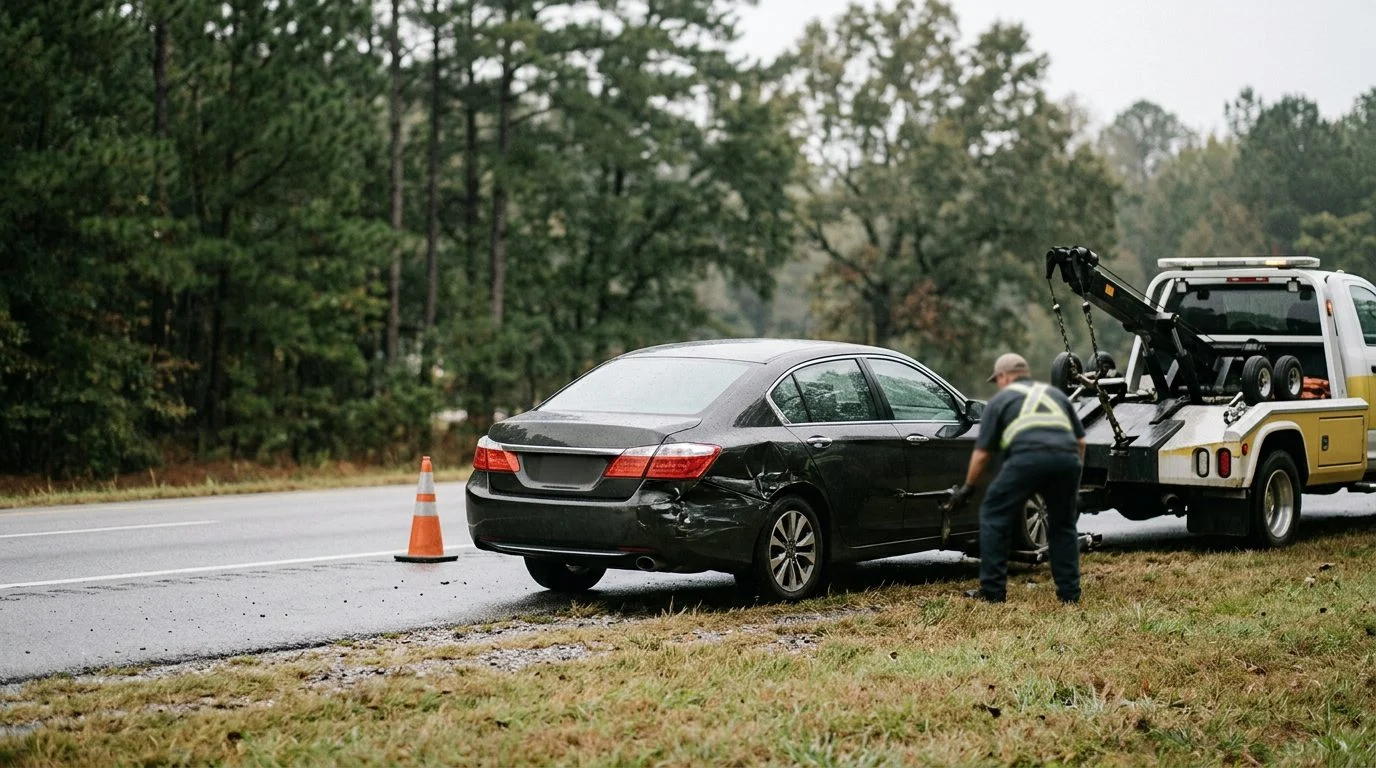
Does insurance pay for tow after accident? Often the answer is yes, but the outcome turns on the specific crash and the policies involved. Several insurance routes can pay for moving a car after a Georgia crash.
This guide explains those routes in plain language. It also covers what to document and what to say, and what to hold back, when you talk with insurers.
Short answer: who usually pays to tow a car after a Georgia crash
Usually, one of four insurance routes pays for the tow. These are the at-fault driver’s liability coverage, your own collision coverage, roadside assistance or towing add-ons, and your uninsured motorist coverage.
Questions about a vehicle’s insurance coverage are often part of reviewing a Georgia car accident claim. Vehicle insurance and registration questions are among the topics our team reviews when helping someone after a crash.
Towing and storage are usually handled as part of the vehicle damage claim. That makes records important from day one. Keep the tow receipt, the storage invoice, and the police report together. Write down every claim number you receive.
If your car is sitting in a tow yard while fees build up, you don't have to sort out the insurance questions alone. Our team can talk through your situation with you. Talk it through with our team — the first consultation is free, confidential, and carries no obligation.
Towing paid through the at-fault driver’s liability insurance
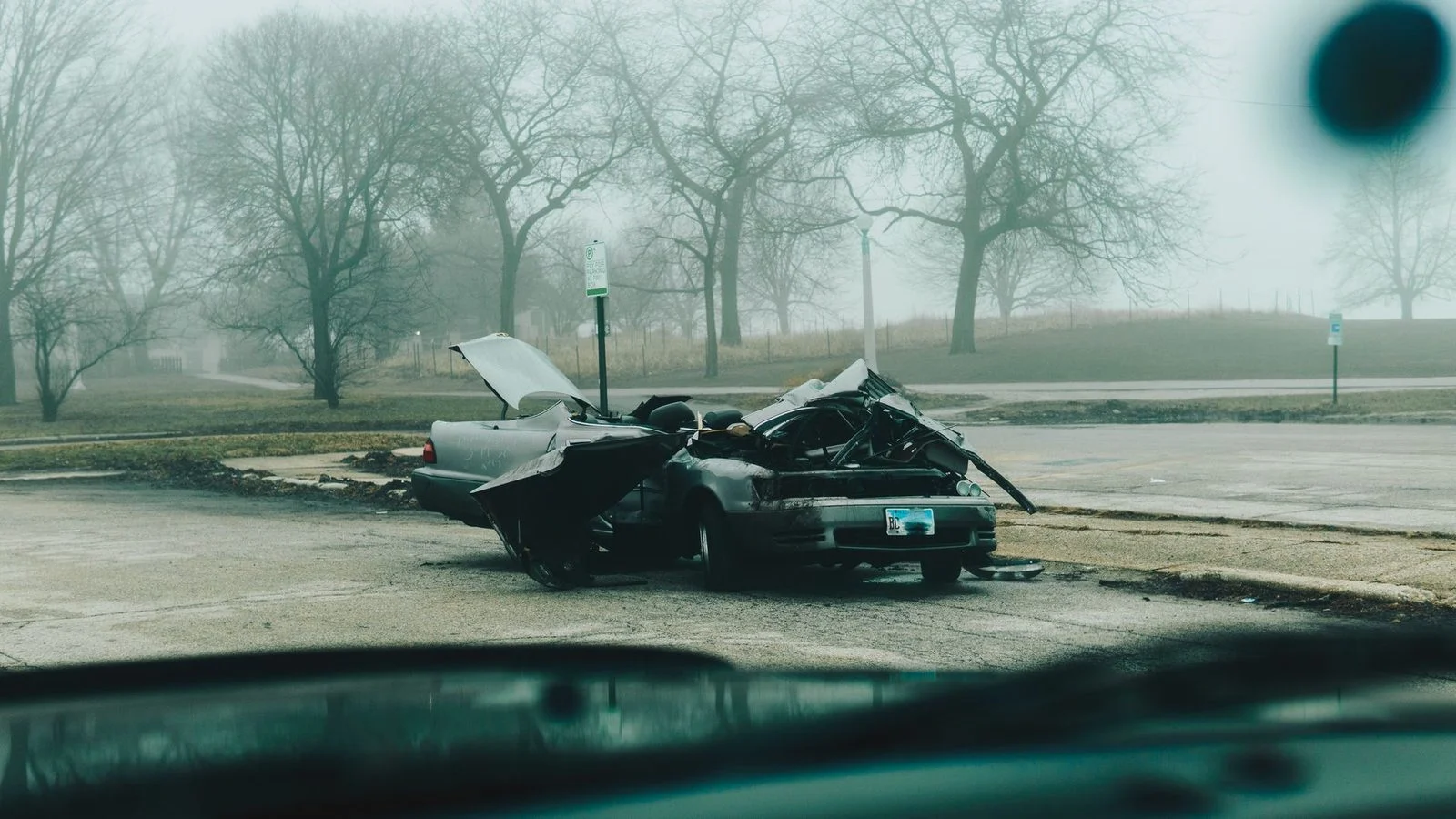
The at-fault driver’s liability insurance may pay reasonable towing and storage as part of a property damage claim. Liability coverage pays for harm the insured driver causes to other people.
When another driver’s negligence caused your crash, the cost of moving your car can be part of that claim. Georgia’s damages statute says necessary expenses that follow from an injury are a legitimate item in the estimate of damages. See O.C.G.A. § 51-12-7.
Ask the at-fault driver’s insurer for a claim number early. Send the adjuster your tow receipt and storage invoice. That way, the charges go into the file from the start.
You will also need to show who was at fault. Georgia’s fault rules can reduce what you recover, and a later section explains them.
Towing paid through your own collision coverage
Your own collision coverage may pay to repair your car after a crash. Some policies also include towing and storage as part of that loss.
Collision coverage pays for damage to your own vehicle, minus your deductible. It does not depend on who caused the crash. Whether towing is covered comes down to your policy wording.
Your insurer may pay the tow company directly. Or you may pay first and submit receipts for reimbursement. Ask which option applies before the yard releases your car.
Your declarations page lists your coverages and limits. Contact your insurer to confirm what your policy includes. Write down the name of the person you spoke with and the date.
Roadside assistance and towing add-ons
Roadside assistance and towing add-ons are optional coverages that can pay for a tow, usually up to set limits. Some insurers offer roadside assistance as an add-on. It often covers a tow after a breakdown, and some plans also cover a tow after a crash.
Towing and labor coverage on some policies pays for a tow to a repair shop or the nearest facility. Those benefits have listed limits.
A tow for a breakdown and a tow after a collision can fall under different parts of a policy. So the cause of the tow matters. Tell the provider the car was in a crash, and ask which coverage applies.
Read the limits, the number of tows allowed, and any rule about where the car must go. A tow to a location outside the policy’s rules may not be covered.
Uninsured motorist coverage when the other driver has no insurance
If the at-fault driver has no insurance, your own uninsured motorist coverage may pay for damage to your vehicle, subject to your policy terms.
Under O.C.G.A. § 33-7-11, those provisions pay the insured for injury to or destruction of the insured’s property caused by an uninsured owner or operator. O.C.G.A. § 33-7-11 reads: “(a)(1) No automobile liability policy or motor vehicle liability policy shall be issued or delivered in this state to the owner of such vehicle or shall be issued or delivered by any insurer licensed in this state upon any motor vehicle then principally garaged or principally used in this state unless it contains an endorsement or provisions undertaking to pay the insured damages for bodily injury, loss of consortium or death of an insured, or for injury to or destruction of property of an insured under the named insured’s policy sustained from the owner or operator of an uninsured motor vehicle, within limits exclusive of interests and costs which at the option of the insured shall be.” The payment is within policy limits.
Check both parts of your policy.
If the owner or operator of the vehicle that caused your crash is unknown, Georgia law allows an action against that unknown owner or operator as “John Doe,” so contact our team to discuss how this could affect your case. A police report records the crash and the vehicles involved, and it supports any claim.
What to tell your insurer, and what to hold back
Tell your insurer only the facts you know. Don’t guess about fault, speed, or injuries.
Stick to what you saw: the date, the place, the vehicles, and what happened. A guess can end up in the file as if it were a fact. Insurers may ask for a recorded statement. You can ask for time to review the questions, and you should answer accurately.
Fault matters for your recovery. Under O.C.G.A. § 51-12-33, a judge reduces damages in proportion to the plaintiff’s percentage of fault. A plaintiff who is 50 percent or more responsible for the injury or damages claimed is not entitled to receive any damages.
Georgia also looks at what a person could have avoided. Under O.C.G.A. § 51-11-7, if the plaintiff by ordinary care could have avoided the consequences of the defendant’s negligence, the plaintiff is not entitled to recover.
Filing deadlines apply to these claims, so don’t wait to act. Keep a log of every call, adjuster name, and claim number.
Not sure what your next step is?
Talk it through with our team — the first consultation is free, confidential, and carries no obligation.
Keeping tow and storage costs documented and under control
Keep every tow and storage record, because each charge needs proof that it came from the crash. Storage fees can add up day by day at a tow yard.
Ask the yard about its daily rate. Move the car or approve repairs as soon as you can, so the bill stops growing.
Request an itemized invoice that shows dates, mileage, and each charge. Save the police report, your photos of the vehicle and scene, and every receipt.
Georgia treats costs that actually flow from a wrong differently. Under O.C.G.A. § 51-12-2, special damages “must be proved in order to be recovered.” Tow and storage bills are that kind of cost, so the paperwork matters.
A personal injury claim can include other losses from a crash, such as medical bills. Keep those records too.
Talk with our team about your tow and crash questions
A tow after a crash can involve several policies at once. Our team can help you sort out which ones may apply in your situation.
Does insurance pay for tow after accident in Georgia?
It can. The usual routes are the at-fault driver’s liability coverage and your own collision, roadside, or uninsured motorist coverage.
Who pays storage fees at the tow yard?
The at-fault driver’s insurer may cover reasonable storage as part of the property damage claim. Your own collision coverage may also cover storage, depending on your policy.
Does collision coverage include towing?
Some collision policies include towing and storage, and others don’t. Your policy wording controls, so check it or ask your insurer.
What if the other driver has no insurance?
Your uninsured motorist coverage may pay for vehicle damage, within your policy limits and terms.
If your car is still in a tow yard and the insurance questions remain open, you can talk with our team about your situation. The first consultation is free, confidential, and carries no obligation to continue. You can contact the firm here.
Disclaimer: T. Madden & Associates, P.C. is a Georgia personal injury law firm in practice since 1999. It has offices in Jonesboro (Clayton County), Atlanta, Decatur, Macon and Augusta. Terance Madden is the responsible lawyer for this page. Contact the firm through the contact page. This page is general information, not legal advice about your case.
How We Can Help
Free First Consultation
Your first consultation is free, confidential, and carries no obligation to continue.
Review of Your Tow and Storage Bills
We look at the towing, storage, and related charges from your crash and explain which insurance coverages may apply.
Dealing With Insurers
Our team can communicate with insurance adjusters so you can focus on recovering from your injuries.
Call 24/7
Reach out any time to talk about a wreck, including late-night tow yard situations.
Don't Let Storage Fees Pile Up
Tow yards often charge daily storage fees. The longer a vehicle sits, the more you may owe. Contact us early so the question of who pays can be addressed while your options are still open.
Insurance Sources That May Cover a Tow
At-Fault Driver's Liability Coverage
The other driver's liability insurer may cover reasonable towing and storage as part of a property damage claim.
Your Collision Coverage
If you carry collision insurance, it may pay to tow and store your vehicle, subject to your policy terms and deductible.
Roadside Assistance Add-Ons
Some policies include roadside service that covers a limited tow. Check whether yours applies to a crash scene.
Uninsured or Underinsured Motorist Coverage
If the at-fault driver lacks enough insurance, your own uninsured or underinsured motorist coverage may come into play.
Not Sure Who Should Pay for Your Tow? Talk to Our Team Today.
Related practice areas
- Car Accident Lawyer in Georgia: What to Do After a Crash and How a Claim Works
- What is the definition of personal injury?