

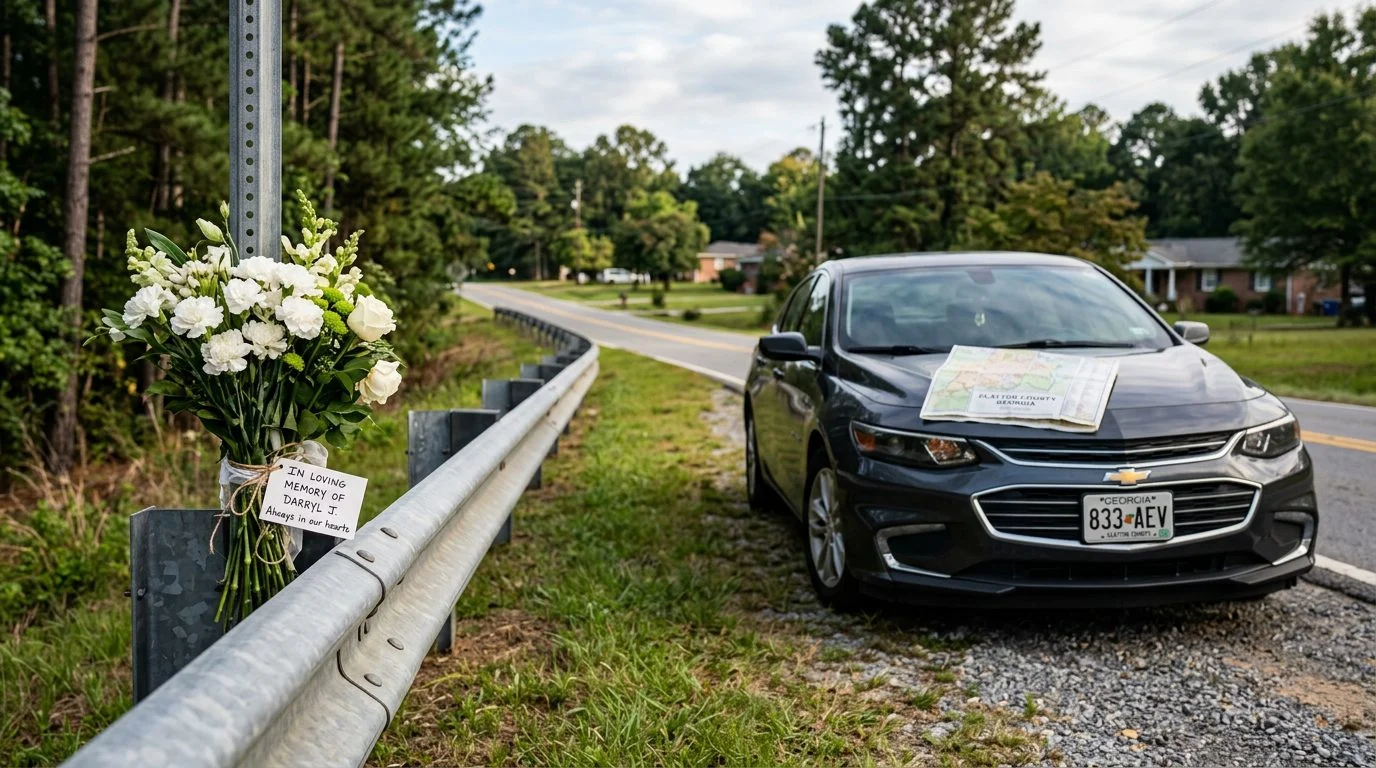
Clayton County, GA
Hurt in a Crash? Get Your Police Report Started the Right Way
Paperwork piles up fast after a wreck. Here is how to find the right agency, what to ask for, and when to bring in help.
Serving injured people since 1999
1999
Year the firm began practice
5
Offices across Georgia, including Jonesboro in Clayton County
24/7
Phone line open for people who need to talk now
By Terance Madden · Published November 11, 2026
Someone you love was hurt in a crash, and the paperwork is already piling up. The first question is simple: where do I file a police report in Clayton County?
The short answer is that the agency which sent an officer to the crash holds the report. That could be the Clayton County Police Department, a city police department, the county sheriff’s office, or the Georgia State Patrol. Find that agency first.
Where Do I File a Police Report in Clayton County?
The agency that responded to the crash keeps the report, so start there.
A police report is the officer’s written record of a crash. It lists the people involved, the time and place, and what the officer saw and heard. Clayton County has more than one agency that responds to crashes, so there is no single desk for every report.
State law also controls who gets notice. Under § 40-6-273, a driver in a crash causing injury, death, or property damage with an apparent extent of $500.00 or more must immediately give notice by the quickest means of communication. Inside a municipality, that notice goes to the local police department. Outside one, it goes to the county sheriff or the nearest state patrol office.
The Georgia Department of Public Safety no longer takes crash-report questions itself. It points people to the agency listed on its contact page.
If someone you love was hurt in a crash, the paperwork can feel endless, and you don't have to sort it out alone. Our team offers a free, confidential first consultation with no obligation to continue. Talk it through with our team — the first consultation is free, confidential, and carries no obligation.

Which Agency Took the Report: Clayton County Police, City Police, or State Patrol?
The agency whose officer came to the scene holds the report, even if you assumed it was another one.
The Clayton County Police Department is one of several agencies that respond to crashes in the county. City police departments handle crashes inside their city limits, so the officer may have come from a city agency. If a Georgia State Patrol trooper responded, the state holds the report.
Write down the officer’s name, badge number, and the agency name from the citation or exchange card. Those details help the records clerk find the right file.
Georgia law also sets what a driver must do at the scene. Under § 40-6-270, a driver of a vehicle involved in a crash that causes injury or death, or damage to a vehicle driven or attended by any person, must immediately stop at the scene or stop as close to it as possible and return to the scene.
Can You File a Police Report Online in Clayton County, GA?
Some requests can start online, but the options depend on the agency and the report type, so begin with the agency’s own records pages.
The Clayton County Police Department’s website has a records section. Requests usually ask for the date, the location, and the names of the people involved, so gather those first. If online is not available for your report, ask about mail or in-person requests.
The state’s Department of Driver Services explains what a driver must do after a crash, including notifying law enforcement. The Georgia Department of Driver Services crash guidance lists those duties.
Keep a note of every call, including the date and the name of the person you spoke with.
What a Police Report Does After a Crash
The report is the official first record of what happened, and it doesn’t disappear because the other driver tells a different story.
The officer writes it at or near the scene. It records who was involved, where and when it happened, what damage and injuries were visible, and what drivers and witnesses said. It is not a private note that only one driver keeps.
Insurers often read the report early. Georgia also divides fault by percentage. Under § 51-12-33, the judge reduces the injured person’s damages (the plaintiff’s damages) by their share of fault. A plaintiff who is 50 percent or more responsible may not receive any damages.
The report is one piece of evidence. Vehicle data can be another. T. Madden & Associates has handled personal injury cases in Georgia since 1999. Commercial trucks often store electronic control module data, which can show speed and braking. Technical evidence can show how a crash happened, and the firm explains what that evidence shows.
How Big Insurance Uses the Report Against a Claim
Big Insurance often starts with a low offer, and a first offer is rarely what a claim is worth.
Adjusters may ask for a recorded statement before you understand your injuries. Payments can stall while the file sits. Treatment may be called unnecessary. A “low impact” argument may be used to say the crash could not have hurt you much.
Georgia sets rules for settlement offers. Under § 9-11-67.1, a written offer on a motor vehicle injury claim, made with an attorney’s help early in the case, must give at least 30 days from receipt to accept. The offer must be sent by certified mail or statutory overnight delivery, return receipt requested, must specifically reference this Code section, and must include an address and either a facsimile number or email address for written acceptance. Damages for medical expenses are limited to the reasonable value of medically necessary care, and the judge or jury decides that amount, under § 51-12-1.1.
The firm looks at every coverage layer. That includes the at-fault driver’s liability coverage, your own uninsured or underinsured motorist coverage, any umbrella or excess policy, and corporate coverage when a company vehicle is involved. Georgia requires auto policies to include uninsured motorist coverage, with limits the insured can choose, under § 33-7-11.
Serious injuries often carry lifetime costs. Georgia law lets the fact-finder reduce future economic losses, such as medical costs and lost wages, to present value under § 51-12-13.
Hurt in a Crash That Was Someone Else’s Fault? Talk With the Firm
If another driver’s choices hurt someone you love, you’re probably the one keeping track of everything.
Often that person is a spouse, a mother, or an adult daughter. You’re juggling medical visits, bills, and calls from an insurer while the report is still being sorted out. You don’t have to carry it alone.
T. Madden & Associates, P.C. has been in practice since 1999, with offices in Jonesboro, Atlanta, Decatur, Macon and Augusta. The firm also supports community work through the Terance Madden Foundation.
Does the police report decide who pays?
The report is one piece of evidence.
Can I get the report without a lawyer?
Yes. Ask the agency that responded how to request a copy.
Hurt in a crash that someone else caused? A free, confidential first consultation, with no obligation to continue, is a good place to talk through the report and your next steps. Reach out through our contact page.