

E-Bike Crash Lawyer in Georgia
Hit by a Left-Turning Car on Your E-Bike?
Terance Madden has represented Georgians hurt in crashes since 1999. Here is how these claims usually work, and how the firm can help you sort out who pays.
Why Injured Riders Call T. Madden & Associates, P.C.
1999
Year the firm began practicing
24/7
Phone line open around the clock
Free
Confidential first consultation, no obligation
By Terance Madden · Published November 7, 2026
A car that turns left in front of an e-bike can leave the rider with broken bones, ruined gear, and weeks of lost pay. In Georgia, the turning driver’s liability insurance is usually the first source of money, but the rider’s own share of fault can cut what is recovered.
If you were hurt on an e-bike in Georgia, you may be asking how your medical care, lost wages, and bike damage will be paid for. The firm has been in practice since 1999, and its Jonesboro office serves Clayton County.
What This Page Covers and Who It Is For
If a car turned left into your e-bike or bicycle, this page explains who may pay for your losses. The reader may be the rider. It may be a parent of a teen rider, a spouse, or a friend who is now handling the calls, the bills, and the repair shop.
Each of these readers faces the same three questions. Who is responsible? What can be recovered? And what deadline applies? This page covers each one in plain words.
The crash pattern is common. A driver pulls out to turn left, and a rider coming straight through the intersection is struck. Whether the rider was in a bike lane, a travel lane, or a crosswalk changes the facts, so the details matter from the start. For the wider picture of e-bike crashes, the firm’s broader e-bike guide covers more ground.
If a car turned left into your e-bike and the bills and insurance calls are piling up, our team can talk through the facts with you in a free, confidential consultation. Talk it through with our team — the first consultation is free, confidential, and carries no obligation.
Left Turns and Who Is at Fault
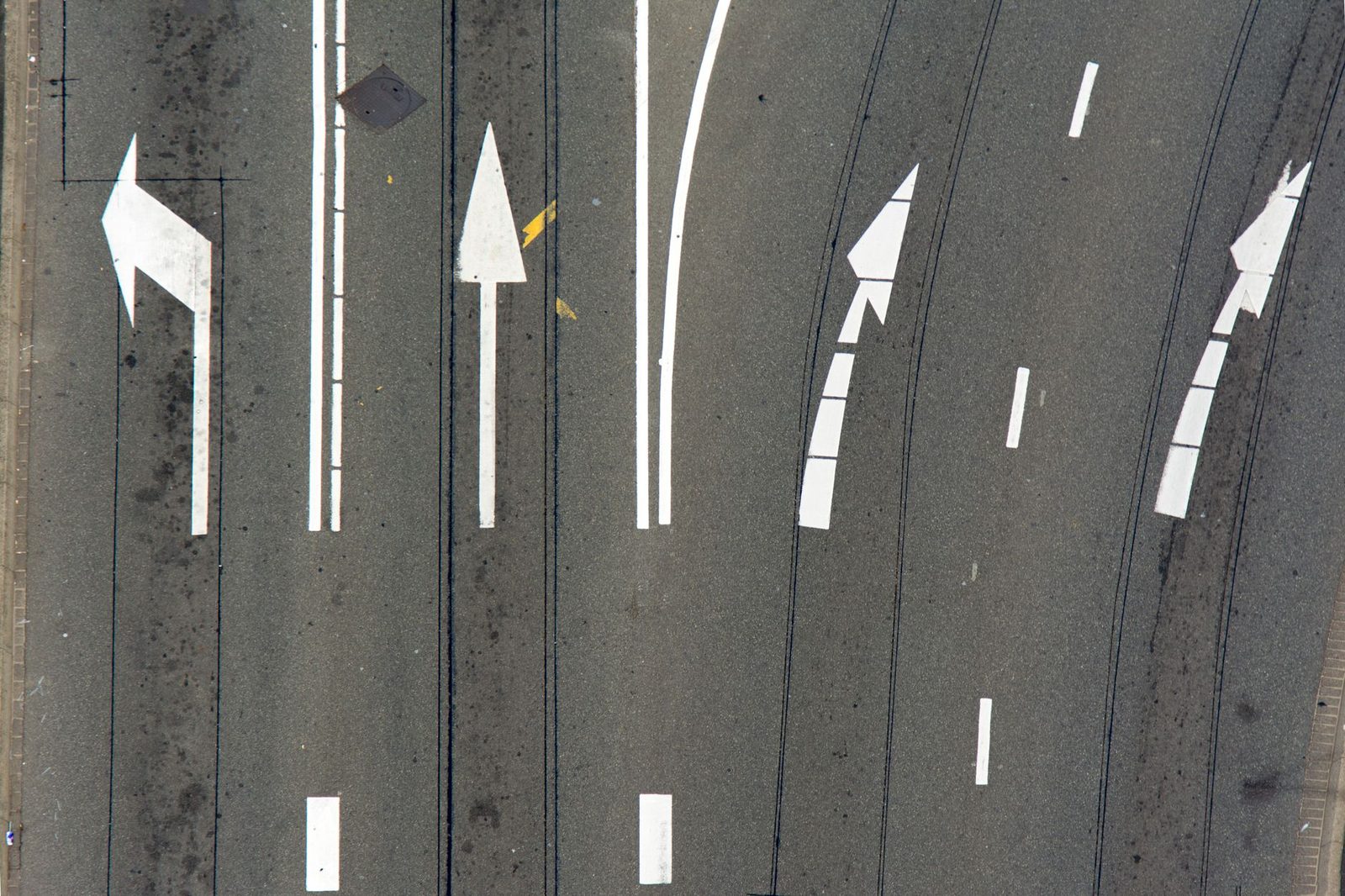
Distance and timing often decide the question. How far away was the rider when the car started its turn? How fast was the e-bike moving? Did the driver look for the rider before moving? A rider far back and closing fast tells a different story than one who was already in the intersection.
Sight lines matter too. A driver who says the rider “came out of nowhere” still has to explain what was in view. Many left-turn cases turn on the gap between what the driver could see and what the driver did.
Georgia Fault Rules: Comparative Fault and the 50 Percent Bar
Georgia splits fault among everyone who contributed to a crash, and an injured person’s award is reduced by their own share. This is called comparative fault (shared fault). The judge reduces damages in proportion to the share of fault of the injured person, called the plaintiff in court, under O.C.G.A. § 51-12-33.
The bar is the line that matters most. Under the same statute, a plaintiff who is 50 percent or more responsible for the injury cannot receive any damages (O.C.G.A. § 51-12-33). Under O.C.G.A. § 51-12-33, the judge reduces the damages otherwise awarded to a plaintiff in proportion to the plaintiff’s percentage of fault, and a plaintiff who is 50 percent or more responsible for the injury or damages claimed cannot receive any damages.
Here is a simple example. Suppose a jury put the rider at 20 percent at fault and total damages were $10,000. The award would drop by $2,000, to $8,000. This is an illustration only, not a prediction.
Georgia also has an avoidance rule. Under O.C.G.A. § 51-11-7, a plaintiff who by ordinary care could have avoided the consequences of the defendant’s negligence is not entitled to recover. In other cases, the defendant is not relieved, even if the plaintiff contributed to the injury in some way. O.C.G.A. § 51-11-7 reads: “If the plaintiff by ordinary care could have avoided the consequences to himself caused by the defendant’s negligence.”
Who Pays: Sources of Money After a Left-Turn E-Bike Crash
The turning driver’s liability insurance is usually the first source for medical bills, lost pay, and property damage.
Medical bills get special treatment. Under O.C.G.A. § 51-12-1.1, medical expenses are limited to the reasonable value of medically necessary care. Necessary expenses from an injury count as part of the damages, under O.C.G.A. § 51-12-7.
Your own auto policy may matter too. Under O.C.G.A. § 33-7-11, an auto liability policy in Georgia must include an endorsement covering bodily injury from an uninsured motor vehicle, within limits the insured may choose under the statute, unless an insured named in the policy rejects that coverage in writing. O.C.G.A. § 33-7-11 reads: “(a)(1) No automobile liability policy or motor vehicle liability policy shall be issued or delivered in this state to the owner of such vehicle or shall be issued or delivered by any insurer licensed in this state upon any motor vehicle then principally garaged or principally used in this state unless it contains an endorsement or provisions undertaking to pay the insured damages for bodily injury, loss of consortium or death of an insured, or for injury to or destruction of property of an insured under the named insured’s policy sustained from the owner or operator of an uninsured motor vehicle, within limits exclusive of interests and costs which at the option of the insured shall be.” Whether a rider applies to a claim depends on the wording of the policy, so the policy itself is the place to start.
Coverage limits are another issue. A driver’s limits can be lower than the total losses.
The Evidence: What Shows the Turn and the Speed
The evidence that matters most shows where each person was, how fast each was moving, and whether the driver could have seen the rider.
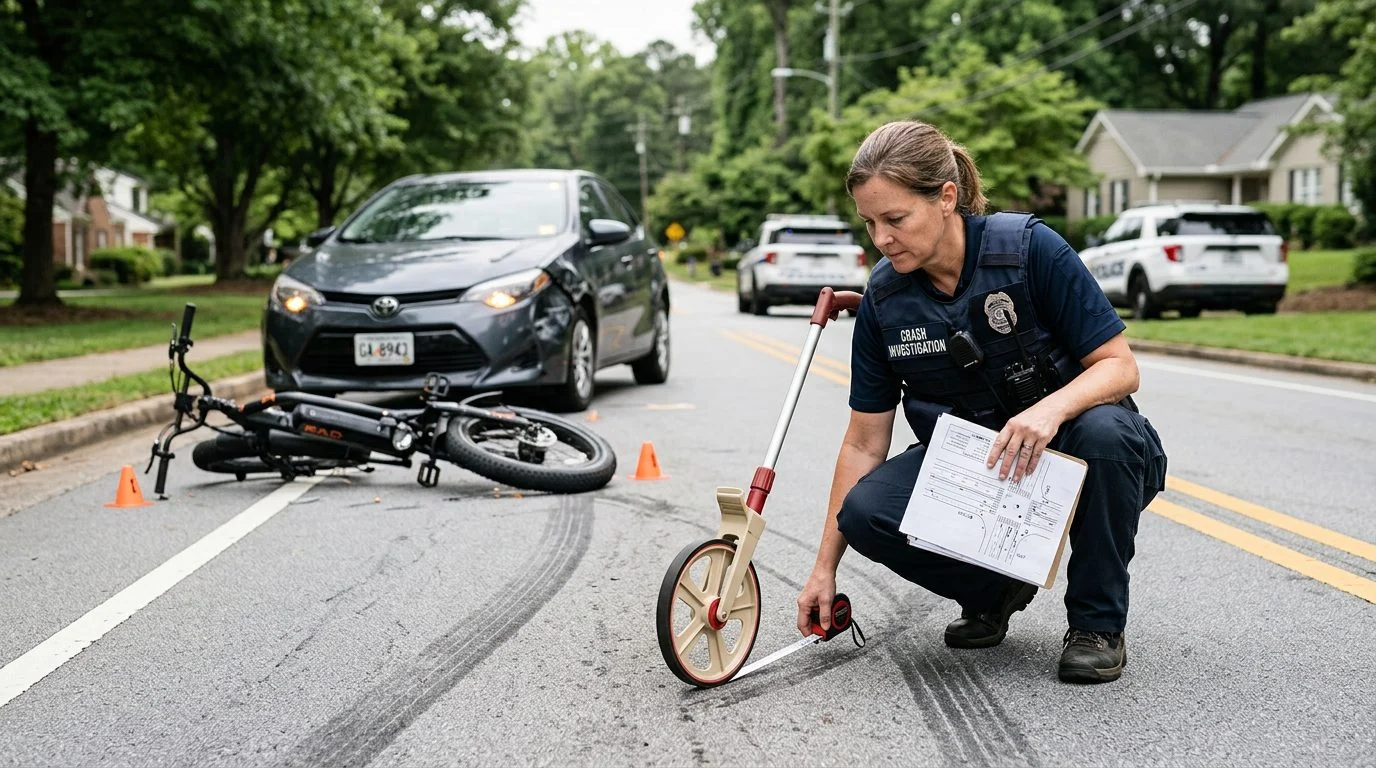
Start with the basics: the car’s position before the turn, whether the turn signal was on, the path the bike was on, and the sight lines at the intersection. Photos should show the scene from the driver’s seat and from the rider’s position, not just the damage. Skid or gouge marks and where each vehicle came to rest help show the impact. Witness names and nearby video from doorbells or businesses can disappear quickly, so ask for them early.
Speed matters in both directions. The car’s speed before the turn and the e-bike’s speed both affect whether the driver could have yielded. Ask whether the bike’s app or controller kept speed or power data, and do not repair or sell the bike until someone has looked at it.
The turn, the sight lines, the bike, and the physical evidence from the scene are the details that shape a case like this. We then show how those facts fit the fault rules above.
How Insurers Often Respond and What to Expect
Insurers often move fast, and an insurer’s first offer is rarely what a claim is worth.
Big Insurance adjusters often reach out early, ask for a recorded statement, and open with a low offer before the injuries are fully known. Treat each call as a moment to slow down and write down what was said.
Protect yourself with simple steps. Keep every medical record, bill, and receipt in one folder. Photograph the bike and the scene. Think before giving a recorded statement, and do not sign a release until the injuries are understood. A signed release usually ends the claim.
Georgia’s rules on settlement offers also help. Under O.C.G.A. § 9-11-67.1, from the time a claim arises until every named defendant has filed an answer (the formal written response to a lawsuit) or been found in default, any offer to settle an injury claim from a motor vehicle collision that is prepared by or with the help of the injured person’s lawyer has to be in writing and allow no less than 30 days for acceptance. That period runs from receipt, and the offer must be sent by certified mail or by overnight delivery with a return receipt requested. Asking for clarification in writing is not a counteroffer under that statute, but seeking to modify the terms under paragraph (1) of subsection (b) is not clarification.
Not sure what your next step is?
Talk it through with our team — the first consultation is free, confidential, and carries no obligation.
If a Family Member Was Hurt: The Person Managing the Recovery
The family member who handles calls, bills, and appointments plays a central role, and good records make a claim stronger.
Keep a simple file. Include the crash report number, witness names, visit notes, pharmacy receipts, time missed from work, and repair estimates for the bike. Write down every call with the date, the time, the caller’s name, and what was said.
Medical records have their own rules. Under O.C.G.A. § 31-33-2, the provider must send a requested record within 30 days of receiving the request, when the request includes both an authorization that complies with the federal Health Insurance Portability and Accountability Act of 1996 and a signed written authorization as specified in subsection (d) of this Code section, unless the provider reasonably determines that disclosure to the patient will be detrimental to the patient’s physical or mental health; in that case, upon the patient’s written request, the record must be furnished to another provider the patient designates. If the patient has died, the request may come from the appointed executor or administrator. If none is appointed, it goes to the surviving spouse, then a surviving child, then a parent, in that order.
Keep the injured person informed and part of every decision about their claim.
Time Limits and Your Next Step
Georgia generally gives two years from the crash to file a personal injury lawsuit, under O.C.G.A. § 9-3-33. Talks with an adjuster are not a lawsuit, so do not wait on them to check the deadline.
The firm handles these claims on a no-fee-unless-we-win basis. The client may still be responsible for court costs and case expenses.
Who pays if a car turned left into my e-bike in Georgia?
The turning driver’s liability insurance is usually the first source of payment. Your own share of fault can reduce what you recover.
Can I still recover if I was partly at fault?
Under O.C.G.A. § 51-12-33, a plaintiff who is found partly at fault can still recover, with damages reduced in proportion to that share of fault, but a plaintiff who is 50 percent or more responsible for the injury or damages claimed cannot receive any damages. At 50 percent or more, Georgia’s statute bars recovery (O.C.G.A. § 51-12-33; Quynn v. Hulsey (2020)).
How long do I have to file a claim?
Georgia generally allows two years from the crash to file a personal injury lawsuit (O.C.G.A. § 9-3-33; Kenneth B. Cameron v. Jmp Pizza, Inc (2026)).
If a car turned left into your e-bike, and the bills and insurer calls are piling up, you do not have to sort it out alone. Terance Madden offers a free, confidential first consultation with no obligation to continue, so you can talk through the left-turn facts before deciding anything.
Related practice areas
- E-Bike Accident Lawyer in Georgia
- E-Bike Accident Lawyer in Clayton County
- E-Bike Accident Lawyer in Jonesboro
- Quick Settlement Offer After a Catastrophic Crash in Georgia