

Georgia crash guidance | Jonesboro, Atlanta, Decatur, Macon, Augusta
Hurt in a Georgia crash? Start with the police report.
A few facts at the scene can shape your claim later. Here is how the report fits in and what to do before you talk to anyone else.
T. Madden & Associates, P.C.
1999
Year the firm began practice
5
Georgia offices
24/7
Call line available
By Terance Madden · Published November 21, 2026
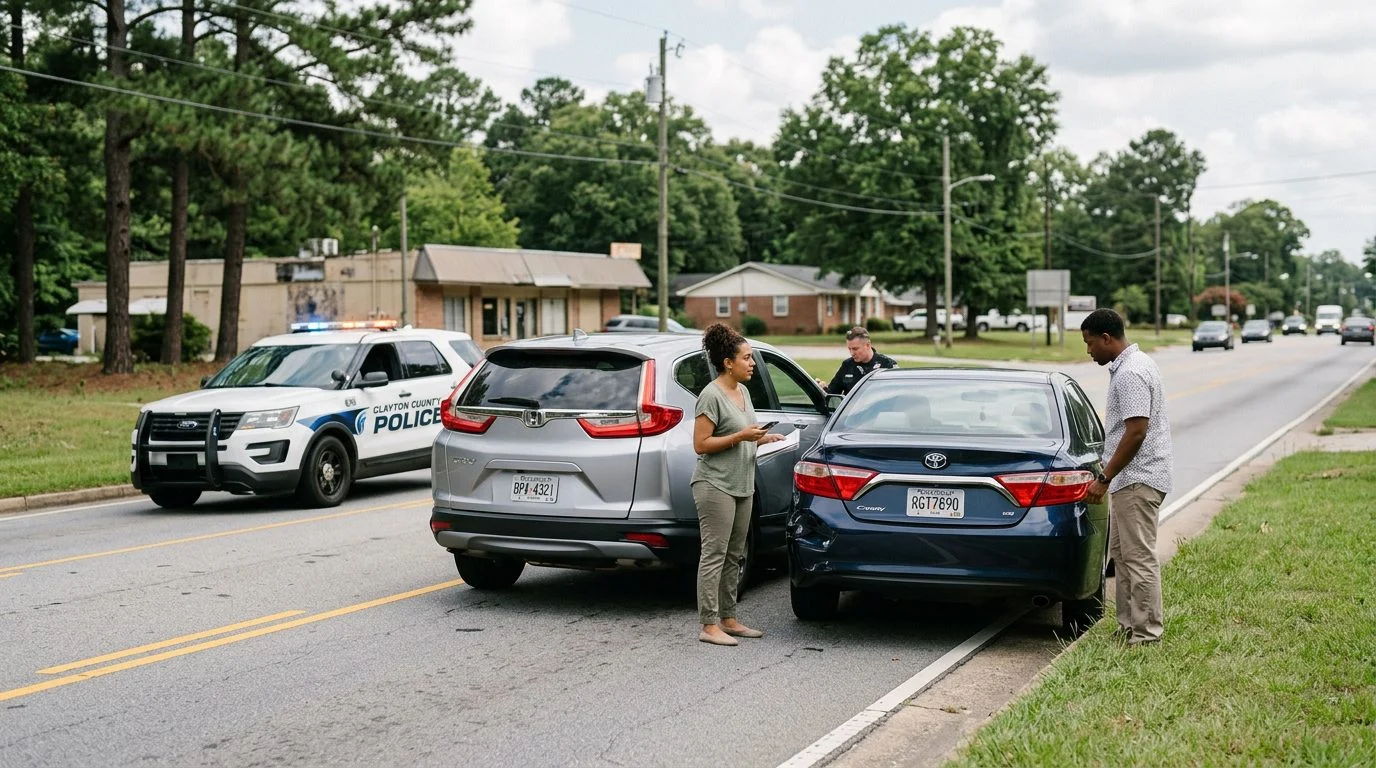
Someone was hurt in a crash, and now the police report is missing, or nobody called the police at all. A police report can be a useful record after a crash.
No, a missing police report does not end a Georgia claim
A missing police report makes your claim harder to prove.
A police report is the official record an officer writes about a crash. It usually lists the date, the location, the people involved, and what the officer saw. It’s useful because it’s written close to the crash.
But it is only one piece of proof. You still have to show three things. First, how the crash happened. Second, who was at fault. Third, what the injuries and losses cost.
Fault is the legal word for responsibility. Without a report, the other side has more room to argue about all three points.
If someone else's driving left you or someone you love hurt, you don't have to sort out the missing paperwork alone. Our team can talk it through with you. Talk it through with our team — the first consultation is free, confidential, and carries no obligation.
When Georgia law requires a crash to be reported
A Georgia driver must report some crashes right away. That includes a crash that injures or kills someone, or one with property damage of $500.00 or more.
Under O.C.G.A. § 40-6-273, the driver of a vehicle involved in an accident resulting in injury to or death of any person or property damage to an apparent extent of $500.00 or more must give notice “immediately, by the quickest means of communication.” Notice goes to the local police inside a city. Outside a city, it goes to the county sheriff’s office or the nearest state patrol office.
The driver’s duties at the scene matter too. Under O.C.G.A. § 40-6-270, the driver of a vehicle involved in an accident resulting in injury to or death of any person, or in damage to a vehicle driven or attended by any person, must immediately stop at the scene or as close as possible and return to it, and must: give name, address, and vehicle registration number; upon request and if available, exhibit operator’s license; render to any person injured in the accident reasonable assistance, including transporting, or arranging transport of, the person to a physician, surgeon, or hospital for medical or surgical treatment if such treatment is apparent to be necessary or the injured person requests it; and, where a person injured in the accident is unconscious, appears deceased, or is otherwise unable to communicate, make every reasonable effort to ensure that emergency medical services and local law enforcement are contacted. The driver must remain at the scene until these requirements are fulfilled. The driver must stay until those duties are done.
If the other driver fled, the crash still counts.
The exact duty turns on the facts: the type of crash, who was hurt, and how much was damaged. Before you leave, get the other driver’s details. If an officer responds, get the officer’s name and contact information.
Can you still file a claim if no one called the police?
Yes. A claim rests on proof of fault, not on a form.
Georgia defines the basic standard of care this way. Under O.C.G.A. § 51-1-2, ordinary diligence is the care an ordinarily prudent person uses in similar circumstances. Falling short of that care is ordinary negligence.
Georgia also reduces damages by the injured person’s own share of fault. Under O.C.G.A. § 51-12-33, the judge reduces the award in proportion to that share. At 50 percent or more, the injured person gets no damages.
With no report, fault often becomes the main fight. The firm builds the proof from what it can document: the scene, the vehicle or e-bike, the medical care, and the witnesses.
Evidence that can fill the gap when there is no police report
Photos, witness names, and early medical records can carry much of the proof a police report would have shown. Gather them as soon as you safely can.
- Photos and video of the scene, the vehicles or e-bike, skid marks, debris, and road signs.
- Traffic camera or business video, if it exists. Ask for it quickly.
- Witness names and phone numbers, plus what each person saw, written down while memories are fresh.
- Medical records that tie your injuries to the crash, starting with the first visit.
Medical costs have to be proved. Under O.C.G.A. § 51-12-2, special damages, such as medical bills, must be proved to be recovered. Under O.C.G.A. § 51-12-1.1, medical expenses are limited to the reasonable value of medically necessary care.
Before law school, Terance Madden trained as an electrical engineer. He starts a case by asking what the evidence shows and how the crash happened. He also asks which records exist and must be preserved. In an e-bike crash, that can mean the battery, charger, and wiring, which can show whether damage or a failure played a role.
Unpaid medical bills create their own problems. Read our guide on what happens when Georgia medical bills are not paid.
How Big Insurance uses a missing police report
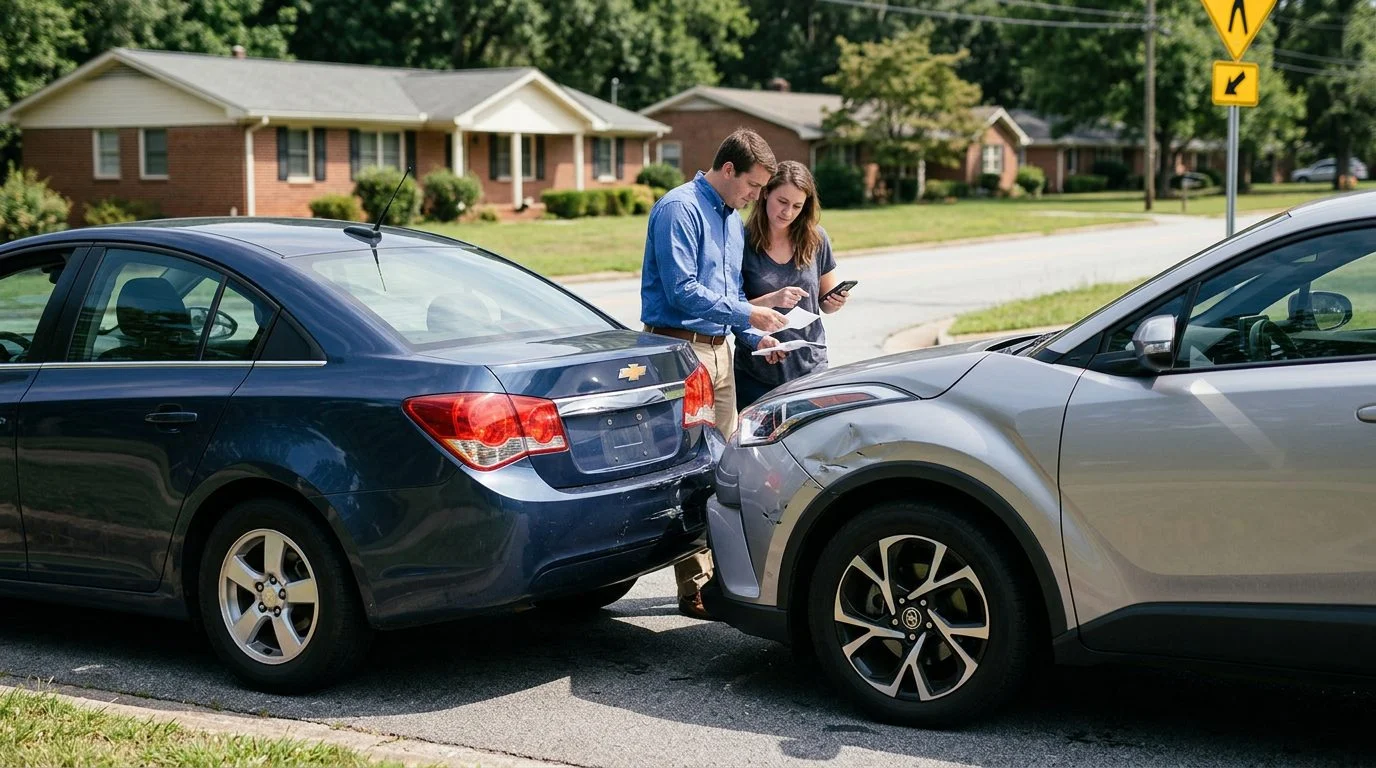
Big Insurance often points to a missing report to dispute fault and pay less. The insurance company is not on your side.
Expect an early request for a recorded statement. Expect a low first offer, a “low impact” argument, payment delays, and a challenge to whether your treatment was needed. A first offer is rarely what a claim is worth. Talk to a lawyer before you give any recorded statement.
The response is to pursue every layer of coverage that may pay. That can include the at-fault driver’s liability coverage, uninsured or underinsured motorist coverage (UM/UIM), any umbrella or excess policy, and corporate coverage when a company owned the vehicle or employed the driver.
In Quynn v. Hulsey, the Supreme Court of Georgia held that claims for negligent hiring, retention, supervision, and training are based on the employer’s own negligent acts.
The firm has represented people hurt in Georgia since 1999.
If you are dealing with a crash right now
You may be the one making calls, chasing paperwork, and sitting by a hospital bed. You didn’t choose this, and you don’t have to figure out every step alone.
Write down what you remember today. Keep photos, bills, and names together in one place. To look for an existing crash report, read our guide on how to find an accident report online in Georgia.
If someone else’s driving hurt you or someone you love, the firm would like to talk. Start a free case evaluation. The first consultation is free, confidential, and carries no obligation to continue.
T. Madden & Associates, P.C. has practiced in Georgia since 1999, with offices in Jonesboro, Atlanta, Decatur, Macon, and Augusta.
Not sure what your next step is?
Talk it through with our team — the first consultation is free, confidential, and carries no obligation.
Frequently Asked Questions
Do you need a police report after a crash in Georgia?
Not every crash requires a police report, but you should call police if anyone is hurt, someone has died, or the vehicles are blocking traffic. A report creates an official record of what happened, and that record can matter later.
What if the other driver says the police don’t need to be called?
Call 911 yourself, even if the other driver disagrees. Take photos of the scene, the vehicles, and any injuries, and write down the other driver’s name, insurance details, and license plate.
Can you still pursue an injury claim without a police report?
Yes. Photos, witness names, and medical records can also support a claim. A police report makes it easier to show how the crash happened, so it is still worth getting one whenever you can.
How do you get a copy of a police report?
Request it from the law enforcement agency that responded to the crash, such as the county sheriff or city police department. If you were hurt, T. Madden & Associates, P.C. can help you request the report. The firm’s first consultation is free, confidential, and comes with no obligation to continue. Call the firm to start.