

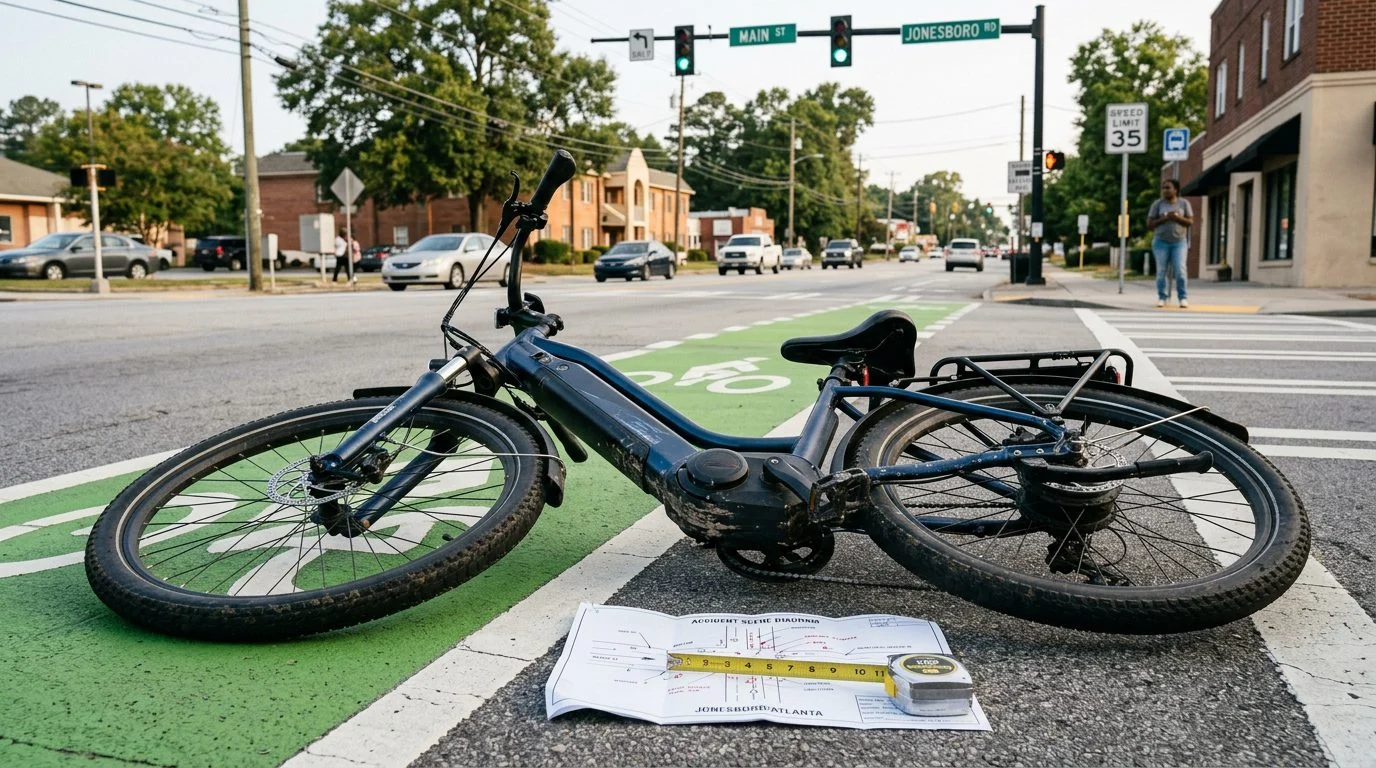
E-bike injuries in Georgia
Hurt on an e-bike without a helmet? Your injury claim still deserves a close look.
Insurers often raise the helmet question first. Here is how we look past it at what the evidence shows.
Proof points
1999
Practicing in Georgia since
5
Offices: Jonesboro, Atlanta, Decatur, Macon, Augusta
24/7
Call us anytime
By Terance Madden · Published November 12, 2026
You may be asking this while you or someone you love is still healing from an e-bike crash. Did skipping the helmet cost you the claim?
Usually, no. Not wearing a helmet does not, by itself, bar an e-bike injury claim in Georgia. The questions that matter are who caused the crash and whether the missing helmet changed the injuries. The answer depends on the facts.
Short Answer: Not Wearing a Helmet Does Not End Your E-Bike Claim
A missing helmet is a question about fault and injuries. It is not an automatic bar to a claim.
Big Insurance adjusters often raise helmet non-use early. It gives them a reason to offer less. It also sounds convincing to someone who doesn’t yet know what the injuries will cost.
Expect the argument. Answer it with records and facts, not guesses. Your job isn’t to prove you wore a helmet. Your job is to show what happened and what the injuries are.
Keep two questions in view. First, did someone else’s fault cause the crash? Second, would a helmet have changed the harm you have? The first question decides whether you have a claim. The second shapes how much that claim is worth.
Many riders assume a missing helmet means the claim is over. Big Insurance is counting on that assumption. The law asks more careful questions.
If someone you love was hurt on an e-bike and an insurer is asking about the helmet, you don't have to sort it out alone. Our team can talk through the crash with you. Talk it through with our team — the first consultation is free, confidential, and carries no obligation.
Georgia Is a Fault State, So Who Caused the Crash Comes First
In Georgia, you have to show that someone else’s negligence caused your harm. Negligence means failing to use the care a reasonable person would use.
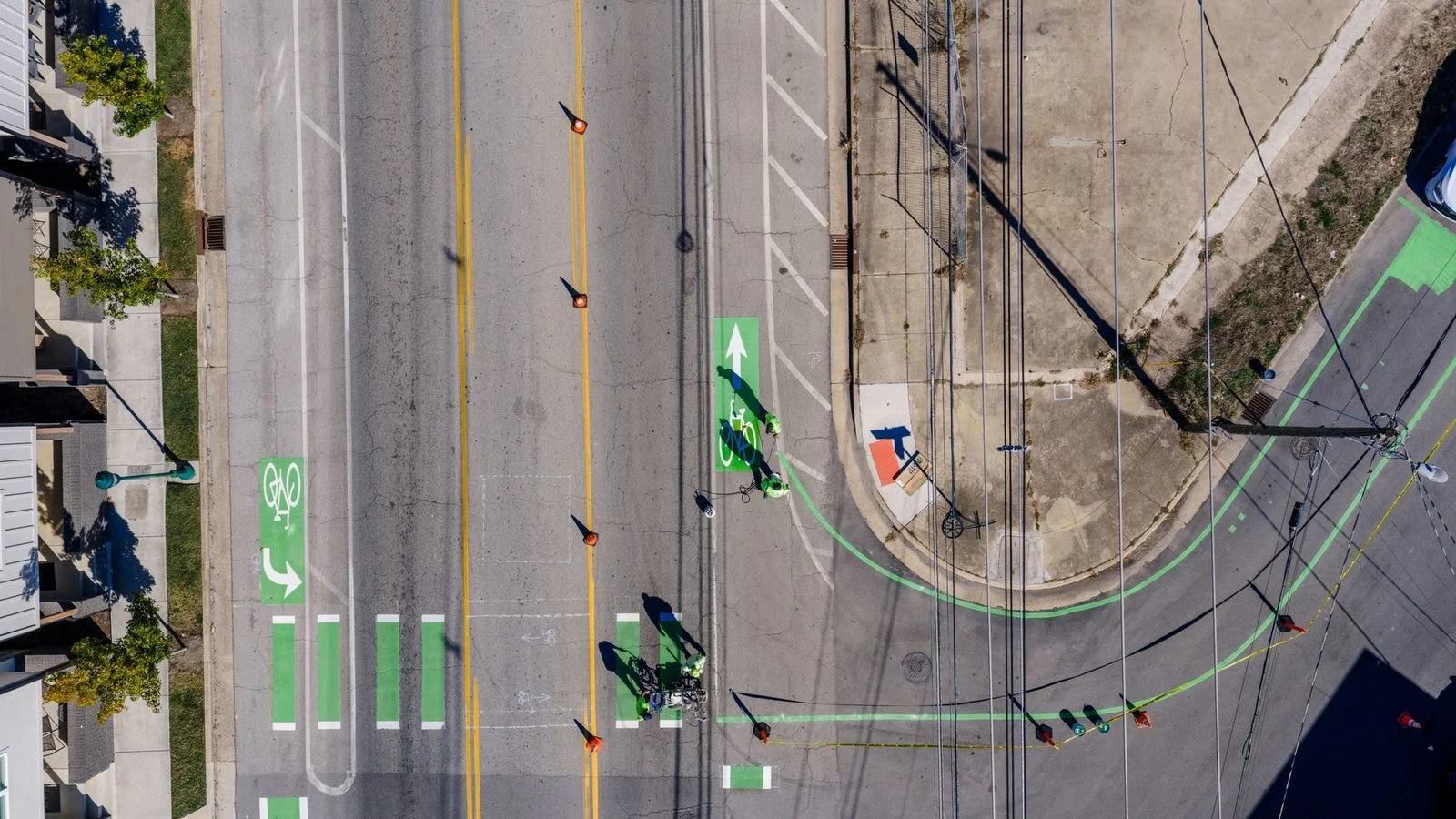
Liability, or legal responsibility for the harm, is the first question in any e-bike claim. So the work starts with the crash itself. Common causes include:
- A driver who turns left across the rider’s path.
- A car door that opens into a bike lane.
- A pothole or road defect that throws the rider off the bike.
- A vehicle that pulls out from a driveway or side street without looking.
Photos, video, skid marks, damage to the bike, phone records and witness names all help show the sequence. Footage can be overwritten, so ask for it early.
A missing helmet answers none of those questions. It tells you what the rider wore. It doesn’t tell you who turned in front of them.
How Georgia Comparative Fault Handles a Helmet Argument
Georgia reduces your damages by your share of fault, so a helmet argument works on percentages.
Comparative fault (shared fault) is the rule that splits blame when more than one person contributed to the harm. Under O.C.G.A. § 51-12-33, the judge reduces the damages in proportion to the injured person’s percentage of fault.
The same statute says a plaintiff who is 50 percent or more responsible for the injury or damages claimed cannot receive any damages (O.C.G.A. § 51-12-33; Quynn v. Hulsey (2020)). That is the line that ends a claim.
Here’s the math in plain terms. If a jury puts 20 percent of the fault on the rider, the award drops by 20 percent. A helmet argument that moves that share from 10 percent to 30 percent moves the value of the claim a lot.
Each at-fault party pays only its own share. Those shares are not joint liability, meaning one party paying the whole. The trier of fact (the person or group who decides the facts) considers everyone who contributed, named or not.
Georgia also has an avoidance rule. Under O.C.G.A. § 51-11-7, if the injured person by ordinary care could have avoided the consequences of the other side’s negligence, they cannot recover. In other cases, the defendant is not relieved even if the plaintiff contributed in some way. Whether that fits a helmet question is for the evidence to answer. The firm’s guide to partly at fault e-bike crashes in Georgia walks through the same fault split.
Helmet Non-Use Versus Causation: What Has to Be Proven
The key question is causation, meaning proof that the harm came from the event. Would a helmet have prevented or reduced the specific injuries you have?
The insurer’s version is simple: the head injury would have been smaller with a helmet. That is a medical and physical claim, so it needs proof, not a sentence in a letter.
The response starts with the medical records. Imaging, emergency room notes and the treating doctors’ reports show what the injuries were, whether a fracture, a brain bleed or facial injuries. Then look at the crash mechanism. Where did the head meet the pavement, a curb, a car door or a fixed pole? The Snell Memorial Foundation publishes helmet fit and use guidance, a useful reference when the question is how a helmet is supposed to work.
Terance Madden holds a B.S. in Electrical Engineering and trained as an electrical engineer before law school. He starts a case by asking what the evidence shows and how the crash happened. On an e-bike claim, that means reading impact points, damage to the bike, the road surface and speed evidence. It also means making sure phone and camera data is preserved before it’s gone. Those details show whether a helmet would have changed the harm.
How Big Insurance Uses a Missing Helmet Against Your Claim
Big Insurance uses a missing helmet to lower what it offers. It usually pairs that argument with other tactics.
Watch for these. A low first offer, made before the full picture of the injuries is known. A recorded statement, requested early, while you’re still on pain medication. A long list of records requests that slows everything down. A dispute over whether the treatment was needed. And the line “you should have worn a helmet,” used to cut the number.
Three points to keep in mind. Big Insurance is not on your side. A first offer is rarely what a claim is worth. The firm knows how to pursue what is owed.
The response is to check every coverage layer that may apply. That means the at-fault party’s liability coverage, your own uninsured or underinsured motorist (UM/UIM) coverage, any umbrella or excess policy, and corporate coverage if a business or vehicle was involved.
Lifetime damages matter too. Future care and lost earning ability belong in the value analysis. Under O.C.G.A. § 51-12-13, a jury may reduce future economic losses to present value (today’s dollars) using a 5 percent rate or another rate it finds appropriate. The firm prepares every claim as if it may go to trial.
Common Questions About Tickets, Helmets and Your Claim
Does a helmet ticket change an injury claim?
A traffic ticket is a separate matter. The injury claim turns on fault and injuries.
Can an insurer lower my claim because I wasn’t wearing a helmet?
Insurers often make that argument. The answer is evidence about fault, causation and the injuries.
What if the driver who hit me has no insurance?
Your own uninsured motorist coverage may apply, as described above. Check that coverage early.
How long do I have to file?
Georgia generally gives injured people two years to file suit, under O.C.G.A. § 9-3-33.
Does Georgia’s helmet law cover e-bikes?
The statute in O.C.G.A. § 40-6-315 is written for motorcycles.
Not sure what your next step is?
Talk it through with our team — the first consultation is free, confidential, and carries no obligation.
What the Person Managing the Recovery Should Do Now
Start with one folder, one calendar and one running list of calls. If you’re the spouse, mother or adult daughter handling this, you’re carrying a lot. These steps help.
- Get medical care promptly. Keep every visit, test result and discharge paper in one place. Ask for copies of imaging.
- Keep the helmet, bike, gear and phone as they were after the crash. Don’t repair, sell or throw them away. Take photos of the damage.
- Write down what happened while it’s fresh. Note the time, the place, the weather, who was there and what the driver said.
- Before anyone gives a recorded statement to an insurer, talk with a lawyer. You can say you’re not ready and ask for the request in writing.
- Keep a log of out-of-pocket costs, missed work and rides to appointments.
Under O.C.G.A. § 51-12-2, special damages, which are losses that actually flow from the crash, must be proved. Bills and lost pay fall in that group, so receipts and your log are the proof. General damages are the harm the law presumes flows from the injury, and they can be recovered without proof of an amount.
The firm’s guide to first steps after an e-bike crash in Georgia covers safety, evidence, insurance calls and deadlines.
Talk With Our Team About Your E-Bike Crash
If you’re trying to sort out a helmet question while someone you love is still in pain, you don’t have to do it alone. Bills keep arriving, the insurer keeps calling, and deciding whether to talk with a lawyer can feel like too much to handle by yourself.
T. Madden & Associates, P.C. has practiced since 1999 and has offices in Jonesboro, Atlanta, Decatur, Macon and Augusta. The firm offers a free first consultation, which is confidential and carries no obligation to continue. When you’re ready to talk through your crash, request a free first consultation.