

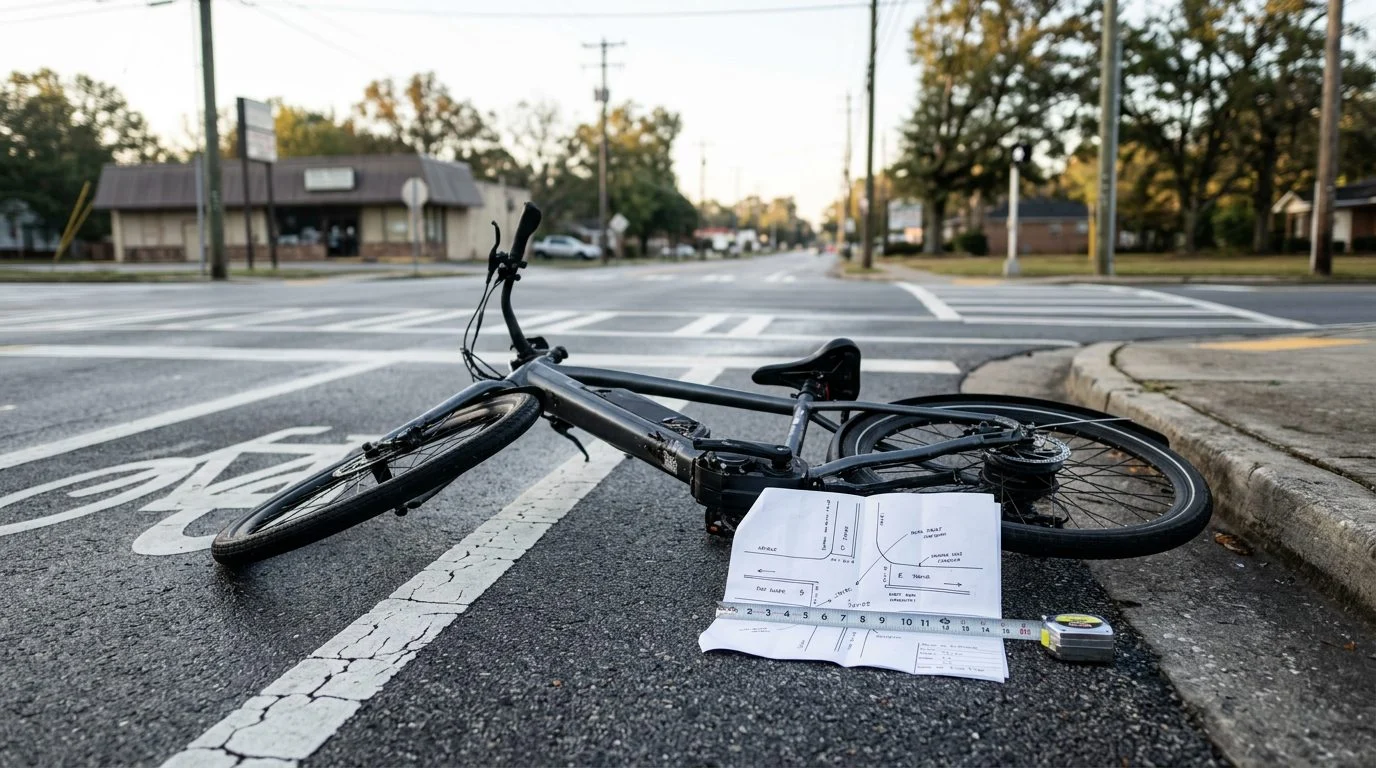
E-bike battery fires and defects | Clayton County and Georgia
E-Bike Battery Defect Lawyer: When the Battery Caused Harm
A battery that overheats, swells or catches fire can cause serious burns, smoke injuries and losses that no rider should carry alone.
T. Madden & Associates, P.C.
1999
In practice since
5
Georgia offices: Jonesboro, Atlanta, Decatur, Macon and Augusta
By Terance Madden · Published November 26, 2026
If an e-bike battery fire or overheating hurt you or someone you love, you may be asking whether the battery itself is to blame. The evidence, not the first guess, shows whether a battery caused the fire.
When a lithium-ion battery (the rechargeable type most e-bikes use) vents smoke, overheats, or catches fire during normal use, a defect in the battery, its cells, or its charger may be the cause. In Georgia, that can become a product liability claim, meaning a lawsuit saying a product was not safe for its intended use and caused harm. T. Madden & Associates, P.C. represents people hurt in fires and explosions caused by defective lithium-ion batteries, and families who lost someone in them. The firm has been in practice since 1999.
When the Battery Itself Is the Cause
A battery defect case says the battery or charger failed because of how it was designed, built, or labeled. That failure caused the injury.
Three kinds of defect matter here:
- Design defect: the battery was planned in a way that made it unsafe.
- Manufacturing defect: this unit was built wrong, even if others were fine.
- Failure to warn: the maker knew of a danger and did not warn buyers clearly enough.
This page is for riders burned or hurt in a battery fire, families of someone killed in one, and people hurt by an off-brand or uncertified battery. The facts decide whether a battery defect caused the harm. The firm starts by finding out what failed.
If a battery failure burned you or took someone you love, the battery may be to blame and more than one company may owe you. Start your free case evaluation with the firm today. Talk it through with our team — the first consultation is free, confidential, and carries no obligation.

What a Battery Defect Claim Can Recover
A Georgia claim can seek money for medical bills, lost pay, pain, and property damage. Here is what that covers.
- Medical expenses: emergency care, burn treatment, surgery, rehabilitation, and future care your doctors say you need. Georgia limits these to the reasonable value of medically necessary care (O.C.G.A. § 51-12-1.1).
- Lost wages: pay you lost while you could not work, and lost earning ability if the injury lasts.
- Pain and suffering: harm the law presumes from a wrong, such as pain, scarring, and loss of enjoyment of life. These general damages can be recovered without proof of an exact amount (O.C.G.A. § 51-12-2).
- Property: your bike, gear, home, or vehicle damaged by the fire.
Bills and lost pay are special damages. Keeping bills, pay stubs and other records can help show what a crash has cost you.
When a battery fire kills a spouse or parent, Georgia law lets the surviving spouse recover, or the children if there is no spouse. The recovery is the full value of the decedent’s life, as shown by the evidence (O.C.G.A. § 51-4-2). The personal representative can also recover funeral and other necessary expenses when death results from a crime or from criminal or other negligence (O.C.G.A. § 51-4-5).
How a Battery Defect Is Proven
The proof starts with the battery, the charger, and the scene of the fire. Each one tells a part of the story.
Before law school, Terance Madden trained as an electrical engineer. He starts a case by asking what the evidence shows, where the fire began, and which records must be kept. That training helps him read battery, charger, and wiring evidence and explain it in plain words.
Here is what that evidence can show:
- Swelling or cell damage can point to an internal short circuit, a path where electricity flows where it should not.
- Thermal runaway is a chain reaction where heat feeds more heat until the battery burns or vents.
- Charger and wiring damage shows whether the power system worked the way it was built to work.
- Certification marks and warning labels show whether the battery carried a recognized safety certification and whether the warnings matched the risk.
Fire can destroy evidence. Owners and sellers may also throw it away. Keep the battery, the charger, the bike, burned gear, photos, receipts, and online listings.
The other side may point to a changed battery, charger, or motor. The firm checks whether the change caused the failure or had nothing to do with it.
Who Else May Be Liable
More than one company may be liable. The company’s role in the product decides which claims fit.
The unsafe condition must be the proximate cause of the injury, meaning the direct cause (O.C.G.A. § 51-1-11).
A product seller is not treated as a manufacturer for strict liability, which is liability without proof of carelessness (O.C.G.A. § 51-1-11.1). A company that only puts its own label on a product made by another, with no input into its design or making, is treated as a product seller (Alltrade, Inc. v. McDonald).
A repair shop or upgrade shop may also be liable if its work contributed to the failure.
Each liable company may carry its own coverage. Some carry corporate or umbrella coverage too. More liable parties can mean more insurance available to pay the claim.
How Big Insurance Responds to Battery Claims
Big Insurance is not on your side. Its first offer is rarely what a claim is worth.
Expect these tactics:
- Early, low offers made before the full medical picture is known.
- Recorded statements taken before you understand your claim.
- Records requests that drag on for months.
- Delays while burns heal and bills pile up.
- Disputes over whether your treatment was needed.
- Arguments that the rider or the heat caused the fire, not a defect.
The firm’s response has three parts. It pursues every coverage layer that applies, including liability, umbrella, excess, corporate, and, where a motor vehicle is involved, uninsured or underinsured motorist coverage. It documents lifetime damages with medical and engineering proof. It prepares every case as if it will go to trial.
How the Case Moves, Step by Step
A battery claim usually moves through five steps, from the first call to a lawsuit if one is needed.
- First call. The firm listens, asks how the fire or failure happened, and tells you what evidence to keep.
- Preservation. The firm works to secure the battery, charger, and seller records.
- Investigation. Engineering review and medical records show how the battery failed and what your care will cost.
- Demand. The firm presents the claim to the liable companies and their insurers, then negotiates.
- Lawsuit. If the offer does not reflect the claim’s value, the firm files suit and prepares for trial.
Product claims have their own timing rules. Georgia requires actions for injuries to the person to be brought within two years after the right of action accrues, except injuries to reputation (one year) and loss of consortium (four years) (O.C.G.A. § 9-3-33). Product claims may follow different timing rules (Chrysler Corp. v. Batten). Start early.
Terance Madden is the responsible lawyer for this page. The firm has been in practice since 1999, with offices in Jonesboro (Clayton County), Atlanta, Decatur, Macon, and Augusta. The Terance Madden Foundation supports community work in the same spirit.
Not sure what your next step is?
Talk it through with our team — the first consultation is free, confidential, and carries no obligation.

Common Questions About Battery Defect Claims
Does Georgia’s fault rule stop my claim if I share some blame?
Shared blame lowers your recovery in proportion to your share of fault. You recover nothing if you are 50 percent or more responsible (O.C.G.A. § 51-12-33).
Does a modified e-bike end my claim?
Questions about how a change to a claim affects it are worth raising with a lawyer. The other side may raise it, so the firm checks whether the change caused the failure. Read our modified e-bike claim guide.
What if I bought the battery online from an unknown seller?
The maker, importer, and seller may each have a role. Keep receipts, order emails, and the listing page.
How long do I have to file?
Georgia generally allows two years after the right of action accrues for injury claims (O.C.G.A. § 9-3-33). Product claims can follow other timing rules, so start early.
Is there a fee?
The first consultation is free, confidential, and comes with no obligation to continue. The firm works on a no-fee-unless-we-win basis, but you may still be responsible for court costs and case expenses.
Who handles my case?
Terance Madden is the responsible lawyer. Our team supports the case day to day.
If a battery failure burned you or took someone you love, contact the firm now to start your free case evaluation.