

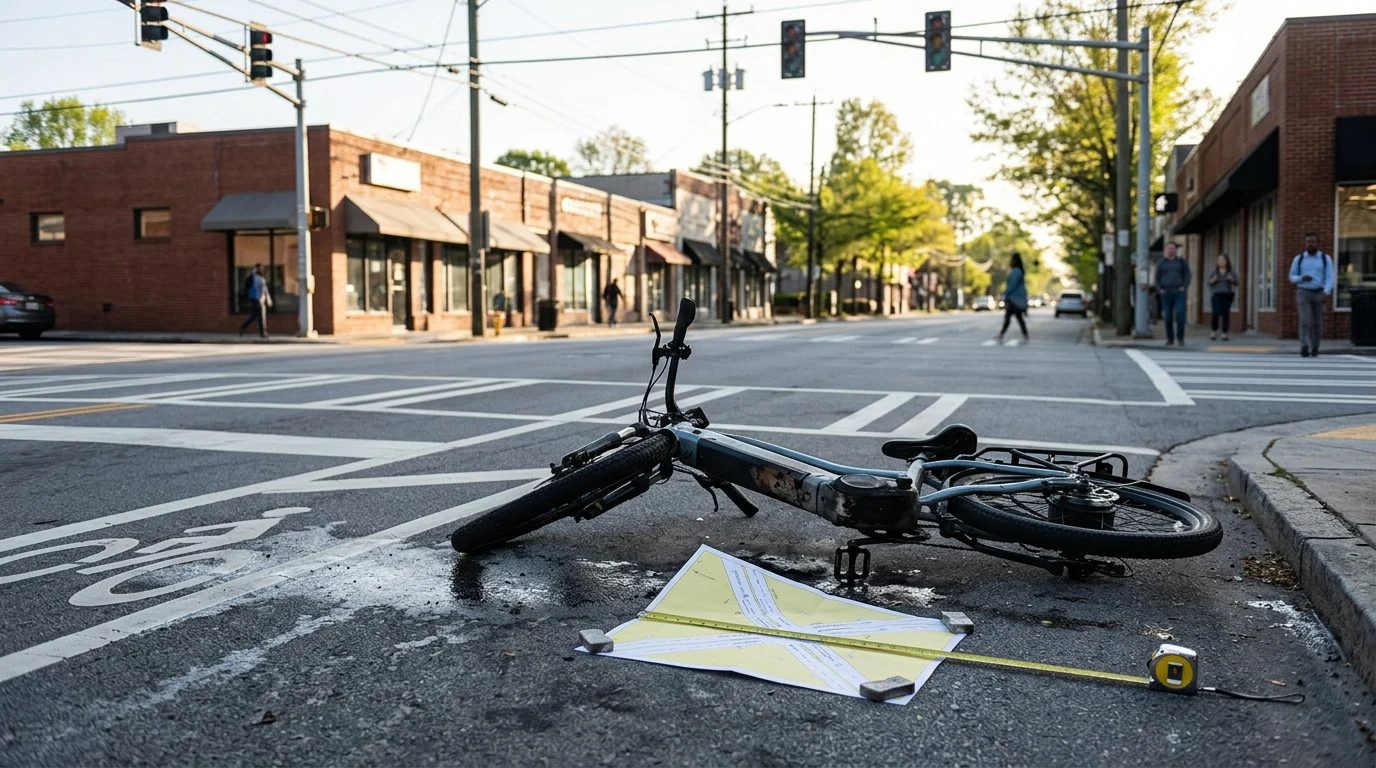
Lithium battery fire help for Georgia families
Your child's e-bike battery caught fire. Do these things first.
Fear and confusion are normal in the first hours. A short checklist can keep your family safe and protect evidence that may matter later.
T. Madden & Associates, P.C.
1999
Representing Georgians since
5
Offices across Georgia
24/7
Call us any time
By Terance Madden · Published November 26, 2026
Your adult child’s e-bike battery caught fire, or you’re scared one in your home could. You need to know what happened, whether your child has a claim, and what to keep right now.
Short answer: work through the yes-or-no tests below, write down every answer, and keep all the evidence. In Georgia, an injury claim generally must be filed within two years, so pin down the facts while they’re fresh.
Before You Start: Who This E-Bike Battery Fire Checklist Is For
This e-bike battery fire checklist for parents is for you if your adult child’s bike smoked, burned, or caught fire. It’s also for you if you fear a battery at home could do the same.
You may be the one making the calls, paying the bills, and keeping the family posted. That’s a heavy job. This checklist is built for it.
A lithium-ion battery is the rechargeable power pack that stores an e-bike’s energy. When its cells fail, they can overheat and burn hot and fast.
Each step asks one yes-or-no question. Each one gives a short reason and a next move. If anyone is in danger right now, get your child out and call 911 first. Come back to this list once everyone is safe.
Not sure what your next step is?
Talk it through with our team — the first consultation is free, confidential, and carries no obligation.
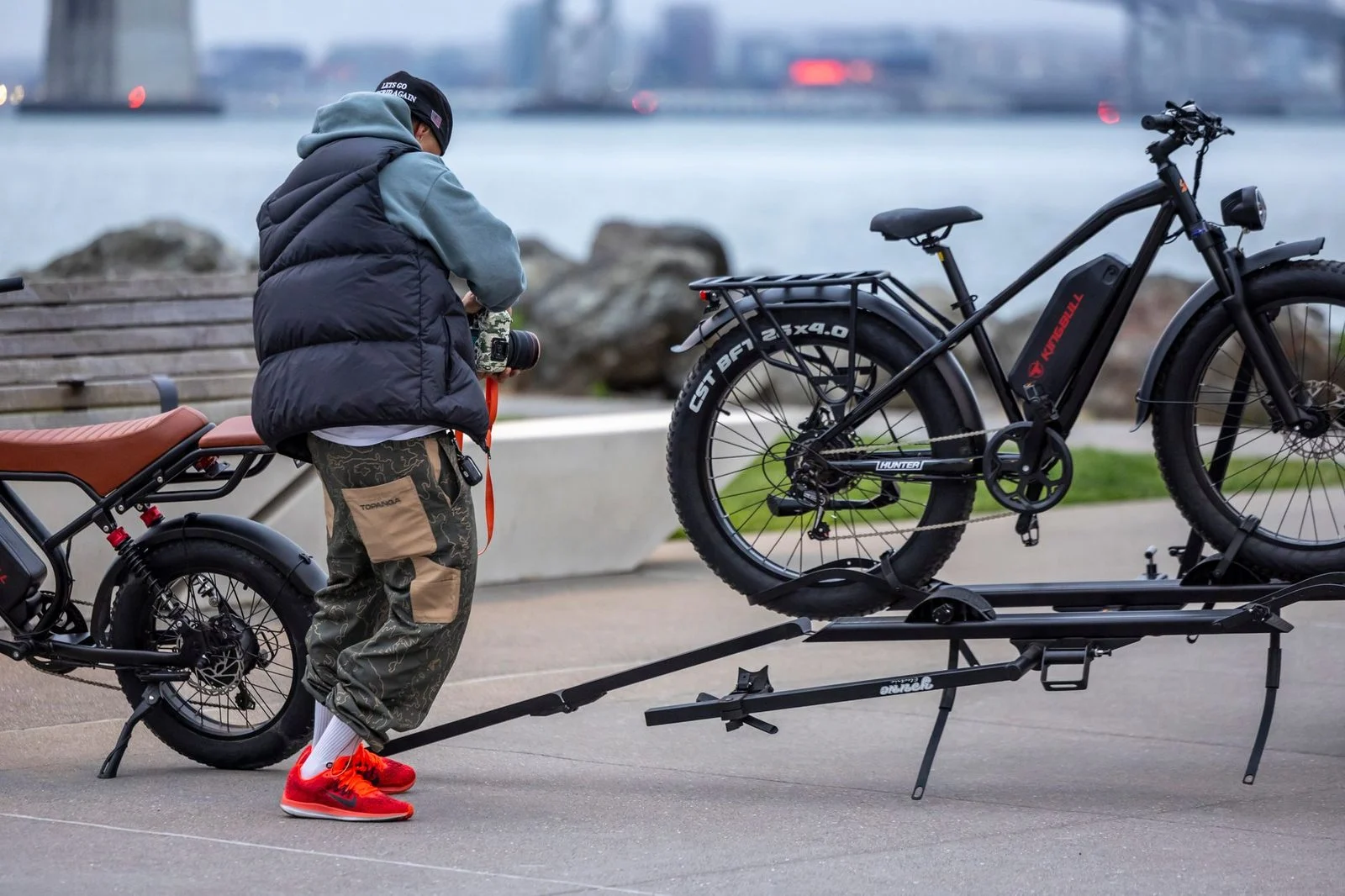
Step 1: Did the Fire Start in the Battery?
The fire may have started in the battery, the charger, the motor, or the wiring. The answer shapes what you do next.
- Test: Did the smoke or flames start at the battery pack? A battery fire often shows heat, hissing, smoke, or a sharp chemical smell before flames appear. Yes means go to Step 2.
- Test: Was the fire at the battery when help arrived? Firefighters and witnesses often describe where the fire was when they first saw it. Write down what they said and who said it.
- Test: Are you unsure? Keep going and save everything. Where a fire started gets decided later, with evidence.
Once everyone is clear, write down the scene as you remember it. Do it while the details are fresh.
Step 2: Is the Battery or Charger Original, or Off-Brand?
Off-brand, swapped, or mismatched parts raise hard questions about who is responsible.
- Test: Did the bike come with this battery? Batteries bought online, swapped in, or rebuilt can differ from what the bike maker sold. If not, the battery’s source matters.
- Test: Does the battery or charger carry a testing mark, such as UL? A testing mark shows the product was checked against a safety standard. A missing mark is a question to raise, not proof of fault.
- Test: Was a different charger used? A charger built for another pack can overheat it. Record any mismatch.
If any answer is no or mismatch, keep the box, receipts, and online listings. In Georgia, a company that only resells or labels a product made by someone else is generally a product seller, and in a strict liability in tort claim it is not treated as a manufacturer (§ 51-1-11.1). A manufacturer can be liable in tort (a civil wrong that causes harm) to a person hurt by personal property sold as new property that was not merchantable and reasonably suited to the use intended when sold (§ 51-1-11). Georgia also implies, when the seller is a merchant with respect to goods of that kind and unless the warranty is excluded or modified, a promise that goods are fit for ordinary use and match what the label says (§ 11-2-314).
Step 3: Was It Charging, Stored, or Left Unattended?
Charging and storage details are where the facts get specific. Write down the exact conditions.
- Test: Was the bike charging when the fire started? Charging puts the battery under load. If no one was watching, no one could catch the first warning signs.
- Test: Was it charged overnight or left alone? A fire that starts while everyone sleeps or is away can burn longer before anyone notices.
- Test: Was the battery stored near exits, bedrooms, paper, gas cans, or cleaning chemicals? Flammable items near a fire help it spread.
- Test: Was the battery kept somewhere hot, like a sunny garage or a parked car? Heat stresses lithium-ion cells.
Carroll County, Georgia publishes official lithium-ion battery safety guidance that covers charging, storage, and emergency response. Compare your answers with it.
Write down each answer as it happened. Don’t guess. Facts recorded early count later.
Step 4: Were There Warning Signs Before the Fire?
Yes, warning signs can come before a battery fire, and each one matters.
- Test: Did the battery look swollen, bulging, cracked, or warped? A swollen battery is a warning sign, not normal wear.
- Test: Did the bike shut off, overheat, show error messages, or smell like burning plastic first? These signs can show up before a fire starts. Note the date of each one.
- Test: Was the battery dropped, crashed, soaked, or repaired? Physical damage can change how the cells behave.
Any yes answer goes in your notes, with dates. Don’t charge, handle, or try to repair a damaged battery. Keep it away from living spaces and follow guidance from local fire officials. The same Carroll County battery safety guidance explains how to recognize warning signs.
Step 5: Was Anyone Hurt or Killed?
If anyone was hurt or killed, Georgia’s deadlines and damages rules start to matter right away.
- Test: Did your child or anyone else suffer burns, smoke injury, or other harm? Keep every bill, visit note, and prescription. These records show what the injury cost.
- Test: Did the fire cause a death? Georgia law lets a personal representative (the person legally handling the estate) recover funeral, medical, and other necessary expenses when a death results from a crime or other negligence (§ 51-4-5). Who may bring the claim is set by law, and the answer depends on the facts.
- Test: Are bills, lost pay, or repair costs piling up? Special damages are costs that actually flow from the harm, and they must be proved (§ 51-12-2). Keep one folder for every receipt.
Georgia generally gives two years to file a claim for injury to the person, but a claim for injury to the person involving loss of consortium must be brought within four years (§ 9-3-33). If anyone was hurt or killed, a fast consultation protects your options.
Not sure what your next step is?
Talk it through with our team — the first consultation is free, confidential, and carries no obligation.
Step 6: Did You Keep the Evidence?
Keep the battery, the charger, and every paper trail exactly as they are.
- Test: Do you still have the battery, charger, cables, and any remains of the bike? Physical evidence is often the strongest proof of what failed.
- Test: Do you have photos or video of the scene, the burn pattern, and the bike before anyone moved it? Early photos show what the fire left behind.
- Test: Do you have the receipt, order confirmation, product listing, warranty, and messages with the seller? These show where the battery came from and what was promised about it.
Don’t throw out, repair, or test the battery yourself. Destroying or changing evidence can hurt a claim. Bag the battery, label it, and store it away from the house. Tell the firm before anyone else touches it.
How an Engineer Reads Battery Fire Evidence
An engineer reads a battery fire by tracing where the heat started and what failed first.
Before law school, Terance Madden trained as an electrical engineer. So he starts a case by asking what the evidence shows and how the fire started. He looks at the cells, the charging circuit, the battery management system (the electronics that watch a pack’s voltage and temperature), and the charger. He works to preserve the records that show what happened.
Other parties may share fault. Georgia law requires the trier of fact, which may be a jury, to consider the fault of everyone who contributed to the injury, whether or not that person was named as a party, and a nonparty’s fault must be considered if the plaintiff settled with that nonparty or a defending party gave notice no later than 120 days before trial that the nonparty was wholly or partially at fault (§ 51-12-33). Each liable party pays its own share, not a shared bill. That makes the seller, anyone who changed the bike, and the maker of a part worth examining. Each may bring its own insurance. Georgia also has a ten-year limit, counted from first sale, for many claims against manufacturers (§ 51-1-11). Georgia law keeps a manufacturer’s duty to warn of a danger from using a product once that danger becomes known to the manufacturer (§ 51-1-11).
What Big Insurance Will Likely Do, and How the Firm Responds
Big Insurance is not on your side, and its first offer is rarely what your claim is worth.
Expect these tactics:
- A quick, low offer made before the full bills are in.
- A recorded statement requested early, before you understand the claim.
- Slow requests for records and long waits for answers.
- Disputes over treatment, with claims that a follow-up visit wasn’t needed.
- Arguments that burns or smoke injuries are minor.
The response is to look at every coverage layer. That includes the liability policy, the responsible business’s corporate coverage, and any umbrella or excess coverage (extra coverage above the base policy). The firm also looks at lifetime costs, such as ongoing care, not just the first bills.
Before you give a recorded statement, ask for time to understand your claim.
What to Do Next With Your Results
Put your answers in one place, then bring them to a free first consultation.
Your summary:
- Battery source: original or off-brand?
- Charging, storage, and heat conditions.
- Warning signs, with dates.
- Injuries, a death, and the costs so far.
- Evidence you kept, and where it’s stored.
The first consultation is free, confidential, and has no obligation to continue.
Can I sue the store that sold the battery?
You may have a claim against a seller, a converter, or a maker, depending on what the evidence shows. The firm reviews each party’s role.
Should I keep the battery after the fire?
Yes. Bag it, label it, store it away from living space, and tell the firm before anyone else touches it.
Does a UL mark prove an e-bike battery is safe?
No. A testing mark shows the product was tested against a safety standard. It doesn’t decide who is at fault.
If your adult child’s e-bike battery caught fire and you’re now handling medical visits, repairs, and hard questions, start a free case evaluation with T. Madden & Associates, P.C.