

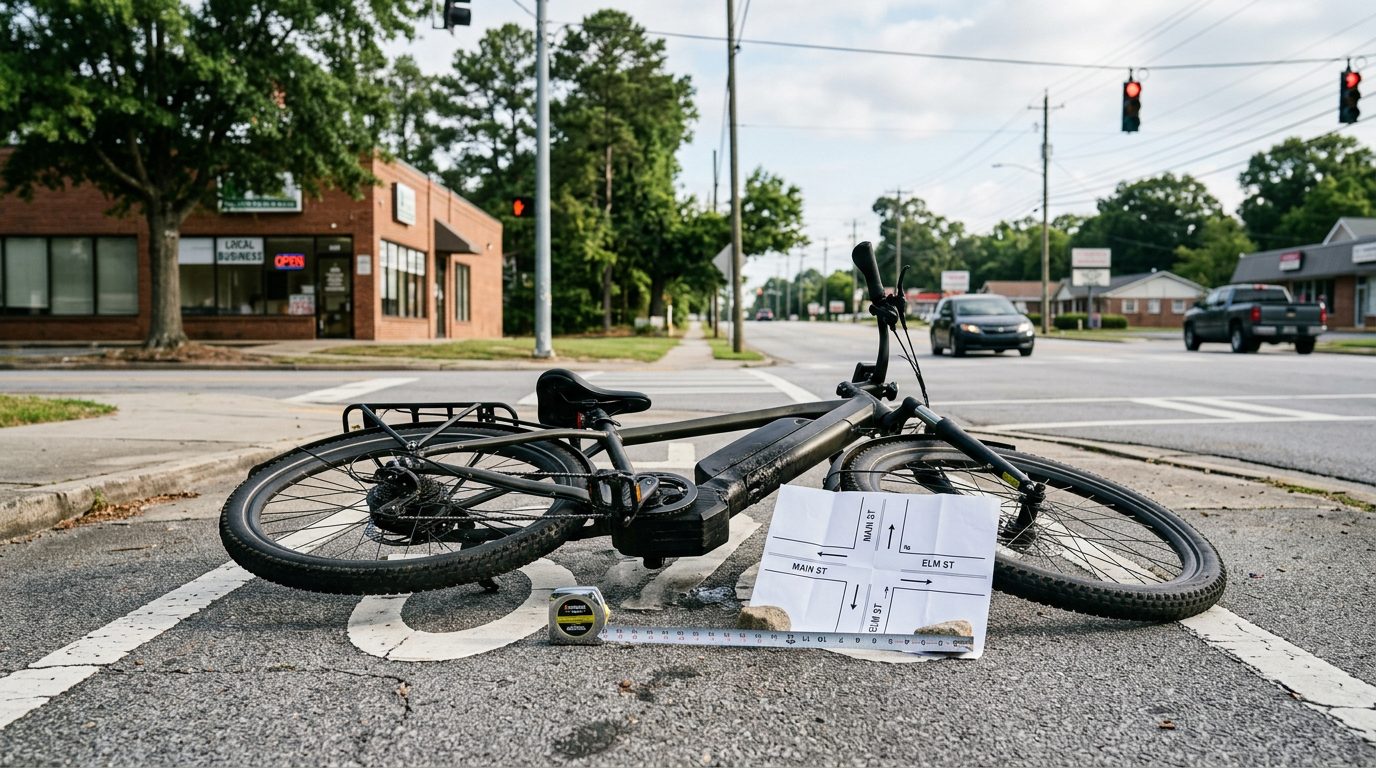
E-bike battery fire lawyer | Jonesboro, Atlanta, Decatur, Macon and Augusta
Hurt in an e-bike battery fire? Talk with a Georgia lawyer who starts with the evidence.
Lithium-ion batteries can fail suddenly. T. Madden & Associates, P.C. looks at what went wrong and helps injured riders and grieving families decide what comes next.
The firm at a glance
1999
Practicing since
5
Offices across Georgia
24/7
Phone line available
By Terance Madden · Published November 18, 2026
If an e-bike battery exploded or caught fire and hurt someone you love, you need clear answers fast. Short answer: the company that made or sold a defective battery, charger, or bike may be legally responsible for the harm. Georgia law gives injured people a way to pursue that responsibility, and this page explains how it works.
What an E-Bike Battery Explosion Injury Claim Covers
An e-bike battery explosion injury claim is a product liability claim. That means a lawsuit against the party responsible for a defective product that caused harm.
A lithium-ion battery is the rechargeable type used in most e-bikes and e-scooters. When its cells fail or its charger is wrong, it can overheat, burn, or explode.
The people hurt are often:
- The rider, burned or hit by flames.
- A bystander or neighbor hurt by the same fire.
- A family that lost a loved one. A wrongful death claim (a lawsuit brought after a death) may be available.
Common injuries include burns with scarring or skin grafts, smoke inhalation, fractures from falls, and damage to a home or rental unit.
Fires like these often start in the battery pack, the charger, or a mismatched replacement battery. Terance Madden has practiced law since 1999. The firm represents people hurt in lithium-ion battery fires and defective product cases, along with car, truck, and motorcycle crash victims.
If a battery fire burned you or someone in your family, the firm can review whether someone may be responsible and whether you may have a claim. Start your free case evaluation today. Talk it through with our team — the first consultation is free, confidential, and carries no obligation.
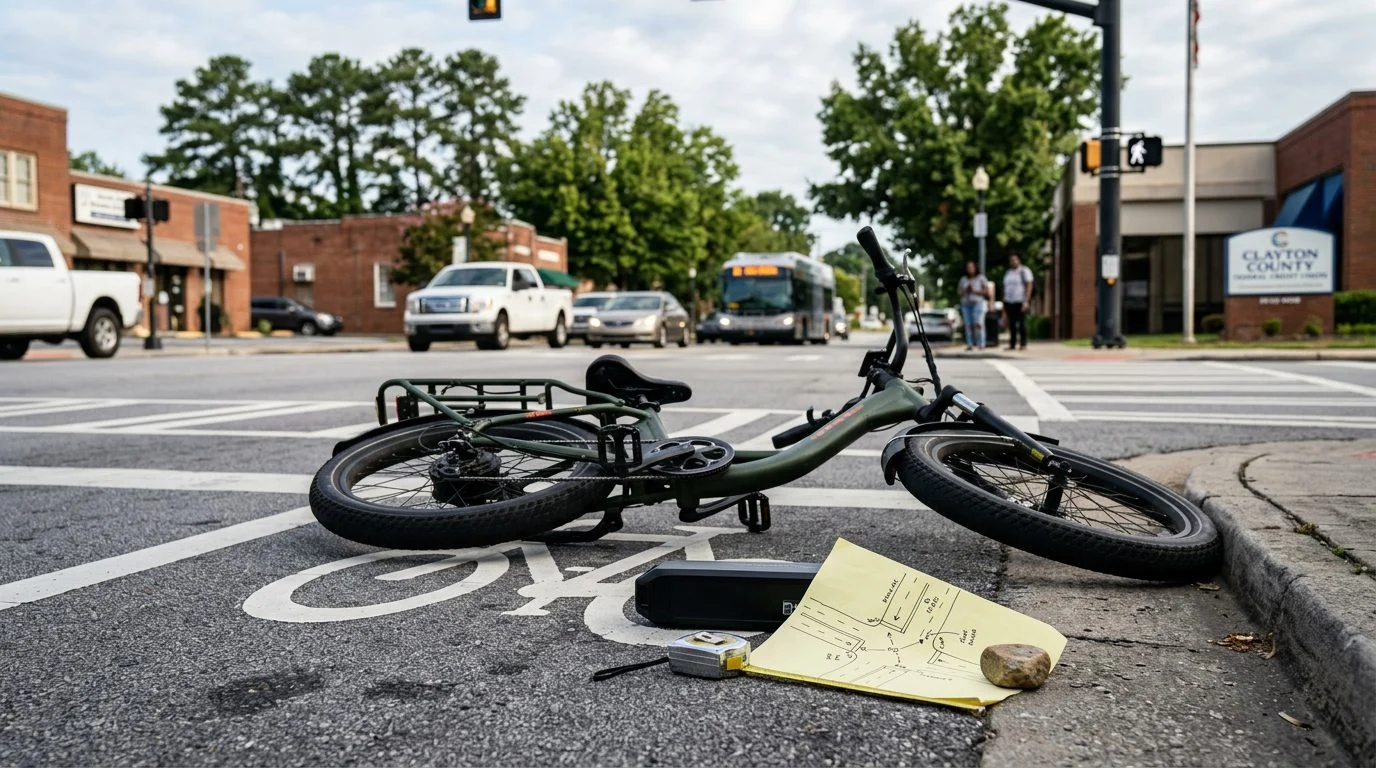
Who May Be Liable When an E-Bike Battery Fails
Product cases often involve more than one company, such as the maker of a part, the seller, or the company that assembled the product.
Georgia’s product liability law, O.C.G.A. § 51-1-11(b)(1), makes the maker of a product sold new answerable to any person who uses it, consumes it or is reasonably affected by it and is hurt or has property damaged, if the product, at the time the maker sold it, was not merchantable (fit for ordinary sale) and reasonably suited to its intended use, and that condition was the proximate cause (the direct legal cause) of the harm; under paragraph (2), a claim under this part of the law cannot be filed more than ten years after the product was first sold for use or consumption.
Under O.C.G.A. § 51-1-11.1, a product seller is not a manufacturer for strict liability (blame for a defect, without proof of carelessness), so the claim must name the right party.
Under O.C.G.A. § 51-1-11(c), the ten-year limit does not relieve a manufacturer of the duty to warn about a danger from use of its product once that danger becomes known to the manufacturer.
Terance Madden holds a B.S. in Electrical Engineering and trained as an electrical engineer before law school. He reads a battery fire the way an engineer reads a failed circuit. He asks which cell failed, whether the battery management system (the circuit that tracks charge and temperature) did its job, and whether the charger carried a recognized safety mark. He also works to trace the origin-and-cause, the path that shows where the fire started, before that evidence is lost. Terance Madden leads the firm, which has been in practice since 1999.
Steps to Take After the Fire
Get to safety first, then get medical care and keep every piece of evidence.
- Leave the building and stay out of smoke. Do not go back in for property.
- Call 911 and report the fire and every injury, even minor ones. Ask for the fire report number.
- See a doctor the same day, even if the burns look small. Burns can get worse over several days.
- Keep the battery, charger, and damaged parts. Do not repair, toss, or let anyone discard them.
- Photograph the scene, your injuries, and the damaged property. Write down the bike’s brand, model, purchase date, and where it was bought.
- Request the police and fire department reports.
- Talk with a lawyer before giving a recorded statement to an insurer.
The battery is the most important evidence in the case, and it’s easy to lose.
What Compensation Can Include and How Pain and Suffering Works
A Georgia injury claim can recover medical bills, lost pay, property damage, and pain and suffering.
Georgia splits damages into two groups. General damages (losses the law presumes from the wrong) need no proof of an exact amount. Special damages (losses that actually happened) must be proved. O.C.G.A. § 51-12-2
If a provider treated you on a letter of protection (a promise to be paid from your settlement), that arrangement can be examined in the case.
If Medicare paid for the care, it may have a conditional payment (a payment it expects to be repaid from a settlement). Federal law takes precedence over state law and private contracts. CMS explains conditional payments
Pain and suffering covers physical pain, emotional distress, and loss of daily life. No formula sets its value. The facts of each case drive it, including how long the burns need care and what they change at home.
How Big Insurance Responds to Battery Fire Claims
Big Insurance is not on your side, and its first offer is rarely what your claim is worth.
Expect these tactics:
- A low offer made before doctors know the full extent of the burns.
- Early recorded statements that ask about your charging habits.
- Slow payment of bills and disputes over whether burn treatment was needed.
- Blame on the rider, such as the charger used or how the bike was charged.
The response is to find every coverage layer. That includes the maker’s liability policy, the seller’s policy, homeowner or renter’s coverage, umbrella and excess coverage, and UM/UIM coverage (uninsured and underinsured motorist coverage), where it applies.
For more on settlement offers, read the e-bike battery fire settlement offer guide.
How the Case Works, Step by Step
A case moves from a free consultation to evidence, investigation, negotiation, and, if needed, a lawsuit.
- Free consultation. The initial consultation is free, confidential, and carries no obligation to continue.
- Evidence preservation. The firm works to keep the battery, charger, and records intact.
- Damages records. Treatment notes, bills, pay records, and a clear account of daily life.
- Liability investigation. An engineering review of the battery and charger, plus every party and coverage layer.
- Georgia law generally sets a two-year deadline for injuries to the person, though claims for injuries to the reputation must be brought within one year and actions for injuries to the person involving loss of consortium within four years. O.C.G.A. § 9-3-33 Wrongful death claims follow their own rules.
Terance Madden has practiced since 1999. The firm has offices in Jonesboro, Atlanta, Decatur, Macon, and Augusta. The firm also supports community work through the Terance Madden Foundation.
Not sure what your next step is?
Talk it through with our team — the first consultation is free, confidential, and carries no obligation.
Questions People Ask About E-Bike Battery Fire Claims
Most of these answers come down to the battery, the charger, and how the product was sold.
Can I make a claim if the e-bike was used?
Possibly. The product’s history, its battery and charger, and the seller’s records all matter.
Can a family member who was not riding make a claim?
Possibly. Bystanders and household members hurt by a fire may have their own claim.
Do I have to go to court?
Many cases resolve without trial, but every claim should be ready for one.
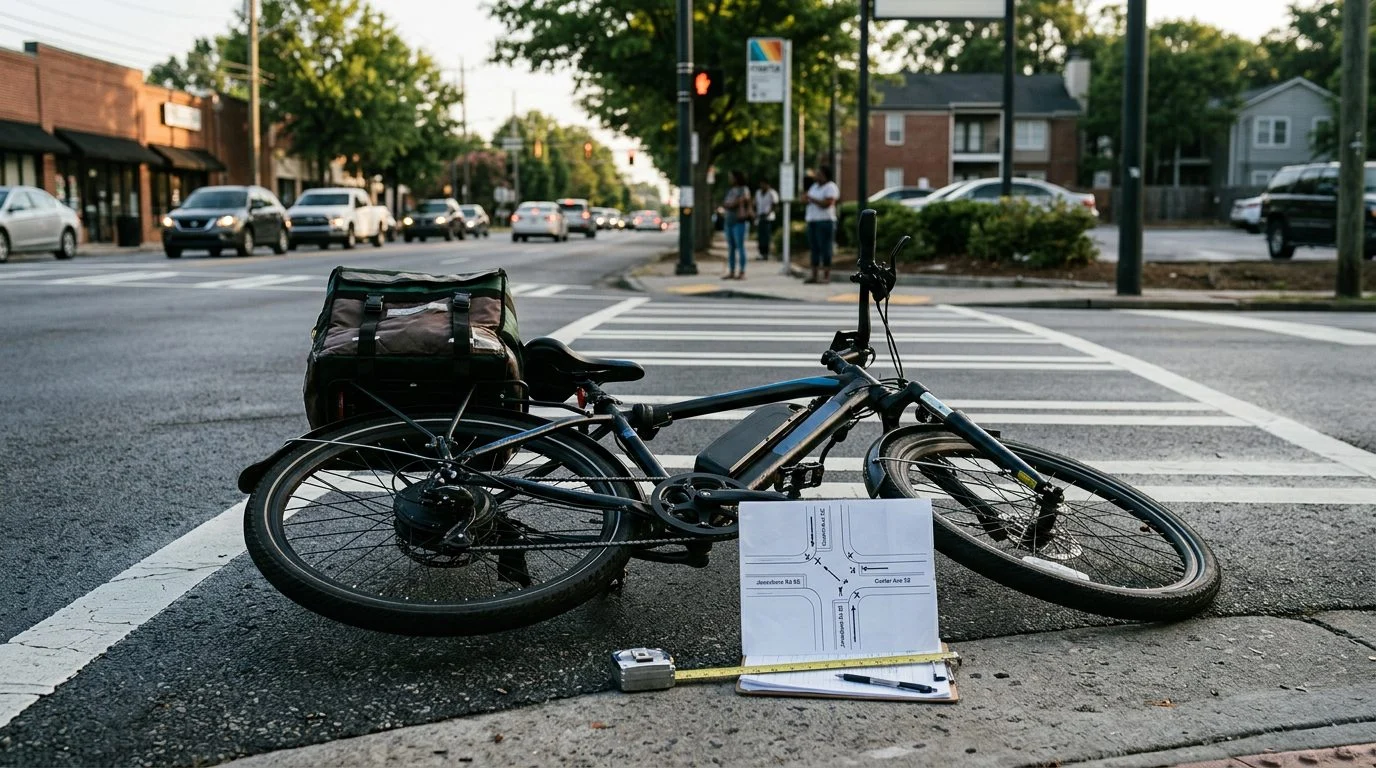
If an E-Bike Battery Already Hurt Your Family
If a battery fire hurt someone you love, the person managing their care is part of the case from day one.
That’s often a spouse, a parent, or an adult daughter handling burn clinic visits, medical bills, and calls with insurance. Your role matters, and the firm works with you as well as the injured person.
Keep a simple log of appointment dates, medicines, bills, and calls from insurers. Bring the battery, charger, receipts, and fire report number to your first meeting, if you have them.
If your family is dealing with burns, a hospital stay, or an insurer asking for a recorded statement, you don’t have to sort it out alone. Start your free case evaluation or call the firm any time, day or night.