

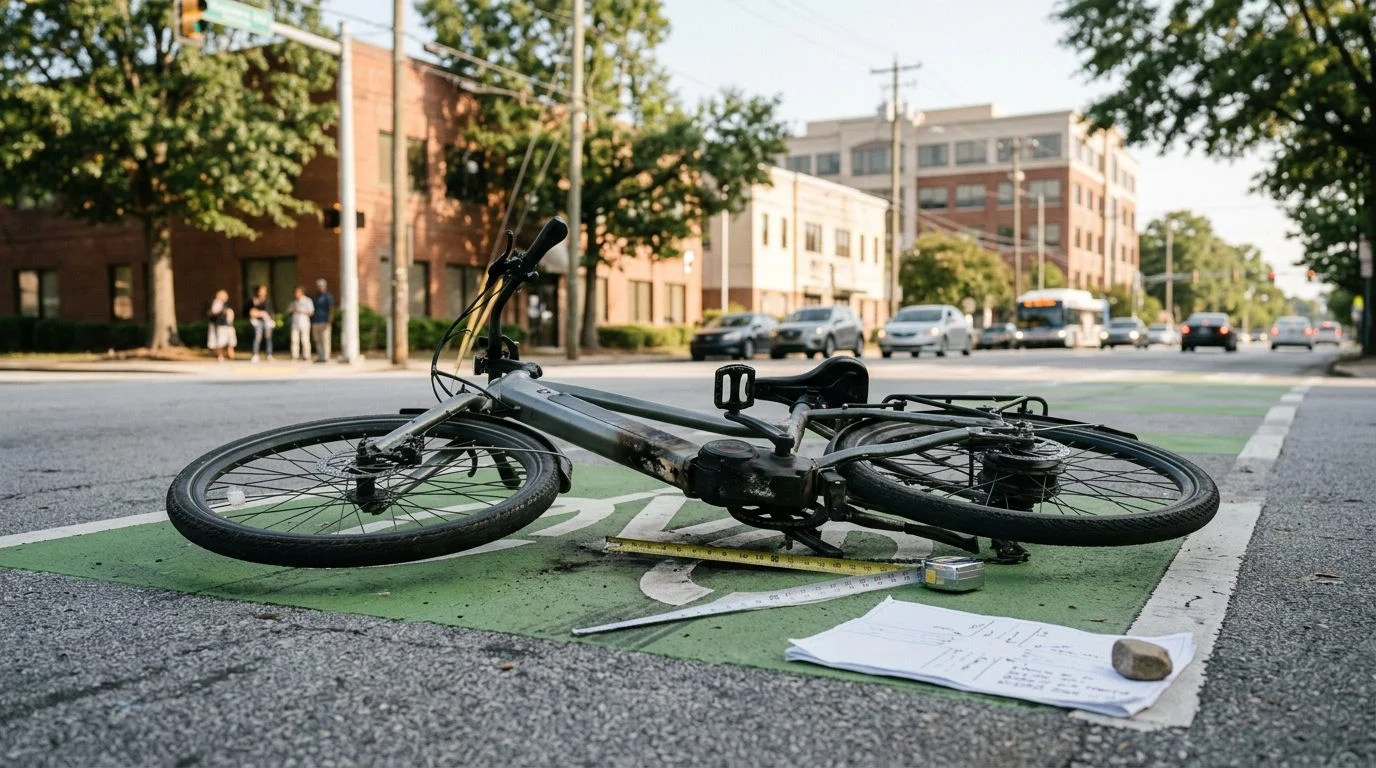
E-bike battery fires | Georgia
E-Bike Battery Fire Lawsuit in Georgia: Who Is Liable
Defective cells, mismatched chargers and off-brand parts can all start a fire. The firm helps you trace the damage back to the companies that made, imported and sold the battery.
About T. Madden & Associates, P.C.
1999
Year the firm began practice
24/7
Call us anytime
By Terance Madden · Published November 14, 2026
Your rider is in the hospital, or your home burned overnight while a battery charged. Now you’re handling bills, insurance calls, and questions nobody prepared you for.
The short answer: more than one company can be held responsible. Under Georgia law, the maker of a defective product can be liable for the injuries it causes, and other companies in the chain may share responsibility too.
What an E-Bike Battery Fire Lawsuit Is and Who It Fits
An e-bike battery fire lawsuit is a civil claim for money damages against the companies whose product or conduct caused a battery to burn or explode. “Civil claim” means a private case for payment, not a criminal case. “Money damages” means payment for losses like medical bills, lost pay, and lost property.
It fits several kinds of people:
- A rider burned or hurt by a battery fire or explosion
- A bystander or neighbor hurt in the fire
- A property owner who lost a home or its contents
- A family who lost someone in a fire tied to a defective battery
Often, a spouse, mother, or adult daughter ends up running the recovery. She tracks the bills, keeps the appointments on the calendar, and takes the insurer’s calls. Her role matters. You should never have to wonder where the claim stands.
If a battery fire has hurt someone you love, someone may be responsible, and our team can talk through what happened with you. Talk it through with our team — the first consultation is free, confidential, and carries no obligation.
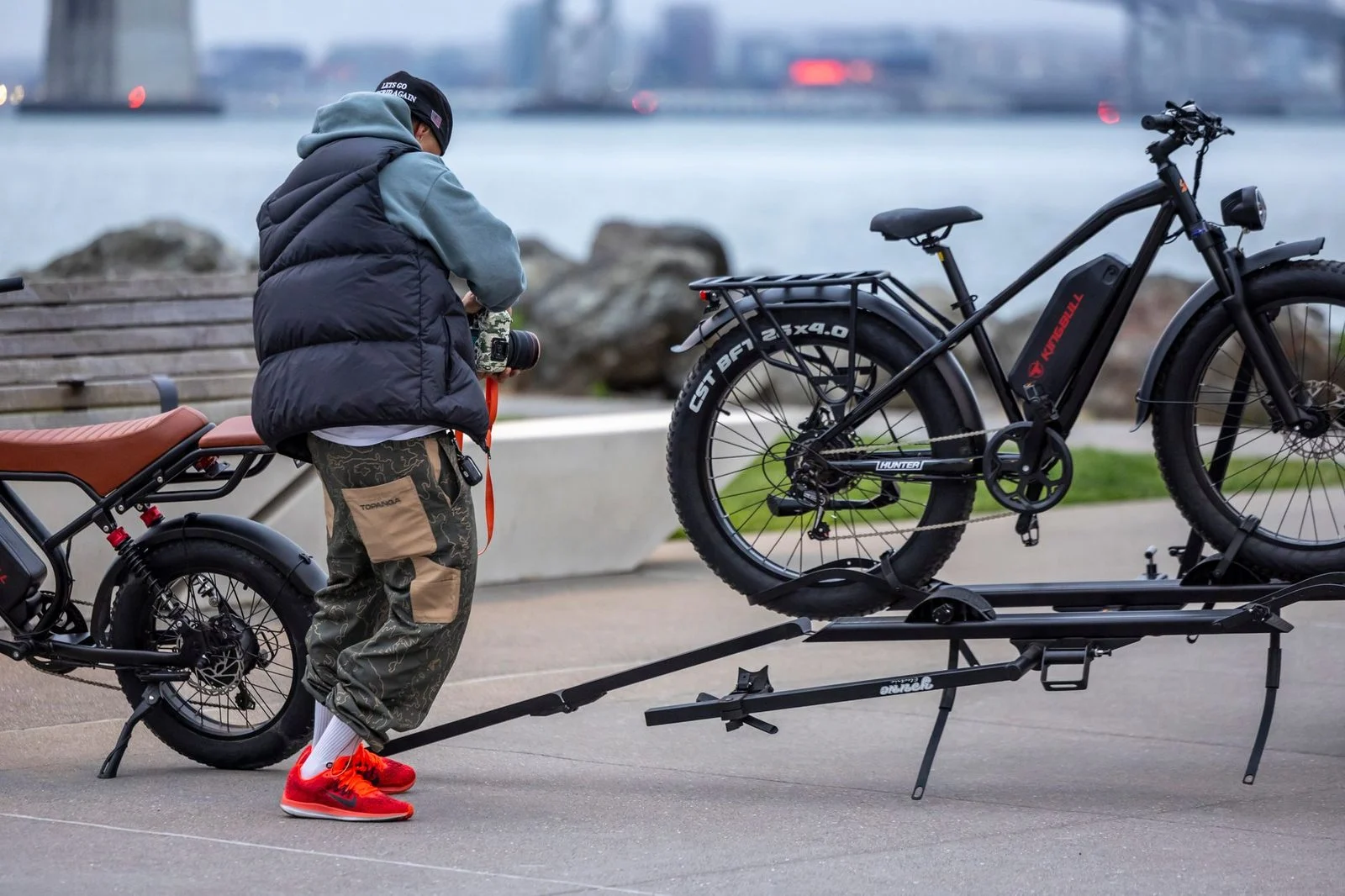
How E-Bike Battery Fires Start
Most of these fires start with thermal runaway, a chain reaction inside the battery. One cell overheats, gives off heat and gas, and heats the cells beside it until the pack burns or bursts.
Common triggers include:
- Manufacturing defects inside the cells
- Damaged or punctured cells
- A battery management system (the circuit that watches voltage and temperature) that fails
- A charger that does not match the battery
- Replacement, aftermarket, or home-modified packs from makers nobody can verify
Off-brand packs deserve close attention. A replacement battery from an unknown maker may never have been tested to a recognized safety standard. UL Solutions’ lithium-ion battery incident reporting resource explains why the details of each battery incident matter.
Who Can Be Held Responsible
Responsibility can reach every company that made, assembled, or sold the product. The facts decide each company’s role.
- Cell and pack makers. A company that built the cells, or the pack and its management circuit, can answer for a defect inside them.
- The e-bike maker. The company that built the bike around the battery can share responsibility for design and warnings.
- The importer and distributor. A U.S. company that brought the product in and sold it can be reached, even when the factory is overseas.
- The seller. Stores and online sellers can be liable in their own right.
Georgia law sets the basic rule. Under O.C.G.A. § 51-1-11, a manufacturer of personal property sold as new can be liable in tort, without privity, to a natural person who uses, consumes, or is reasonably affected by the property and is injured because the property, when sold, was not merchantable and reasonably suited to the use intended, and that condition was the proximate cause of the injury.
O.C.G.A. § 51-1-11.1 defines a product seller as a person who, in the course of a business, leases or sells and distributes, installs, prepares, blends, packages, labels, markets, or assembles pursuant to a manufacturer’s plan, intention, design, specifications, or formulation, or repairs, maintains, or otherwise is involved in placing a product in the stream of commerce. For purposes of a product liability action based in whole or in part on strict liability in tort, a product seller is not treated as the manufacturer under that section. In Alltrade, Inc. v. McDonald, the Court of Appeals of Georgia treated a company that had no input into a product’s design or making as a product seller, not a manufacturer.
Repair shops that swapped a battery or changed a charger can also play a part.
What the Evidence Shows and How Terance Madden Reads It
The physical evidence shows where the fire started, so it has to be kept safe and read with care.
Keep the battery and charger remains, the bike’s model and serial number, receipts, online listing pages, photos, video, and any fire or police report. Burned evidence can be thrown out or altered. The firm moves fast with preservation letters to the companies that hold the product.
Before law school, Terance Madden trained as an electrical engineer. Before law school, he trained as an electrical engineer, so he starts a battery case by asking what the evidence shows and where the fire began.
In plain terms, a cell with an internal defect can show swelling or melted separators, the thin layer that keeps the cell’s two sides apart. Burned charger wiring can point to the charger instead of the cells. Scorching that starts at one spot can mark where the fire began. Whether the product carries a recognized safety certification mark, and whether that mark matches the real product, is also part of the review.
That review can point to a manufacturing defect, a design flaw, or a warning that failed to tell the rider about a danger. It can also show which other companies share the blame.
What You Can Recover and the Deadline to Act
Injured people can seek payment for medical care, lost pay, and pain and suffering. Georgia separates general damages, which the law presumes flow from a wrong, from special damages, which must be proved (O.C.G.A. § 51-12-2).
Medical bills must reflect the reasonable value of medically necessary care (O.C.G.A. § 51-12-1.1). When a death results from criminal or other negligence, the personal representative may recover funeral, medical, and other necessary expenses (O.C.G.A. § 51-4-5).
Deadlines matter most. Injury claims generally must be filed within two years of when the right of action accrues, but a loss of consortium claim must be brought within four years (O.C.G.A. § 9-3-33). A claim for damage to personal property, such as your belongings, has to be filed within four years after it accrues, which in plain terms means the point when the law first lets you sue, often the date of the loss (O.C.G.A. § 9-3-31). If a fire damaged your home, contact the firm promptly to talk through your options. Georgia law sets a ten-year deadline for suing a manufacturer over a defective product, and the clock starts on the date the product was first sold for use or consumption. That deadline covers strict liability claims, which are claims that the product was defective when sold, whether or not the maker was careless. It also covers most negligence claims against a manufacturer. One exception is a negligence claim over a product that causes a disease or birth defect. Another is a negligence claim where the manufacturer’s conduct shows it willfully, recklessly or wantonly disregarded life or property. Georgia’s rules on manufacturer liability for defective products are set out in O.C.G.A. § 51-1-11. Under O.C.G.A. § 51-1-11(c), the ten-year limit does not relieve a manufacturer from the duty to warn of a danger arising from use of a product once that danger becomes known to the manufacturer; for failure-to-warn claims, see Chrysler Corp. v. Batten.
Waiting can cost a family its claim. Don’t let the calendar run while the bills pile up.
How Big Insurance Responds and How the Firm Pushes Back
Big Insurance is not on your side, and its first offer is rarely what your claim is worth. Insurers for manufacturers, sellers, and homeowners study the fire to limit what they pay.
Expect these tactics:
- A fast, low first offer, made before future care is known
- A recorded statement taken before the family understands the claim
- Delays in releasing the claim file or the fire findings
- Disputes over whether the treatment was needed
- Blame shifted to a non-original charger, a modified battery, or the rider
The Georgia Office of the Commissioner of Insurance and Safety Fire advises injury claimants not to rush to accept an offer, and notes they may negotiate for a fair settlement (Georgia insurance claim tips). Don’t sign a release until the injuries and future care are known.
The firm pursues every coverage layer. That includes product liability coverage for the maker and seller, homeowners or renters coverage for property, umbrella and excess policies, corporate assets, and, where a motor vehicle is involved, uninsured or underinsured motorist coverage. The firm also counts the full lifetime cost of an injury, not only the bills so far. Every case is prepared as if it may go to trial.
Not sure what your next step is?
Talk it through with our team — the first consultation is free, confidential, and carries no obligation.
Your Questions About E-Bike Battery Fire Cases, Answered
What causes e-bike batteries to ignite?
Thermal runaway, a chain reaction inside the battery, is how many of these fires begin. Damaged cells, internal defects, and mismatched chargers can start that chain.
Can I still file a claim if the battery maker is overseas?
Yes. A claim can still be pursued against U.S. importers, distributors, and sellers.
Can I sue if the fire started in my home?
Yes. A home fire from a defective battery can support a claim, even if the bike was parked and charging.
How are fees handled?
The first consultation is free, confidential, and carries no obligation to continue. The firm takes these cases on a no-fee-unless-we-win basis, but you may still be responsible for court costs and case expenses.
Do I need a lawyer if the insurer already made an offer?
A first offer is rarely the full value of a claim. Have it reviewed before you sign anything.
If Your Family Is Dealing With This Now
If a battery fire has landed on your family, you don’t have to sort out the claim alone. You may be dealing with a rider in the hospital, a home that burned while a battery charged, or a funeral you never expected to plan.
Our team is ready to hear what happened. Start a case evaluation with the firm, and call any hour, because the firm answers calls 24/7.