

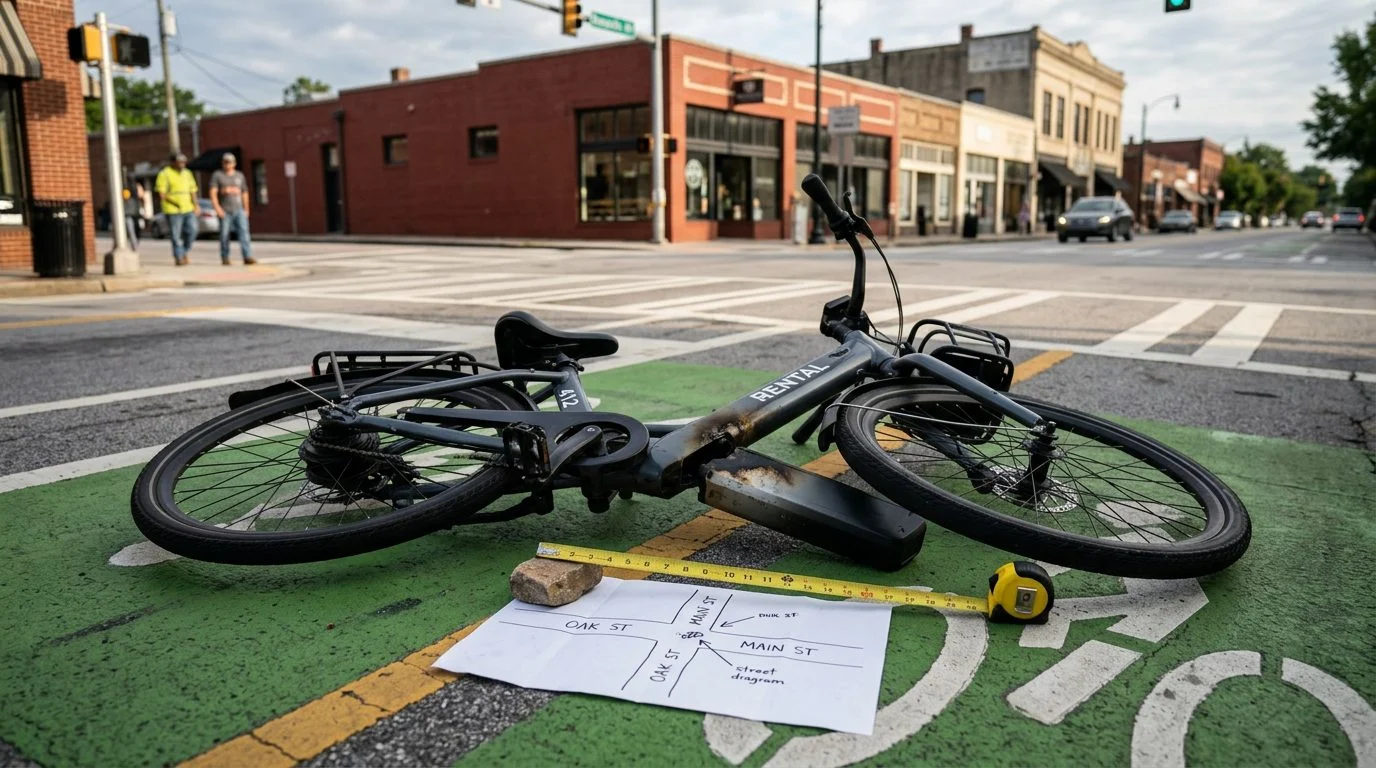
Lithium battery fire lawyer | Georgia
Hurt in a rental e-bike battery fire? Start by asking who had control.
A battery fire can start in a unit you rent, not one you own. T. Madden & Associates, P.C. helps people hurt in these fires and families who lost someone to them.
The firm at a glance
1999
Year the firm began practice
5
Offices across Georgia
24/7
Call line for injured people and families
By Terance Madden · Published November 23, 2026
If a battery caught fire in your rental, the question of who pays can start that same day. In Georgia, a landlord or property owner can be held liable for injuries when the facts show they did not use ordinary care (the care a reasonable property owner would use) to keep the property safe. The battery maker and the seller may share responsibility too.
When an e-bike battery fire hits your home or your family
A fire that starts in an e-bike battery can hurt a tenant, a guest or a neighbor. It can destroy a home, a bike and a family’s sense of safety in one night.
Often, the person managing the aftermath is a spouse, a mother or an adult daughter. That person is making hospital visits, taking insurance calls and tracking missed work. If the fire took a life, the family is planning a funeral and asking hard questions at the same time.
Here’s the hard part: a fire can destroy the very evidence that proves a claim. That’s why the first steps matter.
This page covers claims against the landlord or owner, claims against the battery or charger maker and seller, and the insurance that may pay.
If a battery fire in your rental left you hurt, or took someone you love, you may have a claim, and our team can talk it through with you. Talk it through with our team — the first consultation is free, confidential, and carries no obligation.
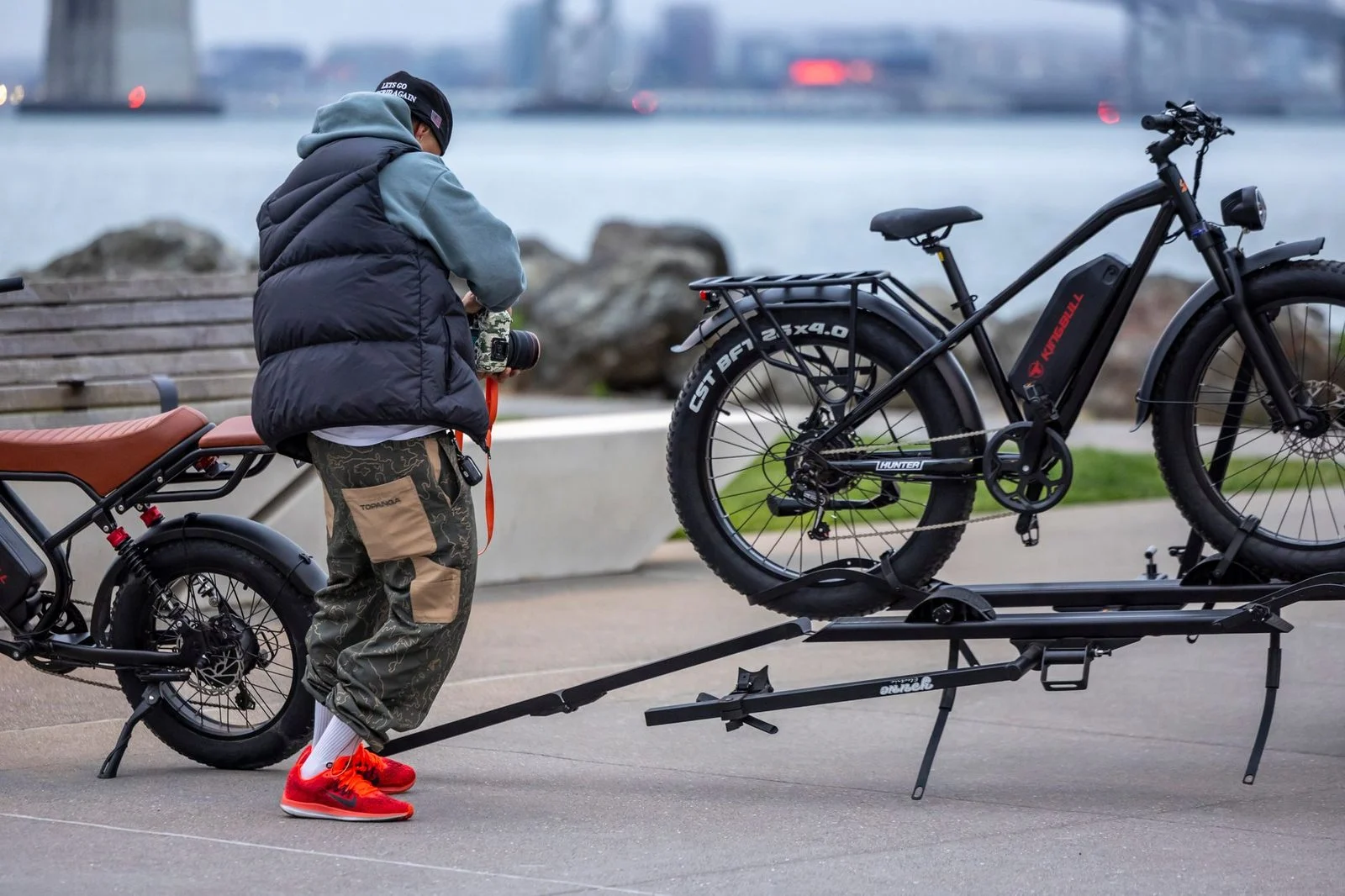
Why e-bike batteries catch fire
An e-bike battery fire starts inside the battery pack, when a cell overheats and cannot cool down.
A lithium-ion battery is a rechargeable battery that packs a lot of energy into a small space. Each pack holds many small cells. When one cell fails, heat can spread to the cells beside it. Engineers call this thermal runaway (a self-feeding overheat that can vent smoke and ignite).
The risks are plain ones. Physical damage to the pack, a swollen or worn battery, a charger that does not match the battery, and parts from off-brand or unknown sellers all raise the odds of trouble.
Warnings and recalls matter for the same reason. A public warning can show what a maker or seller knew, and when. Keep copies of any notice you receive.
This is not a reason to panic. It’s a reason to know what to look for and to keep the records.
Who can be held liable in Georgia
In Georgia, the landlord or owner, the battery or charger maker, and the seller can each face a claim, based on what each one did or failed to do.
The landlord or owner. Georgia law says an owner or occupier who, by express or implied invitation, induces or leads others to come onto the premises for a lawful purpose must use ordinary care in keeping the premises and approaches safe (O.C.G.A. § 51-3-1). This duty is called premises liability (the legal duty to keep property reasonably safe). Hallways, stairwells, garages and charging rooms are shared spaces where people can get hurt.
A landlord also must keep the premises in repair (O.C.G.A. § 44-7-13). A lease for a dwelling is treated as including a promise that the home is fit for human habitation (fit to live in).
The landlord stays responsible for defective construction and for failing to keep the premises in repair (O.C.G.A. § 44-7-14). So the key questions are who controlled the space and what the landlord knew.
Georgia makes a manufacturer liable to an injured person when a product sold as new was not merchantable (not reasonably suited to its intended use) and that condition caused the injury, but no action may be brought for an injury more than ten years after the product’s first sale for use or consumption (O.C.G.A. § 51-1-11). A manufacturer must also warn of a danger once it knows about it. Georgia treats a product seller differently from a manufacturer for strict liability claims (O.C.G.A. § 51-1-11.1).
A person who is 50 percent or more responsible cannot recover damages (O.C.G.A. § 51-12-33; Quynn v. Hulsey (2020)).
What the evidence shows, and why an engineer reads it
The first job is protecting the evidence, because the battery, the charger and the scene can change fast.
Keep these now:
- Photos of the scene, the bike and the damage
- The battery and charger, stored safely away from living space, not thrown out
- Model and serial labels, and any certification mark on the pack
- Receipts, order records and product listings
- Texts and emails with the landlord, and repair requests
- Any fire or incident report
Before law school, Terance Madden trained as an electrical engineer. Terance Madden’s training as an electrical engineer shapes how he reviews the evidence: he checks the physical facts of where a fire started before he draws any conclusion about its cause.
Why does that matter? Damage to one cell points one way. A charger that doesn’t match the battery points another. A pack built without proper protection points a third. Each one can point to a different party, and each one can be tested. Because fault is split among the parties, the evidence helps decide who carries which share.
Terance Madden has been in practice since 1999, and the firm has offices in Jonesboro, Atlanta, Decatur, Macon and Augusta.
Which insurance may pay, and how insurers usually respond
Several policies can respond to an e-bike fire, including the owner’s liability policy, the tenant’s renters policy, and coverage held by the maker or seller. Which policy pays depends on the policy wording and the facts.
Big Insurance is not on your side. Its adjusters often open with a low offer, and an insurer’s first offer is rarely what a claim is worth. Expect a request for a recorded statement early, before the full picture is clear. Expect delays in paying bills, disputes over whether treatment was needed, and the argument that the tenant or the charger caused the fire.
Medical expenses are limited to the reasonable value of medically necessary care (O.C.G.A. § 51-12-1.1).
What to expect after you reach out
The process starts with a review of the fire facts and the paperwork, and the free first consultation is confidential and carries no obligation to continue.
- The free first consultation, confidential and with no obligation to continue, is a chance to explain what happened.
- A review of the scene, the battery, the charger and the documents.
- A request that key evidence be preserved.
- A technical review of the evidence and the timeline.
- A check of every coverage layer that may pay.
- A demand and negotiation with Big Insurance.
- A lawsuit if the claim does not settle.
Time matters. Georgia’s general deadline for personal injury claims is two years after the right of action accrues (O.C.G.A. § 9-3-33). Waiting on an insurer can use up time you need.
The law measures that recovery by the full value of the life (O.C.G.A. § 51-4-5).
The firm works on a no-fee-unless-we-win basis, but you may still be responsible for court costs and case expenses. The free first consultation is confidential, with no obligation to continue.
Not sure what your next step is?
Talk it through with our team — the first consultation is free, confidential, and carries no obligation.

Questions people ask, and where to start
Here are short answers to the questions that come up most often.
Is the landlord always liable for an e-bike battery fire?
No. Liability turns on who controlled the space, what the landlord knew, and what the landlord did about it.
Can I sue the battery maker if the charger came with the bike?
Possibly. A claim can reach a maker or seller of a defective product, based on the defect and the warning.
What if I was charging the battery when the fire started?
Georgia reduces a plaintiff’s damages in proportion to the plaintiff’s share of fault, and a plaintiff who is 50 percent or more responsible for the injury or damages claimed is not entitled to receive any damages (O.C.G.A. § 51-12-33; Quynn v. Hulsey (2020)). Those facts should be reviewed early.
Will my renters insurance pay?
It might. Renters coverage and the landlord’s coverage can both matter, and the policy wording and the cause of the fire decide which applies.
If a battery fire in your rental left you hurt, or took someone you love, you may have a claim.