

E-Bike Road Defect Crashes | Clayton County and Georgia
Hurt When a Bad Road Threw You Off Your E-Bike?
Cracked pavement, deep potholes and broken road edges give little warning. The steps you take in the first days can shape what happens next.
T. Madden & Associates, P.C.
1999
In practice since
5
Offices across Georgia
24/7
Call us any time
By Terance Madden · Published November 17, 2026
City County E-Bike Road Defect Crash: Georgia Claim Notice
An e-bike crash caused by a road defect in Georgia can require a claim notice before you can sue. That notice can come due long before the two-year deadline most people know.
Short answer: if a city owns the road, Georgia law generally requires written notice within six months of the injury. County and state roads follow their own timelines, and the owner of the road decides which one applies.
Talk it through with our team — the first consultation is free, confidential, and carries no obligation.
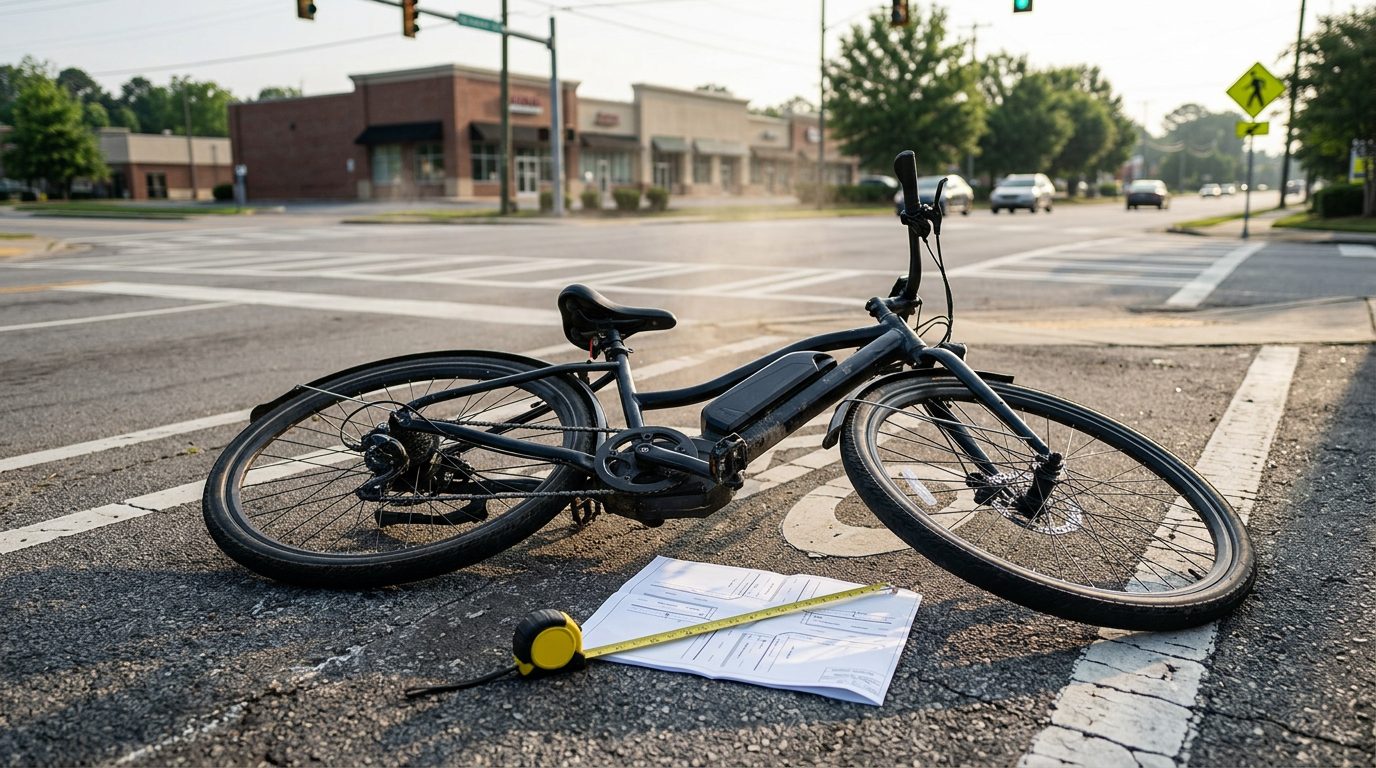
Why a Road Defect Claim Runs on a Different Clock
A road defect claim against a government body often starts with a letter, not a lawsuit. Most Georgia injury claims have a two-year filing deadline under O.C.G.A. § 9-3-33, and many people stop reading there. Claims against a government body follow a different path.
Before a lawsuit can go forward, the injured person must give notice in writing. Lawyers call this ante litem notice, meaning a written notice given to the government before a lawsuit. Until that notice is presented, the courts cannot hear the case, even when the pothole and the fall are clear.
That makes the notice date as important as the crash date. A missed notice can end a strong claim. Put both deadlines on the calendar the same day, and treat the shorter one as the one that counts.
The Six-Month Notice Rule for Claims Against a City
A claim against a city must be presented in writing to the city’s governing authority within six months after the event that caused the injury. Under O.C.G.A. § 36-33-5, the written claim must state the time, place and extent of the injury, as nearly as practicable, and the negligence that caused it.
The notice also has to name a specific dollar amount of damages you are seeking. The statute treats that amount as an offer of compromise (a settlement offer). If the claim is litigated, the number does not bind you. So the figure should come from a real look at medical bills, lost pay and the long-term effects of the injury, not a guess.
Delivery matters too. The claim must be served on the mayor, or the chairperson of the city council or city commission, by hand, by certified mail or by statutory overnight delivery. Keep the receipt.
The city must consider and act on the claim within 30 days. O.C.G.A. § 36-33-5 reads: “(c) Upon the presentation of such claim, the governing authority shall consider and act upon the claim within 30 days from the presentation; and the action of the governing authority, unless it results in the settlement thereof, shall in no sense be a bar to an action therefor in the courts.” The statute of limitations is suspended while the demand is pending and the city takes no action. Count from the event that caused the injury, which is usually the crash day, not the day you were released from the hospital.
Who Owns the Road Decides Where the Notice Goes
A pothole on a city street, a cracked lane on a county road and a bad shoulder on a state route can each have a different owner, and each owner can have a different deadline.
For a county claim, O.C.G.A. § 36-11-1 says claims against counties must be presented within 12 months after they accrue or become payable, or they are barred. The same statute gives minors and people under other disabilities 12 months after the disability is removed.
For a state road, O.C.G.A. § 50-21-26 requires written notice within 12 months of the date the loss was discovered or should have been discovered. The notice goes to the Risk Management Division of the Department of Administrative Services by certified mail or statutory overnight delivery, return receipt requested, or by personal delivery with a receipt obtained, with a copy delivered personally or mailed first-class to the state entity involved.
Finding the owner often means checking the road itself, the sign history and the maintenance records. A contractor who did recent work on the spot may share fault, which can mean another source of coverage. Depending on the facts, notice may need to go to more than one entity, so confirm the owner and the deadline for each possible defendant before anything is sent.
How a Road Defect Becomes Evidence
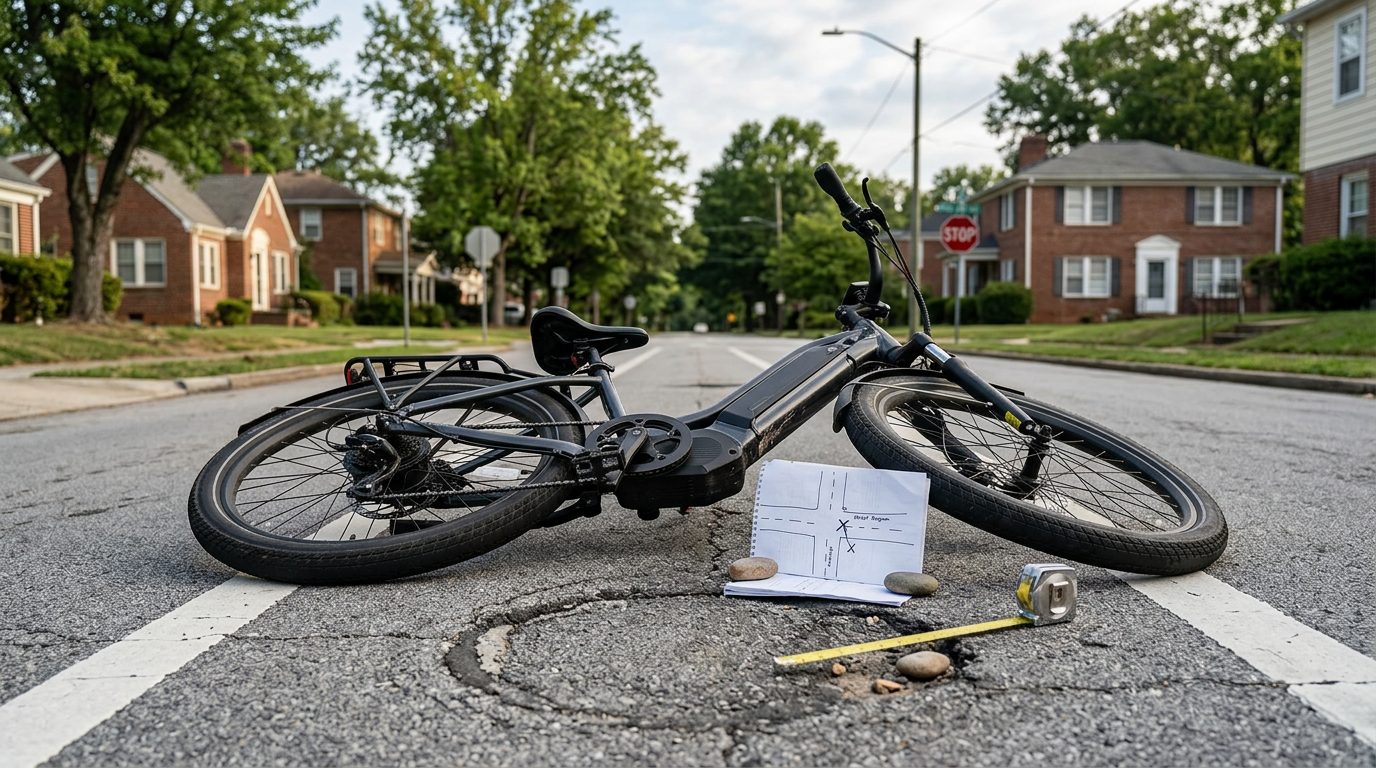
The strongest evidence shows the defect, its size and how long it was there. Photos should capture the depth and width of the hole or crack, the lighting and where the bike came to rest. Taken at the scene, they show what a rider could and could not see.
Measurements, witness names, weather and the time of day help show whether the hazard was visible. Records often matter more. Prior complaints, repair requests and maintenance logs can show whether the government body knew about the hazard and how long it stood.
Before law school, Terance Madden trained as an electrical engineer. Before law school, he trained as an electrical engineer, so he starts a case by asking what the evidence shows and how the crash happened. For a road defect claim, that means working out how the bike moved over the defect and which records must be preserved before they disappear.
Why the Person Managing the Recovery Needs This Deadline
The person handling the paperwork needs the notice date in writing. Often that is a spouse, a mother or an adult daughter who is tracking appointments, bills, lost pay and the calendar. Give that person the dates first.
Start one file today. Include the crash date, the injury date, the exact location, the medical records and every letter from the city, county, state or an insurer. Write down who is the main point of contact, so the timeline does not slip when things get busy.
The most common mistake is waiting until the injuries settle before anyone checks the notice clock. Recovery can run for months, and the notice period does not wait for it. If a rider cannot work during recovery, the guide on lost wages after an e-bike crash explains what that gap can look like. Caregivers carrying daily needs can read the caregiver guide for e-bike crash recovery.
Not sure what your next step is?
Talk it through with our team — the first consultation is free, confidential, and carries no obligation.
How Big Insurance Handles a Late or Thin Claim
Big Insurance is not on your side, and a first offer is rarely what a claim is worth. Plan for that from the start.
Expect the tactics. A low opening offer. A request for a recorded statement, made before anyone has reviewed your medical file. Delays that stretch a file for months. Disputes over whether the treatment was needed. And the “low impact” argument, which says a fall at a modest speed could not cause serious harm.
The response is to pursue every layer of coverage that applies. That can include the government body’s coverage, a contractor’s liability coverage, uninsured or underinsured motorist (UM/UIM) coverage when the facts allow it, and any umbrella, excess or corporate coverage. Value the claim on lifetime damages, not just the first bills.
Georgia’s fault-sharing rule matters here too. Under O.C.G.A. § 51-12-33, the judge reduces the damages awarded to an injured person in proportion to that person’s percentage of fault, and a plaintiff who is 50 percent or more responsible for the injury or damages claimed is not entitled to receive any damages. The firm prepares every file as if it will go to trial, starting with the notice letter.
Questions to Settle Before the Clock Runs Out
Does a claim against a city need written notice? Generally yes, and for a city claim the notice must be in writing under O.C.G.A. § 36-33-5.
What if my recovery is still going on?
The notice clock still runs from the event that caused the injury, so start the file now.
What if the city or county already wrote or called?
Save every letter, email and call log, because those records show what was said and when.
Is the two-year deadline still in play?
Generally yes, under O.C.G.A. § 9-3-33, injuries to the person must be brought within two years, except that injuries to reputation must be brought within one year and loss-of-consortium actions within four years, but on a government claim the notice step comes first.
Should I answer an adjuster’s offer right away?
No. Read the guide on low settlement offers before you respond.

What to Do in the Next Week If a Road Defect Put You Down
Write down the exact location, the date, the defect and the names of anyone who saw it while the details are fresh. Keep the bike, helmet and clothing if they are still usable. If the defect is still there, photograph and measure it before it gets fixed.
Keep a dated log of medical visits, missed work and out-of-pocket costs. That log helps show the full cost of the injury over time.
If a road defect hurt you on an e-bike in Georgia, the notice clock may already be running. The firm has offices in Jonesboro, Atlanta, Decatur, Macon and Augusta. Reach out through the firm’s contact page for a free consultation that can check the notice deadline and identify the owner of the road.
The first consultation is free, confidential, and comes with no obligation to continue. The firm handles these claims on a no-fee-unless-we-win basis, but you may still be responsible for court costs and case expenses.