

E-Bike Crash Lawyer | Georgia
Hurt in an e-bike crash? Bring these items to your free consultation.
You do not need every document to call. Bring what you have, and the firm will sort out what matters.
The firm at a glance
1999
Serving Georgia clients since
Free
First consultation, confidential and with no obligation
By Terance Madden · Published November 13, 2026
Hit on an e-bike, you have pain, a damaged bike and bills to deal with all at once. The first step is a meeting that sorts out what you have.
A free e-bike (electric bicycle) crash consultation is a first meeting, at no cost, where the firm reviews how the crash happened, your injuries and your papers. Bring the crash facts, your medical records and every insurance letter you have.
What a free e-bike crash consultation is and who it is for
A free e-bike crash consultation is a first talk about your case, and it costs you nothing to sit down. The first consultation is free, confidential and comes with no obligation to continue. You can ask questions, hear your options and decide what comes next.
It fits three kinds of riders:
- You were hit by a car, truck or other driver while riding your e-bike.
- You went down on a road hazard, such as a broken road surface or debris, and someone else’s fault played a part.
- You are a spouse, parent or adult daughter managing a serious injury for someone you love.
Worry about bills is normal after a crash. The meeting gives you straight answers before you make any decisions.
If an impaired driver hit you, you may have a claim against that driver. Bring the same papers and describe what you know about how that driver behaved.
If an e-bike crash left you hurt, with bills and insurance letters piling up, you do not have to face it alone. Talk with the firm about your options. Talk it through with our team — the first consultation is free, confidential, and carries no obligation.
Bring the crash facts: scene photos, the police report and the bike itself
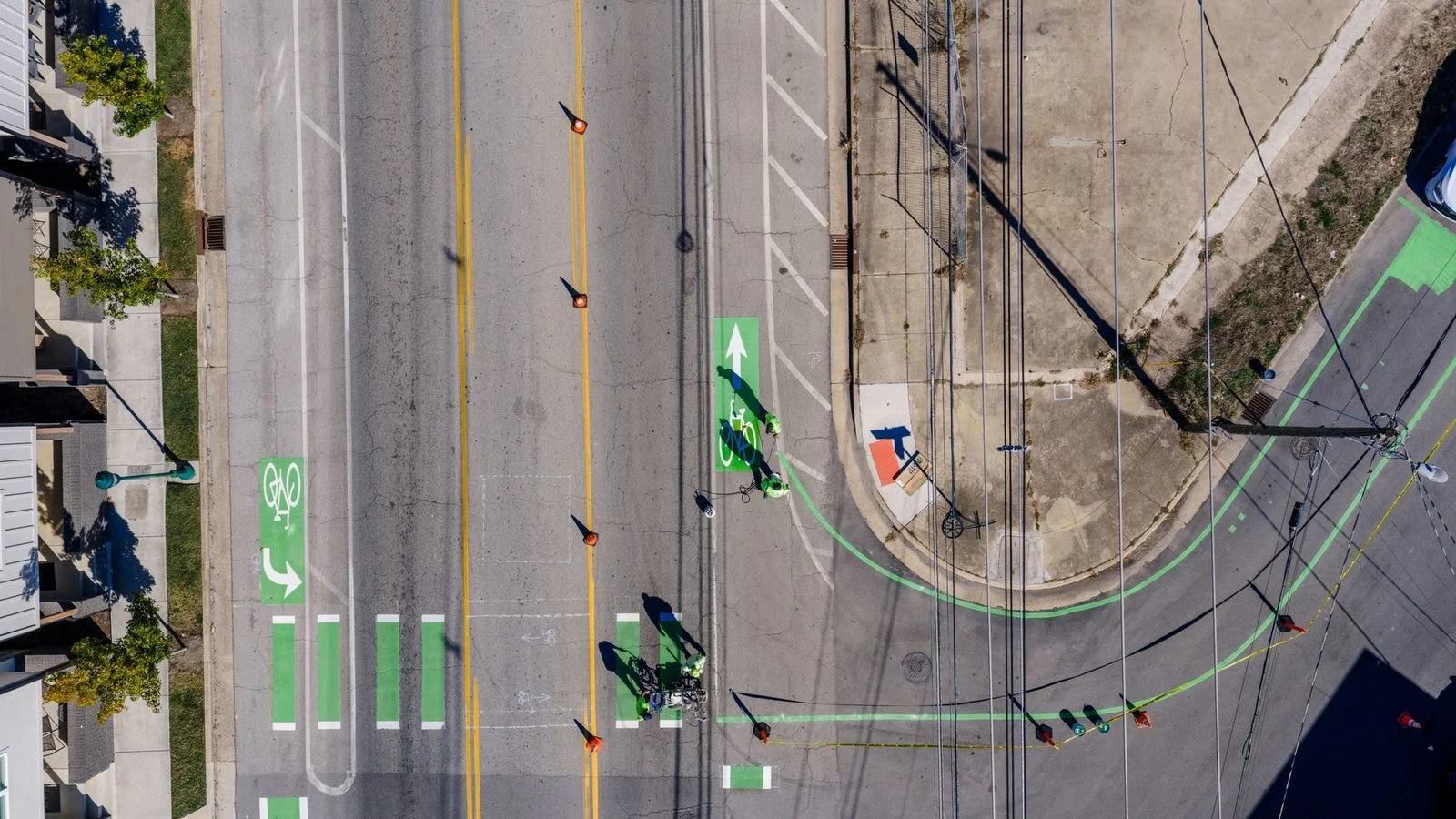
Bring anything that shows where, when and how the crash happened. Fault is decided on those facts.
- A written timeline. Include the date, time, street, direction you were riding, weather, and what you saw and heard. Write it while your memory is fresh.
- Photos and video. Capture the scene, the vehicles, skid or debris marks, traffic signals and damage to the e-bike.
- Georgia requires a driver in a crash resulting in injury, death, or property damage of $500.00 or more to report it immediately, to local police if the crash is inside a city, or to the sheriff or state patrol outside a city (O.C.G.A. § 40-6-273).
- Witness and insurance details. Write down witness names and phone numbers, plus the other driver’s insurance and plate information.
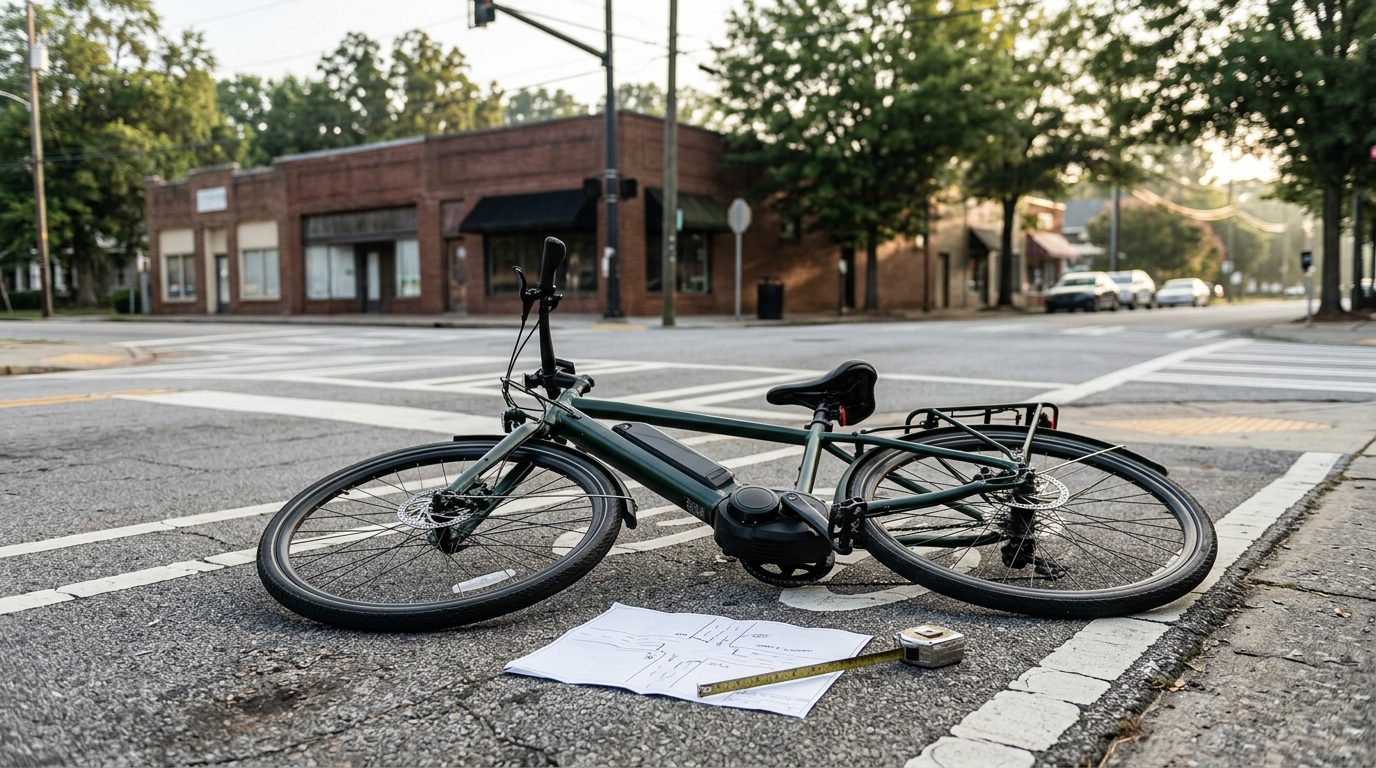
- The bike and gear. Keep the e-bike, battery, charger, helmet and clothing as they are. Do not repair, sell or throw away damaged parts before the meeting.
Terance Madden trained as an electrical engineer before he became a lawyer, so he starts a case by asking what the evidence shows and how the crash happened. Before law school he trained as an electrical engineer, so he starts by asking what the evidence shows. A damaged battery, a bent wheel or a broken mount can help show how hard the impact was. Parts that get repaired or thrown away can’t be checked later, so keep them. Camera footage from nearby homes or businesses is also worth asking about early.
Bring the medical records, bills and a treatment list
Your medical records show what the crash did to your body. Your bills show what it cost.
- Emergency room, urgent care, hospital, imaging and surgery records, plus discharge papers and work restrictions.
- Every bill and explanation of benefits from your health plan, showing what was paid and what you still owe.
- Prescription receipts, mileage to appointments and other out-of-pocket costs.
- A dated list of every doctor, therapist and provider you have seen since the crash.
- Your doctor’s notes on care you may need later.
Georgia looks at health insurance in a specific way. If you have health insurance, the evidence on a bill’s reasonable value includes the amount charged and the amount needed to satisfy the charge under your insurance contract, whether or not you used it (O.C.G.A. § 51-12-1.1). Keep your insurance statements as well as the bills.
If a provider treated you under a letter of protection (a promise to be paid from any settlement or judgment, instead of up front), bring that letter too.
The law also separates two kinds of damages. Special damages, such as bills and lost pay, must be proved (O.C.G.A. § 51-12-2).
Bring your insurance papers and every letter from Big Insurance
Bring every insurance paper you have, and every letter, call and offer. Early contact from Big Insurance can shape what happens next.
- Your own auto policy page. Include any uninsured or underinsured motorist coverage (UM/UIM, which protects you if the at-fault driver has too little or no insurance). Georgia requires auto policies to include that coverage, within limits the insured chooses (O.C.G.A. § 33-7-11).
- The other driver’s insurance information and any claim number you were given.
- Every letter, text, voicemail and offer, saved as received, with dates.
Watch for these tactics. Big Insurance may make a quick, low offer before your medical picture is clear. It may ask for a recorded statement, an account the insurer keeps, before you understand your injuries. It may stretch the claim out with delays, dispute your treatment, or argue the crash was “low impact” so your injuries must be minor.
Here is the response. An insurer is not on your side, and a first offer is rarely what a claim is worth. The firm looks at every coverage layer that may apply, including liability coverage, your own UM/UIM, any umbrella or excess policy, and corporate or vendor coverage. The firm looks at the full cost of the injury over time. Georgia also sets strict form rules for certain written settlement offers in motor vehicle claims, such as certified mail delivery and at least 40 days to pay (O.C.G.A. § 9-11-67.1).
Bring your work records and the notes of the person managing your recovery
Bring proof of lost pay and a simple daily log. The person helping you can bring their own notes.
- Recent pay stubs, your employer’s name and contact, and any letter about missed work or light duty.
- A daily log of pain, sleep, activity limits and tasks you cannot do, with dates.
- For a spouse, parent or adult daughter managing the recovery: contact information, the appointment list, the medication list and the questions they want answered.
- A written note of who may speak with the firm for you, and any signed paperwork that says so.
Records requests have their own rules. Upon written request from the patient or a person authorized to have access to the patient’s record, a provider must furnish a complete and current copy within 30 days, if the request is accompanied by a HIPAA authorization and a signed written authorization, unless the provider reasonably determines that disclosure to the patient will be detrimental to the patient’s physical or mental health (O.C.G.A. § 31-33-2). Ask the firm which forms apply to you.
The injured rider is the client. A family member’s job is to help with records and rides, and the firm answers to the injured person.
What happens during and after the consultation
The meeting reviews your papers, your injuries and your options, and you leave knowing the next step.
- Intake call. The firm confirms the crash details and sets a time to meet.
- The meeting. You go through your papers. The firm asks how the crash happened and what injuries followed.
- Plain-English options. The firm explains the likely next steps and lists what it still needs from you.
The firm works on a no-fee-unless-we-win basis. The client may still be responsible for court costs and case expenses.
T. Madden & Associates, P.C. has practiced personal injury law since 1999, with offices in Jonesboro, Atlanta, Decatur, Macon and Augusta. Terance Madden leads the firm and is the responsible lawyer for this page. Shenia Madden is also a lawyer at the firm. Our team handles intake, records and scheduling, so you always have someone to call.
Not sure what your next step is?
Talk it through with our team — the first consultation is free, confidential, and carries no obligation.
Common questions before a free e-bike crash consultation
Most questions come down to fault, deadlines and what to do right after the crash.
What should I do if an e-bike crash left me hurt?
Get medical care, report the crash to police, and photograph the scene. Talk with this firm before giving a recorded statement to any insurer.
What is Georgia’s fault rule?
Georgia uses modified comparative negligence (shared fault). Your damages are reduced by your share of fault, and you recover nothing if you are 50 percent or more responsible (O.C.G.A. § 51-12-33).
How long do I have to file?
Georgia generally allows two years after the right of action accrues for an injury claim (O.C.G.A. § 9-3-33; quoted in Cameron v. Jmp Pizza). Claims against government entities can follow different notice rules, so do not wait.
What if the at-fault driver has no insurance?
Your own uninsured motorist coverage may pay within the limits you chose (O.C.G.A. § 33-7-11). Bring your policy page so the firm can check it.
Do I need to bring everything?
No. Bring what you have and say what is missing. The firm will tell you what to request next.
Hurt in an e-bike crash? Bring your papers and call
If an e-bike crash left you hurt, with a damaged bike, a stack of bills and letters from an insurer, you do not have to sort it out by yourself. Request a free case evaluation or call the firm. Bring the crash date, your papers and your first questions written down. The phone line is available 24/7.
Related practice areas
- E-Bike Accident Lawyer in Georgia
- Georgia E-Bike Crash Lawyer: Hospital Liens Explained