

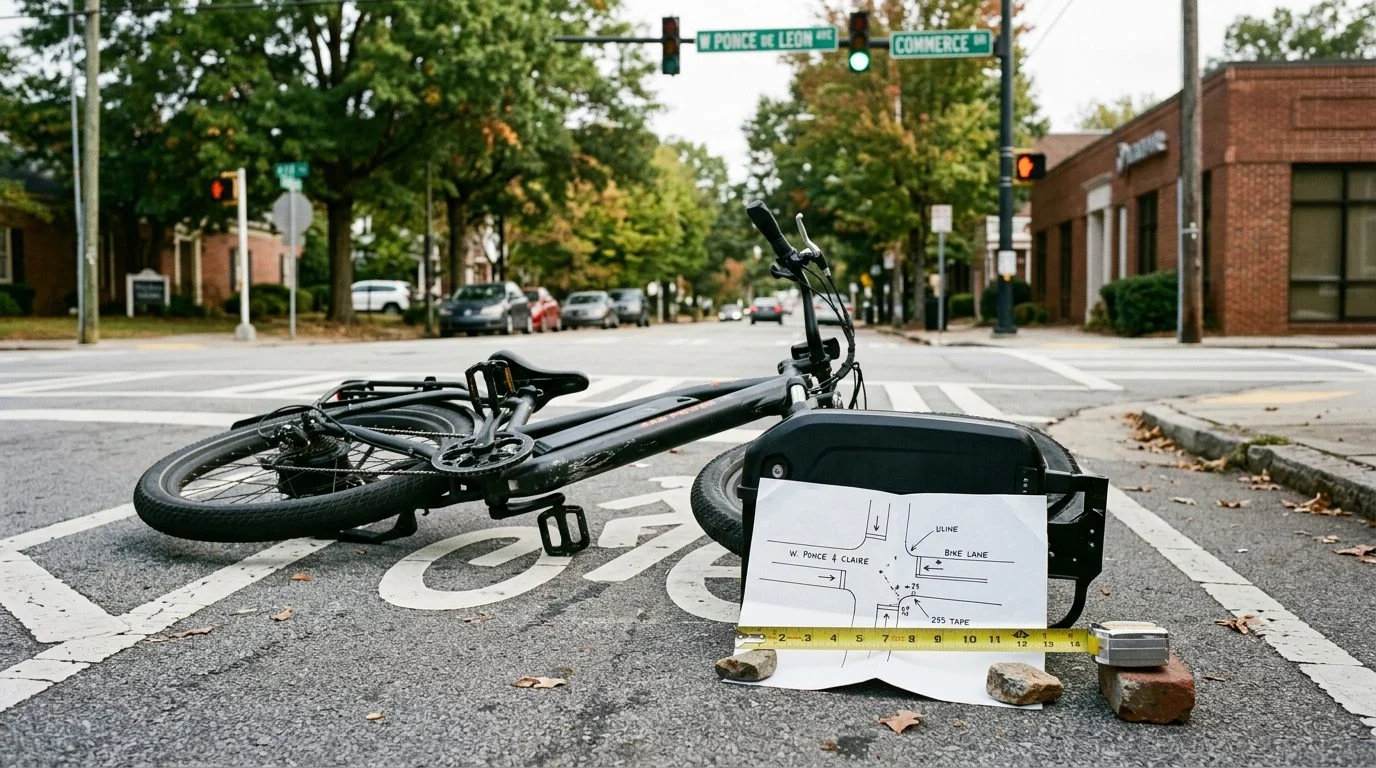
E-Bike Crashes in Georgia
Hurt in an e-bike crash and worried about the hospital bills? Start with a free case evaluation.
Medical bills can arrive before a claim is settled. T. Madden & Associates, P.C. helps riders and families plan for what comes next.
T. Madden & Associates, P.C.
1999
Year the firm began practicing law
5
Offices: Jonesboro, Atlanta, Decatur, Macon and Augusta
24/7
Call the firm any time
By Terance Madden · Published November 20, 2026
If you were hurt in an e-bike crash in Georgia and have no health insurance, the hospital bills can feel like the whole problem. They are not. The bills are one track. The claim against the party responsible for the crash is the other.
Missing health insurance does not end a claim against the party at fault. The bills you already owe can still be part of what a claim seeks to recover. Here is what comes first, and why the order matters.
Hurt on an E-Bike With No Health Insurance? Here Is What Comes First
Your first job is medical care, and it should not wait on the bills. Tell every provider how the crash happened and that someone else’s fault caused your injury. Those early notes matter later.
The second track is the claim. A claim is a demand for payment from the person or company legally responsible for your harm. That legal responsibility is called liability, and it is separate from who pays your doctor today.
Georgia generally gives two years to file a personal injury lawsuit, with some exceptions, under O.C.G.A. § 9-3-33. Bills pile up fast, so do not let the calendar slip while you wait. For the wider picture, read our e-bike case guide.
Talk it through with our team — the first consultation is free, confidential, and carries no obligation.
Who Can Be Responsible for an E-Bike Crash?
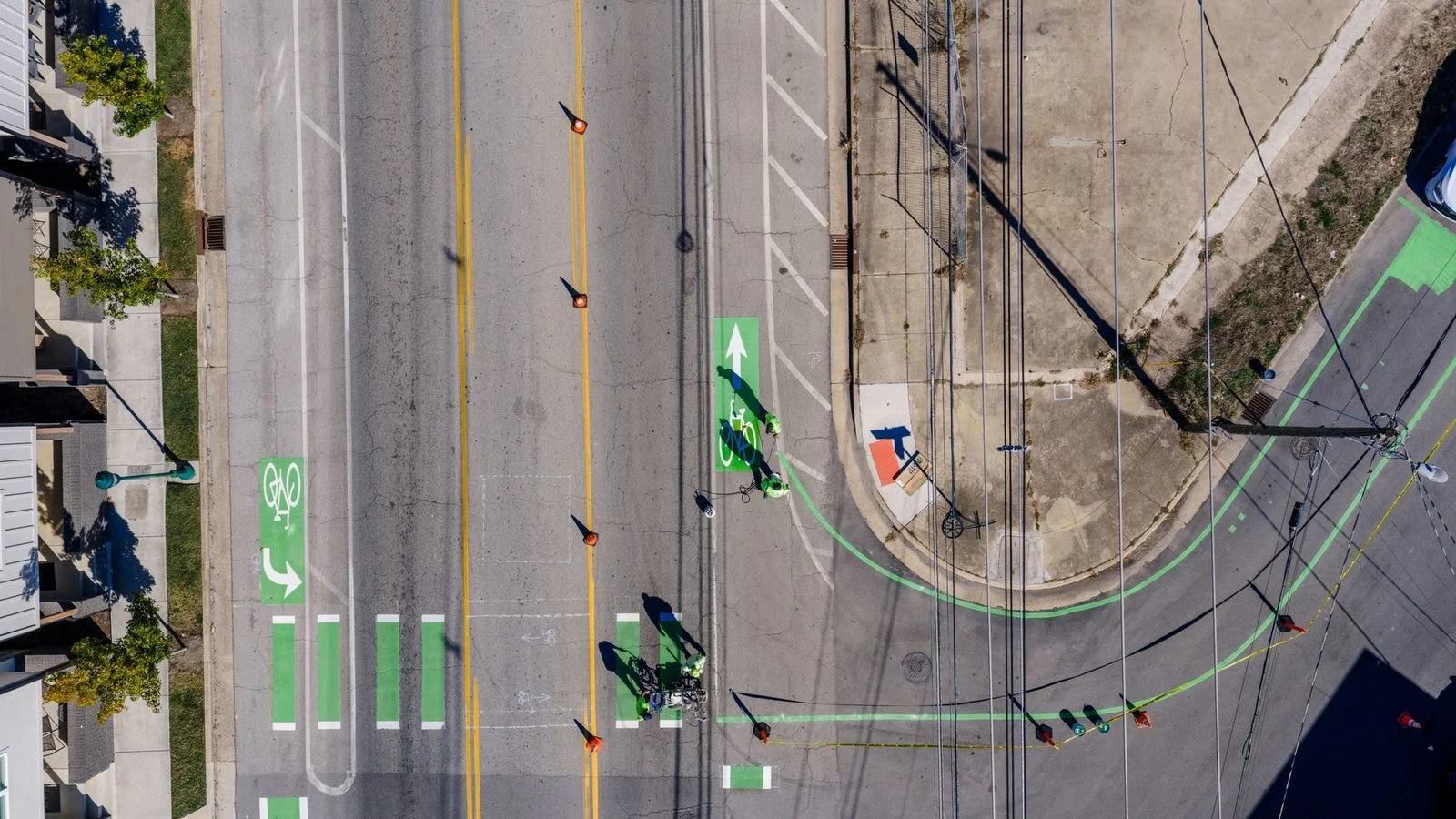
More than one party can share responsibility for an e-bike crash. The driver is only one of them.
- Motor vehicle drivers who cut across a bike lane, turned without looking, or opened a car door into a rider’s path.
- Cities and counties where a known road defect or missing warning played a part. Claims against a government body have their own notice rules, so act early.
- Rental companies where the rented bike or its maintenance caused or worsened the crash.
- Manufacturers of personal property sold as new, directly or through a dealer, where a defect played a part. Under O.C.G.A. § 51-1-11, a maker of a product sold as new can be liable to an injured person when the product was not merchantable and reasonably suited to its intended use and that condition when sold was the proximate cause of the injury. A ten-year limit from the first sale applies to that kind of claim.
Georgia also looks at everyone’s fault. Under O.C.G.A. § 51-12-33, the trier of fact weighs the fault of every person or entity who contributed to the injury, regardless of whether it was or could have been named as a party to the suit. Each liable party pays its own share, not a joint share.
Before law school, Terance Madden trained as an electrical engineer, and that training shapes how he reads the evidence in a case. He looks at the battery cells, charger, and wiring, and asks what that evidence shows about how the crash happened. Keep the bike, battery, and charger unrepaired until they are examined.
The First Steps When Hospital Bills Start Arriving
Start with your care, build a paper trail, and keep insurers at arm’s length.
- Keep every bill, statement, receipt, and mileage log to appointments in one folder.
- Keep a short daily log of pain, tasks you cannot do, and work you missed.
- Ask each provider for an itemized bill (a line-by-line list of charges).
- Do not give a recorded statement to any insurer before talking with a lawyer.
- Do not sign payment plans, releases, or insurer forms until you have read them.
Here is the order that works: gather records, report the claim, have a lawyer review every insurer contact, then build the file.
Coverage Layers That May Pay When Health Insurance Is Not in Place
Several insurance policies may respond to an e-bike crash, even with no health insurance. Each policy has its own terms, and the firm checks every layer.
- Uninsured motorist (UM) coverage on an auto policy.
- Underinsured motorist (UIM) coverage for a driver whose policy is not enough to cover your losses.
- The at-fault driver’s liability policy, which pays for injuries the driver caused, within its limits.
- Umbrella and excess policies that sit above a basic liability limit, but which are excluded from the required uninsured motorist coverage unless the policy or a policy endorsement affirmatively provides for it.
- Commercial or corporate policies that cover a business vehicle or rental fleet.
- Medical payments coverage, if a policy you or a household member holds includes it. Uninsured motorist coverage may contain provisions which exclude any liability of the insurer for personal or bodily injury or death for which the insured has been compensated pursuant to “medical payments coverage.”
If the driver fled, Georgia law requires that driver to stop and give name, address, and registration details, under O.C.G.A. § 40-6-270. The uninsured motorist layer is often the first one to review.
How Medical Bills Are Handled Inside the Claim
Georgia ties medical bills to the reasonable value of care that was medically necessary. Bills and lost pay are special damages, which must be proved, under O.C.G.A. § 51-12-2. Pain and daily-life losses are general damages, which the law presumes flow from the harm.
Under O.C.G.A. § 51-12-1.1, medical charges are limited to the reasonable value of medically necessary care. If a provider treats you under a letter of protection (a promise to wait for payment from a settlement), that letter and the itemized charges can be requested as evidence.
If you are on Medicare, CMS secondary payer guidance says liability insurance pays first for crash-related care. A Medicare conditional payment must be repaid from a settlement. Ask for each bill and each lien (a legal claim on settlement money for unpaid care) in writing before any money is paid out.
What Big Insurance Tries First, and How the Claim Answers It
Big Insurance is not on your side, and its first offer is rarely what a claim is worth. Expect a few familiar moves.
- A low first offer made before your medical picture is complete.
- A recorded statement that locks in words you may wish you had chosen differently.
- Delays in review, payment, or answers to basic questions.
- Disputed treatment, where the insurer claims your care was not needed.
- “Low impact” arguments that a bike or rider could not have been hurt badly.
The response has three parts. When a claim may involve more than one insurance policy, the firm looks at each policy that may apply. It documents lifetime damages, including future care, and it builds the file as if the case will go to trial.
Crash physics helps answer the “low impact” argument. Speed, stopping distance, and the change in speed during impact (delta-V) can test that claim. Terance Madden’s engineering training helps him read that evidence and explain it in plain words.
Not sure what your next step is?
Talk it through with our team — the first consultation is free, confidential, and carries no obligation.
How T. Madden & Associates Handles These Cases
T. Madden & Associates, P.C. has been in practice since 1999, with offices in Jonesboro (Clayton County), Atlanta, Decatur, Macon, and Augusta. Terance Madden is the responsible lawyer for this page. Shenia Madden is also one of the firm’s lawyers.
The firm explains each step in plain English, with no gaps in communication and with dignity and respect for your family. The person managing the recovery, often a spouse, parent, or adult daughter, can be the first point of contact. The firm explains the bills and the claim to that person directly.
La consulta inicial es gratuita, confidencial y sin compromiso de continuar. In English: the first consultation is free, confidential, and carries no obligation to continue.
The Terance Madden Foundation also supports community work.
Questions to Settle Before You Call
A claim does not depend on having health insurance. A few questions come up first.
Can I still make a claim without health insurance?
Yes. A claim against the party at fault does not depend on having health insurance. The firm reviews every coverage layer that may apply.
What if the driver fled?
Georgia law requires a driver involved in an accident resulting in injury, death, or vehicle damage to stop and give name, address, and registration details. Uninsured motorist coverage and other layers may still apply.
Does Georgia reduce compensation if I was partly at fault?
Yes. Under O.C.G.A. § 51-12-33, damages are reduced by your share of fault, and you recover nothing if you are 50 percent or more responsible.
Should I answer the insurer’s first offer right away?
Talk it through first. A first offer is rarely what a claim is worth.
If you are the one tracking the bills, the calls, and the paperwork after an e-bike crash, you do not have to sort it out alone. Start a free case evaluation with T. Madden & Associates, P.C., or call the firm, available 24/7.