

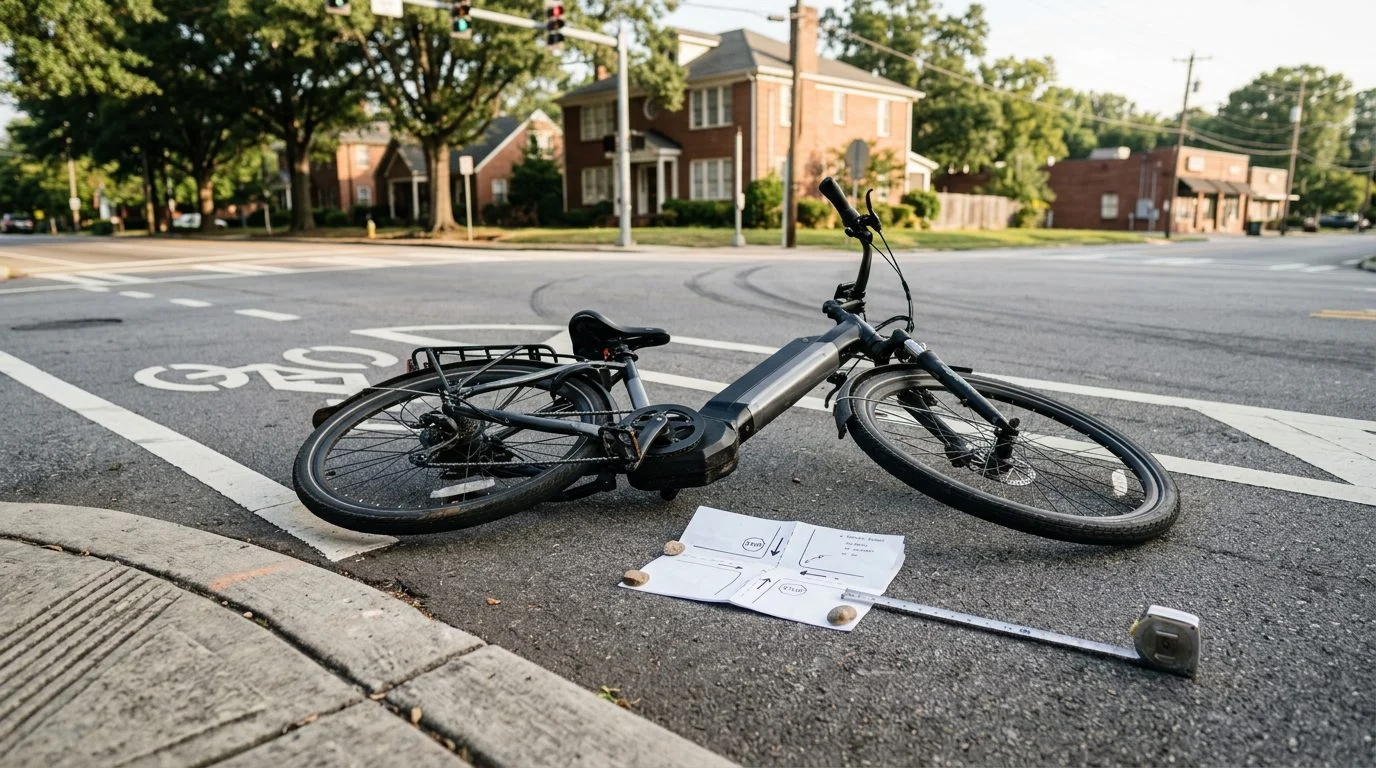
E-bike and lithium battery crash evidence in Georgia
Your E-Bike Can Record What Happened. Get It Preserved.
Controllers, phone apps and batteries often hold speed, power and fault data that can disappear quickly. Ask us whether that evidence still exists for your case.
The firm at a glance
Since 1999
Representing people hurt in Georgia
5
Georgia offices: Jonesboro, Atlanta, Decatur, Macon and Augusta
By Terance Madden · Published November 23, 2026
Someone you love is hurt, the bike is parked in a garage, and you don’t know what proof matters. The short answer: an e-bike crash leaves evidence in four places. Those places are the bike’s electronics, the paired phone app, the crash scene, and the medical file. Each one shows a different piece of what happened.
The Short Answer: An E-Bike Crash Leaves Evidence in Four Places
The bike itself is often the most important piece of evidence. Evidence is anything that shows how the crash happened, who was at fault, and how the injury occurred. Keep the bike as it is. Don’t repair it, clean it, or sell it. Don’t let a shop reset the controller before someone documents it.
Fault matters here. Under O.C.G.A. § 51-12-33, a court reduces damages by the injured person’s share of fault. Under subsection (g), a person who is 50 percent or more responsible recovers no damages. The other side will look for a way to shift blame onto the rider. The bike’s records help answer that.
If you're holding the bike, the battery, the phone and the medical papers while someone you love recovers, you don't have to sort out the proof alone. Our team is ready to talk it through. Talk it through with our team — the first consultation is free, confidential, and carries no obligation.
Controller Data: What the Motor Controller Can Record
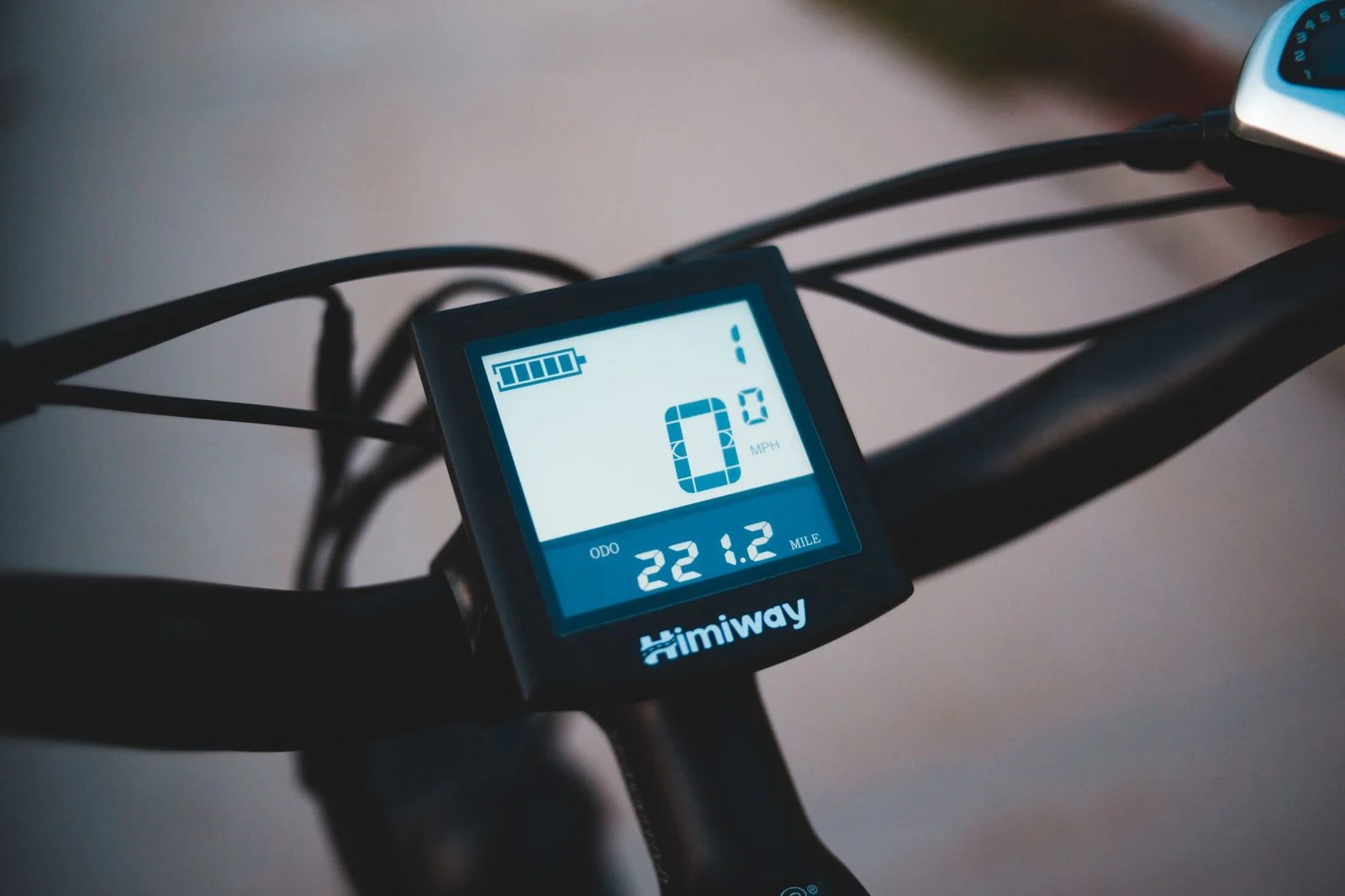
The motor controller can show how hard the motor was working before the crash. The controller is the part that tells the motor how much power to deliver. Many controllers keep stored settings and fault codes. A stored fault or power record may show whether the motor was running at high output or cut out just before impact.
Settings can also change after the bike leaves the factory. Removing a speed limit is one example. A changed setting can matter to who is responsible, so it has to be checked.
Controller data is only as good as the bike’s preservation. Power the bike down. Don’t reset it or reflash it. Write down what the display shows, and take photos before anyone touches it. Ask that the controller and battery be held, not repaired, until someone who can read the data pulls it.
Battery Data: What the Battery Management System Shows
The battery management system can show whether the battery was healthy before the fire or crash. The battery management system, or BMS, is the circuit that watches cell voltage, temperature, and charge. In many packs, it also logs events. Charging history, temperature spikes, and cell faults can point toward a defect.
Battery fires and explosions can come from defective or off-brand batteries and chargers. Georgia treats sellers and manufacturers differently in some product claims. Under O.C.G.A. § 51-1-11.1, a product seller is not a manufacturer for purposes of strict liability in tort. So the chain of sale matters.
Keep the battery, the charger, and any loose cells away from heat and water. Don’t charge them again. Don’t open the pack. Write down labels, model numbers, and serial numbers first.
App, Phone and Ride Records: GPS, Speed and Timestamps
The paired app can show a ride’s speed, route, and timing. Many e-bikes pair with a phone app that logs trips, speed, GPS location, and time stamps. Those records can show what the rider was doing in the minutes before impact. Don’t delete the app or clear the trip history.
The phone holds more. Photos, texts, and call logs can build a timeline. That matters when the other driver claims the rider came out of nowhere, or when a distracted driver was at fault.
Time is the enemy here. Phone data can be lost if no one asks for it quickly. Dashcams, doorbell cameras, and nearby business cameras may overwrite footage on a schedule. Ask early. Write down which cameras might have caught the scene.
Scene, Vehicle and Physical Evidence
The scene and the damaged vehicles show where the impact happened and how each party moved. Physical evidence includes skid marks, gouges in the pavement, debris fields, and where the bike and rider came to rest. It also includes damage to the bike, the other vehicle, and the helmet. A helmet with fresh scrapes can show where the head hit.
Photos and measurements taken soon after the crash can show the point of impact and the path of travel. Weather, lighting, and traffic signals matter too. Write them down while they’re fresh.
The police report and any citations are records you can request. They are a starting point, not the whole story. The report may not capture everything the scene showed, so your own photos and witness notes still matter.
Medical Records and Witness Statements: Proving the Injury
Medical records connect the injury to the crash and show how serious it is. The chart, imaging, and emergency room notes tie each injury to the crash. They also show how the injury was described from the first day. Head injuries and other serious harm often show up days or weeks later. Keep every follow-up visit, even the ones that feel minor. A peer-reviewed bicycle injury study found that injury-related factors differ across crash groups, which is one reason the records matter.
Witnesses matter too. Write down names and phone numbers while people are still close to the scene. Memory fades, and witnesses move.
Georgia’s damages rules matter here. Under O.C.G.A. § 51-12-2, general damages are those the law presumes flow from a wrongful act, and they can be recovered without proof of an amount. Special damages actually flow from the act and must be proved. Pain and suffering is the harm an injury causes beyond the bills. Your family’s daily account and the medical record help show it. For more, read our pain and suffering guide.
If your loved one can’t request the chart, Georgia law says who can. Under O.C.G.A. § 31-33-2, a provider must furnish a requested record within 30 days, with the right authorization. For a deceased patient, the request may come from the estate’s executor, administrator, or temporary administrator if such person has been appointed. If none is appointed, it can come from the surviving spouse, then a surviving child, then a parent.
Not sure what your next step is?
Talk it through with our team — the first consultation is free, confidential, and carries no obligation.
How Big Insurance Uses Missing Evidence, and How the Firm Responds
Big Insurance is not on your side, and an insurer’s first offer is rarely what a claim is worth. Big Insurance often opens with a low offer before anyone has reviewed the evidence. Other common tactics include asking for a recorded statement early, calling the crash “low impact,” disputing the treatment, and delaying the claim. A missing bike or deleted data can become a reason to call the claim weak.
The response is to find every layer of coverage. That includes the at-fault driver’s liability policy and your own uninsured motorist coverage, which is insurance for a crash with a driver who has no insurance or not enough. Under O.C.G.A. § 33-7-11, a Georgia auto liability policy must include uninsured motorist protection for bodily injury, loss of consortium, or death of an insured, and for damage to an insured’s property, caused by the owner or driver of an uninsured motor vehicle, unless an insured named in the policy rejects that coverage in writing. Umbrella, excess, and corporate policies also count when a company’s vehicle, product, or property is involved.
The firm prepares each case as if it will go to trial. Serious injuries can bring lifetime damages, so the claim has to cover the full future, not just the first bills.
Time limits matter. Georgia generally requires a personal injury lawsuit to be filed within two years, under O.C.G.A. § 9-3-33. Review the evidence early.
How Terance Madden’s Engineering Training Shapes the Evidence Review
Terance Madden starts by asking what the evidence actually shows. Terance Madden trained as an electrical engineer before he went to law school, so he starts a case by asking what the evidence shows and how the crash happened. Before law school, he trained as an electrical engineer. That training shapes how he reads an e-bike case.
He asks what the controller logged and how the battery’s cells and charging circuit behaved. He asks whether a changed setting or a defect played a role. He also asks how the crash physically happened, and which records must be preserved before they are lost.
The firm has practiced since 1999. It works with Georgia families from offices in Jonesboro, Atlanta, Decatur, Macon, and Augusta.
If Someone You Love Was Hurt: Your Next Step
If you’re holding the bike, the battery, the phone and the medical papers, you don’t have to sort out the proof alone. Reach out through the contact page to talk through what the crash may have left behind. The first consultation is free, confidential, and carries no obligation to continue. The firm works on a no-fee-unless-we-win basis, but you may still be responsible for court costs and case expenses.
Frequently Asked Questions
What evidence does an e-bike crash leave behind at the scene?
Skid marks, debris, paint transfer, and the final resting spots of the bike, rider, and any vehicle often tell the story of how the crash happened. Photos taken right away, plus names and phone numbers of witnesses, help preserve that evidence before it disappears.
Can the battery or controller on an e-bike hold proof of what happened?
Some e-bike batteries and controllers may store data such as speed, battery temperature, and fault codes, but not every model does. Keep the bike unrepaired and unsold until someone has checked whether that data exists.
Why does it matter if the e-bike battery was damaged or off-brand?
A damaged or off-brand battery can point to a defect in the product, and the maker, seller, or another company in the supply chain may share responsibility. Lithium-ion battery fires are a serious risk, so save the battery, its packaging, and any receipts.
What should I do to protect the evidence after an e-bike crash?
Take photos of the bike, helmet, clothing, and the crash area, and keep the bike and helmet as they are. Save texts and messages, write down what you remember while it’s fresh, and keep every medical record. Hurt in a crash that was someone else’s fault? Call T. Madden & Associates, P.C. The first consultation is free, confidential, and comes with no obligation to continue.