

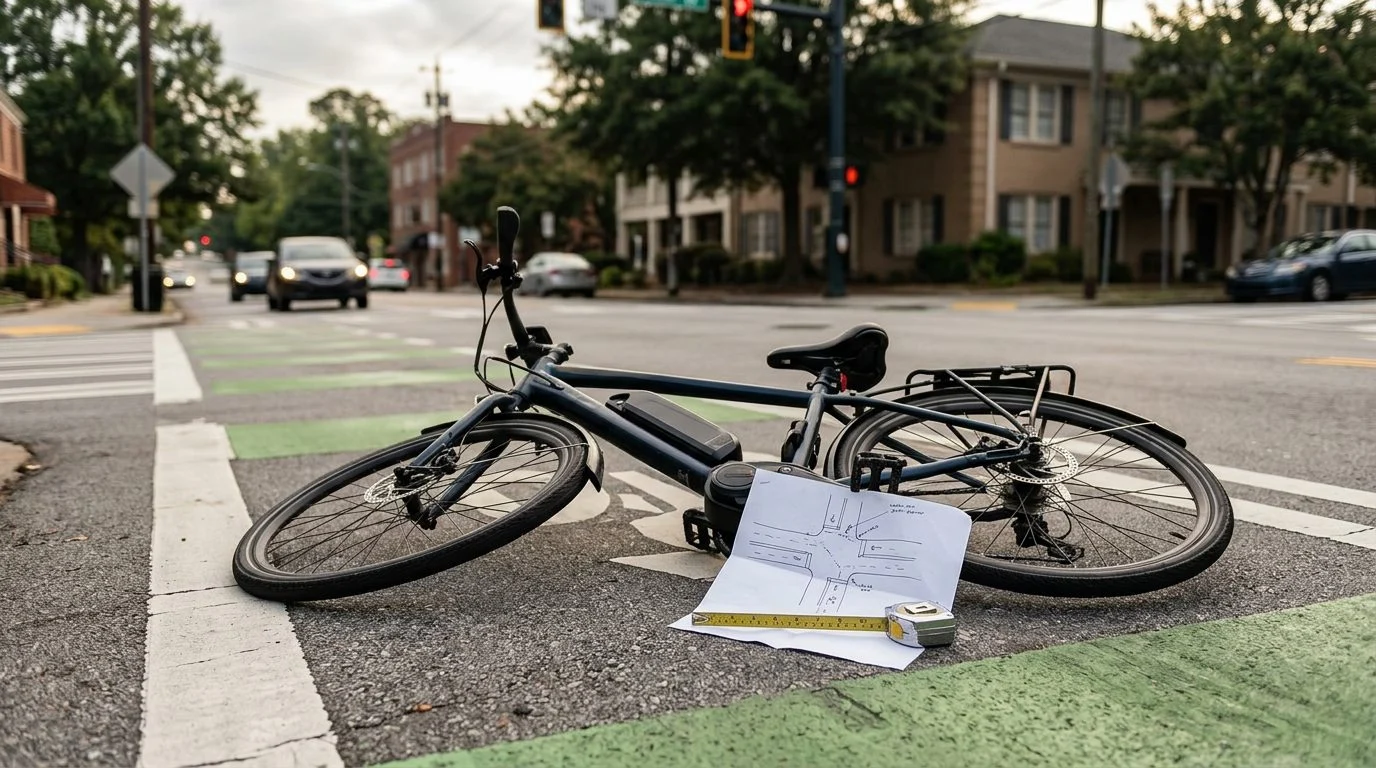
E-Bike Crash Lawyer in Georgia
Hurt in an E-Bike Crash? Here's What to Bring to Your Free Consultation
Gather a few key items now, and the firm will help you sort out what matters most for your case.
Serving Georgia Since 1999
1999
Year the firm began practicing law
5
Georgia offices, including Jonesboro and Atlanta
24/7
Call us any time
By Terance Madden · Published November 25, 2026
Hurt in an e-bike crash in Georgia? A free e-bike crash consultation is a first meeting where the firm reviews your facts before anyone decides on a case. The first consultation is free, confidential, and carries no obligation to continue.
What a Free E-Bike Crash Consultation Is and Who It Is For
A free consultation is a sit-down review of what happened, your injuries, and your paperwork. You leave knowing where your case stands and what questions to answer next.
It fits three kinds of people. The first is a rider hit by a car or truck. The second is a rider hurt in a collision with another road user, such as a pedestrian or another cyclist. The third is a family that lost a rider. Often a spouse, parent, or adult daughter runs the process for the injured person, and the meeting is built for them too.
The firm handles e-bike crashes, car and truck crashes, motorcycle crashes, lithium battery fire cases, and product liability matters. If your situation fits one of these, the review will show it.
Timing matters early. Georgia’s injury deadline statute generally requires an injury lawsuit to be brought within two years after the right of action accrues. § 9-3-33 injury deadline
If a driver who should have yielded left you hurt on your e-bike, you don't have to face the insurance company alone. Request your free consultation with T. Madden & Associates today. Talk it through with our team — the first consultation is free, confidential, and carries no obligation.
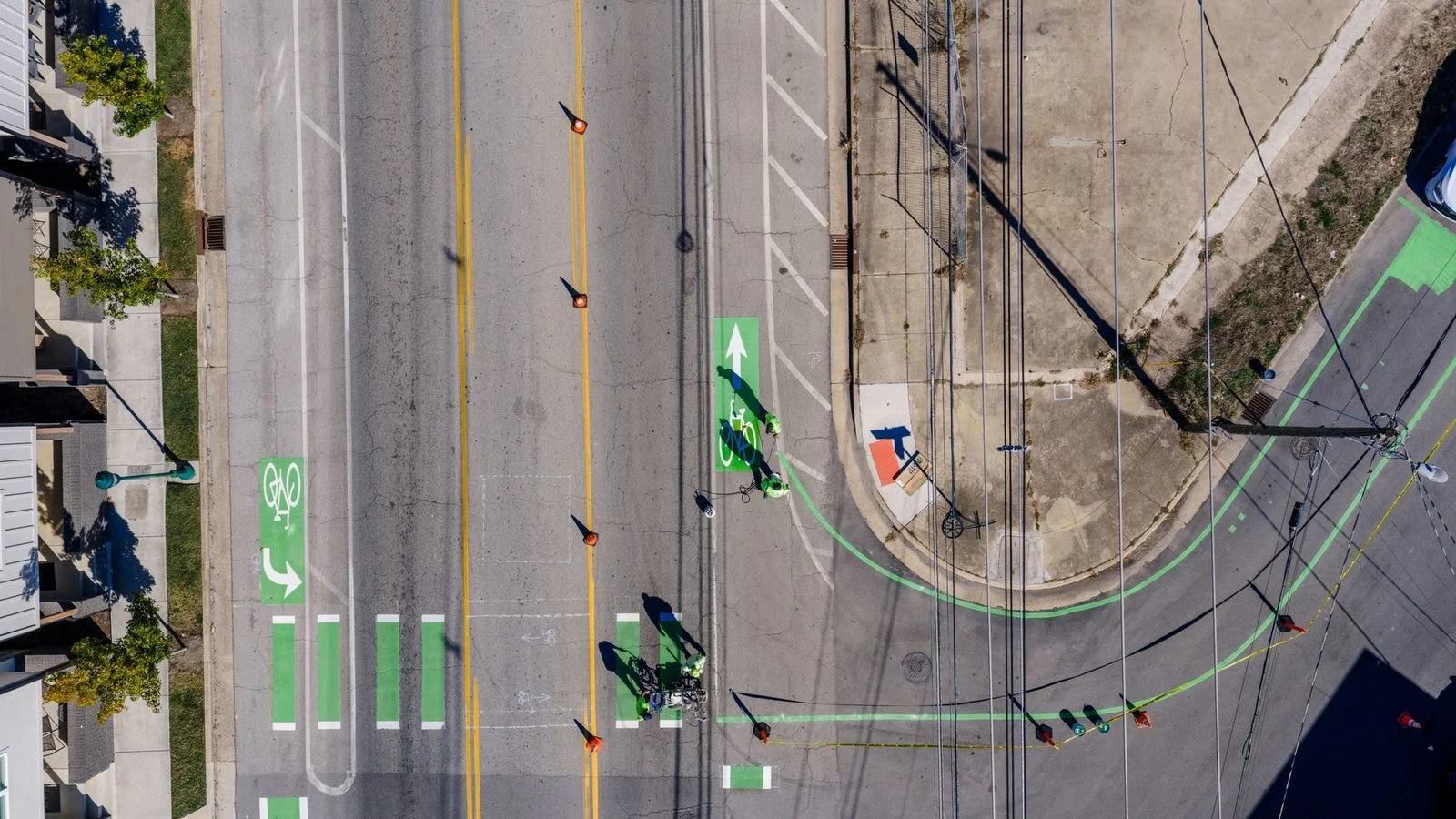
What to Bring to Your Free Consultation
Bring what you have. Missing items won’t stop the meeting.
- Medical records: discharge papers, imaging results, and a list of every provider you’ve seen since the crash.
- Bills and receipts: ambulance, hospital, prescriptions, and any lost wage records.
- The e-bike: the bike, battery, charger, and controller or display, if you can keep them safe. Don’t repair or modify anything first.
- Photos and video: the scene, the vehicle, your injuries, and the road or crosswalk, with dates if you know them.
- Report and contacts: the police or incident report number, witness names and phone numbers, and the other driver’s insurance and plate information.
- Your timeline: a written account of the crash and your recovery, plus texts, emails, and posts about it.
- Your own policies: auto, health, and any umbrella insurance cards and policy details.
- Work details: if you were on a delivery or rideshare job, the app records and your employer’s contact.
If you’re keeping the family’s paperwork, bring the folder and the appointment calendar. You’re part of this process, and the review goes faster when you’re organized.
What the Evidence Shows: Battery, Controller, and Crash Data
The proof in an e-bike case often sits in the bike itself. The battery, controller, and wiring can show whether the bike failed or whether a driver or rider made a choice that caused the crash.
Malfunctions leave physical marks, such as heat damage on a battery, a burned connector, a controller fault, or a brake or tire that failed. Human error leaves a different trail, such as a driver who didn’t yield or a turn made without a proper look. Each one needs different proof.
Before law school, he trained as an electrical engineer, so he starts by asking what the evidence shows and how the crash happened. In a battery fire case, he looks at the cells, the charging circuit, certification marks, and the origin-and-cause investigation that traces where the fire started.
Other parties can share responsibility. Under Georgia’s product seller statute, a seller that isn’t the manufacturer is not treated as one for strict liability, which means liability without proof of fault. § 51-1-11.1 product seller For product liability claims based on strict liability, a product seller is not a manufacturer and is not liable as such.
How the Process Works, Step by Step
Your case moves in five steps, and each one builds on the last.
- Start with the free consultation. Tell the firm the basic facts: when and where the crash happened, how it happened, and what hurts.
- Meet and review. Walk through your documents and the e-bike. The firm explains what it sees and what it still needs.
- Investigate. If the firm takes the case, it gathers scene evidence, medical records, and the at-fault party’s insurance information.
- Review damages. The firm looks at your medical care, future treatment, and lost income. Georgia limits medical damages to the reasonable value of medically necessary care. § 51-12-1.1 medical expenses
The firm handles cases on a no-fee-unless-we-win basis. You may still be responsible for court costs and case expenses. The first meeting takes one sitting. What comes after depends on the facts.
Why the Insurance Company’s First Offer Is Rarely the Claim’s Value
An insurer’s first offer is rarely what your claim is worth. Big Insurance is not on your side. Its goal is to pay less than your claim is worth.
Watch for these tactics. A quick low offer comes before the full medical picture is clear. A request for a recorded statement comes while you’re still in pain. Bills sit unpaid for weeks. Treatment gets disputed. A “low impact” argument says the crash must have been minor because the bike looked fine.
The response is to pursue every layer of coverage. That can include the at-fault driver’s liability policy, your own uninsured or underinsured motorist coverage (UM/UIM), any umbrella or excess policy, and corporate coverage when a company is responsible. Georgia auto policies must include an endorsement that pays the insured for injuries caused by an uninsured driver. § 33-7-11 uninsured motorist coverage
Georgia’s settlement statute for motor vehicle collision claims also sets terms. An offer must allow at least 40 days for payment. You may ask for clarification in writing, and that request isn’t treated as a counteroffer. § 9-11-67.1 settlement offers
Serious injuries carry future costs, not just the first bills.
Common Questions Before You Call
What if I don’t have all my paperwork?
Bring what you have. The firm can help you request missing records.
Do I have to talk to the other driver’s insurance company?
Be careful with recorded statements. Talk to the firm before you give one.
Can a family sue after a rider dies?
Yes, in some cases. When no one else can bring the claim, the administrator or executor may sue for the next of kin, and the recovery is the full value of the decedent’s life. § 51-4-5 wrongful death
Is someone available after hours?
Yes. The firm is available 24/7 by phone.
What if the crash involved a battery fire?
The firm handles lithium battery fire and product liability cases. It reviews who made, sold, and maintained the product.
Not sure what your next step is?
Talk it through with our team — the first consultation is free, confidential, and carries no obligation.
Why Work With T. Madden & Associates, and Your Next Step
T. Madden & Associates, P.C. has practiced in Georgia since 1999. It has offices in Jonesboro (Clayton County), Atlanta, Decatur, Macon, and Augusta. Terance Madden is the responsible lawyer for this page, and Shenia Madden is also a lawyer at the firm.
The firm works in plain English, keeps communication open, and treats clients and families with dignity and respect. It pursues every insurance layer and prepares as if the case will go to trial. The Terance Madden Foundation also supports community work across the firm’s home region.
If a driver who should have yielded left you hurt on your e-bike, or a battery fire left your family facing bills and loss, you don’t have to sort out the next step alone. Bring what you have and request your free consultation with T. Madden & Associates.