

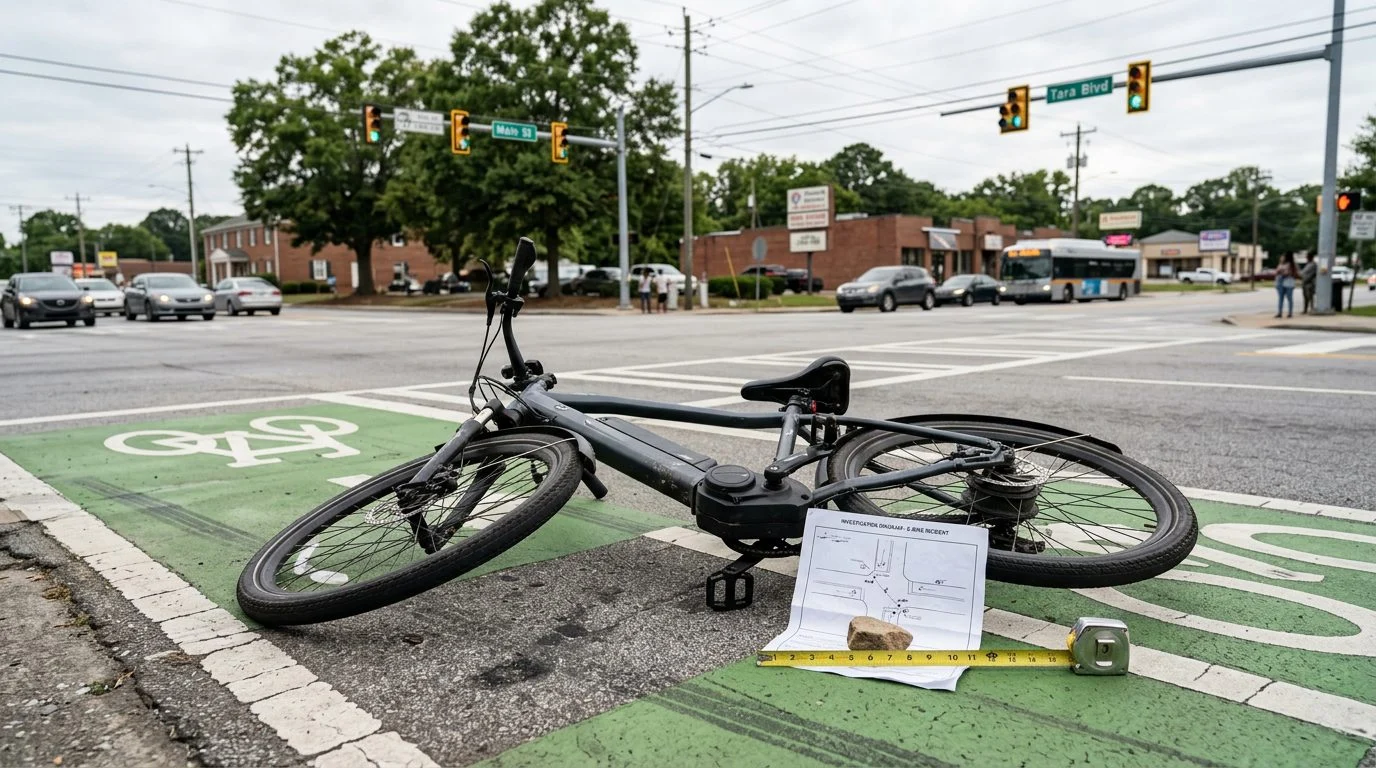
E-Bike Crashes | Georgia
Lost Income After an E-Bike Crash? Talk to Our Team Today.
A missed shift can turn into a missed rent payment fast. Here is what to gather now and how the firm can help you sort it out.
T. Madden & Associates, P.C.
1999
Year the firm began practice
5
Georgia offices: Jonesboro, Atlanta, Decatur, Macon, Augusta
24/7
Call us any time
By Terance Madden · Published November 22, 2026
You’re hurt, you’re off work, and the bills keep coming. The paycheck you lost after an e-bike crash is real money, and in Georgia it can be part of your claim.
Lost wages are the pay you would have earned by working but could not earn because of the crash. This guide shows what counts, what proof to gather, and why the first offer usually leaves that money out.
What Lost Wages Cover After an E-Bike Crash in Georgia
Lost wages are the money you would have earned at work and did not earn because the crash kept you off the job. They are one piece of your claim, alongside medical bills and pain and suffering.
Lawyers call money losses like these economic damages (losses you can count with paperwork, like paychecks and bills). Georgia law says damages compensate you for the injury, and they are measured in money when the injury can be estimated that way. O.C.G.A. § 51-12-4
A rider who can’t make a shift is losing real money. That loss belongs in the claim, but if the injury is small or the mitigating circumstances are strong, only nominal damages are given.
For the bigger picture, read the firm’s e-bike crash lawyer guide for Georgia.
Hurt on an e-bike in a crash someone else caused, and missing paychecks because of it? Our team can talk through your lost wages and what you may be able to claim. Talk it through with our team — the first consultation is free, confidential, and carries no obligation.
Missed Shifts and Lost Work Time: How to Count Them
Count every hour the crash took from you. That includes full shifts you missed, shifts cut short, and days you stayed home to heal.
Start with your normal schedule before the crash. Pay stubs and your work calendar show what a typical week looked like. Compare that schedule to the time you actually lost. Numbers that match the schedule are easy to check.
Write each missed day down as it happens, not weeks later. Count these:
- Full shifts you could not work
- Partial shifts cut short by pain or medical visits
- Doctor visits, therapy and tests
- Paid time off or sick days you used to recover
Keep records of paid time off and sick days, too. How they fit into your claim depends on the facts.
A doctor’s work restriction note links the time away to the crash. It should say, in writing, what you cannot do at work and for how long.
Lost Tips and Gig Income From App-Based Work
Tips, bonuses and app payouts can be lost wages when the crash stops that work. If you drove deliveries or rides, your app’s earnings history is your main proof.
Pull that history now. Weekly payouts, trip logs, tip reports and bonus statements show what you earned before the crash. A screenshot helps, but the full report from the platform is easier to check.
Georgia has its own insurance rules for transportation network companies, the app-based ride services. Those rules can decide which policy applies, so the app’s log-on times matter. O.C.G.A. § 33-1-24
Terance Madden earned a B.S. in Electrical Engineering before he went to law school. That training shapes how he works a gig-income case. He asks what the records show, when the rider was logged on, and what the crash cost in income. He also asks which records need to be saved before they disappear.
A complete, organized earnings history leaves less room for doubt.
Future Earning Capacity After a Catastrophic Injury
Future earning capacity is your ability to earn money in the years ahead. A serious injury can lower it, and that loss can be part of the claim.
This matters most with lasting injuries: a spinal cord injury, a brain injury, an amputation, or a fracture that never heals right. When the injury limits the work you can do, the future loss can be bigger than the weeks you missed.
Think about the work you did before the crash. Lifting, driving, standing for hours, and dealing with customers are all part of that story.
Future money is worth less than money paid today. Georgia’s statute lets the jury reduce future lost wages and other economic damages to present value (today’s dollar value of money paid later). It names a 5 percent discount rate, or any other rate the jury considers appropriate. O.C.G.A. § 51-12-13
Future income is built from your work history, your skills and your doctor’s restrictions. Those figures should come from records, not guesses.
The Records That Prove Your Lost Income
The records that prove lost income come from four places: pay, work, app and medical files. Gather them before the insurer asks.
- Pay stubs for the months before the crash
- W-2 or 1099 forms for recent tax years
- App earnings history with payouts, tips and bonuses
- Your work schedule and a timeline of missed shifts
- A letter from your employer on time missed, if you work for a business
- The doctor’s work restriction note
- Medical records and bills that tie the injury to the crash
If a pay stub shows overtime or bonus pay, keep that page too.
Medical bills need proof, too. Georgia limits medical expense damages to the reasonable value of medically necessary care. O.C.G.A. § 51-12-1.1
Keep a simple log, starting now. Write down each day you missed and each app shift that did not happen, with the date and reason. A log written close to the event is easier to trust than one rebuilt months later.
Why the First Offer Leaves Out Future Income
Big Insurance is not on your side, and a first offer is rarely what a claim is worth. Expect a low number before anyone has measured your lost income.
The tactics are familiar:
- A low first offer that ignores future income
- A recorded statement requested early, before the medical picture is clear
- Delays in paying or deciding
- Disputes over your treatment and bills
- The “low impact” argument, that a bike crash did little harm
Don’t accept a number until the lost wages and future income are on paper.
Here is the response. The firm pursues every coverage layer that may apply: the at-fault party’s liability insurance, your own uninsured and underinsured motorist (UM/UIM) coverage, any umbrella or excess policy, and corporate coverage when a business or vehicle owner is responsible. Under O.C.G.A. § 33-7-11(a)(1), a Georgia auto liability policy must include uninsured motorist coverage unless an insured named in the policy rejects that coverage in writing, as § 33-7-11(a)(3) provides, and under § 33-7-11(a)(1)(B) the insured may affirmatively choose uninsured motorist limits in an amount less than the policy’s liability limits. O.C.G.A. § 33-7-11
Under Georgia’s comparative fault law, O.C.G.A. § 51-12-33, damages are reduced in proportion to the injured person’s own fault, and a person who is 50 percent or more responsible recovers nothing. O.C.G.A. § 51-12-33
A claim for a lasting injury covers lost income for the years the injury affects you. The firm prepares every claim as if it will go to trial, so the proof is built early.
Crash physics is where an engineer’s training helps. Terance Madden asks how fast the change in speed was and what the device data shows, so a “low impact” argument gets tested, not just accepted.
Not sure what your next step is?
Talk it through with our team — the first consultation is free, confidential, and carries no obligation.
Pain and Suffering Next to Lost Wages
Pain and suffering covers the physical and emotional harm the injury causes. It is claimed next to lost wages, not inside them.
Its weight depends on how long the injury lasts, what you can no longer do at home, and how it changes your sleep, mood and family life.
Lost income and pain and suffering support each other. The pay records show the money lost. The daily-life story shows what the injury took.

When a Family Member Manages the Paperwork and the Next Step
The person keeping the folder often carries the heaviest load, whether that’s a spouse, mother or adult daughter. This week, three steps help most:
- Make one folder for pay records, app screenshots and medical bills.
- Start a missed-work log with dates and reasons.
- List every insurance letter and phone call, with the date it arrived.
Keep phone numbers and names of anyone who calls about the claim. Keep the paperwork moving so nothing gets lost in the shuffle.
Quick answers
Can I claim lost wages after an e-bike crash in Georgia?
Lost wages can be part of a claim when a crash caused by someone else keeps you from work.
Are tips and delivery income lost wages?
They can be, when the crash stops that work. The app’s earnings history is the main proof.
Can your share of the blame change a lost wages award?
It can: under O.C.G.A. § 51-12-33, Georgia lowers the damages you recover, including lost wages, by your percentage of fault, and you recover nothing if you are found 50 percent or more at fault. O.C.G.A. § 51-12-33
If you were hurt on an e-bike in a crash someone else caused, and missed paychecks because of it, our team can talk through your lost wages and your options. The first consultation is free and confidential, with no obligation to continue. Start with a free case evaluation.