

E-Bike Crash Lawyer | Jonesboro and Clayton County
Hurt in an e-bike crash? Talk to a Jonesboro lawyer 24/7.
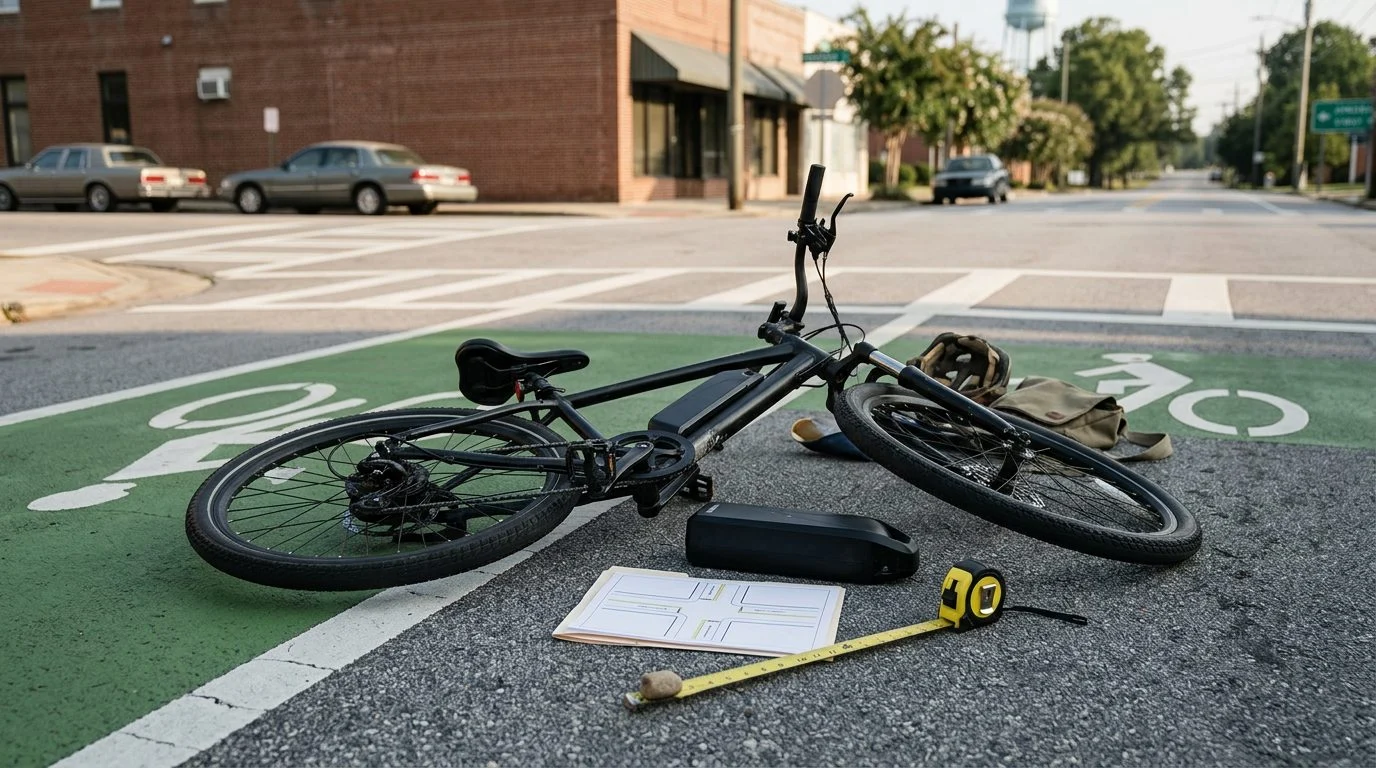
Terance Madden and our team start with the bike, the battery and the crash scene, so you can focus on getting better.
The firm at a glance
1999
Representing injured people since
5
Georgia offices: Jonesboro, Atlanta, Decatur, Macon and Augusta
24/7
Phone line for injured clients
By Terance Madden · Published November 16, 2026
Hurt in an e-bike crash and not sure what comes next? You are not alone, and you don’t have to sort it all out in one sitting. An e-bike crash lawyer in Jonesboro, GA can review what happened, who may be responsible, and what your claim may include.
What an E-Bike Crash Case Covers and Who It Is For
T. Madden & Associates, P.C. represents people hurt in e-bike crashes, and families who lost someone in one, across Georgia. The first question is simple: who caused the crash, and who pays for the harm?
A personal injury lawyer is a lawyer who represents people hurt by someone else’s fault. The firm takes these cases for:
- Riders hit by a car or truck.
- Riders hurt in a crash with no other vehicle, when a defect or road condition played a part.
- Riders hurt when a battery, charger or other part failed.
- Families who lost a parent, spouse or child in an e-bike crash.
The firm has an office in Jonesboro, in Clayton County. Terance Madden has practiced in Georgia since 1999. The firm also has offices in Atlanta, Decatur, Macon and Augusta.
If your rider was hurt in a crash that was someone else's fault, you don't have to face the insurance calls alone. Start your free case evaluation today. Talk it through with our team — the first consultation is free, confidential, and carries no obligation.
Serious Injuries and Losses the Firm Documents for Families
Serious e-bike injuries often involve the head, spine, bones or internal organs. Each one can change a family’s life.
Common injuries include:
- Head and brain injuries
- Spinal and nerve injuries
- Broken bones, including hip, wrist and leg fractures
- Deep road rash that can leave lasting scars
- Internal injuries that may not show up right away
A catastrophic injury is one that changes a person’s life for the long term. These claims look past today’s bills. They account for future medical care, lost earning capacity (the income a person could have earned over a working life) and the daily help the injured person will need.
Start gathering proof now. Keep every medical record and bill. Take photos of the scene, the bike and your injuries. Save the bike’s make, model and receipt. Write down battery and charger details, and keep any recall notice.
Georgia law also protects families who lose someone. A surviving spouse, or the children if there is no spouse, may recover “the full value of the life of the decedent, as shown by the evidence” under O.C.G.A. § 51-4-2.
How Fault Gets Decided in a Georgia E-Bike Crash
Georgia splits fault among everyone involved. Each person’s share of blame reduces what they can collect.
Under O.C.G.A. § 51-12-33, damages are reduced in proportion to the injured person’s percentage of fault. If the injured person is 50 percent or more responsible, that person recovers no damages.
That makes the fault fight central to most e-bike claims. Common disputes include:
- Left-turn crashes, where a driver turns across a rider’s path. See the firm’s left-turn e-bike fault guide.
- Dooring, where a car door opens into a rider’s lane.
- A driver who pulls out in front of a rider.
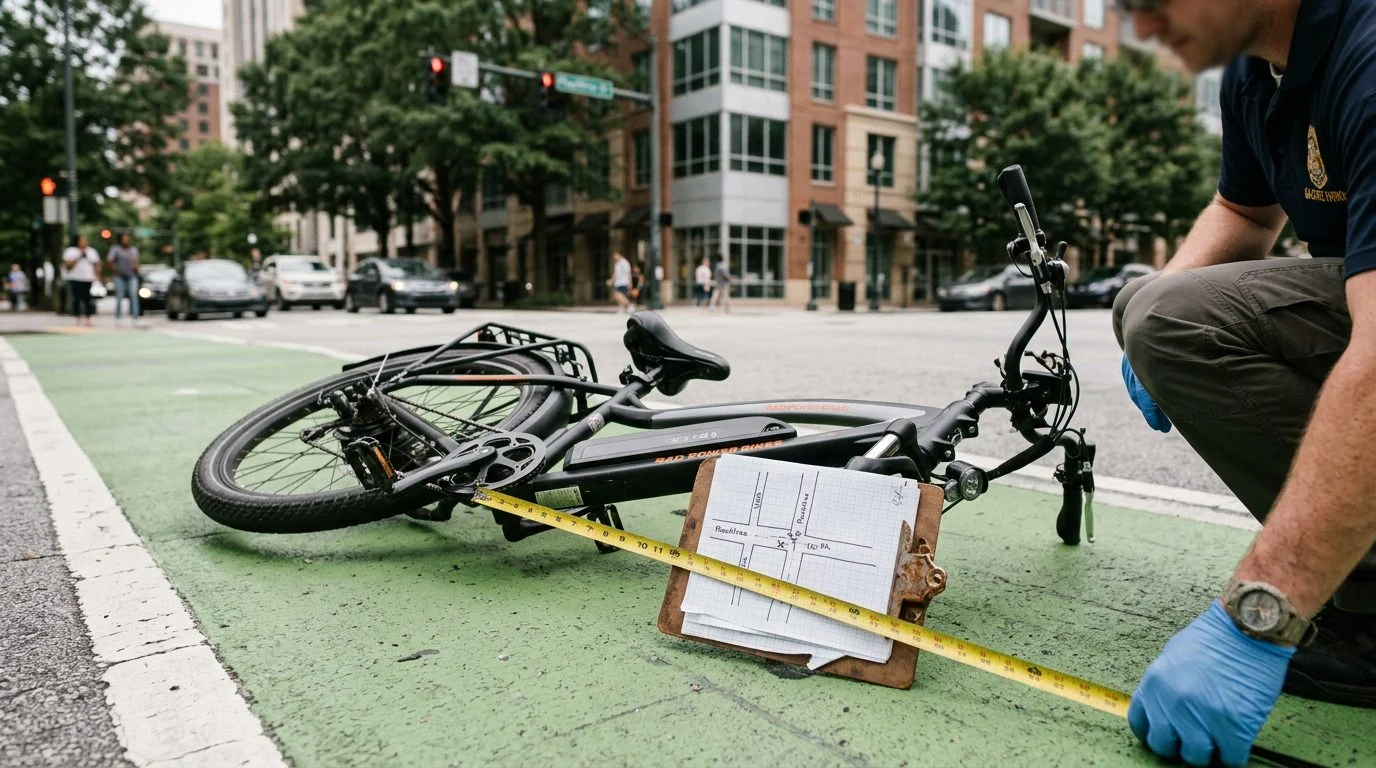
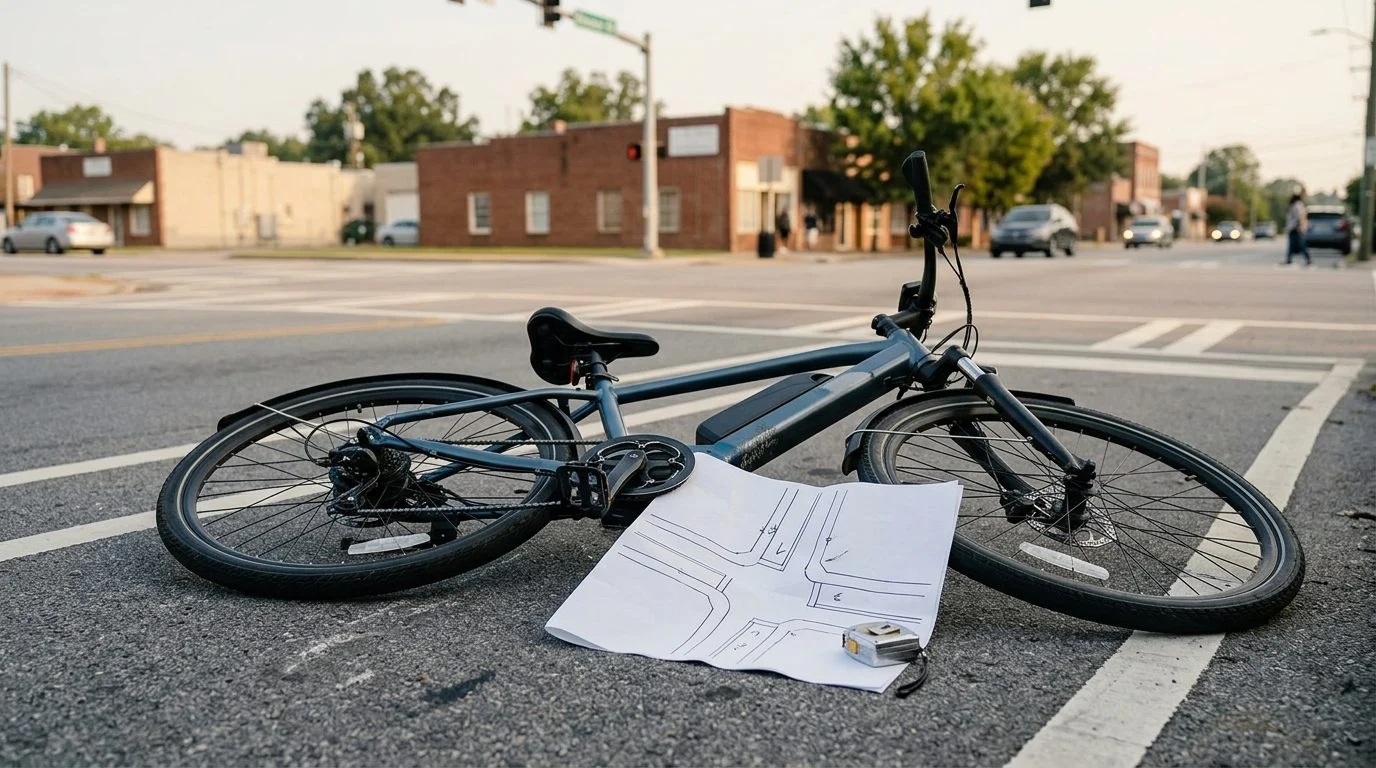
Expect the other side to raise speed, lane position or a helmet. The real question is how each fact connects to the cause of the crash. Skid marks, vehicle damage, the bike’s resting position and the scene layout all tell part of the story. The firm asks what the evidence shows, not what anyone wants it to show.
When a Battery Fire or Product Defect Adds Other Liable Parties
Sometimes the crash is not the whole story. A battery can overheat, catch fire or fail. A charger can do the same.
A product liability claim (a claim that a defective product caused harm) can name more than the driver. Under O.C.G.A. § 51-1-11, a manufacturer of personal property sold as new can be liable to a person injured because the product, when sold by the manufacturer, was not merchantable and reasonably suited to its intended use, and its condition when sold is the proximate cause of the injury, which means the product’s condition directly led to the harm rather than being only a remote link to it.
A seller that did not make the product follows a different rule. Under O.C.G.A. § 51-1-11.1, a product seller that is not the manufacturer is not liable as a manufacturer in a strict liability action. So the firm traces who designed, built, labeled and sold the part.
Georgia also has a ten-year limit on many manufacturer claims. The statute adds that nothing in that subsection relieves a manufacturer of the duty to warn of a danger from using a product once the manufacturer knows of that danger, which can matter in a failure-to-warn claim (a claim that the maker knew of a danger and did not warn people).
Terance Madden trained as an electrical engineer before law school. On a battery fire, he looks at the cells, the charging circuit, the certification marks and the place the fire started. Each piece shows part of the story. He works to preserve the damaged parts before they are lost.
How Big Insurance Handles an E-Bike Claim, and How the Firm Responds
Big Insurance is not on your side. A first offer is rarely what your claim is worth. Terance Madden has been in practice since 1999, and the firm represents injured Georgians.
Expect these tactics:
- A quick, low offer made before the full bills are in.
- A request for a recorded statement while you are still hurting.
- Delays in paying or answering letters.
- Disputes over whether your treatment was needed.
- A “low impact” argument that says the crash was too minor to cause real harm.
- A claim that the rider was at fault.
Georgia sets rules for written settlement offers in motor vehicle crash claims. Under O.C.G.A. § 9-11-67.1, a written settlement offer for a motor vehicle collision claim, made by or with an attorney before the defendant files an answer, must allow at least 40 days from receipt for payment and include medical or other records sufficient to evaluate the claim.
The firm pursues every coverage layer:
- The at-fault driver’s liability policy.
- Your own uninsured or underinsured motorist coverage. Under O.C.G.A. § 33-7-11, an auto liability policy issued in Georgia must include uninsured motorist coverage unless the insured rejects that coverage in writing.
- Umbrella or excess policies.
- Corporate or employer policies, when a business is involved.
- Product or battery maker coverage, when a defect is involved.
Crash physics helps answer a “low impact” argument. How fast each vehicle was moving, and how the impact changed that speed, shows the force a rider took. The firm prepares every claim as if it will go to trial. An early offer does not change that.
What to Expect: From the First Call to Resolution
Here is how a case usually moves. Timelines depend on the facts.
- Start a case evaluation. Use the free case evaluation form.
- Collect the facts. The firm reviews the crash details, bike and battery information, medical records and insurance information.
- Preserve the evidence. The firm requests scene information, photos and the damaged bike or battery before anything is lost.
- Present the claim. The firm sends the demand, handles the negotiations and keeps you updated in plain English.
- File suit if needed. When talks stall, the firm files a lawsuit to protect the claim.
- Resolve or try the case. The claim ends in a settlement or a trial.
Watch the clock. Under O.C.G.A. § 9-3-33, actions for injuries to the person must generally be brought within two years after the right of action accrues, except for actions involving loss of consortium, which must be brought within four years after the right of action accrues. Waiting can cost a family its claim.
The client may still be responsible for court costs and case expenses.
Not sure what your next step is?
Talk it through with our team — the first consultation is free, confidential, and carries no obligation.
Working With the Firm in Jonesboro
Attorney Terance Madden has practiced law since 1999 and leads T. Madden & Associates, P.C. Terance Madden is the responsible lawyer for this page. Its lawyers include Terance Madden and Shenia Madden. The firm’s Jonesboro office serves Clayton County.
Terance Madden’s electrical engineering training shapes how he starts each case. He asks what the evidence shows and how the crash happened.
Often one person runs the whole recovery. It may be a spouse, a mother or an adult daughter who handles the calls, appointments and paperwork. The firm works with that person directly and gives them one clear point of contact.
The firm’s community work includes the Terance Madden Foundation. Calls to the firm are answered 24/7.
Questions Families Ask Before Calling
Does not wearing a helmet end a claim?
The other side may raise it. What matters is how a helmet, or the lack of one, connects to the injuries.
Can I still recover if I was partly at fault?
Yes, in part. If you share some of the blame, Georgia law lowers your damages by your percentage of fault, and you cannot receive any damages if you are 50 percent or more responsible for the injury (O.C.G.A. § 51-12-33).
What if the driver fled the scene?
Georgia law requires a driver in a crash with injury to stop and give name and registration, under O.C.G.A. § 40-6-270. Your own uninsured motorist coverage may still help.
Can I talk to the other driver’s insurance company myself?
You can, but recorded statements and early offers can hurt your claim. Talk with the firm before you give any statement.
If your family member was hurt on an e-bike in Clayton County and you are facing bills, insurance calls or a battery question right now, you don’t have to handle it alone. Call the Jonesboro office or start your free case evaluation today.