

E-Bike Crash Claims | Clayton County and Georgia
Low impact doesn't mean low injury.
When the other side calls your e-bike crash minor, the firm checks the evidence before anyone accepts that label.
The firm at a glance
1999
Year the firm began practicing
24/7
Call us anytime
Free
First consultation, confidential, no obligation
By Terance Madden · Published November 12, 2026
Your e-bike crash left you hurt, and now an insurance letter calls it ‘low impact.’ In Georgia, that phrase is a claim-value argument, not a finding about how badly you were hurt.
Here is the short answer. Big Insurance uses ‘low impact’ to push an e-bike crash claim’s value down before the medical records are reviewed. A first offer built on that label is rarely what the claim is worth. The rest of this page explains why, and what the firm checks in response.
What ‘Low Impact’ Means When an Insurer Says It
‘Low impact’ means the insurer believes the crash force was too small to cause the injuries you are claiming.
That is an argument, and it is built to sound like physics. The adjuster looks at the bike, sees little damage, and says you could not have been hurt badly. Big Insurance relies on this idea because a scratched bike sounds convincing on paper.
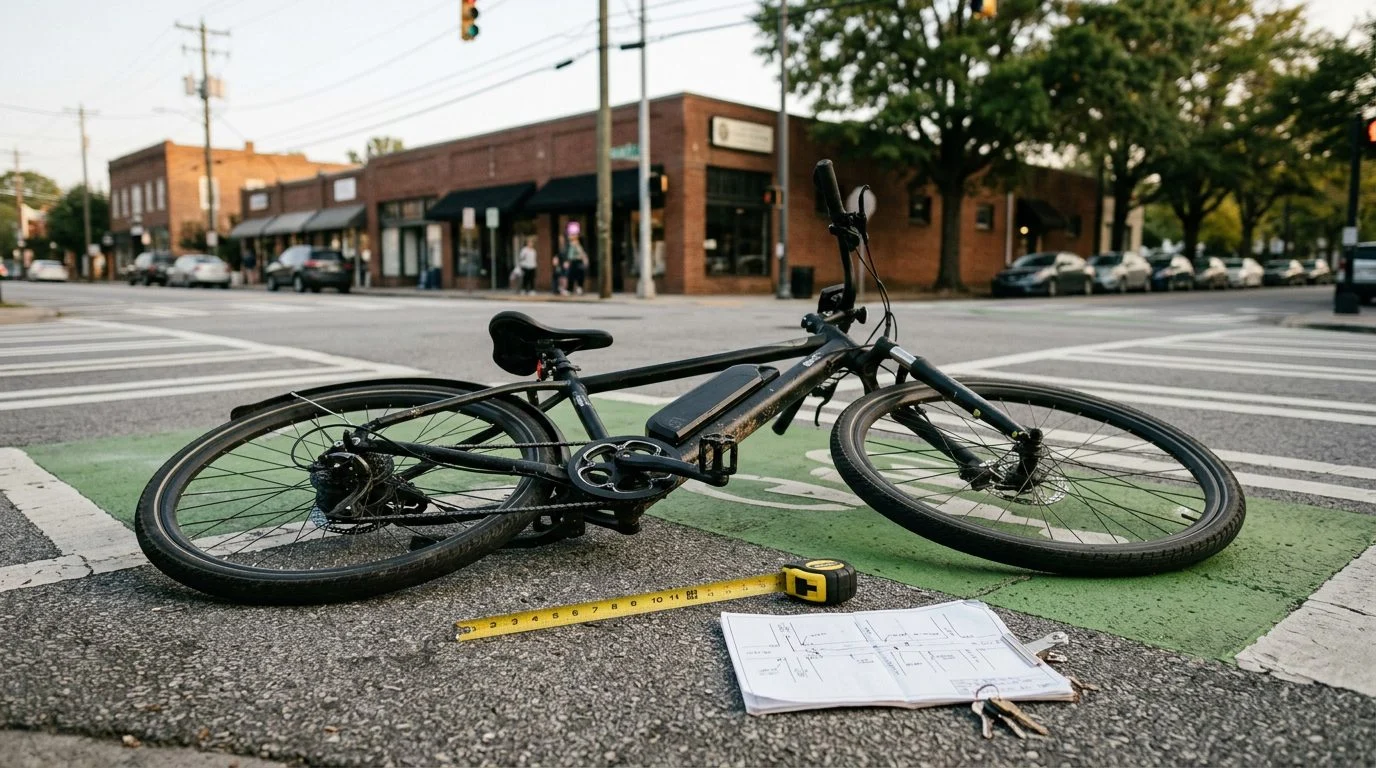
A rider is not a car passenger. A bike rider often takes the impact straight through the body, with nothing around them. A slow crash can still break bones, tear ligaments, or cause a head injury. Low speed on paper does not mean low harm.
Watch for the phrase early. It often appears in the first letter or phone call, before a doctor’s notes are read. An early label shapes the whole file before the facts are in.
Ask yourself one question when you read it. Did the letter give a medical reason, or only an opinion about the bike? A label with no medical reason is an opening move, not a finding.
Not sure what your next step is?
Talk it through with our team — the first consultation is free, confidential, and carries no obligation.
Georgia Law on E-Bikes and Why the Classification Matters
The class and speed of your e-bike are facts the insurer will check, so the file needs them right from day one.
Insurers look hard at which class an e-bike fits and how fast it can go (Georgia e-bike classification rules). If the file records the wrong class or the wrong speed, the claim can start off on the wrong foot. Write down what the bike is, what it can do, and how fast you were riding.
Here is what the classification does not do. It does not decide who was at fault. It does not decide what the claim is worth. Those questions turn on how the crash happened, what the other party did, and what your injuries are.
Georgia’s fault rules matter more to the outcome than any label. Under O.C.G.A. § 51-12-33, a judge reduces damages by the injured person’s share of fault. That share is called comparative fault (shared fault). The same statute says a plaintiff who is 50 percent or more responsible for the injury cannot recover damages. Keep your account of the ride accurate and consistent, because fault gets compared.
How Big Insurance Uses the Label to Lower the Offer
An insurer’s first offer is rarely what a claim is worth, and the label is often the first step toward a low number.
Big Insurance tends to use a set of moves. The first is the ‘low impact’ label. The second is a quick request for a recorded statement, which is a recording of your words that can be picked apart later. The third is a low first offer, often made before the bills are in.
Then comes the fight over care. Big Insurance often disputes treatment, arguing it was unnecessary or not tied to the crash. It may point to a gap between appointments. Delays are another tool. Every week that passes adds bills and strain to your family.
Georgia limits medical damages to the reasonable value of medically necessary care, and the trier of fact (the judge or jury) decides that amount. Either side may challenge the reasonableness of medical expenses and the medical necessity of any treatment. See O.C.G.A. § 51-12-1.1.
What to do: don’t give a recorded statement or sign a release before the firm has reviewed it. Keep every appointment. Save every bill, receipt, and note from work. Those papers are the proof the insurer will test.
Any tactic is worth checking against the records and the crash facts, line by line.
What the Crash Physics Actually Shows
Low speed on paper does not end the analysis, because the rider’s body and the pavement are the real points of contact.
Several facts shape what a fall does to a body. Rider speed matters. So does the combined weight of rider and bike. If another vehicle was involved, the closing speed between them matters. The surface and the direction of the fall matter too.
Think about a rider who slides at low speed and strikes a curb with the head. The bike may show only a scratch. The head injury is still real, and the scratch tells you very little about it.
Before law school, Terance Madden trained as an electrical engineer. He starts a case by asking what the evidence shows and how the crash happened. For a bike claim, that means reading the speed data, the damage pattern, where the rider and bike came to rest, and which records exist and must be kept.
Reading the physics is part of building the case. A low-impact label is worth questioning until someone has checked what the evidence actually shows.
Evidence a Low-Impact Argument Often Leaves Out
Bike data, road conditions, and other responsible parties can change the crash picture, so they belong in the file.
If the bike or its controller stores data, that data may show how fast the bike was moving and how the power system behaved at the moment of the crash. Keep the bike and its battery as they are until the evidence is reviewed.
Road conditions matter too. A pothole, a broken surface, or a poorly kept path can change how the fall happened and who had a duty to fix it.
Other parties may share the blame. A brake, tire, or battery maker, or a maintenance vendor, may bear part of the fault. Georgia requires the fault of everyone who contributed to the injury to be considered, whether or not they were named in the suit (Quynn v. Hulsey), but a nonparty’s fault is considered only if the plaintiff settled with that nonparty or a defending party gave notice not later than 120 days prior to the date of trial (O.C.G.A. § 51-12-33). Each share is that party’s own liability, not joint liability. See O.C.G.A. § 51-12-33.
Your medical record is the main proof of your injury, not the bike’s photos.
Which Insurance Layers May Pay
More than one insurance policy may pay an e-bike claim, and which ones apply depends on the facts.
Several coverage layers may apply. Those can include the at-fault party’s liability coverage, your own uninsured motorist (UM) coverage, and underinsured motorist (UIM) coverage where a policy offers it. Umbrella or excess policies are excluded from the required uninsured motorist coverage unless the policy or a policy endorsement affirmatively provides for them, though corporate coverage may also apply where a business is responsible. See O.C.G.A. § 33-7-11.
Lifetime damages means the full cost of the injury over time, not only the bills already paid. Under Georgia law, future medical expenses and lost wages can be part of a claim. A trier of fact may reduce those future economic losses to present value, using a 5 percent rate or another rate it chooses. See O.C.G.A. § 51-12-13.
A claim can be prepared as if it may go to trial, since that is how an insurer’s offer can be tested.
Not sure what your next step is?
Talk it through with our team — the first consultation is free, confidential, and carries no obligation.
When a Spouse, Parent, or Adult Daughter Is Managing the Claim
The person running the recovery needs a simple system, and the injured rider does not have to handle the insurer alone.
If that’s you, you’re likely the one tracking appointments, paying bills, answering the insurer’s calls, and keeping the paperwork in order. That is a lot to carry. Your family has taken care of each other for years, and this is no different.
Start a simple log. Write down symptoms, appointments, missed work, rides to care, and out-of-pocket costs. Keep the bike, the helmet, and the photos. Before anyone responds to a letter from an insurer, contact T. Madden & Associates, P.C.
If your loved one signed a durable power of attorney for health care, that person can ask a provider for the records.
A lawyer can take those calls and letters, so the injured person can focus on getting better.
Reading a Low-Impact Letter
If a ‘low impact’ letter has you worried, the firm can review it with you during a free first consultation.
T. Madden & Associates, P.C. has practiced since 1999, with offices in Jonesboro, Atlanta, Decatur, Macon and Augusta. Terance Madden is the responsible lawyer for this page.
The first consultation is free, confidential, and carries no obligation to continue.
If you were hurt in an e-bike crash that someone else caused, and a ‘low impact’ letter has you stuck, the firm is ready to review it with you. Contact T. Madden & Associates to get started.
Frequently Asked Questions
Can I still have a claim if my e-bike crash left little visible damage?
Yes. A low-speed crash can still cause real injuries, such as soft tissue injuries, concussions, and spinal problems. Terance Madden trained as an electrical engineer before law school, so he starts by asking what the evidence shows and how the crash happened.
How long do I have to file a claim after an e-bike crash in Georgia?
Georgia generally requires personal injury lawsuits to be brought within two years after the right of action accrues (O.C.G.A. § 9-3-33), and loss of consortium claims within four years, under O.C.G.A. § 9-3-33. Waiting can cost you time and evidence, so it is smart to call early.
What insurance might pay for my injuries after an e-bike crash?
The at-fault driver’s liability insurance may pay, depending on the facts. If that driver has too little coverage or none, your own uninsured or underinsured motorist (UM/UIM) coverage may apply, and umbrella, excess, or corporate policies can add more layers when they apply.
Why does Big Insurance often make a low first offer on a low-impact claim?
Big Insurance often opens low, hoping an injured person accepts before the full medical picture is clear, and a first offer is rarely what a claim is worth. A claim may involve more than one coverage layer, and it can be prepared with a possible trial in mind. Hurt in a crash that was someone else’s fault? Call the firm for a free, confidential consultation with no obligation to continue.