

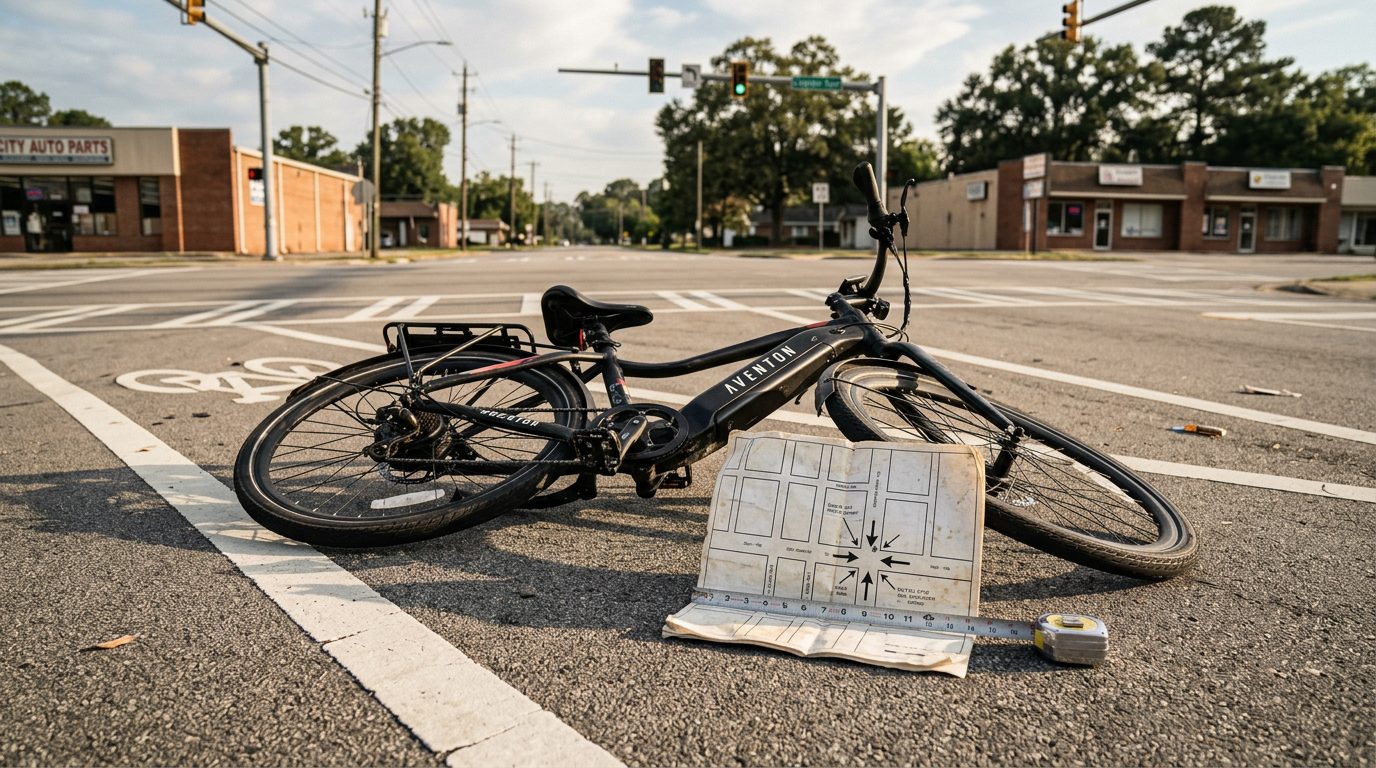
E-Bike Crashes | Clayton County, Atlanta, Decatur, Macon and Augusta
Hurt When Your E-Bike's Brakes Failed? Talk to a Georgia Lawyer
A brake that fails at speed is not a rider's mistake to carry alone. Tell us what happened, and our team will look at the bike, the crash and the evidence with you.
T. Madden & Associates, P.C.
1999
Representing Georgia injury clients since
5
Offices across Georgia
24/7
Phone line available
By Terance Madden · Published November 13, 2026
If a brake failure on your e-bike hurt you, you may have a claim against the companies behind that part. A defect shifts the question away from the rider’s choices and toward who built, sold or serviced the bike.
This page explains what that means in Georgia. It also explains what the physical evidence can show, and why that evidence needs protecting right away.
When an E-Bike Part Fails, the Rider Is Not the Only Question
A failed e-bike part can make the maker, seller or repair shop responsible for your injuries.
Lawyers call this a product liability claim (a claim that a maker or seller is responsible for an unsafe product). It is different from a crash caused by a rider’s own mistake, like taking a turn too fast on worn tires.
This page is for the rider. It is also for the parent of a teen who rides, and for the spouse or adult daughter handling the calls, appointments and bills. If that’s you, you are managing the recovery, and this page is written with you in mind.
The firm starts with two questions: what failed, and why. The answers help decide who may be responsible.
If a part failed on your e-bike and you got hurt, you may have a claim, and you don't have to sort out the insurance alone. Start a free case evaluation with us. Talk it through with our team — the first consultation is free, confidential, and carries no obligation.

How Brakes, Batteries and Motors Fail, and What It Looks Like
Brakes, batteries and motors each fail in patterns. Knowing the signs helps you describe what happened.
- Brakes: worn pads or rotors, fluid leaks, a cable or hydraulic line that gives way, or a lever that pulls to the bar with no slowing.
- Batteries: overheating, swelling, a burnt smell, a fire while charging or after a ride, or a sudden shutdown.
- Motors and controllers: a sudden surge of power, a motor that keeps running after the rider lets off the throttle, or wiring that shorts or burns.
Keep everything. Hold on to the bike, every loose part, the charger, the battery, the box and the manuals. Take photos of the bike as it sits. Don’t repair, sell or toss anything before you talk to the firm.
Write down the ride while you still remember it: the route, the time, and what the rider felt before the failure.
Georgia’s duty to preserve evidence (the duty to keep proof from being lost or changed) can start before a lawsuit is filed. It applies once litigation is reasonably foreseeable to the party holding the evidence, as Phillips v. Harmon explains.
Who Else May Be Liable for a Defective E-Bike
Often more than one company is responsible. The bike’s brand name is only one possibility.
- The manufacturer or assembler, including the company whose name is on the bike.
- The importer, distributor and retailer, including the shop that sold or put the bike together.
- Makers of the battery, brake system, motor and controller, which are often separate companies.
- Repair shops and maintenance vendors whose work may have caused the failure or missed it.
Georgia’s fault-sharing rule matters here. When more than one party is at fault, each liable party owes only its own percentage of the damages, and those shares are not joint (§ 51-12-33(b)).
Each company may carry its own insurance, which can mean more coverage for the rider.
What the Evidence Shows, and How Terance Madden Reads It
The failed part is often the most direct proof of what went wrong. That is why it comes first.
Before law school, Terance Madden trained as an electrical engineer. Before law school, he trained as an electrical engineer. So he starts with what the evidence shows and how the failure happened. He also works out which records and parts exist, and makes sure they are kept.
Here is what physical evidence can show in plain words:
- Heat damage or melted plastic on a battery pack can point to where a fire began.
- Swollen cells can show a pack was damaged or stressed.
- Burn marks on wiring can point to a short or a heat problem in the circuit.
- Pad and rotor wear, or a fluid leak, can show the condition of the brakes.
- Cracked or loose mounts can show a part gave way.
Each mark is a clue, not a verdict. The order of events matters too. Ask when the failure started, whether a warning or recall existed, and whether anyone changed the part after the sale. Testing may need to be arranged before anyone takes the part apart, because one change can make the question harder to answer.
How a Defective E-Bike Claim Moves, Step by Step
A defect claim moves in six steps. The first two start the day you call.
- Get medical care and keep every record. Save bills, visit notes and any time missed from work.
- Preserve the bike. Keep the bike, battery, charger, parts and packaging, plus a written timeline.
- Identify every company in the chain. Find who made, imported, sold and serviced each part, and get their insurance information.
- Investigate the failure. Examine the physical evidence and arrange outside testing where needed.
- Make a demand. Present the claim to the responsible parties and their insurers. Prepare as if the case will go to trial if a fair offer isn’t made.
- File suit if needed. Georgia generally gives two years after the claim arises to sue for injuries to the person (two-year injury deadline). Other rules can change that date, so call early.
Product claims often take longer than a simple crash claim. Testing and document requests take time. If someone in your home is keeping the calendar and the file, that person belongs in this plan from the first call. Our guide for family caregivers covers that role.
How Big Insurance Pushes Back, and How We Respond
Big Insurance is not on your side, and its first offer is rarely what your claim is worth.
Expect these tactics:
- A fast, low first offer, made before anyone knows the full cost of the injury.
- A recorded statement taken before you understand the claim.
- Broad medical record requests, and slow document production.
- Disputes over treatment, such as calling a test or therapy unnecessary.
- “Low impact” arguments, or claims the rider wasn’t paying attention or the part simply wore out.
- Blame pushed onto other companies in the chain.
Our response is to pursue every coverage layer that applies. That can include liability coverage from the manufacturer and retailer, a component maker’s policy, umbrella and excess coverage, and corporate policies. It can also include your own uninsured motorist coverage if a driver caused the crash and had too little or no insurance.
We value the whole injury, not just the bills to date. Georgia law lets a jury decide the reasonable value of medically necessary care (§ 51-12-1.1(b)). Future losses can be reduced to present value, often at a 5 percent rate unless the jury picks another (§ 51-12-13).
We prepare every case as if it will go to trial. That way the firm is ready if a fair offer never comes. Don’t give a recorded statement before you talk with the firm.
Not sure what your next step is?
Talk it through with our team — the first consultation is free, confidential, and carries no obligation.
Common Questions About E-Bike Defect Claims in Georgia
Most questions come down to what failed, who had a hand in it, and how fast you act.
What are the laws and requirements for e-bikes in Georgia?
Georgia’s e-bike rules are covered in our Georgia e-bike laws guide. They can matter to how a claim is built.
Can I still recover if I knew my brakes were worn?
Depends on the facts. Georgia reduces damages by your share of fault, and you recover nothing if you are 50 percent or more responsible (§ 51-12-33).
What if the driver who hit me left the scene?
Georgia law requires a driver in a crash that injures someone to stop and give their name, address and registration number (§ 40-6-270). Tell the firm what you remember.
What if the driver was uninsured?
Your own uninsured motorist coverage may apply. Check it early, before deadlines pass.
Should I give a recorded statement to an insurance adjuster?
Hold off until you’ve talked with the firm. A recorded statement can be used to dispute your claim.
What does the firm charge?
The first consultation is free, confidential and comes with no obligation to continue. The firm works on a no-fee-unless-we-win basis, but you may still owe court costs and case expenses.
A failed brake or battery can leave a bike in the garage, bills in the mail and a hard choice about who to call first. You don’t have to sort that out alone. Start a free case evaluation with T. Madden & Associates, P.C., or call the firm, available 24/7.
Related practice areas
- E-Bike Accident Lawyer in Georgia
- Georgia E-Bike Rider Fall Lawyer