

E-bike crash claims · Georgia
Low E-Bike Crash Settlement Offer? Read This First
The first number an insurer offers is often far below what your injuries will cost over time. Here is how to tell the difference and how to respond.
T. Madden & Associates, P.C.
1999
Year the firm began practice
5
Georgia offices: Jonesboro, Atlanta, Decatur, Macon, Augusta
By Terance Madden · Published November 17, 2026
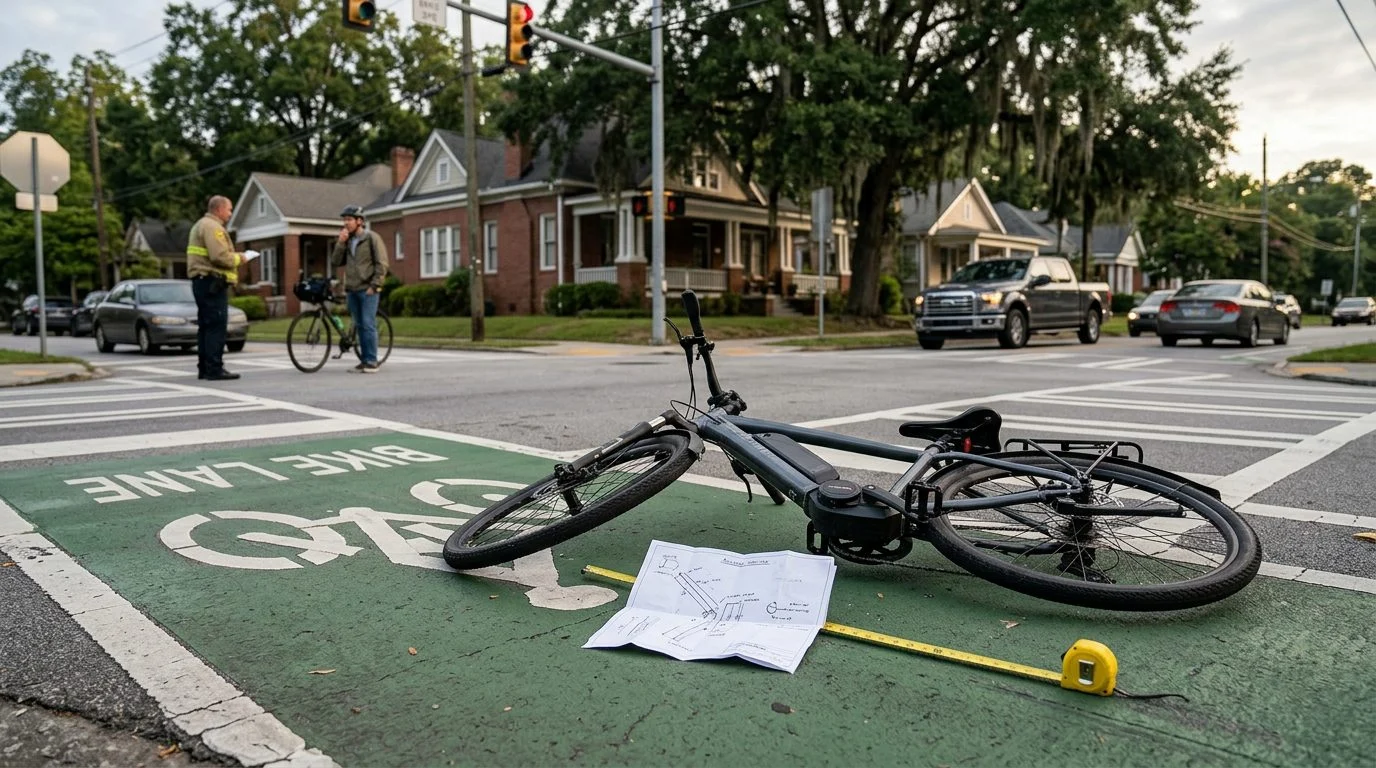
You were hurt on an e-bike, and now an insurer has sent a settlement offer, and it came fast. A first offer is rarely what the claim is worth, so an e-bike settlement offer that looks too low in Georgia deserves a second look before you answer it.
This page is for the person who was hurt and for the parent, spouse or adult child handling the calls, bills and letters. Here is what Big Insurance is doing, and how to respond.
Why a Low E-Bike Crash Offer Comes So Fast
A quick offer is often the cheapest number the insurer will ever put on your claim. Big Insurance wants to close the file before anyone knows the full medical picture.
In the first few weeks, nobody can say whether the wrist will need surgery, whether the headaches will last, or how many months of work are gone. An offer made in week one puts a price on none of that. It is an opening bid, not a final answer.
Big Insurance is not on your side. Its job is to pay as little as it can, so read every offer with that in mind.
Families feel pressure to take the first check. Bills keep arriving, and paychecks may have stopped. That pressure is part of the play. A check that lands when the rent is due can feel like relief, even when it is far less than the claim is worth.
If an insurer sent a quick offer after your e-bike crash, you don't have to decide alone. Contact T. Madden & Associates to review the offer, the coverage and the evidence. Talk it through with our team — the first consultation is free, confidential, and carries no obligation.
The Tactics Big Insurance Uses to Lowball an E-Bike Claim
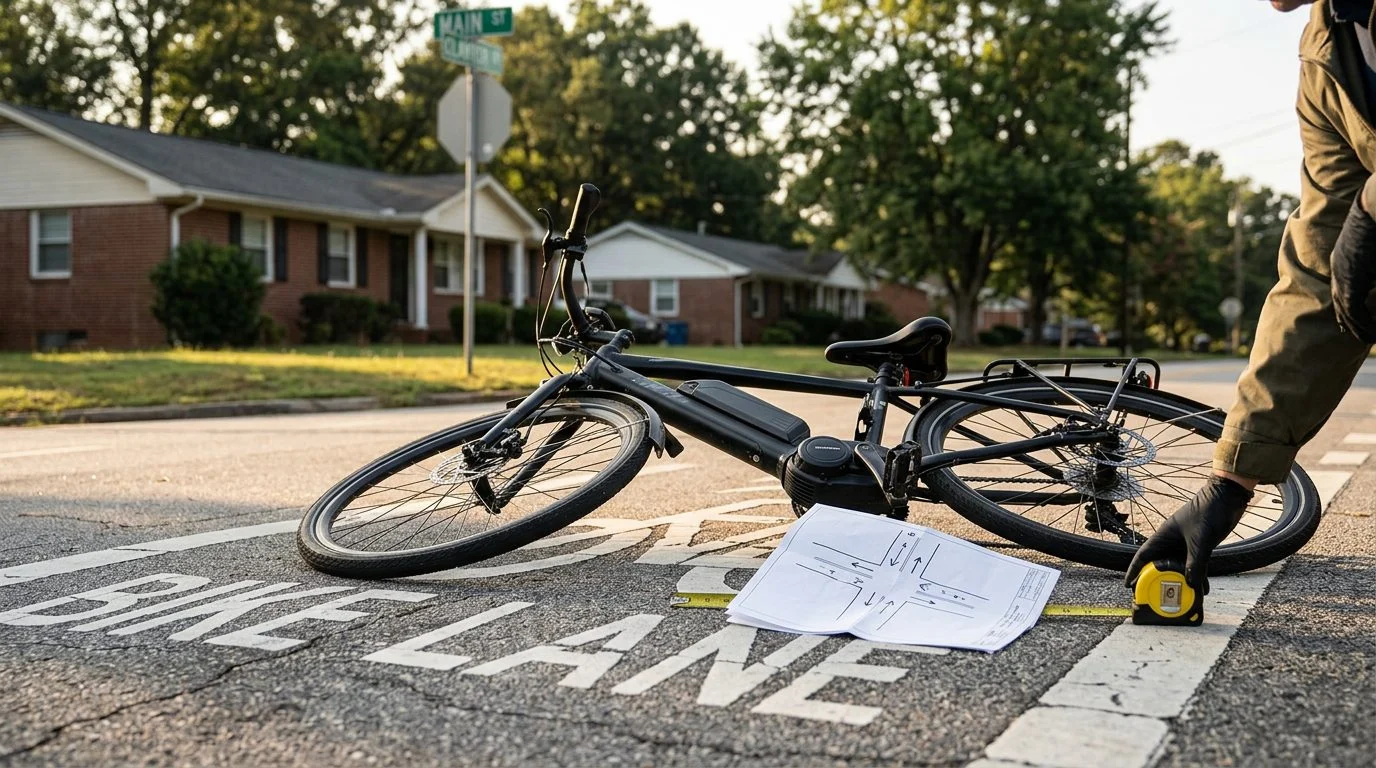
Big Insurance uses a short list of tactics to close e-bike claims for less than they are worth. Learn them, and you will spot them early.
- Early low offer. A quick check, often sent before treatment ends, framed as a fair deal to close the file.
- Recorded statement requests. The adjuster asks you to talk on tape. Words said in a rushed call can be used later to shrink the claim, so talk with the firm before you give one. Georgia’s insurance regulator advises people to avoid statements about fault after a crash (state auto claim tips).
- Delay. Slow replies, repeated requests for the same papers, and long waits that push families to take less.
- Disputing treatment. Claims that the injuries are minor, the bills are too high, or later care is not tied to the crash.
- Blame shifting. The insurer argues you were partly at fault. Georgia reduces damages by your percentage of fault (O.C.G.A. § 51-12-33), and a plaintiff who is 50 percent or more responsible recovers nothing.
Each tactic is a pressure point. The response is to slow down, put every request in writing, and build a clear record.
Why an Engineer’s Eye Matters When the Insurer Says ‘Low Impact’
The “low impact” argument is a physics question, and the evidence should answer it.
Before law school, Terance Madden trained as an electrical engineer. He starts a case by asking what the evidence shows and how the crash happened.
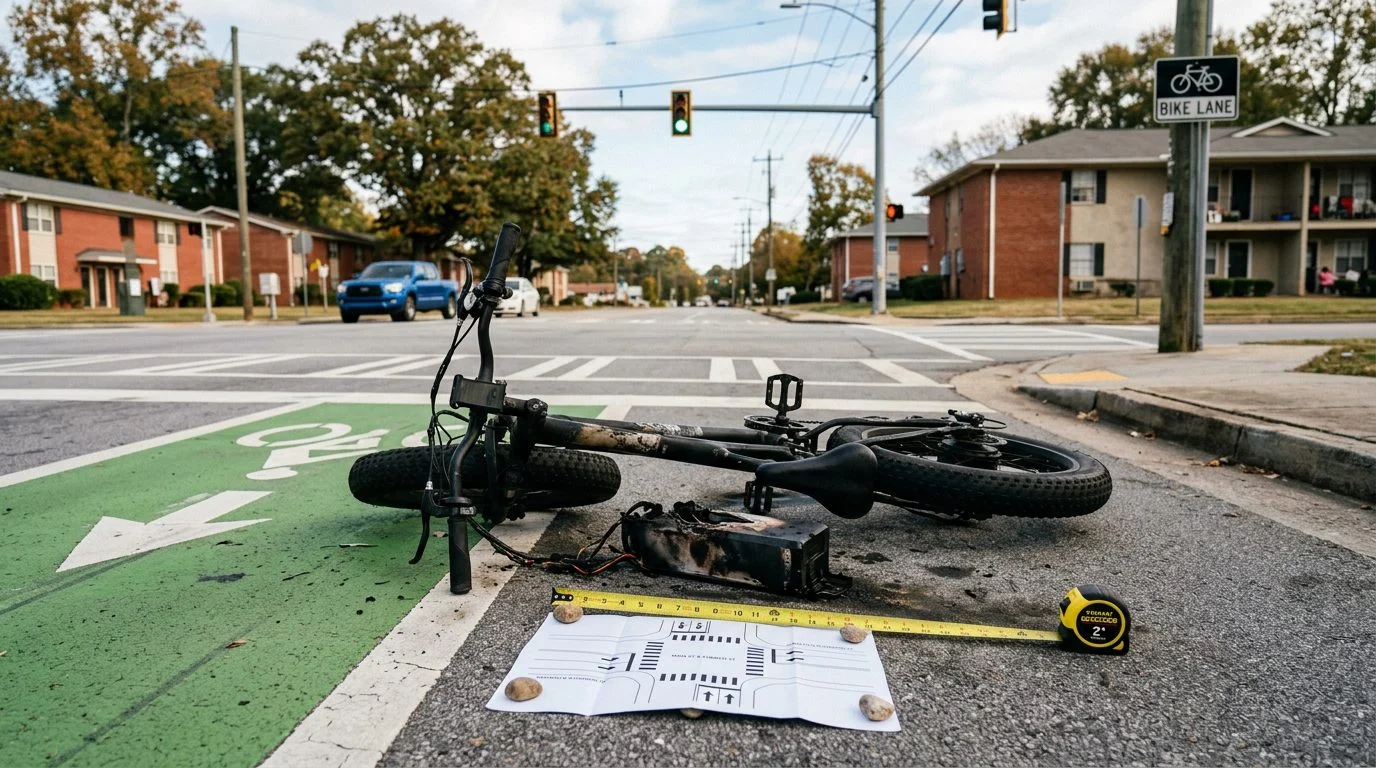
Speed, braking, the point of impact, and where the rider and bike came to rest show how hard the crash was. Those facts test a claim that a slow bike could not cause serious harm. If the battery, controller or wiring is involved, the evidence changes. Battery cells, charging circuits and the place a fire or failure began can point to a defect, and those records must be preserved.
Other parties can share responsibility.
Who Pays: Every Coverage Layer That May Apply
The firm looks at every insurance layer, not only the first policy the insurer names.
- Liability coverage. The at-fault party’s own policy pays for the injuries that party caused.
- Georgia auto policies must include an endorsement for uninsured motorist coverage, and the insured may choose uninsured motorist limits lower than the liability limits (O.C.G.A. § 33-7-11). Your own policy can respond when the at-fault driver has no insurance or too little. The policy wording controls.
- Umbrella and excess coverage. Extra layers above a primary policy. They can add money when the primary limit runs out.
- Corporate coverage. Policies held by a business whose vehicle, property or product was involved.
Your family may not know which policies apply until someone reads them. The firm reads every one.
Evidence to Protect Before the Bike Is Repaired or Sold
Protect the bike, the battery and the proof before anyone repairs, sells or throws them away.
- Report the crash to police and get the report number. Georgia’s regulator also advises prompt notice to police and to the insurer.
- Keep the e-bike, battery, charger and broken parts as they are. A repaired bike can hide the proof of how it failed.
- Photograph the scene, the bike, your injuries and any damage. Save the names and phone numbers of witnesses.
- Keep every medical record, bill and receipt. Start a written log of missed days and out-of-pocket costs. For help with missed work, read the lost wages guide.
What a Fair Claim Has to Cover: Lifetime Damages
A fair claim covers the full cost of the injury, including losses that have not happened yet.
Georgia separates general and special damages. The law presumes general damages flow from the wrong. Special damages, like bills and lost pay, must be proved with records.
Future medical care and lost earnings count as economic losses. Georgia lets the jury reduce those future losses to present value, using a 5 percent discount rate or another rate it finds right (O.C.G.A. § 51-12-13). Expect the other side to use that math to shrink the number, so check every figure.
Medical expenses are limited to the reasonable value of medically necessary care (O.C.G.A. § 51-12-1.1). Insurers use this rule to dispute treatment. Keep the records that show each visit was needed.
An offer made before the injury is understood rarely covers those future losses.
Not sure what your next step is?
Talk it through with our team — the first consultation is free, confidential, and carries no obligation.
If Your Case Goes to Court
Some cases do go to court.
If your e-bike crash involved a motor vehicle, Georgia sets rules for written settlement offers.
Your first consultation is free, confidential and comes with no obligation to continue.
When Your Loved One Is the One Hurt and You Are Managing the Recovery
The person handling the paperwork often carries the heaviest load.
If you are the spouse, mother, adult daughter or caregiver answering calls and opening insurance letters, you are the one Big Insurance will talk to most. Keep a log of appointments, medicines, missed work and every insurer request, with dates. Ask the insurer to put each request in writing, and keep copies of everything you send. For a full checklist, read the caregiver guide for e-bike crash recovery.
T. Madden & Associates has practiced since 1999. The firm has an office in Jonesboro, in Clayton County, along with offices in Atlanta, Decatur, Macon and Augusta.
Got a Low Offer? Talk to the Firm Before You Answer It
Do not answer a low offer on the spot. Read it, write down your questions, and get the full picture first.
Is the first settlement offer after an e-bike crash usually the final offer?
No. A first offer is rarely what the claim is worth, and you can ask questions in writing before you decide.
Do I have to give a recorded statement?
Talk with the firm first. Words said in a rushed recorded call can be used later to shrink the claim.
How long do I have to file an e-bike crash lawsuit in Georgia?
Georgia’s general deadline for injury claims is two years from when the right of action accrues; loss of consortium claims have four years, and injuries to reputation have one year (O.C.G.A. § 9-3-33). The right deadline depends on the facts, so act early.
If an insurer has just sent a quick offer after your e-bike crash, and you are deciding whether to accept it, answer a recorded statement, or wait, you do not have to make that call alone. Contact T. Madden & Associates to review the offer, the coverage and the evidence before you respond.