

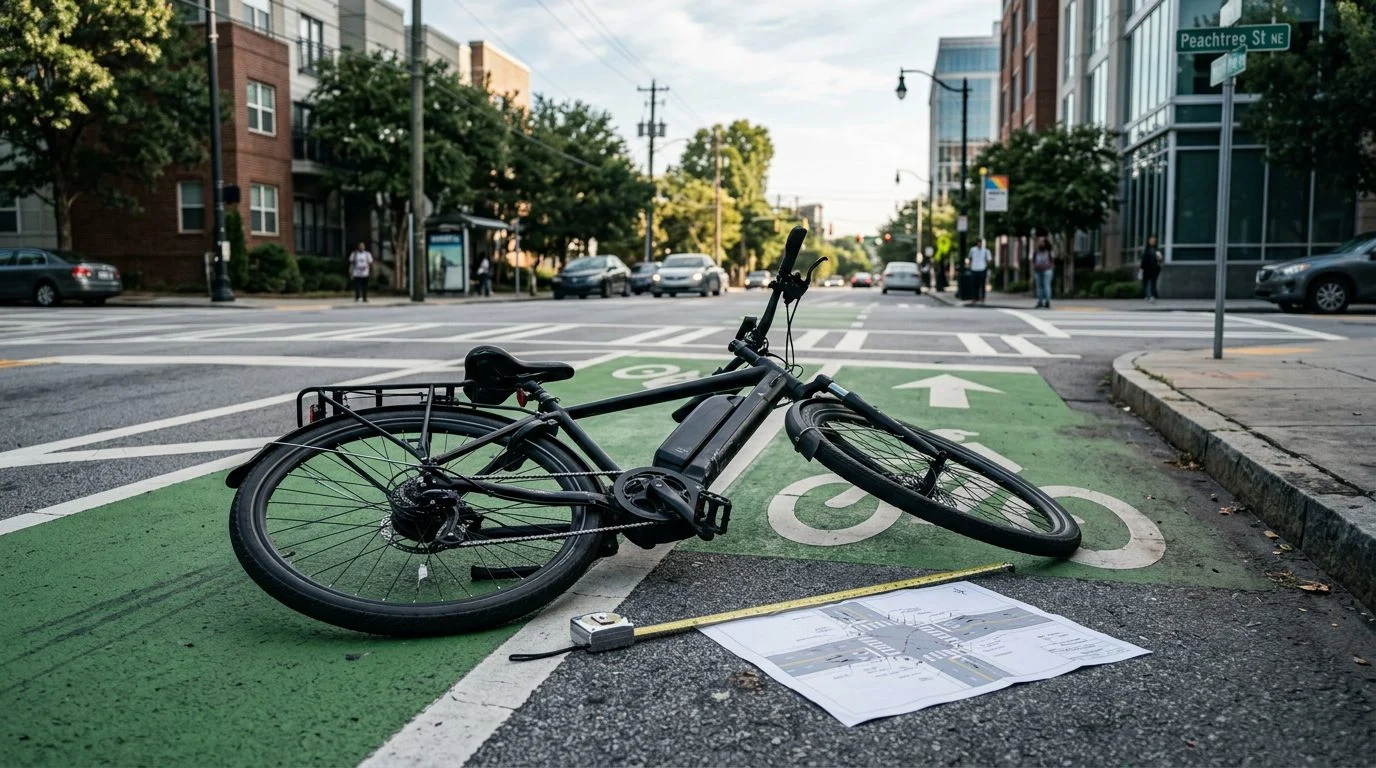
E-bike crashes in Georgia
Hurt on an e-bike? Put the speed and class evidence to work for your claim.
Clear answers about what to gather, how the bike's speed setting and class matter, and what the firm needs from you first.
By Terance Madden · Published November 13, 2026
You were hurt in a crash involving an e-bike, and you want to know if its speed or class matters. It can. If you were hurt in an e-bike crash, the bike itself can help explain what happened, because its motor settings and stored data may show how the crash unfolded.
Here is how an e-bike crash lawyer in Georgia reads that evidence, and what to do now.
Who This E-Bike Crash Page Is For
This page is for people hurt in a crash involving an e-bike. It is also for the spouse, mother or adult daughter who manages that person’s care, bills and paperwork.
If you’re the one keeping track of appointments and bills, you’re part of this claim too.
T. Madden & Associates, P.C. represents people hurt in e-bike crashes in Georgia. The firm has offices in Jonesboro, Atlanta, Decatur, Macon and Augusta, and it has been in practice since 1999.
The focus is on crashes where another person’s conduct, the bike’s equipment or a road hazard caused the injury. Speed and class often show who the evidence points to.
Why E-Bike Class and Motor Speed Matter in a Claim
Motor speed and class matter because they show how fast the bike could go. They also show what other road users had reason to expect.
E-bikes are often sold in three classes. Class 3 models assist to a higher top speed than Class 1 and Class 2 models.
Motor assist is the push the motor adds when you pedal or use a throttle. Top assisted speed is the fastest the motor will help the bike go.
Why does that matter? A driver who sees a rider holding a steady pace reads the road differently than one who sees a rider suddenly speed up. Speed changes what a reasonable driver expects.
The bike’s controller, display and phone app may store speed, assist level and ride history. That data can show whether the motor was helping, how fast the bike was moving and whether settings had been changed.
Liability is the legal responsibility for the harm. Speed data does not decide liability alone, but it often shapes the picture a jury sees.
Crashes the Firm Pursues
The firm pursues e-bike crashes where another party’s conduct, equipment or road condition caused the injury.
- A driver turns across a rider’s path, pulls out of a driveway or opens a door into a bike lane.
- A driver passes too close, cuts into a lane or strikes a rider from behind.
- A road hazard, such as a pothole, debris, broken pavement or poor lighting, that someone responsible for the road knew about or should have fixed.
- An equipment failure: brakes, throttle, battery, charger or controller problems, or an aftermarket speed kit that changes how the bike performs.
Georgia also looks at the rider’s own share of fault. Under the state’s Georgia fault apportionment statute, the award shrinks by the rider’s percentage of fault. A rider who is 50 percent or more responsible may not recover any damages.
The firm reviews the facts honestly, including any mistake the rider made, and explains how that rule applies.
Other Parties Who May Be Liable
Other parties besides the driver can be liable. This can happen when a battery, motor or controller fails, or when someone changes the bike’s speed.
The list can include battery, motor and controller makers, parts suppliers, repair shops, retailers and anyone who altered the speed settings or installed a kit. Under the same Georgia fault apportionment statute, the jury weighs the fault of everyone who contributed to the injury, whether or not they were named in the suit.
More liable parties can mean more insurance that may respond to your losses.
If the driver was working for a company, the company may be part of the claim. See Quynn v. Hulsey.
Terance Madden’s engineering training helps here. A failed battery or controller can leave physical signs, such as heat damage, burned connectors or fault codes, that show what failed and when.
Keep the bike, battery and charger as they are. Don’t repair, sell or throw them away until the firm has reviewed them.
How an E-Bike Speed Claim Moves Forward
A claim moves in clear steps. It starts with the facts, then the evidence, then the demand and negotiation.
- Start with the crash date, location, bike make and class, and your injuries.
- Preserve evidence: photos, the bike, battery, app or display data, phone records, witness names and medical records.
- The firm reviews the scene and the bike data, and identifies every liable party and coverage layer.
- Treatment is documented, including the lasting effects of head, spine and other serious injuries.
- A written demand goes to the responsible insurers, followed by negotiation.
- If a fair resolution is not offered, the firm files suit and prepares the case as if it will go to trial.
Deadlines matter. Georgia’s general deadline for most injury lawsuits is two years, under O.C.G.A. § 9-3-33 (Kenneth B. Cameron v. Jmp Pizza, Inc (2026)). Claims against a city, county or the state require written notice (called ante litem notice) within much shorter periods, and exceptions such as tolling can change the deadline.
Most claims take months. Serious injury cases can take longer.
How Big Insurance Handles E-Bike Claims
Big Insurance is not on your side. A first offer is rarely what your claim is worth. Since 1999, the firm has handled injury claims for people across Georgia, and it explains each step as the case moves forward.
Expect these tactics:
- A fast, low offer, often before the full medical picture is known.
- A recorded statement taken early, when you may be in pain and on medication.
- Delays while records are requested, followed by more requests.
- Disputes over whether your treatment was needed or the charges were reasonable.
- The “low impact” argument, or the claim that the bike was simply going too fast.
The response is to pursue every coverage layer. That includes the at-fault driver’s liability policy, your own uninsured or underinsured motorist coverage where it applies, umbrella and excess policies, and corporate policies. Georgia’s uninsured motorist statute sets out the coverage terms auto policies must contain.
Georgia also sets rules for motor vehicle settlement offers. An attorney-prepared offer must give a payment date at least 40 days after it is received. See the Georgia settlement offer statute.
General damages, such as pain and suffering, are presumed to flow from the crash. Special damages, such as medical bills, must be proved under the Georgia damages statute. Future care can be part of a claim, and the firm looks at what future medical needs may cost as it evaluates a case.
Why T. Madden & Associates, P.C. Handles These Cases
T. Madden & Associates, P.C. has been in practice since 1999. The firm is led by attorney Terance Madden.
Before he works a case, he asks what the controller, battery and app data show. He also asks how the crash physically happened and which records must be preserved.
The client may still be responsible for court costs and case expenses.
The Terance Madden Foundation supports community work in the places the firm serves. The case work comes first.
Common Questions About E-Bike Speed and Class Claims
Can I still make a claim if my e-bike is a Class 3 model?
Yes, you can still bring a claim. Class is one factor in the evidence, and it does not decide the claim by itself.
Does not wearing a helmet hurt an e-bike claim?
Helmet use is one fact the firm reviews along with the crash and the injuries.
Can the insurer use e-bike app data against me?
Device and app data can be read in more than one way. The firm reviews that data before anyone relies on it.
I was hit by a drunk driver while riding. Do I have a claim?
You may have a claim against the impaired driver. The firm can review what happened and which records exist.
Is the first consultation free?
Yes. The first consultation is free, confidential and without obligation to continue.
How long do I have to file?
Georgia generally requires an injury lawsuit within two years. Damage to property, such as the bike, generally has four years.
Your Next Step After an E-Bike Crash
If someone else’s conduct, equipment or a road hazard hurt you on an e-bike, the evidence is at risk right now. The bike, the battery and the app data can change or disappear if no one acts.
You already have a lot to manage. You don’t have to sort out the evidence alone. Contact T. Madden & Associates, P.C. any time, 24/7, to start a free case evaluation and schedule a free consultation.