

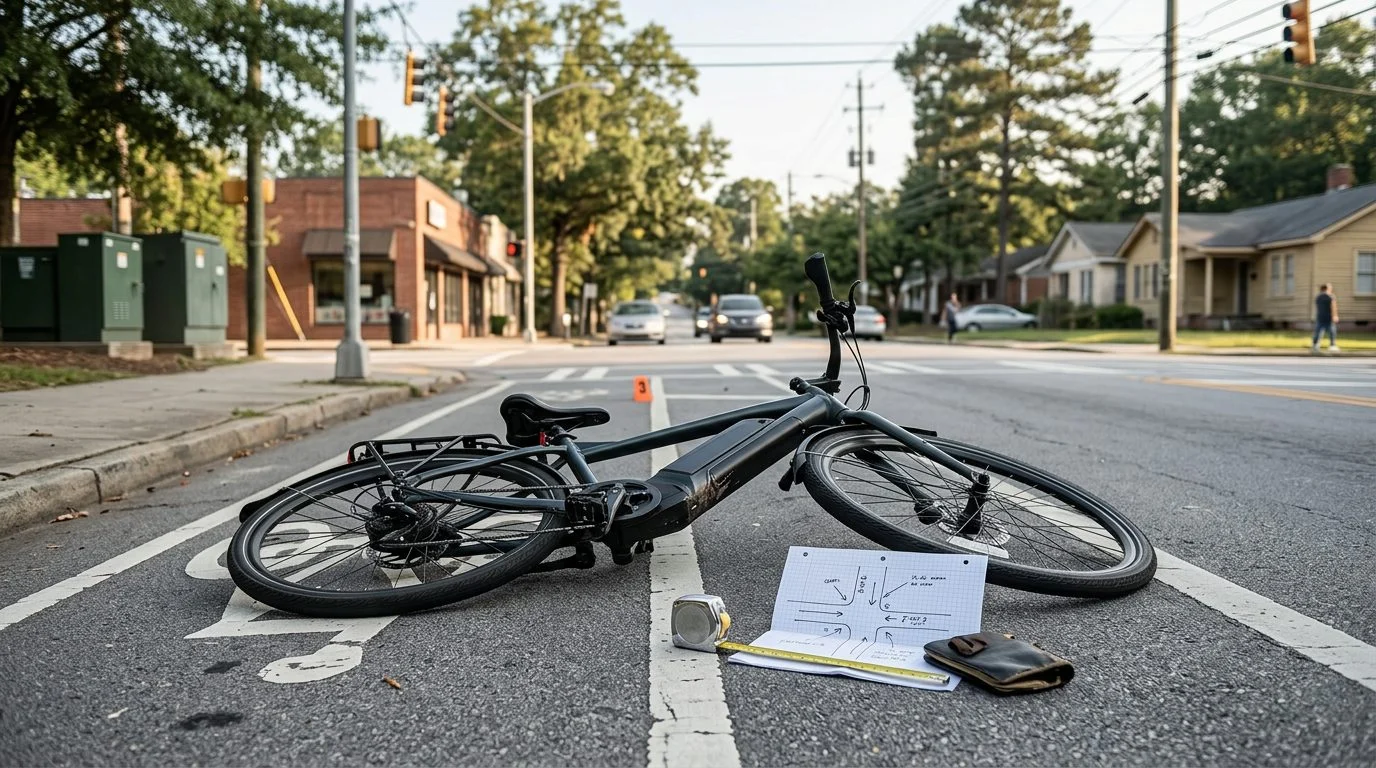
E-Bike Crash Help in Georgia
Hurt on an E-Bike? Medical Bills Shouldn't Pile Up While You Heal
Hospital statements, provider liens and collection calls can arrive while you are still recovering. Here is how to keep them organized and under control.
T. Madden & Associates, P.C.
1999
In practice since
Georgia
Offices in Jonesboro, Atlanta, Decatur, Macon and Augusta
24/7
Call us anytime
By Terance Madden · Published November 21, 2026
Your loved one was hurt in an e-bike crash, and now the bills are stacking up. Someone in the family is probably opening envelopes, calling billing offices and tracking what has been paid.
Here’s the short answer. Medical bills after an e-bike crash in Georgia can be paid by health coverage, by the at-fault party’s insurance, or from a settlement. A medical lien is a legal claim by a provider against money from your case, so it has to be dealt with before that money is divided.
Why the Bills Pile Up After an E-Bike Crash
Bills pile up fast because one bad day can bring an ambulance ride, an emergency room visit, scans and sometimes surgery. Follow-up visits, physical therapy and prescriptions come next, often for months.
Bills usually arrive before anyone has decided who pays. The person handling them is often a spouse, a mother or an adult daughter. They make the calls, ask what was billed and ask what was paid. It is hard work, and it happens while the injured person is still healing.
Many families put the envelopes aside. That’s a mistake. A missed bill can turn into a collection notice, and that can turn into a bigger problem.
Start with three questions. What is owed? Who is owed? What deadlines apply? Answer them in that order, and the pile gets smaller. Put the itemized bills, insurance cards and every letter from a provider or plan into one folder. That folder is the starting point for every step below.
If someone else's reckless choice left your family holding these bills, our team can walk through what's owed and what may be recoverable. Talk it through with our team — the first consultation is free, confidential, and carries no obligation.
What a Medical Lien Is and Why It Matters
A medical lien is a legal claim that ties a provider’s bill to money from your case. “Lien” means a claim on money or property to secure a debt. In an injury case, the money is the settlement or the judgment.
That’s why a lien matters at the settlement table. It can change how much you keep. A provider may assert a lien, so the bill can follow the money.
A common mistake is paying a lien in full before asking for the itemized bill. Ask for the lien notice, the itemized charges and the amount claimed. Then compare them line by line.
Georgia’s medical damages law also reaches care given under a letter of protection. That’s a promise to be paid from a settlement instead of up front. The letter, the itemized charges, any sale of the bill to a third party for less than the invoice price, and any referral to the arrangement can all be requested in a lawsuit O.C.G.A. § 51-12-1.1.
Liens Are Not the Same as Health Plan Claims
A health plan claim and a provider lien are different, even though both want money back from your case. A lien comes from the doctor or hospital that treated you. A health plan claim comes from the plan that paid for your care.
Read the plan documents. The plan’s own terms often decide what it can claim back. For a closer look at who covers what, see who pays after an e-bike crash.
Government coverage follows its own rules. When someone on Medicare is hurt in a crash involving liability insurance, that insurance pays first for the crash-related care, and Medicare pays second (CMS Medicare Secondary Payer overview). Medicare may make a conditional payment, which must be repaid when a settlement is made. Federal law takes precedence over state laws and private contracts.
Medicare’s letter is not the final number. Medicare may keep paying while the claim is pending. No formal recovery demand comes until there is a settlement, judgment or other payment (CMS Attorney Services).
Medicaid works differently. The recipient assigns certain rights to the state. The state keeps the part of any collected money it needs to repay its medical assistance payments, and the rest goes to the person (42 U.S.C. § 1396k).
Gather every bill, letter and lien notice before a settlement is discussed. Missing papers slow everything down.
How Big Insurance Handles Bills and Liens in an E-Bike Claim
Big Insurance is not on your side, and a first offer is rarely what your claim is worth.
Big Insurance wants to pay as little as it can. Expect a few common moves. An early low offer, made before the full course of treatment is known. A request for a recorded statement while you’re still on medication. Questions about gaps in treatment. Arguments that the bills are too high. A “low speed” or “minor impact” argument about the crash. Delays that stretch the claim while bills keep coming in.
Georgia’s settlement-offer law for motor vehicle collision claims sets rules for written offers. For written offers prepared by or with the assistance of an attorney on behalf of a claimant or claimants, made before the named defendant files an answer (or, if there are multiple named defendants, before all named defendants have filed their initial answers or been found in default), the payment date must be not less than 40 days from receipt of the offer (O.C.G.A. § 9-11-67.1).
The response is to pursue every layer of coverage. That includes the at-fault party’s liability coverage, your own uninsured or underinsured motorist coverage (UM/UIM) where it applies, any umbrella or excess policy, and corporate coverage when a company or a defective product is part of the crash.
Serious injuries carry lifetime costs. If care is needed for years, the claim has to count that future care, not just the bills so far. From the first call, the firm looks at what the evidence shows and how the injury happened.
How Georgia’s Fault Rules Shape an E-Bike Claim
Georgia uses a shared fault rule. If you are 50 percent or more at fault, you cannot recover damages (O.C.G.A. § 51-12-33; Quynn v. Hulsey (2020)). Shared fault means the blame is split among everyone responsible.
The jury sets a percentage of fault for each person involved. The judge then reduces your award by your share.
Each person found liable pays only its own share. The shares are not joint, so each one matters. The jury must also consider the fault of everyone who contributed, even someone who was never sued.
That matters in an e-bike case. The at-fault party may be a driver, a property owner, a business, or the maker of a defective battery or charger.
Terance Madden trained as an electrical engineer, so he starts with the hardware. He looks at battery cells, charging circuits and certification marks to see whether a defect helped start a fire or cause a crash. Fire-origin work traces where a fire started. The battery, the charger and the records of how they were used should be preserved early.
How Liens Are Paid From a Settlement
Money from a settlement is sorted in order. First come the attorney fee and case costs. Then come the liens and reimbursement claims. The injured person’s share comes last.
Georgia limits the medical expenses you can recover as damages to the reasonable value of medically necessary care, and the jury decides that amount (O.C.G.A. § 51-12-1.1).
Check each lien and reimbursement claim against the bills. Ask whether the amounts are accurate. Where the law allows, negotiate them down.
Not sure what your next step is?
Talk it through with our team — the first consultation is free, confidential, and carries no obligation.
Frequently Asked Questions
What happens if I don’t pay my medical bills in Georgia?
Unpaid bills can go to collections and can hurt your credit. A provider with a valid lien may look to your settlement for payment.
How do you get a medical lien removed?
A lien can be checked for accuracy, filing and amount, and a provider may agree to reduce or release it after review. Whether that works depends on the facts of your case.
What is the statute of limitations for medical bills in Georgia?
For an injury lawsuit, Georgia generally gives two years after the right of action accrues, which means after the claim arises (O.C.G.A. § 9-3-33). A bill’s collection timeline is a separate question.
How long is a lien valid in Georgia?
Lien timing depends on the type of lien, so start with the lien notice and any filing dates.
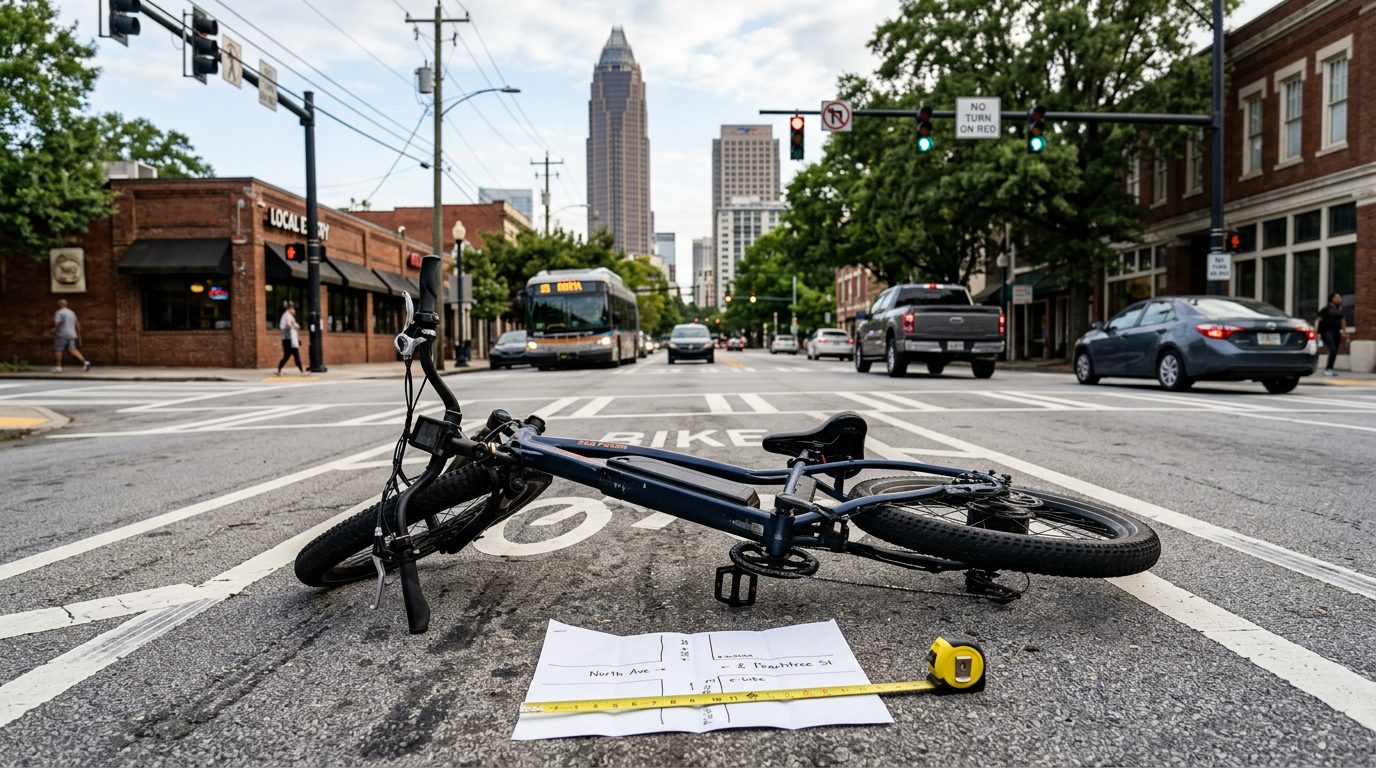
What Happens to Medical Bills in an Injury Claim
If someone else’s reckless choice caused your e-bike crash, you may have a claim that can help cover these bills.
You’re juggling bills, work and appointments while someone you love heals. You don’t have to sort out the liens alone.
The firm has practiced since 1999 and has its office in Jonesboro, in Clayton County. Terance Madden is the responsible lawyer for this page. The first consultation is free, confidential and carries no obligation to continue.
To start a free case evaluation, reach out today.