

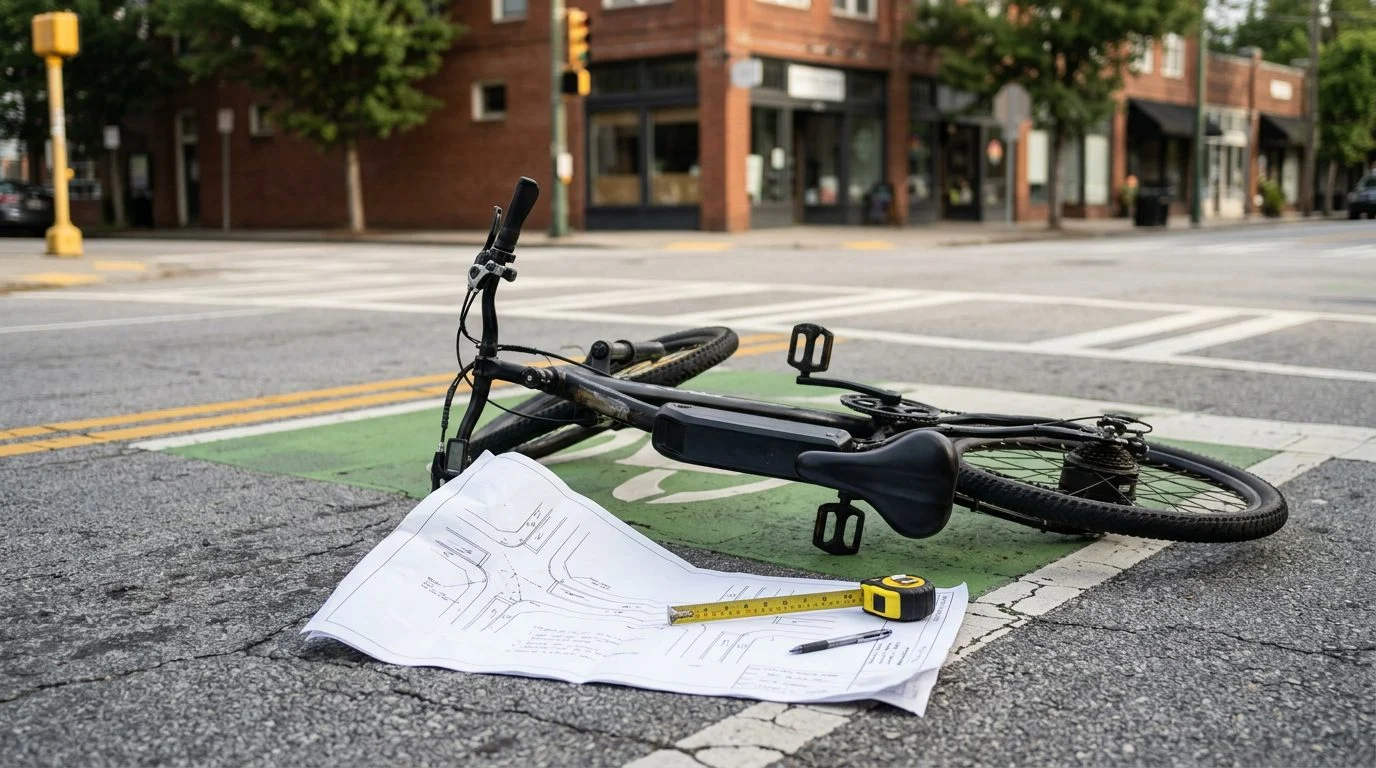
Off-brand e-bike injury claims · Jonesboro, Atlanta, Decatur, Macon and Augusta
Off-Brand E-Bike Injury Lawyer in Georgia: Who Is Liable?
Cheap batteries, chargers and parts can fail in ways the rider never sees coming. The people who made, sold or imported them may be answerable.
T. Madden & Associates, P.C.
1999
Year the firm began practice
5
Georgia offices
24/7
Call us any time
By Terance Madden · Published November 16, 2026
Your e-bike crashed, caught fire, or threw you hard onto the pavement. Now there are bills, insurance calls and questions you never expected to ask.
Here’s the short answer: more than one party can be responsible. That can include a careless driver, the company that made or sold an off-brand bike, battery or charger, and others in the chain. The facts decide which ones.
What Counts as an Off-Brand E-Bike, and Who This Page Is For
An off-brand e-bike is one whose maker, importer or seller is hard to trace. It may also be a bike, battery or charger with no clear safety mark or recall history.
- A bike sold under a name nobody can trace to a real company.
- A battery or charger bought separately, online, with no safety mark on the label.
- Parts added later from a seller nobody can identify.
This page is written for two readers. One is the rider who was hurt. The other is the spouse, mother or adult daughter who now handles appointments, bills and calls from insurers.
Many of these bikes were bought to save money or get around town. Nobody picks a fire or a bad fall. Traffic rules for e-bike riders can also shape who is at fault, so the rider’s own riding is part of the review.
Hurt in an off-brand e-bike crash, fire or fall? More than one party may be responsible, and you don't have to sort it out alone. Call us to talk through the facts. Talk it through with our team — the first consultation is free, confidential, and carries no obligation.
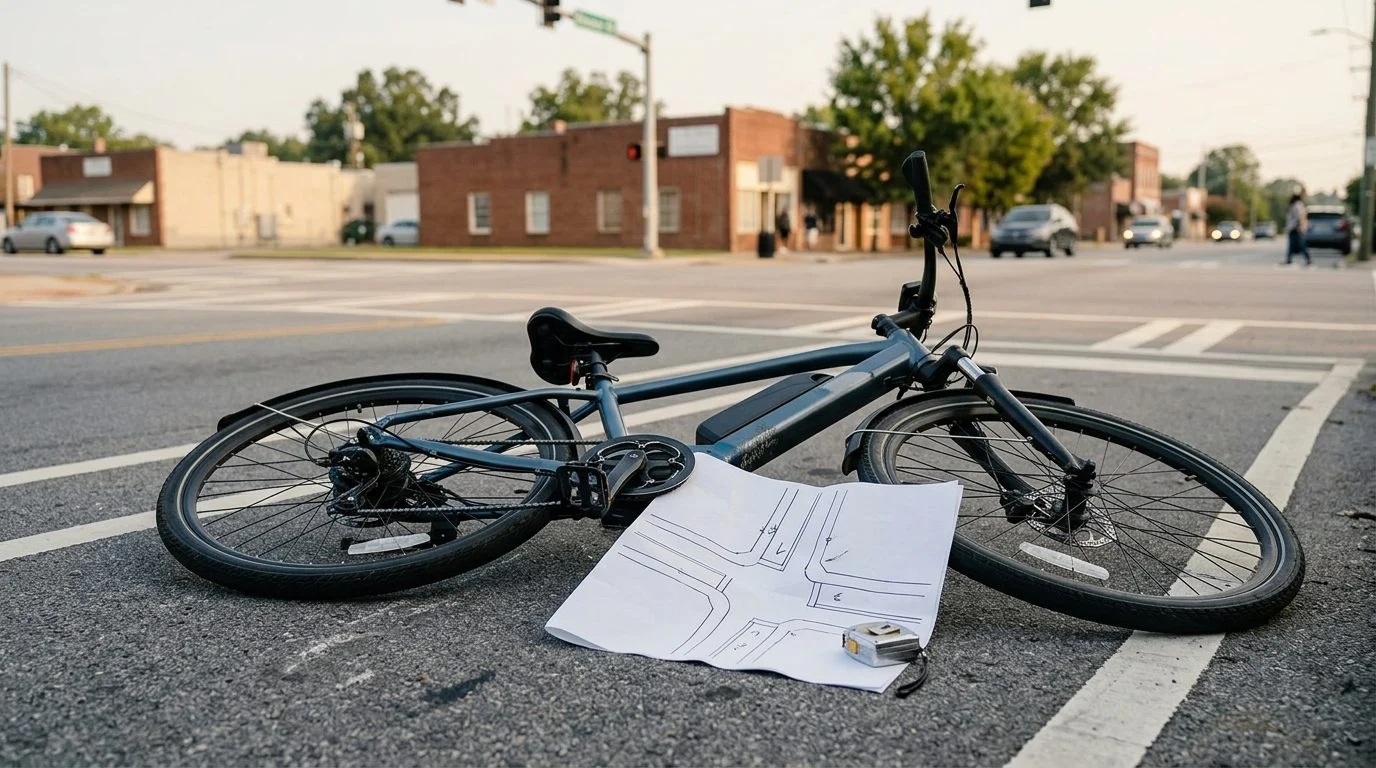
Who Can Be Liable When an Off-Brand E-Bike Hurts Someone
Liability means legal responsibility for harm. In one crash, fire or fall, it can fall on several parties.
- The driver whose careless turn or lane change hit the rider.
- The manufacturer, the company that designed or built the bike, battery or charger.
- An importer or brand owner that put its name on a product made by someone else.
- A seller or repair shop that installed, altered or repaired the parts.
- A property owner whose broken path or unsafe ramp caused the fall.
Georgia treats a manufacturer and a product seller differently. Under O.C.G.A. § 51-1-11.1, a product seller is not a manufacturer for strict liability (responsibility for a defect without proof of carelessness). Under O.C.G.A. § 51-1-11.1, a product seller is a person who, in the course of a business, sells, distributes, labels, markets, or assembles a product pursuant to a manufacturer’s plan, intention, design, specifications, or formulation, or otherwise is involved in placing a product in the stream of commerce, as Alltrade, Inc. v. McDonald explains. That’s why the name on the label matters.
Can you sue a cyclist? A claim goes against whoever’s careless conduct caused the harm, and that can include another rider.
Fault can also be split. Under O.C.G.A. § 51-12-33, the judge reduces your damages by your own share of fault. Each liable party pays only its own share. If you are 50 percent or more responsible, you recover nothing.
Product Liability vs. a Driver Claim: What Has to Be Proven
A product liability claim says the product was defective and the defect caused the injury. A driver claim asks whether a driver’s carelessness caused the harm. Some cases involve both.
Under O.C.G.A. § 51-1-11, a manufacturer can be liable to a person injured by a product sold as new. That happens when the product, as sold by the manufacturer, was not merchantable and reasonably suited to the use intended, and that condition caused the injury.
In plain words, the product was not safe for the job it was built to do. E-bike crashes can involve several kinds of defects, including the following:
- A battery cell that fails, sparks or burns.
- A charger that overheats while plugged in.
- A frame, fork or brake part that breaks during normal riding.
The evidence can show whether a defect played a role in the crash. Look for battery labels and cell markings, charger ratings, fire patterns that show where a fire started, the battery management system if it survived (the circuit that watches charge and heat), and any recognized safety mark.
The same statute sets a ten-year limit from the first sale for many product claims. Under O.C.G.A. § 51-1-11, nothing in the ten-year limit relieves a manufacturer from the duty to warn of a danger arising from use of a product once that danger becomes known to the manufacturer; see Chrysler Corp. v. Batten, 264 Ga. 723 (1994). The statute does not relieve a manufacturer from the duty to warn of a danger arising from use of a product once that danger becomes known to the manufacturer, and Chrysler Corp. v. Batten is the Georgia Supreme Court decision on this point.
Before law school, Terance Madden earned a B.S. in Electrical Engineering, and he starts every case by asking what the evidence shows. With a battery fire, that means the cells, the charging circuit, the certification marks and the origin-and-cause work that traces where the fire began. He also works to make sure the product and its data survive.
T. Madden & Associates, P.C. has been in practice since 1999. The firm has offices in Jonesboro, Atlanta, Decatur, Macon and Augusta, and it handles lithium battery fire, product liability and e-bike claims.
Evidence to Protect Right After an Off-Brand E-Bike Crash or Fire
The first thing to protect is the bike, battery and charger, exactly as they are.
- Don’t repair, recharge or throw away a damaged battery, even if it looks ruined. Keep it away from people and anything that can burn.
- Save receipts, order confirmations, seller listings, screenshots, serial numbers and every message with the seller or brand.
- Photograph the scene, the damage, any scorch marks, and the road or path. Note any camera or doorbell that may have caught the moment.
- Write down witness names and phone numbers.
- Track every medical visit, bill, missed workday and symptom. These show the real cost of the injury.
Why move fast? The bike, the battery and its data can be lost, altered or sent back to the seller. The claim depends on what survives the crash or fire.
How Big Insurance Handles an E-Bike Claim, and What Covers You
Big Insurance is not on your side, and its first offer is rarely what your claim is worth. The firm knows how to pursue what is owed.
Expect these tactics:
- A quick, low offer made before the full medical picture is known.
- A recorded statement requested early, while you are still hurting and still learning the facts.
- Delays in answering or paying, which push you to take less.
- Disputes over whether a treatment was needed or caused by the crash.
- “Low impact” or “the battery didn’t cause it” arguments, made without the evidence.
The response is to pursue every layer of coverage and to prepare the claim as if it will go to trial. Check each source:
- The at-fault driver’s liability policy.
- Your own auto policy. Under O.C.G.A. § 33-7-11, an automobile liability policy issued or delivered in this state to a vehicle’s owner, or by a Georgia-licensed insurer on a vehicle principally garaged or principally used in this state, is generally required to include uninsured motorist terms, unless the insured rejects that coverage in writing, and the insured may choose uninsured motorist limits lower than the liability limits. Those terms can cover injuries from an uninsured driver.
- A homeowner’s or renter’s policy, where it applies.
- An umbrella or excess policy.
- Corporate coverage from the maker, importer or seller.
Serious injuries can carry long-term costs. Medical bills are limited to the reasonable value of medically necessary care, under O.C.G.A. § 51-12-1.1. Engineering matters here too. Brakes, tires, batteries, chargers and maintenance vendors can each be another liable party, which can mean another source of insurance.
How the Process Works, What to Expect, and How the Fee Works
The first consultation is free, confidential and carries no obligation to continue. From there, the claim moves through six steps:
- Talk through the facts, the injuries and any insurance calls so far.
- Review the crash or fire facts, medical records and insurance information. Identify every party that may be responsible.
- Review the evidence, including an engineering read of the bike, battery and charger when the product is involved.
- Present the claim to the responsible parties and their insurers, with demands tied to documented losses.
- Negotiate, and explain every offer in plain English before you decide.
- If the claim does not settle fairly, prepare it as if it will go to trial.
Timing depends on the facts: the injury, medical recovery, the number of parties and whether the claim goes to court. Georgia also sets a filing deadline. Under O.C.G.A. § 9-3-33, an action for injuries to the person generally must be brought within two years after the claim accrues (starts), with exceptions the law sets out.
Not sure what your next step is?
Talk it through with our team — the first consultation is free, confidential, and carries no obligation.
Frequently Asked Questions About Off-Brand E-Bike Claims in Georgia
Can you sue a cyclist for hitting you?
Yes, when that rider’s careless riding caused the harm. Fault can be shared among everyone who contributed.
Who is liable if a battery catches fire on its own?
Possible parties include the maker, the importer, the seller and the makers of parts. The evidence decides who.
Do I have to prove the bike was defective?
The claim turns on what caused the failure. That is why keeping the bike, battery and charger intact matters.
If Someone You Love Was Hurt in an Off-Brand E-Bike Crash
The person managing the recovery needs one simple system, a clear list of who may be responsible, and a plan for insurance calls.
If you’re the spouse, mother or adult daughter handling this, you’ve likely become the family’s paperwork desk. Start with these habits:
- Keep one folder for bills, records, discharge papers and receipts.
- Keep a notes page for every insurance call, with the date, the caller’s name and what was said.
- Ask for time before any recorded statement, and talk through the facts first.
If your loved one has Medicare, ask which bills Medicare already paid. Medicare can make a conditional payment, which is a payment it expects to be repaid from a settlement or judgment. When liability insurance is involved, that insurance generally pays first, and Medicare pays second, under CMS secondary payer guidance.
You may still be gathering facts, and you may not be ready to hire anyone. That’s a normal place to be.
If the crash, fire or fall involved an off-brand e-bike, battery or charger, you don’t have to sort out who is responsible alone. Start a free case evaluation with T. Madden & Associates, P.C. The firm is available 24/7.