

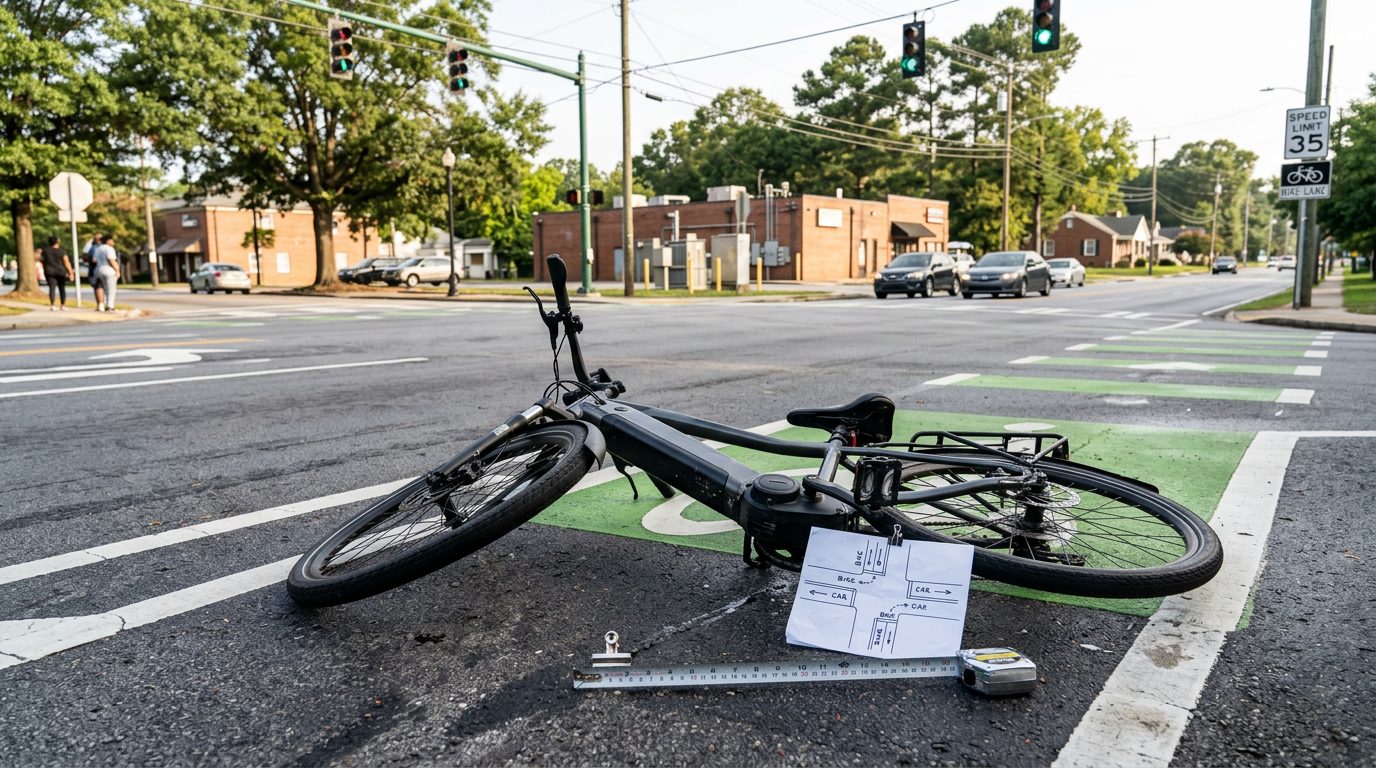
E-Bike Crash Claims in Georgia
Hurt on an E-Bike? Find Out How Your Medical Bills Get Paid
A provider may have a claim against your settlement. Learn what that means for you, and what to check before you sign anything.
T. Madden & Associates, P.C.
1999
Year the firm began practice
Free
First consultation, confidential, no obligation to continue
24/7
Call us anytime
By Terance Madden · Published November 18, 2026
If a lien letter arrived after your e-bike crash, you’re not alone in wondering what it means. A medical lien is a legal claim that a provider can make against the money you recover from the at-fault party. It does not make you pay that provider from your own pocket just because the lien exists.
The amount can be reviewed, and it is often negotiated before any money moves. Here is how liens work and what to do with that letter.
What a Medical Lien Is, in Plain Words
A medical lien is a claim on your injury money, tied to your case rather than your bank account. The provider or payer making the claim is the lien holder.
A settlement is an agreed payment that ends your claim without a trial. Your lawyer and the other side negotiate it, and the lien gets paid from what comes out of that deal.
A lien letter is a notice, not a final bill. It tells you someone wants money from your recovery. It does not prove the amount is right.
Read the letter closely. Look for the provider’s name, the dates of care, the amount claimed, and what the claim covers. Those details tell you what to check next.
If a lien letter arrived after your e-bike crash, you don't have to sort out who gets paid alone. Start a free case evaluation and talk through the letter with the firm. Talk it through with our team — the first consultation is free, confidential, and carries no obligation.
Which Georgia Providers Can Claim a Lien
A lien is worth checking, not just accepting.
Some providers treat an injured person under a letter of protection. That is a written promise to wait for payment until the case settles or ends in judgment.
Georgia also sets the measure of medical costs. Under O.C.G.A. § 51-12-1.1, medical costs in an injury case are limited to the reasonable value of medically necessary care. The jury or judge, called the trier of fact, decides that amount.
Discoverable means the other side can request them in the case.
Ask for four things: the actual lien filing, the itemized bill, any letter of protection, and the explanation of benefits from your health plan. The filing shows what is claimed and when. The bill shows each charge. The letter shows the promise. The explanation of benefits shows what insurance already paid. The firm reviews each one.
Liens Are Not the Same as Health Plan Claims
A health plan reimbursement claim asks you to pay back money the plan spent on your care. It is separate from a provider lien, and both can apply to the same settlement.
This works through subrogation, meaning the plan’s right to step into your claim and recover what it paid. Each plan’s contract sets its own terms, so the plan documents matter.
If you have Medicare, federal rules apply. The Centers for Medicare & Medicaid Services (CMS) says a liability insurer pays first for crash-related care, and Medicare pays second. See the CMS Medicare Secondary Payer overview.
When that insurance does not pay promptly, Medicare may make a conditional payment. That is a payment it makes now that must be repaid when a settlement, judgment or other payment is made. See CMS on Medicare’s recovery process.
Medicare.gov notes that a provider may bill Medicare if an insurer does not pay within about 120 days. CMS also says federal law takes precedence over state laws and private contracts.
The conditional payment letter is not the final number. Medicare may keep paying while the claim is pending. CMS does not issue a formal recovery demand until there is a settlement, judgment or other payment, according to CMS on attorney services.
Government programs and employer plans can have repayment rights too. Their terms vary, so each one needs its own review.
How Liens Are Paid From a Settlement
Liens are paid out of the settlement, in a set order, after the case costs and fee are handled under the written agreement. What remains goes to you.
The firm works on a no-fee-unless-we-win basis. You may still be responsible for court costs and case expenses, as the written agreement states.
Lien amounts are often negotiated, reduced or compromised. The firm handles those talks for the client, so you are not left to bargain with a provider alone.
A settlement is usually not paid out until liens are addressed. That is why an open lien can slow down your check, even after the other side agrees to pay.
Big Insurance Will Test Every Dollar of Your Bills
Big Insurance is not on your side, and its first offer is rarely what your claim is worth.
Expect a low first offer. Expect an early request for a recorded statement, slow-moving records, and the argument that some treatment was not caused by the crash. Expect “low impact” talk, the claim that an e-bike was going too slowly to cause real harm.
Your response is to pursue every coverage layer. That includes the at-fault driver’s liability policy, uninsured or underinsured motorist coverage on your own auto policy where it applies, any umbrella or excess coverage, and corporate policies of other liable parties, such as a battery or product maker.
Big Insurance may also argue you were partly at fault. Under O.C.G.A. § 51-12-33, your damages are reduced by your percentage of fault. You recover nothing if you are 50 percent or more responsible.
How Engineering Training Shapes the Evidence Review
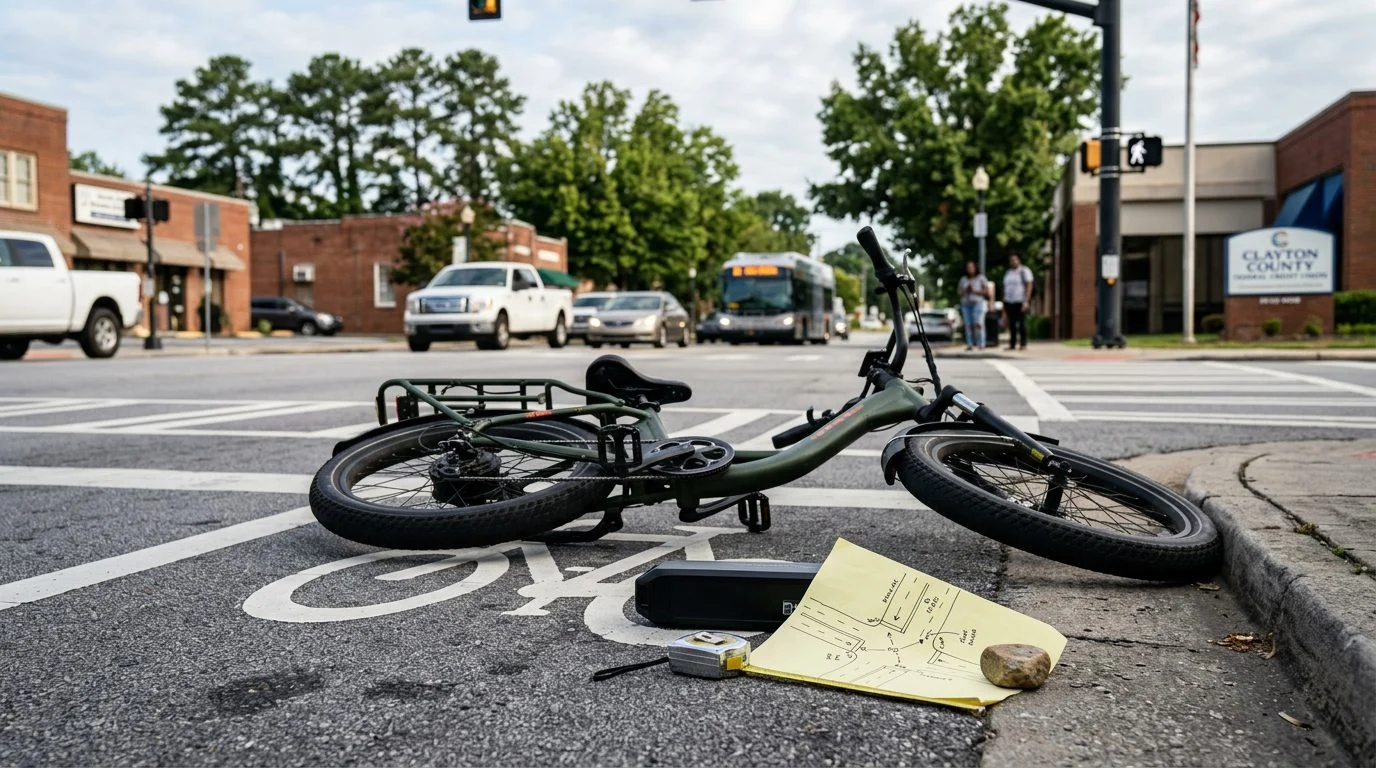
Terance Madden’s engineering training helps him read the evidence behind the bills, starting with what the crash data shows. He also trained as an electrical engineer before law school.
He starts a case by asking what the evidence shows, how the crash happened, and which records must be preserved. E-bike battery and controller records, where they exist, can show speed, power and how the ride ended. Those records can be lost if nobody asks for them early.
Speed and direction of impact help explain injuries. An engineer tests a “low impact” label against the physics of the crash instead of accepting it.
Parts makers, repair shops and battery makers can be liable parties. Each may carry its own insurance, and that can change how liens and reimbursement claims get resolved.
Not sure what your next step is?
Talk it through with our team — the first consultation is free, confidential, and carries no obligation.
Hit-and-Run and Uninsured Driver Crashes
When the at-fault driver fled or had no insurance, your own uninsured motorist coverage may be your main source of recovery.
The limits are the ones the insured selects.
Uninsured motorist claims can carry lien and reimbursement issues too. Those must be sorted out before money is paid.
Georgia law requires a driver involved in a crash that causes injury, death, or property damage of $500.00 or more to immediately notify the local police department if the crash is within a municipality, or the county sheriff or nearest state patrol office if it is outside one, according to O.C.G.A. § 40-6-273. If you can, write down the vehicle description, the time and place, and any witnesses’ names.
The general rule in Georgia is two years after the right of action accrues to file a lawsuit for an injury to the person, with four years for loss-of-consortium claims, under O.C.G.A. § 9-3-33.
What the Person Managing the Recovery Should Keep Track Of
The person handling the bills should keep one file with every bill, lien letter, benefits statement and treatment record. If you’re the spouse, mother or adult daughter running this, you’re the one keeping the paperwork straight, and that matters.
Keep a simple log of appointments, medications, missed work, mileage and out-of-pocket costs. The log lets the claim show the full picture, not just the bills.
Under O.C.G.A. § 31-33-2, a provider must furnish a requested record within 30 days of receiving the request, unless it reasonably determines that disclosure to the patient will be detrimental to the patient’s physical or mental health, in which case it may refuse to furnish the record to the patient; however, upon such refusal, the patient’s record shall, upon written request by the patient, be furnished to any other provider designated by the patient. The request must include (1) an authorization in compliance with the federal Health Insurance Portability and Accountability Act of 1996, P.L. 104-191, and regulations implementing such act; and (2) a signed written authorization. If the patient has died and no executor, administrator or temporary administrator has been appointed, the surviving spouse may request the records. If there is no surviving spouse, a surviving child may. If there is no surviving child, a parent may.
Do not sign releases, payoff letters or recorded statements until the firm has reviewed them. Calls from insurers and providers can be routed to the firm, so the family does not field every question alone.
Talk Through Your Lien Letter With the Firm
If a lien or repayment letter arrived after your crash, have it reviewed before you talk to Big Insurance or sign anything. That letter can change how much of a settlement reaches you.
The first consultation is free, confidential and carries no obligation to continue. Terance Madden has practiced in Georgia since 1999, and the firm’s office is in Jonesboro, in Clayton County.
Start your free case evaluation and bring the lien letter with you.
Frequently Asked Questions
What is a medical lien after an e-bike crash in Georgia?
A medical lien is a legal claim by a provider, such as a hospital or doctor, against money you may recover from a personal injury case.
What is a letter of protection, and why does it matter?
A letter of protection is a promise from your provider to wait for payment until your case settles. It is not a lien, but it still means your bills get paid from the settlement, so read what you sign before you sign it.
Should I talk to a lawyer before agreeing to a medical lien or letter of protection?
Yes, it is wise to get advice before you sign anything about your bills. The firm offers a free first consultation, which is confidential and carries no obligation to continue. If you were hurt in an e-bike crash that someone else caused, call the firm, day or night, to talk through your options.