

E-Bike Crashes | Georgia Families
Your child was hurt on an e-bike? Start with the facts while they are still fresh.
Parents often have to handle the medical bills, the insurance calls and the bike itself all at once. Here is how to keep the evidence safe and get clear answers.
The firm at a glance
1999
Year the firm has been practicing law
5
Georgia offices: Jonesboro, Atlanta, Decatur, Macon and Augusta
24/7
Phone line for families after a crash
By Terance Madden · Published November 15, 2026
Your child was hurt on an e-bike, and now you’re the one juggling the bills, the calls and the decisions. Here’s the short answer: under Georgia law, a minor’s own injury claim generally waits until the child turns 18. The other claims from that same crash don’t always wait, and that’s where families get caught.
A Minor’s Own Claim Generally Waits Until Age 18
A minor’s own injury claim is generally paused while the child is under 18. A minor is anyone under 18. Lawyers call that pause tolling, which means the legal clock stops running for a set time. The clock is the statute of limitations, the legal deadline for filing a lawsuit.
Georgia’s rule gives a person who was under 18 when the claim arose the same time after turning 18 that other people get to sue. See O.C.G.A. § 9-3-90.
The statute has exceptions, so the answer depends on the facts of your case. Treat the pause as a starting point, not a finish line.
If your child was hurt in an e-bike crash someone else caused, you don't have to sort out the deadlines alone. Reach out to T. Madden & Associates to talk through your family's options. Talk it through with our team — the first consultation is free, confidential, and carries no obligation.
How the Two-Year Clock Works for a Child Hurt in an E-Bike Crash
For most injuries to the person, Georgia generally gives two years to file a lawsuit. O.C.G.A. § 9-3-33 sets that two-year period. For a minor, the two-year period in O.C.G.A. § 9-3-33 runs from when the right of action accrues; the separate rule that a minor’s time starts after turning 18 is in § 9-3-90, not § 9-3-33.
Take a 12-year-old hurt in an e-bike crash. The child turns 18 six years later. Add two years, and the child’s own claim generally runs to about age 20. That’s the age math, and it’s simple.
Here’s the catch. Evidence doesn’t wait for a birthday. Medical records, witness names and the bike itself get harder to find as time passes. A pause on the lawsuit clock is not a pause on the work.
For the general e-bike rules, see our Georgia e-bike claims guide.
Why a Parent’s Claim May Not Wait for the Child’s 18th Birthday
A parent’s claim for a child’s medical bills is separate from the child’s own claim. Don’t assume the child’s pause covers it.
Georgia law says necessary expenses from an injury are a legitimate item in the estimate of damages. Damages are the money the law allows for the harm. See O.C.G.A. § 51-12-7.
Those expenses add up fast. There’s the ambulance ride, the ER visit, follow-up appointments, prescriptions and the mileage to every one of them.
The minor pause in § 9-3-90(b) is written for the person who was under 18, but § 9-3-90 also covers individuals who are legally incompetent because of intellectual disability or mental illness and certain individuals imprisoned when the claim accrued. A parent’s deadline needs its own check, and that check should happen early. A common mistake is assuming the bills can wait too.
Start a paper trail from day one. Keep every bill, receipt and mileage log. Those records are how the family proves what it paid.
If a Child Died in an E-Bike Crash: The Wrongful Death Clock
A wrongful death claim is a lawsuit a family brings after a death caused by someone else’s wrongful act. It is separate from a child’s own injury claim, and it has its own rules.
Georgia law lets the personal representative (the person who handles the deceased person’s estate) recover funeral, medical and other necessary expenses. That applies when death results from a crime or from criminal or other negligence. See O.C.G.A. § 51-4-5.
Don’t assume the minority pause settles the deadline for a wrongful death claim. Have that deadline checked now, not after the funeral.
If your child has died, you are living through the worst week of your life. Someone in the family is handling the funeral, the insurance calls and the records. That person needs this information first, in plain words.
Why Waiting Costs Evidence in an E-Bike Battery Crash
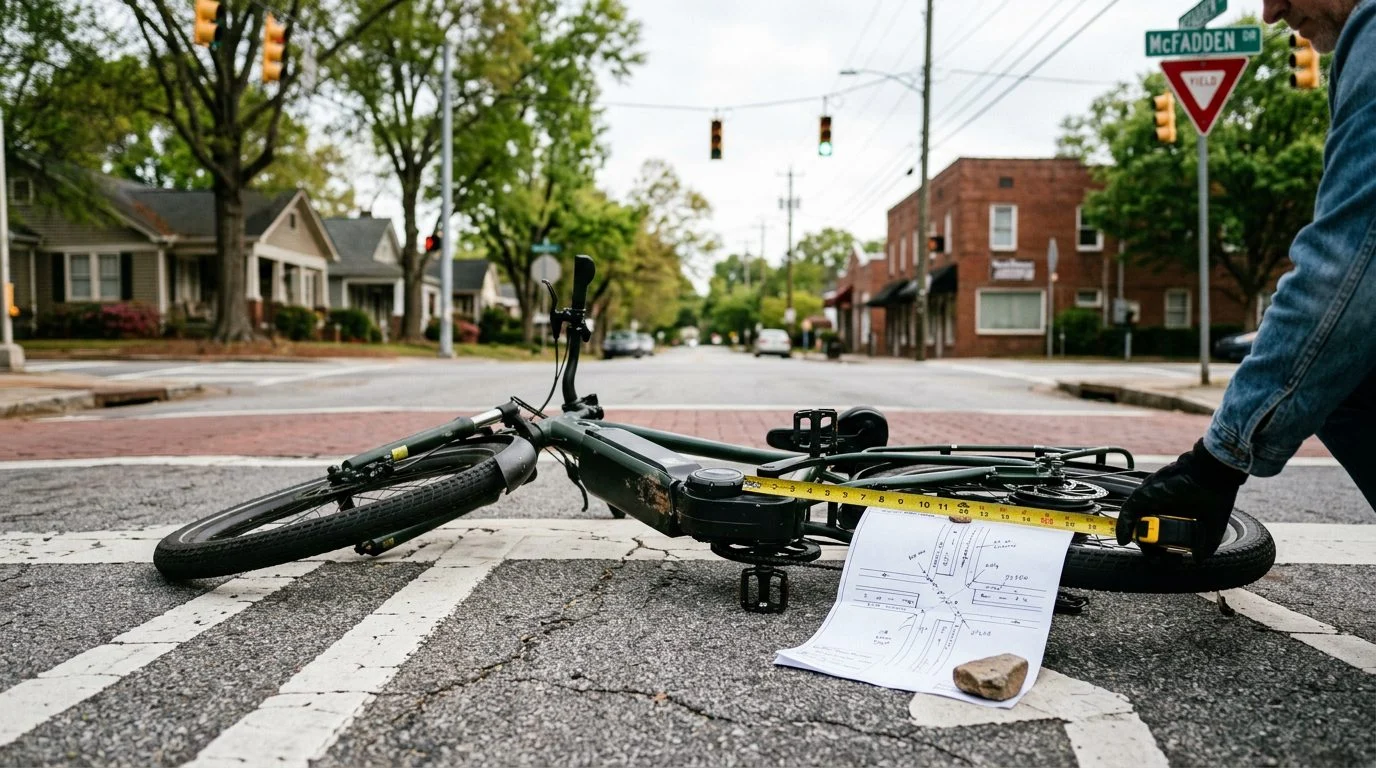
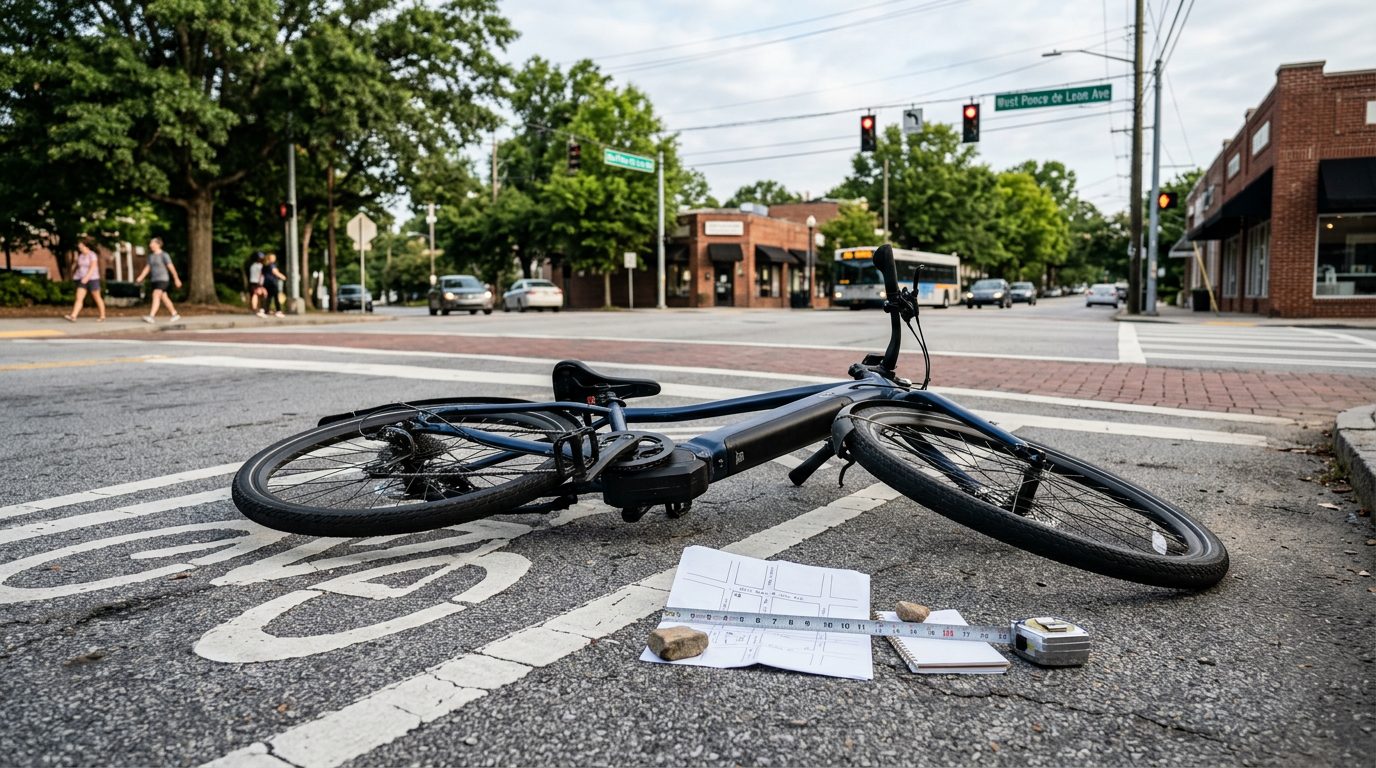
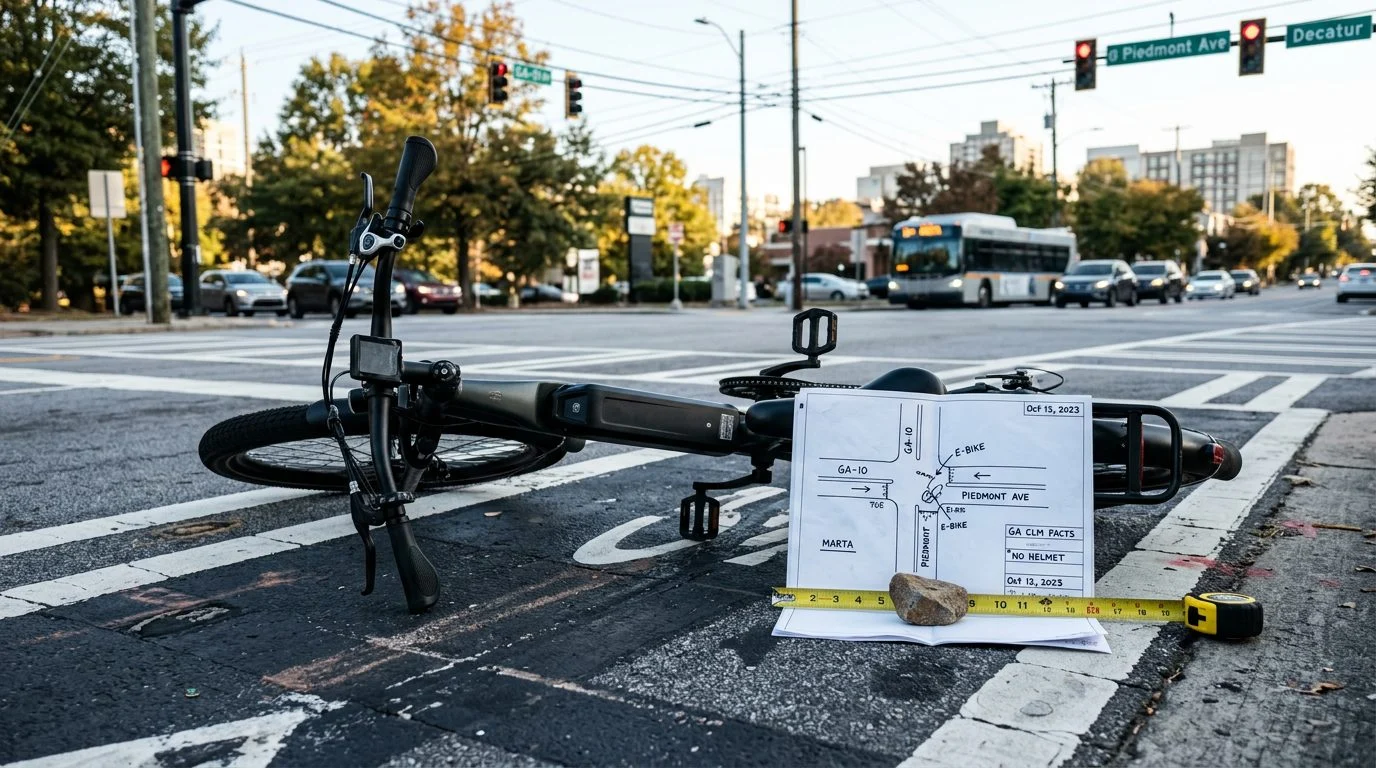
Waiting costs evidence, and the bike is usually the first thing to go. Here’s what can disappear or change: the e-bike, its battery, the controller (the part that sends power from the battery to the motor), the charger, phone video, nearby camera footage, witness names and the spot where the crash happened.
Before law school, Terance Madden trained as an electrical engineer and earned a B.S. in Electrical Engineering. He approaches a case by asking what the evidence actually shows, how the crash happened, and which records exist and must be kept. On a battery fire or a failed part, that means looking at the cells, the charging circuit and any certification mark on the pack. It also means tracing where the failure started.
Those details can point to more than one liable party (someone legally responsible). A maker, a seller or a parts supplier may each carry its own insurance. That can mean more coverage for the family.
Product claims have their own clock. Under O.C.G.A. § 51-1-11, a claim against a manufacturer generally has a ten-year outer limit, counted from the product’s first sale. The statute has exceptions.
So preserve the bike. Don’t repair, sell or toss the battery until someone has reviewed it. Keep the packaging and receipts too.
How Comparative Negligence and Big Insurance Affect a Child’s Claim
Georgia cuts a claim by the injured person’s share of fault, and a claim is barred at 50 percent or more. Comparative negligence means shared fault. The judge reduces damages in proportion to the injured person’s fault. See O.C.G.A. § 51-12-33.
Big Insurance is not on your family’s side. An insurer’s first offer is rarely what a claim is worth. The firm knows how to pursue what is owed.
Big Insurance adjusters often open with a low offer. They ask for recorded statements early, sometimes from a child who is still hurting. They slow payment on bills, dispute the treatment, and argue the crash was “low impact” or that the child was partly to blame.
Here’s the response. Pursue every coverage layer: liability, UM/UIM (uninsured and underinsured motorist coverage), umbrella, excess and corporate coverage where they apply. Count the full lifetime cost of the injury, not just the bills to date. Prepare as if the case will go to trial.
Don’t give a recorded statement or sign a release until the claim has been reviewed.
Not sure what your next step is?
Talk it through with our team — the first consultation is free, confidential, and carries no obligation.
Steps the Parent or Caregiver Can Take This Week
Start one file this week, and keep it current.
- Write down the date, the time, the street or path, and the names of everyone who saw the crash, plus any police or fire responders.
- Save the e-bike, battery, charger and damaged gear. Photograph them where they sit, and don’t repair them yet.
- Build one folder for medical records, bills, pharmacy receipts, mileage to appointments and time missed from work.
- Keep follow-up appointments. The care plan and the records should move together, so ask for copies as you go.
- Log every insurance letter and call with the date and the caller’s name. Don’t sign anything you don’t understand.
The person managing the recovery is usually the one holding all of this. Give that person the folder, the calendar and this checklist.
Talk to the Firm About Your Child’s Deadline Before It Passes
If you’re a parent or caregiver trying to work out whether the clock is running, you didn’t choose this situation. You don’t have to sort it out alone.
T. Madden & Associates, P.C. is a Georgia personal injury firm in practice since 1999. It has offices in Jonesboro, Atlanta, Decatur, Macon and Augusta. The firm reviews the crash, the e-bike and the family’s records, then sets out the deadlines that may apply to each claim.
The first consultation is free, confidential and comes with no obligation to continue. The firm works on a no-fee-unless-we-win basis, but the client may still be responsible for court costs and case expenses.
If your child was hurt in an e-bike crash that someone else caused, reach out for a free case evaluation at the firm’s contact page.
Frequently Asked Questions
How long do I have to file a claim after an e-bike crash in Georgia?
Most Georgia personal injury claims must be filed within two years of the crash, under O.C.G.A. § 9-3-33. Under O.C.G.A. § 9-3-33, actions for injuries to the person must generally be brought within two years after the right of action accrues.
Does the deadline pause if the injured rider is a minor?
Often, yes. Under O.C.G.A. § 9-3-90(b), except as otherwise provided in Code Section 9-3-33.1, individuals who are less than 18 years of age when a cause of action accrues are entitled to the same time after they reach age 18 to bring an action as is prescribed for other persons. Parents should not count on that pause for every claim, so it is smart to call a lawyer early.
Is the deadline different if the crash involved a city, county or state vehicle or road?
Yes, and timing matters.
What is the deadline for a wrongful death claim after a fatal e-bike crash?
Because deadlines can change with the facts, families should contact T. Madden & Associates, P.C. right away for a free consultation, which is confidential and carries no obligation to continue.