


Truck Crash Evidence | Georgia
Trucking records do not wait. Ask for them early.
The black box, the driver's logs and the company's dispatch messages can disappear in the weeks after a wreck. Here is what to ask for and why speed matters.
Why people call T. Madden & Associates, P.C.
1999
Year the firm began practicing law
Free
First consultation, confidential, no obligation to continue
24/7
Call us any time
By Terance Madden · Published November 18, 2026
How Long Georgia Trucks Keep Black Box and Driver Log Data?
After a truck crash, one question matters fast: how long do trucking companies keep black box data in Georgia? Engine data can be overwritten sooner, so the clock matters from the day of the crash.
If your loved one was hurt in a truck crash and no one has confirmed the carrier is keeping its data, you don't have to work out the next step alone. Our team can talk it through with you. Talk it through with our team — the first consultation is free, confidential, and carries no obligation.
The Short Answer: Retention Periods Vary, So Move Fast
Retention periods vary by record type, so the safest step is a written demand that the carrier keep everything now. Don’t wait for the insurance claim to move first.
“Black box” is the everyday name for the onboard computers that store truck data. The main ones are the engine control module (ECM), which logs engine and vehicle activity, and the electronic logging device (ELD), which tracks driving time.
A preservation demand is a formal letter telling the carrier to keep the truck, its data, and its paperwork. It should go out as early as possible. Starting early matters in a truck case, and that starts with asking for records before they are gone.
For the firm’s overall approach to these cases, see truck crash cases in Georgia.
What the Federal Rule Requires for Logs and Supporting Records
The federal rule requires a trucking company to keep a driver’s records of duty status and supporting documents for at least six months. A record of duty status is the official log of when a driver was driving, on duty but not driving, resting in a sleeper berth, or off duty. See the federal driver log rule under 49 C.F.R. § 395.8.
Supporting documents are the backup. They include dispatch records, trip records, and expense receipts tied to time the driver was on duty but not driving. 49 C.F.R. § 395.11 describes these records.
Six months is a minimum, not a promise. A carrier can keep records longer. Assume nothing and ask in writing. That is why the date you send the demand matters, even when six months still seems far away.
What the Engine Control Module Records: Speed, Braking, and Throttle
The engine control module shows how the truck was running in the seconds around a crash. Think of the ECM as the truck’s engine computer. It can store vehicle speed, brake application, throttle position (how far the gas pedal was pressed), and engine events and fault codes.
Each reading answers a different question. Speed shows how fast the truck was going before impact. Brake data shows whether and when the driver stepped on the brakes. Throttle shows whether the driver was still accelerating into the crash. Together, they show the truck’s last moments.
Those readings matter because they test the driver’s account against the truck’s own record.
Here’s the catch. ECM data can be overwritten or cleared once the truck goes back into service, and repairs can change what’s left. Which data survives depends on the vehicle and what was saved.
The carrier’s own technicians may handle the truck first. Reading an ECM takes dedicated download tools. The real question is who keeps the module, and in what condition.
What the Electronic Logging Device and Driver Logs Show: Hours on Duty
The electronic logging device shows when the truck moved, where it was, and how long the driver drove. Under 49 C.F.R. § 395.26, an ELD automatically records certain data. These include the date, the time, the location of the commercial motor vehicle (CMV), engine hours, vehicle miles, driver identification, vehicle identification, and motor carrier identification. It records these data when a driver changes duty status and when the engine is powered up or down. An intermediate recording is made while the vehicle is in motion when no duty status change or other intermediate recording has occurred in the previous 1 hour. During authorized personal use, engine hours and vehicle miles are left blank, and location is recorded with a single decimal point resolution (approximately within a 10-mile radius). During authorized personal use of a commercial motor vehicle, engine hours and vehicle miles are left blank, and location is recorded with a single decimal point resolution, approximately within a 10-mile radius. While the truck is moving, it adds an entry if no other change has been recorded in the previous hour.
The driver’s log ties those machine entries to a duty status: driving, on duty, resting, or off duty. Hours on duty show how long a driver had been working before the crash. Fatigue is often the first question in a truck case, and these records are where it starts.
When the logs and the ECM don’t match, that gap raises questions about fatigue and hours-of-service violations. Hours-of-service means the federal limits on how long a driver may drive and work.
The carrier may not alter or erase the original hours data. Under 49 C.F.R. § 395.30, the motor carrier may request edits to a driver’s records of duty status to ensure accuracy only after the driver has submitted the records, and the driver must confirm or reject any proposed change, then recertify and resubmit the records for the change to take effect.
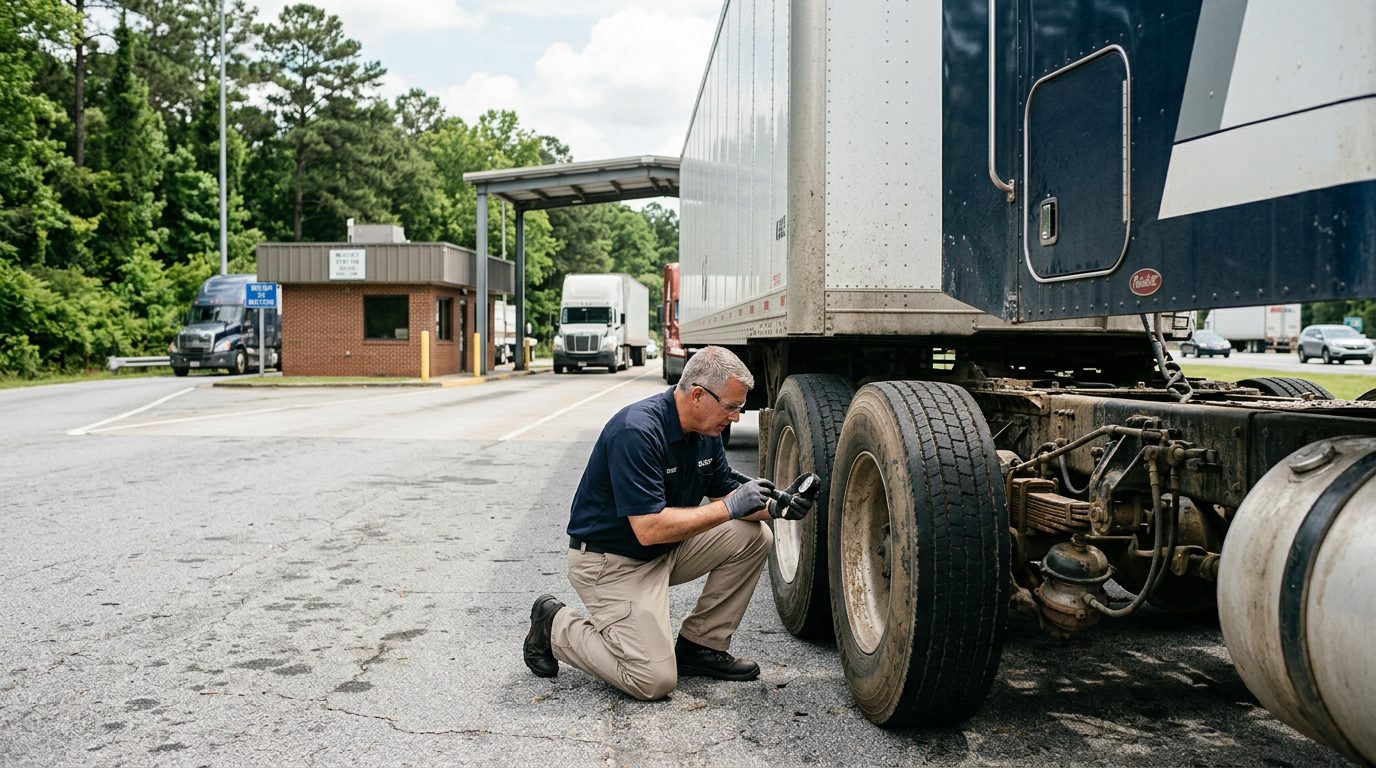
Why Evidence Can Disappear Before a Case Starts
Evidence can disappear when a truck is repaired, sold, or put back on the road before anyone outside the company looks at it. Lawyers call the loss or destruction of evidence spoliation.
The federal rules also bar changing records. Under 49 C.F.R. § 395.11, no carrier or driver may obscure, deface, destroy, or alter information in a supporting document.
A preservation demand puts the carrier on notice. It should name the truck and its ECM, the ELD and its backup copy, the driver logs, dispatch records, and the maintenance file.
Georgia’s Supreme Court has also held that a trucking company’s own negligent hiring, training, supervision and retention are claims based on the employer’s own acts. Under Quynn v. Hulsey, 310 Ga. 473 (2020), these claims focus on the employer’s own alleged negligent conduct, including how it hires, trains, supervises, and retains its drivers. See Quynn v. Hulsey, 310 Ga. 473 (2020). The records that show those decisions matter as much as the truck’s data.
Not sure what your next step is?
Talk it through with our team — the first consultation is free, confidential, and carries no obligation.
How Terance Madden’s Engineering Training Shapes the Read
Terance Madden reads truck data the way an engineer reads test results. First he asks what the numbers show. Then he asks how they line up with the crash.
Before law school, Terance Madden trained as an electrical engineer, so he starts a case by asking what the evidence shows and how the crash happened. Terance Madden trained as an engineer, so the logic of a truck’s computers is familiar ground.
He lines up ECM speed and brake readings, ELD time stamps and locations, and the driver’s log entries on one timeline. When two records disagree, that gap is where the questions start.
Data alone doesn’t tell the whole story. The firm also looks at the scene, the vehicle, and its maintenance and repair records. Brake, tire, cargo and maintenance vendors can be other liable parties.
Next Steps for the Person Managing the Recovery
If you’re handling your loved one’s medical visits, bills and phone calls, you’re holding the family’s paperwork. Start with the facts that fade fastest.
Write down the date, time and location of the crash. Keep the carrier’s name and its U.S. Department of Transportation (DOT) number from the truck or the paperwork. Save photos, and keep every bill and letter in one folder.
Don’t give a recorded statement to the trucking company or its insurer before you talk to a lawyer. Big Insurance often asks for one early, while the injured person is still hurting and the facts are still moving.
Big Insurance is not on your side. A first offer is rarely what a claim is worth. Claims may involve several layers of coverage, including liability coverage, UM/UIM (uninsured and underinsured motorist coverage), umbrella and excess coverage (extra layers that sit above a policy’s basic limits), and corporate coverage.
If your loved one was hurt in a truck crash in Georgia and nobody has confirmed the carrier is keeping the truck, ECM, ELD and driver logs, reach out now. The first consultation is free, confidential, and carries no obligation to continue. The firm has practiced since 1999 and has offices in Jonesboro, Atlanta, Decatur, Macon and Augusta. Contact the firm.
Frequently Asked Questions
How long do trucking companies keep black box data in Georgia?
Engine and electronic data from a truck can be overwritten or lost over time, so it helps to have it saved early.
Does Georgia or federal law require trucking companies to keep black box data?
Federal trucking rules set retention periods for certain records, like driver logs. Georgia’s two-year filing deadline for actions for injuries to the person (O.C.G.A. § 9-3-33) runs on its own clock. That statute sets a one-year period for injuries to reputation and a four-year period for certain loss of consortium claims, so preserving the data early matters.
What happens if a trucking company overwrites its black box data?
Once the data is overwritten, it may be lost for good.
What should I do to preserve truck data after a crash?
Ask a lawyer to send a written preservation demand to the trucking company as soon as possible. The demand should cover the black box data, driver logs, maintenance records, and dispatch records. Terance Madden trained as an electrical engineer, so he reads this data to see how the truck moved and what the driver was doing. If you were hurt in a crash with a truck, contact T. Madden & Associates, P.C. to start that process.