

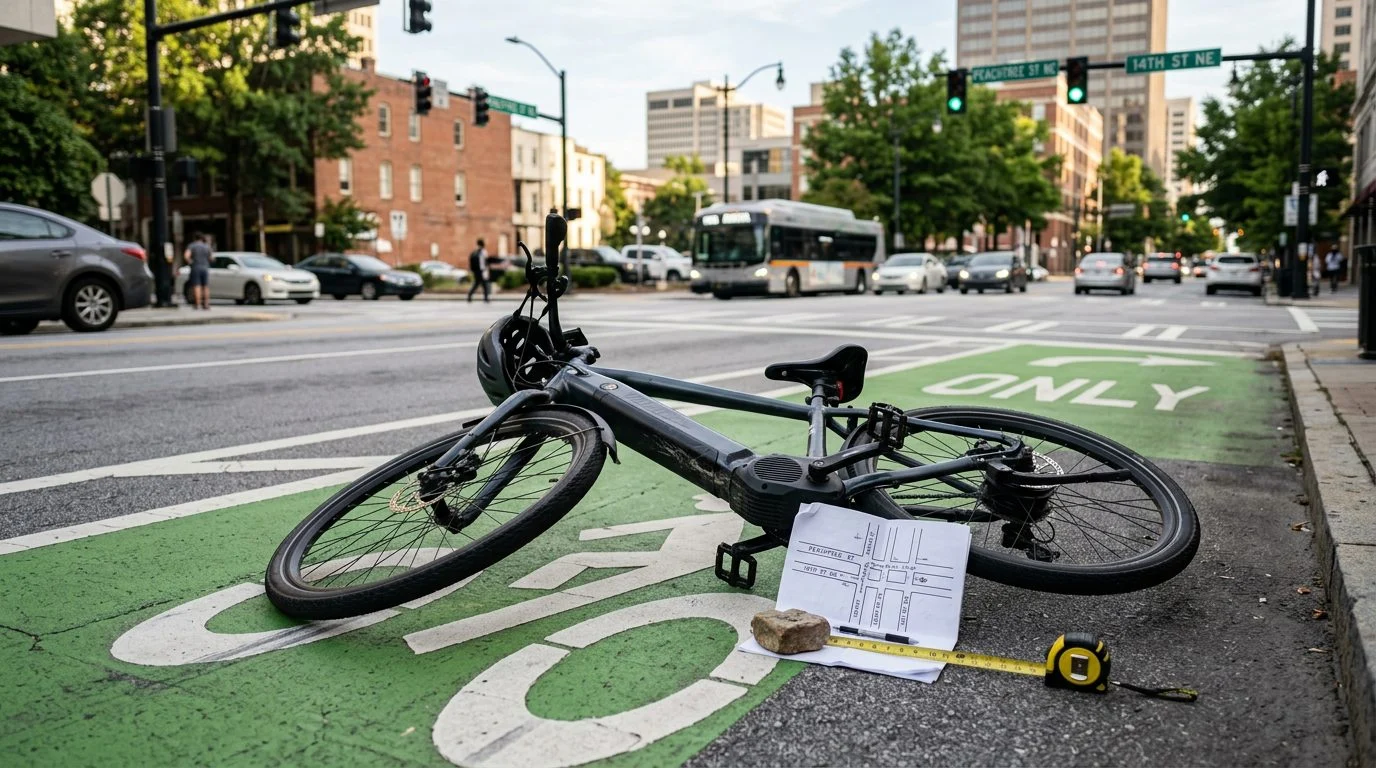
E-bike crashes in Georgia
Hurt in an e-bike crash? Take these steps first.
The first hours and days after a crash shape what happens next. Here is how to protect your health, your evidence and your options.
Serving Georgia since 1999
1999
Year the firm began practice
5
Offices in Georgia
24/7
Phone line for injured riders
By Terance Madden · Published November 9, 2026
You’re hurt, you’re shaken, and your e-bike may be sitting in a ditch or a parking lot. This page covers what to do after an e-bike crash in Georgia, in order.
Three moves do most of the work in the first 72 hours. Get checked out, protect the evidence, and slow down on the insurance calls.
Hour Zero: Get Safe and Get Checked Out
Get out of traffic, call 911, and get medical care, even when the pain feels manageable. Safety comes first, and the medical record comes second.
If you can move out of traffic, do it. If you can’t, stay still, turn on any hazard lights, and call 911 so a police report gets started. Georgia law tells a driver in a crash that causes injury to immediately give notice, by the quickest means of communication, to the local police if the crash is within a municipality, or otherwise to the county sheriff or the nearest state patrol office. See O.C.G.A. § 40-6-273.
Next, get checked out at an emergency room or urgent care. Do this even if you feel okay. Some injuries don’t show up until hours or days later.
Tell the staff exactly how the crash happened, in plain words. Name every place that hurts. Don’t guess, don’t shrink your symptoms, and don’t say “I’m fine” just to end the visit.
If you’re the one managing the recovery, write down the time of the crash and the names of anyone at the scene. Those details fade fast.
If another driver's choices left you hurt on an e-bike, you may have a claim, and our team will talk through your options in a free, confidential first consultation. Talk it through with our team — the first consultation is free, confidential, and carries no obligation.
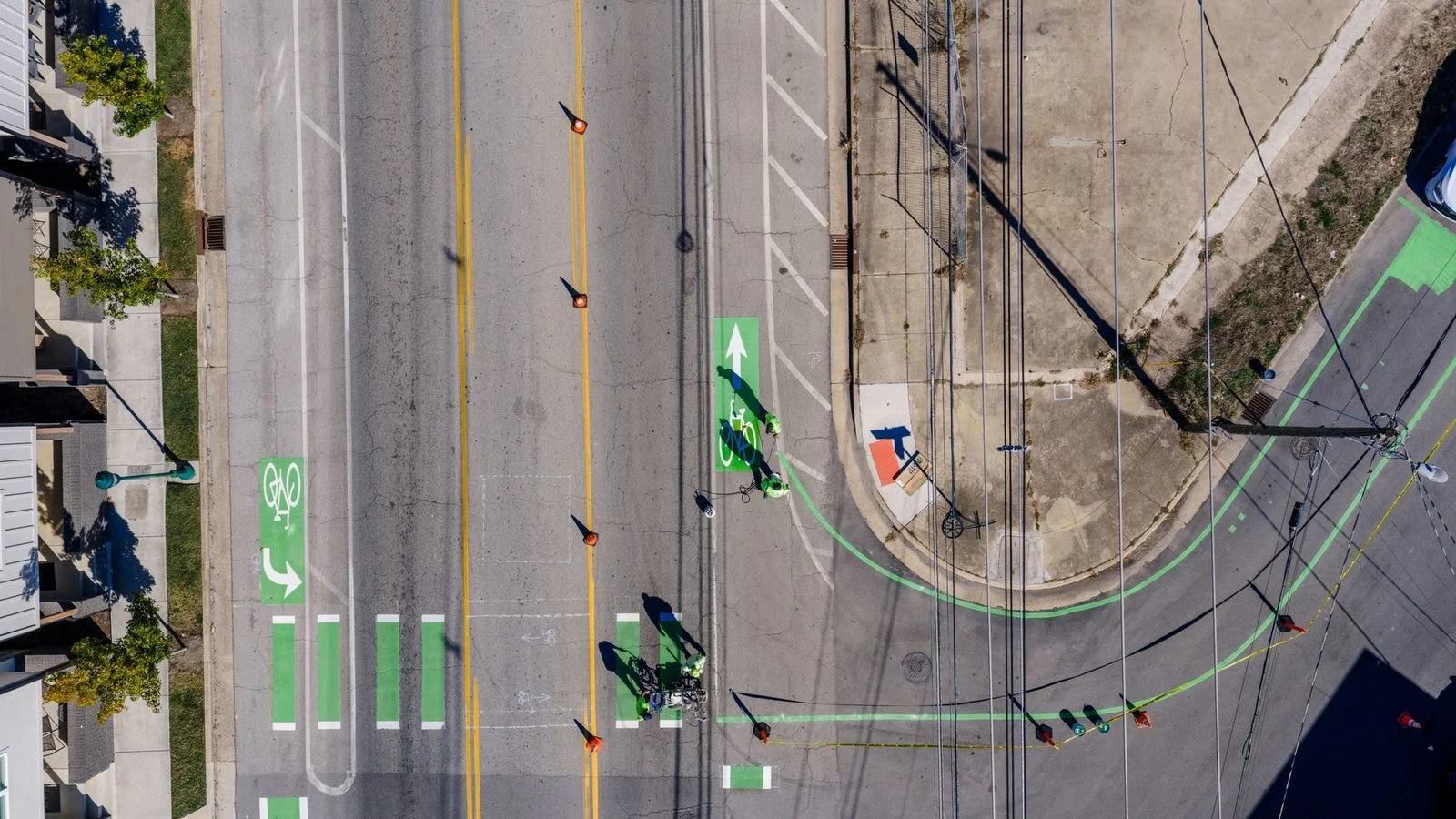
Document the Scene Before It Changes
Photograph the scene, the bike, and your injuries before anyone moves or cleans up anything. Those first hours show the road as it really was.
Take pictures of where the bike stopped, the lane markings, traffic signals or signs, the weather, and the damage to both the bike and you. Wide shots help. Close shots of the damage help more.
Get the other driver’s name, phone number, insurance details, and plate number. Get the names and phone numbers of any witnesses, even the ones who only saw the crash for a second.
Then write a short timeline while your memory is fresh. Include your speed, your direction, what you saw and heard, and where the other vehicle came from. Keep it factual. A guess made in shock can come back later as a problem.
Roads get repaired and skid marks fade. A photo from the first hours can settle a question that a week of memory cannot.
Keep the Bike and Gear as They Are
Don’t repair, sell, or scrap the e-bike until your claim has been reviewed. The bike is physical evidence, and it can’t speak for itself.
Photograph the battery, the controller, the wiring, the wheels, and any broken parts. Write down where the bike is stored and who has access to it. Damage patterns on vehicles can help show how an impact happened.
Terance Madden holds a B.S. in Electrical Engineering, and he reads technical evidence himself. He can look at how a battery, controller, or wiring was damaged and explain in plain words what that damage shows. The firm’s technical evidence guide goes deeper on what an e-bike can show.
Georgia courts treat the duty to preserve evidence as starting once litigation is reasonably foreseeable to the party that controls the evidence. See Phillips v. Harmon. Right now, you control your bike’s condition. Keep it that way.
Report the Crash and Get the Official Record
Ask the responding officer for the report number, and get the full crash report once it’s available. The report is a starting record, not the final word on fault.
Stick to facts when you talk to police. Say what you saw and felt. Don’t admit fault, and don’t guess about what the other driver did.
The firm reviews the police report alongside your photos, witness names, your timeline, and your medical records. Officers record what they see that day. The rest of the story comes from the evidence.
If the other driver left the scene or can’t be identified, your own uninsured motorist (UM) coverage may still matter. UM coverage pays you for bodily injury, loss of consortium or death, and for damage to or destruction of your property, caused by the owner or operator of an uninsured motor vehicle, but a named insured can reject it in writing, so check whether your own policy includes it. See O.C.G.A. § 33-7-11.
The Insurance Calls: What Big Insurance Does in the First Days
Big Insurance is not on your side, and its first offer is rarely what your claim is worth. Know that before the phone rings.
Expect an early call. Adjusters often ask for a recorded statement, an interview on tape that can be used later, before you know the full extent of your injuries. Expect a low first offer, slow payment of bills, and a push to call your treatment unnecessary. Expect the phrase “low impact,” which is often used to shrink a crash with a bike. When someone calls a crash low impact, ask for the physics behind that claim.
Here’s the response. Don’t give a recorded statement or sign a release before you talk to a lawyer. Keep contact in writing where you can.
The firm then looks at every coverage layer that may apply. That can include the at-fault driver’s liability coverage, your own UM and underinsured motorist (UIM) coverage, your own auto policy, any umbrella or excess coverage, and corporate coverage when a business is responsible.
The firm prepares every claim as if it will go to trial. It pursues the full losses, including future medical needs and lifetime damages, where the facts support them.
Keep Up With Care and Keep the Paper Trail
Keep every appointment and follow each treatment plan. Gaps in care give the other side a reason to question how hurt you were.
Tell your doctor about every symptom, including headaches, dizziness, numbness, sleep trouble, and mood changes. Symptoms left out at the first visit are hard to add later.
Save every bill, receipt, pharmacy record, mileage log, and pay stub that shows time missed from work. Georgia law treats necessary expenses from an injury as a legitimate part of your damages. See O.C.G.A. § 51-12-7. See O.C.G.A. § 51-12-2.
Medical records matter too. Under O.C.G.A. § 31-33-2, a patient or an authorized person can request a complete copy in writing.
If you’re the family member managing this, build one binder or folder. Put in the dates, providers, copies of every bill, and a running list of symptoms. That one file keeps the claim organized and saves hours on the phone.
Not sure what your next step is?
Talk it through with our team — the first consultation is free, confidential, and carries no obligation.
Know the Deadlines and Bring Your Situation to the Firm
Georgia generally gives two years to file a personal injury lawsuit, under O.C.G.A. § 9-3-33. Other deadlines can apply to certain claims, so don’t wait to ask.
Under O.C.G.A. § 51-12-33, the judge reduces the award in proportion to the injured person’s fault. A person who is 50 percent or more responsible recovers no damages.
Quick Answers
Do I need to call the police after an e-bike crash in Georgia?
Yes. Call 911 so a report gets started, and ask the officer for the report number.
Do I have to give a recorded statement to the other driver’s insurer?
Talk to a lawyer before you give a recorded statement or sign any release.
Should I keep my e-bike after a crash?
Keep it as it is until your claim has been reviewed.
If you were hurt on an e-bike in a crash someone else caused, and you’re juggling medical bills, insurance calls, and a bike you can’t fix yet, you may have a claim worth a serious look. The firm offers a free first consultation that is confidential and carries no obligation to continue. The firm works on a no-fee-unless-we-win basis, but you may still owe court costs and case expenses. Terance Madden is the responsible lawyer for this page, and the firm has an office in Jonesboro in Clayton County. Contact the firm to start.