

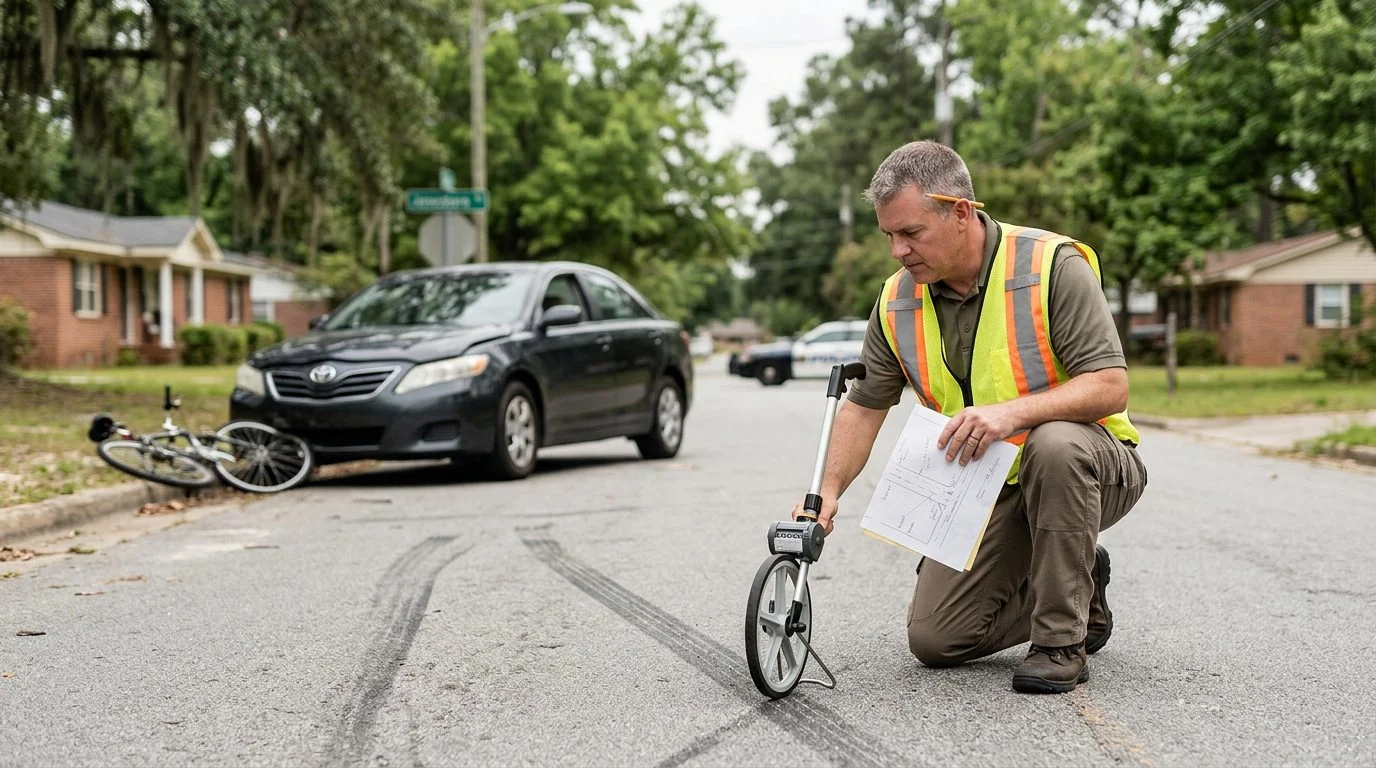
Bike and car crashes in Georgia
Hit on Your Bike by a Car? Find Out Where Fault Is Likely to Land
Georgia's fault rules can turn on details most riders never see. Here is what to look for, and how a free talk with our team can help you sort it out.
T. Madden & Associates, P.C.
1999
Serving Georgia clients since
5
Georgia offices: Jonesboro, Atlanta, Decatur, Macon and Augusta
By Terance Madden · Published November 19, 2026
Your loved one was hit by a car while riding a bike or e-bike, and now the questions are piling up. The first one is almost always who is at fault when a bike hits a car.
In Georgia, fault goes to whoever broke a duty the law sets, such as yielding, signaling, keeping a lookout, or driving at a safe speed. Any blame is then split by percentage, and the physical evidence usually decides where those percentages land.
The short answer: fault turns on the rules of the road and the evidence
There is no automatic answer. Fault depends on who acted unreasonably under the same conditions.
Liability means legal responsibility for harm someone else suffered. Georgia defines ordinary negligence as the absence of the care that ordinarily prudent people use in similar circumstances (O.C.G.A. § 51-1-2). A judge or jury applies that same test to the driver and to the rider.
Their own conduct gets examined too: how they entered the lane, whether they looked before they moved, and how fast they were going.
Three questions decide most cases. Who had the right of way? Who acted unreasonably? What does the physical evidence show?
If you're juggling a hospital stay, a police report and insurance calls after a bike crash, you don't have to work out fault alone. Talk it through with our team — the first consultation is free, confidential, and carries no obligation.
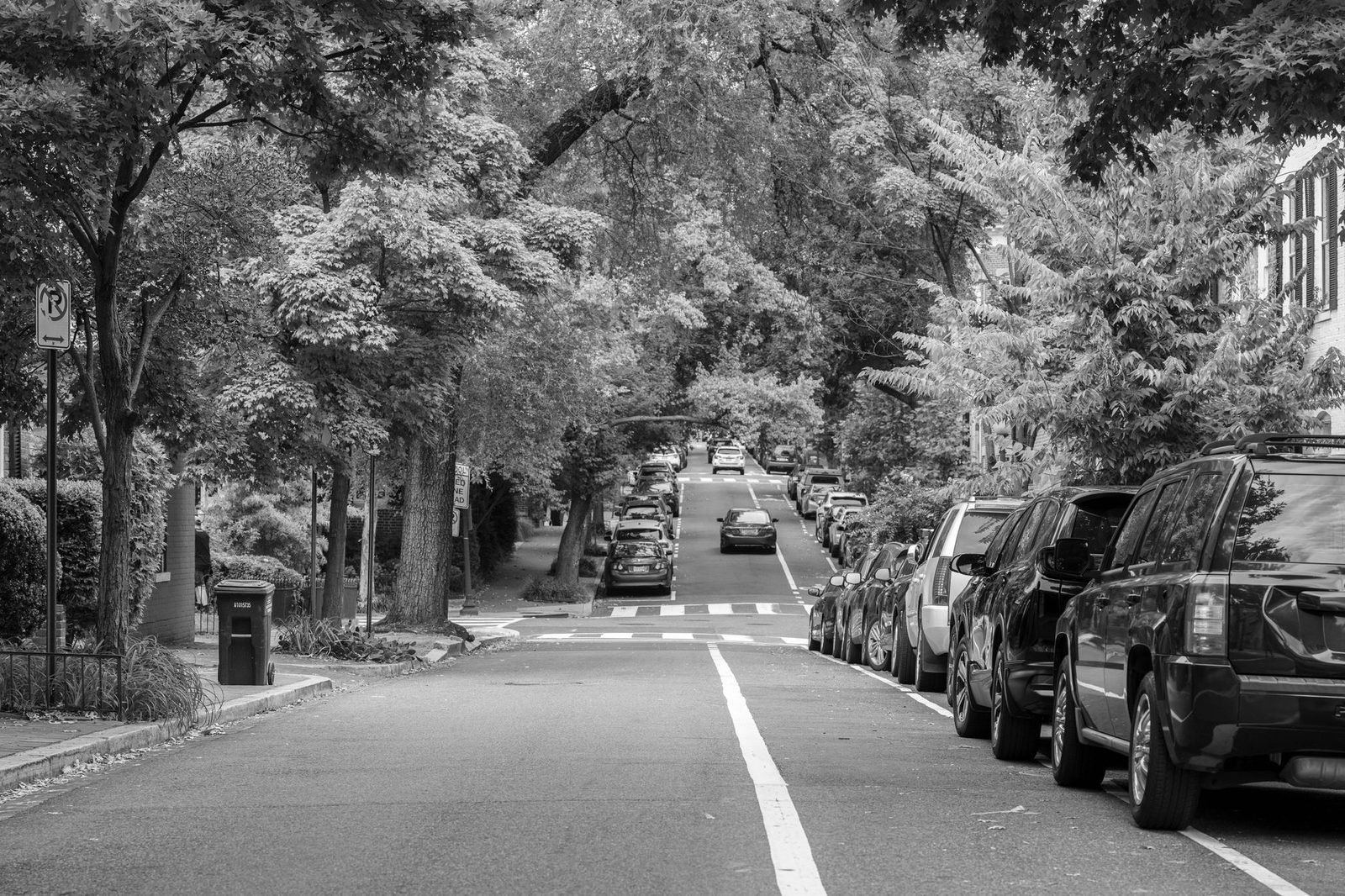
Common crash patterns and who usually has the duty
A left turn across a bike lane is a classic pattern.
A right hook happens when a driver turns right across the path of a rider beside them. The driver cut the rider off or never checked the lane next to the car.
Dooring happens when a parked-car occupant opens a door into the rider’s path. Other people may share responsibility, depending on the facts.
Riders who enter the road from a driveway, sidewalk or hidden spot raise a different question. Each pattern depends on the facts, and the measurements at the scene often change the picture.
How Georgia’s comparative fault rule can reduce or bar a recovery
Comparative fault means blame gets split by percentage among everyone whose conduct contributed to the crash. Georgia’s apportionment statute says the judge reduces damages in proportion to the injured person’s share of fault (O.C.G.A. § 51-12-33).
The 50 percent line is the key number. Under the same statute, a person who is 50 percent or more responsible for the injury cannot receive any damages (O.C.G.A. § 51-12-33; Quynn v. Hulsey (2020)). Under O.C.G.A. § 51-12-33, if the plaintiff is to some degree responsible for the injury or damages claimed, the judge reduces the damages in proportion to the plaintiff’s percentage of fault, and the plaintiff receives no damages if they are 50 percent or more responsible.
Here is a labeled example, not a real case. A jury finds the rider 30 percent at fault and the driver 70 percent. Total damages are $100,000. The rider recovers $70,000. Move the rider to 50 percent, and the rider recovers nothing.
Georgia’s avoidance rule adds another layer. If the injured person could have avoided the harm with ordinary care, they cannot recover for it (O.C.G.A. § 51-11-7).
In Quynn v. Hulsey, the jury split fault 50 percent to a truck driver and his employer and 50 percent to a pedestrian, so the estate recovered nothing (Quynn v. Hulsey). The percentage fight is where many claims are won or lost. The other side will argue the rider’s share is high, so every detail about position, speed and lookout matters.
What Big Insurance does with a bike-versus-car claim
Big Insurance is not on the injured rider’s side. Its job is to pay as little as it can.
Expect a quick, low offer before the medical picture is clear. Expect a request for a recorded statement before the family has the facts. Expect the rider to be blamed, a “low impact” argument, delays, and fights over treatment and bills.
A first offer is rarely what a claim is worth. Georgia sets rules for formal settlement offers in motor vehicle injury cases.
The response is to find every coverage layer. That can include the at-fault driver’s liability policy, the rider’s own uninsured or underinsured motorist coverage where the policy provides it, any umbrella or excess policy, and any corporate or employer policy if a company vehicle was involved. Georgia law can hold an employer liable for torts committed by a servant within the scope of the business (O.C.G.A. § 51-2-2).
A real claim also counts lifetime costs: future medical care and lost earning capacity. Our team looks closely at the evidence in every claim.
The evidence that decides who is at fault
The police report, scene and vehicle photos, dashcam or nearby video, and witness statements come first. The final resting position of each vehicle and the damage pattern on each one show where contact happened. Georgia’s Office of the Commissioner of Insurance and Safety Fire advises promptly notifying police and the insurer, collecting witness information, documenting the scene, and avoiding statements about fault (auto claim tips).
Terance Madden has an electrical engineering background. Before law school he trained as an electrical engineer, so he starts a case by asking what the evidence shows and how the crash happened. In a bike case, that means checking where each vehicle was, how fast each was moving, and whether the timing fits each driver’s account. He also works to preserve records that disappear quickly, such as video and vehicle data.
Crash physics matter here. Delta-V, the change in speed and direction during impact, can show whether a driver had time to see and react to a rider. Driver distraction is another common issue, and Georgia’s hands-free rules are laid out in the Department of Driver Services traffic-laws material.
Other liable parties can matter too. A maintenance shop that serviced the brakes, a brake or tire maker, or a commercial fleet owner may share responsibility. Finding them can mean more insurance is available.
Steps for the person managing the recovery right now
If you are the spouse, parent or adult daughter keeping track of appointments, bills and calls, you are holding the paperwork. These steps help.
Keep the police report number, photos of the bike, helmet and clothing, every medical record and bill, and a log of missed work and out-of-pocket costs. Write down what the rider remembers while it’s still fresh.
Pause before anyone gives a recorded statement to an insurer. Stay polite and brief. Take the claim number and say the rider will follow up.
If the rider has Medicare, the federal payer’s guidance says liability insurance pays first for crash-related care, and Medicare pays second (CMS).
Not sure what your next step is?
Talk it through with our team — the first consultation is free, confidential, and carries no obligation.
When a bike hits a car, the first call can change the paperwork
Answering an insurer’s questions can wait until someone has reviewed the facts. Your family did not plan for a hospital stay, a police report and a stack of insurance calls, and you should not have to sort out fault alone.
Quick answers
Who is at fault when a bike hits a car in Georgia?
Fault goes to whoever broke a legal duty, and Georgia splits blame by percentage.
Can a rider recover if they were partly at fault?
Yes, if their share is under 50 percent, and the recovery is reduced by that share.
Should the rider give a recorded statement right away?
Not before the facts are reviewed and the rider has legal advice.
The first consultation with T. Madden & Associates, P.C. is free, confidential, and has no obligation to continue. The firm works on a no-fee-unless-we-win basis, but you may still be responsible for court costs and case expenses. Start a free case evaluation.